

 English
  Français
  Português
 Home / News / Industry News / How Much Adjuvant Per Acre? Rates, Mixing, and Spray Tips for Every Pesticide
 How Much Adjuvant Per Acre? Rates, Mixing, and Spray Tips for Every Pesticide
2026-10-05
Every spray season, the same question reaches our technical desk: how much adjuvant per acre should I actually add? The honest answer is rarely a single number, because the right rate depends on nozzle type, carrier volume, water hardness, and the mode of action of the pesticide you are tank-mixing. But there is a practical way to think about it: adjuvant rates are built around either a per-acre dose or a percentage of spray solution, and once you understand which system your product label uses, you can avoid both wasted product and failed applications.
As a manufacturer of agricultural silicone adjuvants, we spend most of our time measuring spread area, contact angle, and dynamic surface tension rather than guessing. This article gives you the same decision framework we use when helping growers and formulators select rates, plus the mixing rules that prevent antagonism and foaming. You will leave with a clear rate-calculation method that works across herbicide, fungicide, and insecticide programs.
Why Adjuvant Rate Per Acre Is Not a One-Size-Fits-All Number
The most common label instruction is a range: "use 0.25–0.5% v/v" or "apply 1–2 quarts per acre." That range exists because the optimum concentration shifts with spray volume. If you apply 10 gallons per acre by air, a 0.25% solution means about 32 ounces of adjuvant. At 20 gallons per acre by ground, the same percentage doubles the actual volume to 64 ounces. Both applications may be agronomically correct, but the per-acre amount is different.
From a formulation chemistry standpoint, what matters is the final concentration on the leaf surface after droplet drying. A non-ionic silicone surfactant with super-spreading behavior needs only a fraction of the rate required by a conventional non-ionic surfactant, because it lowers surface tension from roughly 72 mN/m to below 21 mN/m. That is why we always tell buyers to start with the percentage system on the label, then convert it to per-acre volume for their own sprayer setup.
Adjuvant Categories and Their Standard Per-Acre Rates
Before calculating a rate, identify which family your adjuvant belongs to. The products in our portfolio and most commercial adjuvants fall into four functional groups, each with a distinct use rate and purpose.
Activator Adjuvants
Crop oil concentrate (COC), methylated seed oil (MSO), organosilicone surfactants, and non-ionic surfactants (NIS). These improve droplet spreading, cuticle penetration, and herbicide uptake.
Water Conditioners
Ammonium sulfate (AMS) and citric acid-based products. They sequester hard-water cations that bind with weak-acid herbicides, preventing salt formation and keeping the active ingredient available.
Spray Solution Modifiers
Deposition aids, drift retardants, and defoamers. They change droplet-size spectra, reduce off-target movement, and stabilize the tank mix.
Utility Modifiers
Acidifiers, buffers, and compatibility agents. They adjust pH and prevent separation when mixing fertilizers with pesticides.
Reference Table: Common Adjuvant Rates Per Acre
The table below shows typical use rates, but the product label of the pesticide being applied always takes precedence. When a label states both per-acre and per-100-gallon rates, use the figure that fits your spray volume. If they conflict, check the active ingredient chemistry; organosilicone-based adjuvants are almost always concentration-based rather than volume-based.
| Adjuvant type | Typical rate per acre | Typical rate per 100 gal | Spray volume range | Primary function |
|---|---|---|---|---|
| Crop oil concentrate | 1–2 qt | 1 gal | 10–30 gal/A | Improves cuticle penetration of post-emergence herbicides |
| Methylated seed oil | 1–1.5 pt | 1–1.25 gal | 10–20 gal/A | Enhances uptake of grass and broadleaf herbicides |
| Non-ionic surfactant | 0.5–1 qt | 0.25–0.5% v/v | 10–40 gal/A | Reduces surface tension and improves wetting |
| Organosilicone super-spreader | 2–8 fl oz | 0.025–0.1% v/v | 10–40 gal/A | Dramatic surface-tension reduction for difficult-to-wet leaves |
| Ammonium sulfate | 8.5–17 lb | 1–2% w/v | 10–30 gal/A | Overcomes antagonism from hard water |
| Deposition aid | 2–4 oz | 0.1–0.25% v/v | 5–20 gal/A | Reduces driftable fines and improves droplet retention |
How to Calculate Adjuvant Rate Per Acre From a Percentage Label
Many modern agricultural silicone adjuvants are labeled in percent v/v rather than ounces per acre. This is chemically correct, because the active silicone content is designed to work at a fixed concentration in the spray tank. Use this two-step method to get the exact per-acre dose.
- Convert percentage to volume per 100 gallons. A 0.05% v/v rate means 0.05 gallon of adjuvant per 100 gallons, or 6.4 fluid ounces. Multiply the percentage by 128 to get fluid ounces per 100 gallons.
- Adjust for your actual carrier volume. If you spray 15 gallons per acre, the per-acre adjuvant volume is one-quarter of the per-100-gallon figure. The formula is: (label % rate × 128) ÷ 100 × actual spray volume = fluid ounces per acre.
For example, our high-performance drum-mix adjuvants are often used at 0.05–0.1% v/v for ground applications. At the low end and a 15-gal/A carrier rate, that is 9.6 fluid ounces per acre. At the high end, it is 19.2 fluid ounces per acre. A grower who sprays 30 gal/A needs more total product to maintain the same concentration, even though the leaf deposit after drying is identical.
Practical Rate Calculation Examples for Different Spray Volumes
Let us put the formula to work in three common scenarios that generate the exact same concentration in the tank.
| Carrier volume per acre | Adjuvant volume per 100 gal | Adjuvant volume per acre | Application method |
|---|---|---|---|
| 10 gal | 6.4 fl oz | 0.64 fl oz | Aerial or low-volume ground |
| 15 gal | 6.4 fl oz | 0.96 fl oz | Typical ground boom |
| 20 gal | 6.4 fl oz | 1.28 fl oz | High-volume ground |
| 30 gal | 6.4 fl oz | 1.92 fl oz | Dense canopy or high-target-volume |
| 40 gal | 6.4 fl oz | 2.56 fl oz | Pre-emergence or incorporation |
Notice the pattern: doubles in carrier volume double the per-acre adjuvant requirement. That is why a "fixed ounces per acre" label on an organosilicone product is usually a hint that the formulator has calibrated it for a narrow spray-volume window. When you move outside that window, switch back to the percentage method.
How Water Quality Changes the Adjuvant Rate Equation
Hard water is not just a carrier issue; it is a chemistry issue that can consume a surprisingly large share of your active ingredient before the droplet reaches the leaf. Calcium and magnesium ions displace the sodium or potassium salts of glyphosate, glufosinate, and many ACCase-inhibiting herbicides, forming poorly soluble calcium-herbicide salts that reduce weed control by 20–50% in severe cases.
When total hardness exceeds 350 ppm as calcium carbonate, the standard response is to add ammonium sulfate at 8.5–17 lb per 100 gallons, not to increase the surfactant rate. In our technical support work, we regularly see growers double the organosilicone surfactant thinking the issue is poor wetting, when the actual problem is water hardness. The surfactant cannot solve a salt-formation problem because it acts on surface films, not on dissolved ions.
If your water is above 700 ppm hardness, consider using a water-conditioning product first, then add a silicone super-spreader at the lower end of its rate range. The jar-test method we describe below is the best way to verify whether the tank mix stays stable and biologically available.
Rainfastness, Humidity, and Environmental Rate Adjustments
Adjuvant rates also need to respond to weather conditions at and immediately after spraying. A heavy dew can dilute the concentrated herbicide deposit and wash it off before it dries; a low-rainfast window increases the value of a spreader that penetrates the cuticle quickly.
For a fast-rainfast requirement, an organosilicone super-spreader at the high end of its label rate is often the right call, because it accelerates penetration. Under high temperature and low humidity, conversely, water evaporates from droplets so fast that the adjuvant concentration rises on the leaf surface before the pesticide is absorbed. In that scenario, use the lower end of the rate range and increase carrier volume to keep droplets wet longer. Silicone surfactants have an advantage here because they remain stable across a wider temperature range than paraffinic crop oils.
The Jar Test: Confirming Rate and Compatibility Before You Mix
No rate chart can replace a 10-minute jar test when you are using a new adjuvant, a new pesticide formulation, or unfamiliar water. Label rates are valid under ideal conditions; your water chemistry and pesticide blend may require a different ratio.
Fill a graduated quart jar with your actual spray water, then add products in the order you plan to use them in the tank: water conditioners first, then pesticides, then adjuvants. Shake gently after each addition and observe for cream, sludge, flocculation, or suspended droplets. A stable mix should remain uniform for 30 minutes without separation. Conduct the same test at both the low and high label rates of the adjuvant, because some formulations flocculate when the surfactant concentration exceeds its critical micelle concentration.
This test is especially important with organosilicone adjuvants and suspension concentrates. The silicone molecule can interact with certain emulsifier packages in the pesticide formulation, causing either a rapid breakdown of the emulsion or an overly tight droplet that does not spread on the leaf.
Spray Volume, Droplet Size, and Adjuvant Per-Acre Relationship
Adjuvant rates and nozzle selection are connected through the droplet-size spectrum. The same per-acre rate of a drift-reducing adjuvant will behave differently through a flat-fan nozzle at 40 psi versus an air-induction nozzle at 90 psi. When the droplet size moves into the coarse-to-very-coarse category, the total number of droplets per square centimeter drops, which can reduce coverage even if the adjuvant concentration is unchanged.
For fungicides and insecticides that rely on contact activity, the goal is maximum coverage with fine-to-medium droplets. In this case, a silicone super-spreader at the higher end of the rate range helps offset the inherently lower coverage of coarse droplets by making each droplet spread more. For systemic herbicides, on the other hand, coarse droplets are acceptable because the active ingredient moves inside the plant, and the adjuvant is mainly there to help the droplet stick and penetrate.
Case-by-Case Adjuvant Rate Guidance by Crop Protection Product
Herbicides
Post-emergence grass herbicides such as clethodim, sethoxydim, and fenoxaprop often recommend a crop oil concentrate or MSO at 1–2 qt/A. Adding an organosilicone surfactant to these products is not always recommended, because the silicone can accelerate cuticle penetration too quickly for the herbicide's systemic movement pattern. If you need better rainfastness, use the MSO product already on the label and stay at the midpoint of the rate range.
Fungicides
Fungicide labels increasingly specify a non-ionic surfactant or silicone adjuvant for contact products, especially when targeting diseases like rust that require uniform coverage on the leaf surface. A common starting point is 0.05–0.1% v/v organosilicone surfactant in 10–20 gal/A. Growers treating wheat or soybean rust often reduce carrier volume to 10 gal/A by air, so the per-acre adjuvant requirement is roughly 6.4–12.8 fl oz.
Insecticides
Contact insecticides with a high proportion of oil-based formulation may not need additional surfactant, while wettable powders and suspension concentrates almost always benefit from a wetting agent. Use 0.025–0.05% v/v silicone surfactant when applying through hydraulic nozzles. For ultra-low-volume applications, keep the rate below the maximum label to avoid excessive droplet bounce and runoff from the leaf.
Common Mistakes When Calculating Adjuvant Rate Per Acre
Treating per-100-gallon rates as per-acre rates. Many labels list "1 quart per 100 gallons." At 20 gal/A, that is only 6.4 fl oz per acre. Sprayers calibrated in gallons per acre make it easy to misread this as 1 quart per acre.
Using the same rate for aerial and ground application. A product tested at 20 gal/A may perform poorly at 5 gal/A unless the percentage rate is maintained. Always convert to concentration, not fixed volume.
Skipping the jar test for new combinations. Even a rate that is chemically correct on paper can fail physically when the adjuvant interacts with a specific pesticide formulation.
Increasing surfactant to solve a hard-water problem. Hard-water antagonism requires AMS or a water conditioner, not more silicone. The surfactant will spread the herbicide salt evenly, but the salt is still poorly absorbed.
When to Use Less Adjuvant Than the Label Maximum
There are legitimate situations where the label maximum rate is unnecessary and can be counterproductive. With organosilicone super-spreaders, the risk is stomatal flooding: at very high concentrations, the silicone molecule becomes mobile enough to carry the pesticide solution into open stomata, where it can cause phytotoxicity. This is most common in hot weather when stomata are open and the leaf cuticle is thin.
For crops with waxy surfaces such as cabbage, onion, or certain grass species, the higher rate is necessary to achieve a contact angle below 90 degrees. For smooth-leaf crops such as soybean or potato, the lower end of the rate range usually produces the same spreading effect without excessive runoff. Another reduction scenario is a tank mix containing multiple pesticide products, each of which brings its own emulsifier system to the solution. The combined surfactant load can exceed the critical micelle concentration and cause foaming or deposit issues.
How to Read Adjuvant Labels Like a Formulator
The active ingredient concentration in an adjuvant is not always obvious from the trade name. An "organosilicone surfactant" may contain only 50% trisiloxane ethoxylate, with the balance composed of non-ionic surfactants and solvents. The per-acre rate on the label already accounts for this concentration, so never adjust the rate based on the active ingredient percentage unless the label instructs you to do so.
Check the EPA registration number for adjuvants marketed in the United States, and the corresponding regulatory number in your country. In the EU, adjuvants are regulated as co-formulants under plant protection product rules, and the approved rate may differ from the manufacturer's marketing rate. Always follow the local regulatory label rather than promotional literature.
Relating Adjuvant Rate to Cost per Acre
For buyers comparing products, the key number is not the price per gallon but the cost per effective application. A 55-gallon drum of agricultural-grade silicone adjuvant at USD 12 per liter and a rate of 10 fl oz per acre provides roughly 73 acres of coverage at a product cost of around USD 3.55 per acre. A cheaper crop oil concentrate at USD 5 per gallon, dosed at 1.5 qt per acre, covers about 146 acres at a product cost of USD 1.88 per acre. The silicone product costs more per acre but may reduce the number of required applications by improving rainfastness and coverage, which changes the economic comparison entirely.
When you evaluate adjuvants for a commercial spraying operation, build a spreadsheet with four columns: product price per gallon, use rate per acre, acres per gallon, and total product cost per acre. Then add the agronomic cost of a failed application.
Special Consideration for Drone and Aerial Spraying
The explosive growth of agricultural drones has changed adjuvant rate calculations. Drones typically apply 5–10 liters per hectare, far below conventional ground equipment. At this carrier volume, the percentage-based rate of an organosilicone surfactant becomes extremely small in absolute volume: if the label recommends 0.1% v/v and the drone applies 8 L/ha, the total adjuvant is only 8 mL/ha. Many spraying operators choose to add a drift-reduction agent and a silicone super-spreader simultaneously so they can maintain coverage while reducing off-target movement.
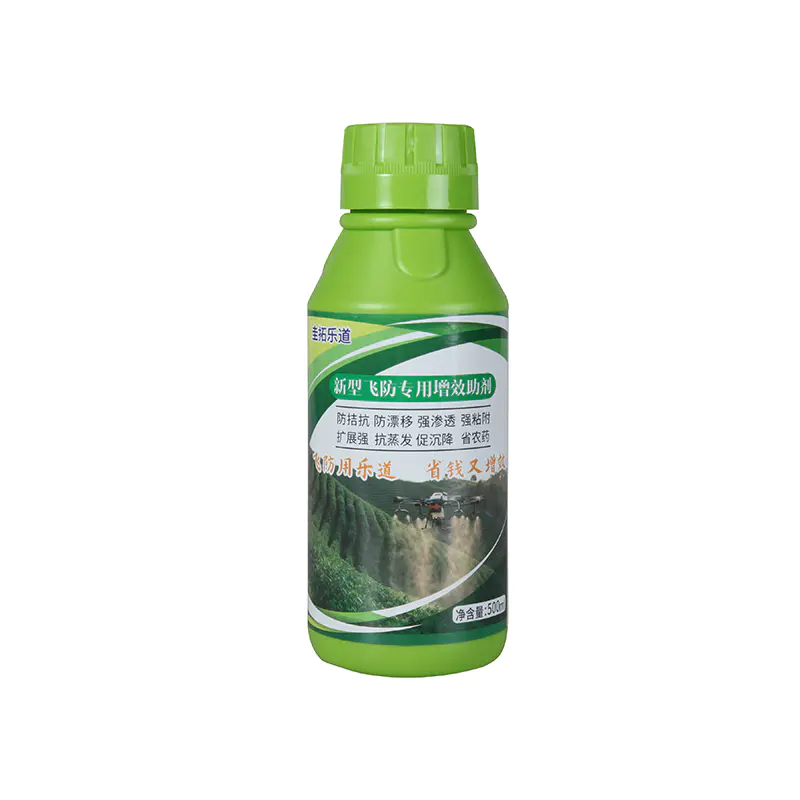
Our dedicated aerial-spraying enhancing adjuvants are formulated to work at these low carrier volumes, and we recommend following the label concentration rather than a fixed per-hectare figure. In practice, growers often increase the percentage to 0.15–0.2% when using drone applications, because the high rotor downwash requires a faster droplet-stabilization time. Jar tests are highly recommended before the first drone application of the season.
Role of Adjuvants in Reducing Pesticide Costs Per Acre
Adjuvants are often the cheapest component of a spray tank, but their influence on total program cost is enormous. A 15–20% improvement in herbicide efficacy can allow a grower to use a lower herbicide rate or avoid a second pass. Our agricultural silicone synergist articles frequently emphasize this point: a USD 3-per-acre adjuvant that improves efficacy by 20% is more valuable than a USD 2-per-acre product that improves efficacy by only 5%.
From the perspective of a manufacturer, we see the same economic logic in our customers' reorder patterns. Growers do not continue buying a silicone adjuvant because it spreads water; they continue buying it because their weed control bill drops. If you are tracking your own field results, compare weed counts or disease incidence between treated and untreated strips across a whole season, rather than making decisions from a single spray event.
Organosilicon Adjuvants vs. Traditional Non-Ionic Surfactants
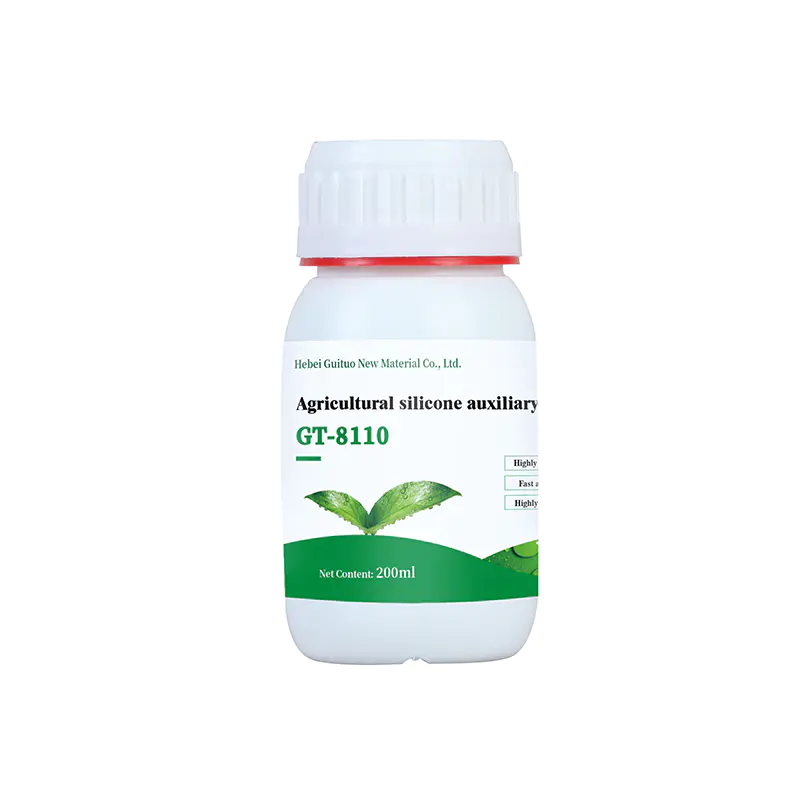
Our own product line includes both tristiloxane-based agricultural silicone wetting agents and traditional non-ionic surfactants. The rate difference stems from their surface-tension performance: regular non-ionic surfactants reduce surface tension to about 30 mN/m, while trisiloxane super-spreaders can bring it down to 20–21 mN/m. This allows a tenfold lower use rate for the silicone product.
For growers who prioritize cost predictability and are spraying crops with easy-to-wet leaves, a conventional NIS at 0.25% v/v is a solid choice. For difficult-to-wet leaves, waxy canopies, or low-volume applications, the silicone product's higher cost per liter is compensated by the lower use rate, and the per-acre cost may actually be lower than NIS. The table below compares typical use rates and costs for an illustrative formulation.
| Adjuvant family | Typical rate | Approx. cost per liter | Approx. cost per acre | Best fit |
|---|---|---|---|---|
| Crop oil concentrate | 1–2 qt/A | USD 2.50 | USD 1.88–3.75 | Post-emergence grass herbicides with coarse spray |
| Non-ionic surfactant | 0.25–0.5% v/v | USD 6.00 | USD 1.15–2.30 at 20 gal/A | Broadleaf contact herbicides and fungicides |
| Organosilicone super-spreader | 0.025–0.1% v/v | USD 12.00 | USD 0.48–1.92 at 20 gal/A | Low-volume, waxy leaves, rainfastness, drone |
How to Choose the Right Adjuvant Rate for Your Crops
Different crops impose different demands on the spray solution because of cuticle thickness, leaf orientation, pubescence, and stomatal density. The table below connects these leaf characteristics to a rate strategy.
| Leaf type | Crop examples | Recommended strategy |
|---|---|---|
| Waxy, vertical leaves | Wheat, barley, oats, onion | Higher end of silicone rate range; use a wetting agent that lowers contact angle below 90 degrees |
| Hairy or pubescent leaves | Tomato, eggplant, some bean species | Medium rate of silicone super-spreader plus a deposition aid to avoid droplet hold-up on trichomes |
| Smooth, broad leaves | Soybean, cotton, potato, sugar beet | Lower end of NIS or silicone rate; focus on drift management |
| Open-stomata, thin-cuticle leaves | Cucurbit crops, sunflower, leafy vegetables | Use minimum effective rate to reduce phytotoxicity risk from stomatal flooding |
FAQs: Adjuvant Rate Per Acre
What is the standard rate of adjuvant per acre for most herbicides?
For crop oil concentrate, 1–2 qt per acre is typical. For non-ionic surfactant, use 0.25–0.5% v/v, which equals 32–64 fl oz per 100 gallons. For organosilicone super-spreaders, 0.025–0.1% v/v (about 3.2–12.8 fl oz per 100 gallons) is a reasonable reference.
How much agricultural silicone surfactant per acre should I use?
Follow the percentage on the label. A typical product like an agricultural silicone wetting agent is used at 0.05% v/v. At a 20 gal/A carrier volume, that equals 1.28 fl oz per acre. If carrier volume is 10 gal/A, the per-acre volume is 0.64 fl oz.
Can I use more adjuvant than the label says for better results?
No. Exceeding the maximum label rate can cause spray solution runoff, stomatal flooding, phytotoxicity, and even reduced efficacy because the surfactant film reaches a thickness where the droplet slides off the leaf. Always remain within the label range.
Does water hardness affect how much adjuvant I need?
Yes, but not by increasing surfactant rate. When hardness exceeds 350 ppm, add ammonium sulfate at 8.5–17 lb per 100 gallons instead of increasing surfactant. This conditions the water and prevents antagonism with weak-acid herbicides.
How do I convert 0.05% v/v to fluid ounces per acre?
Multiply 128 by 0.0005? No, because percent v/v is already a ratio. The formula is: rate % × 128 = fluid ounces per 100 gallons. For 0.05% v/v: 0.0005 × 128 = 0.064 gallons per 100 gallons, which equals 8.2 fl oz. At 15 gal/A, you need 1.23 fl oz per acre.
Is a higher adjuvant rate needed for fungicides than herbicides?
Not necessarily. Fungicide applications usually require better coverage, so growers may choose the high end of the silicone rate. However, systemic fungicides need less spreading than contact fungicides. Always match the rate to the pesticide's mode of action.
Measuring Effectiveness: What a Good Adjuvant Rate Should Deliver
When you have the rate correct, you should observe four measurable changes in the spray application:
- Contact angle below 90 degrees on the target leaf within 1–2 seconds of droplet impact
- Uniform droplet deposition without roll-off or runoff, even on waxy leaves
- Stable tank mix for at least 30 minutes without creaming or flocculation
- Visible reduction in spray drift through a lower proportion of fines in the droplet spectrum
If any of these conditions is not met, review the carrier volume and water quality before suspecting the adjuvant product. In our experience, most rate complaints trace back to either incorrect percentage conversion or hard-water antagonism rather than a defective formulation.
From Our Manufacturing Experience: Quality Factors That Affect Rate Consistency
Since we manufacture agricultural silicone synergists and wetting agents, we know that adjuvant quality varies widely between suppliers, and that quality directly affects the reliable rate. The active trisiloxane content should be stated on the certificate of analysis, not only in the marketing brochure. The cloud point is another critical indicator: an adjuvant with a cloudy appearance at ambient temperature may not mix uniformly, and adjusting per-acre rate cannot compensate for an unstable emulsion.
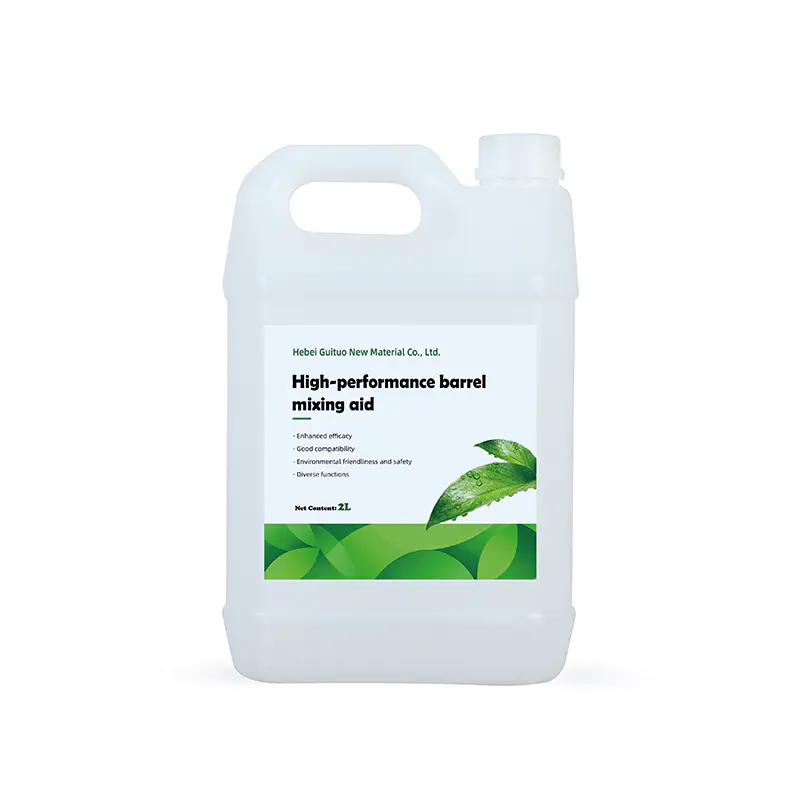
Look for a manufacturer that provides a full technical data sheet including surface tension at different concentrations, dynamic surface tension values, and compatibility results with common pesticides. These numbers tell you whether the product will actually perform at the label rate. At Hebei Guituo New Material Co., Ltd., we publish such data because growers and distributors need the facts to make rate decisions with confidence.
How to Develop Farm-Specific Adjuvant Rate Protocols
No two farms are identical in water quality, nozzle wear, sprayer speed, and target crop growth stage. A rate protocol that works one season may fail the next simply because the farm switched from well water to pond water or changed nozzles. Build a simple seasonal testing routine:
- Test water hardness and pH from each water source before the spray season.
- Calibrate your sprayer and measure actual output per acre at the intended speed and pressure.
- Run a jar test for each new pesticide-adjuvant combination.
- Spray a small strip at the lower rate, inspect the leaf after 15 minutes, and check whether the droplet spread exceeds the stoma area.
- Record all rate decisions and field conditions in a notebook to build your own local rate reference.
This may sound like extra work, but it is the same process that agronomists at research stations use to validate label rates. It also gives you the data to push a formulator or supplier for a rate adjustment when the crop response does not match expectations.
Work With the Supplier to Fine-Tune Adjuvant Rates
When you are using an unfamiliar adjuvant from a new supplier, ask for the technical service department's recommendation for your local crops and water conditions. A reputable manufacturer should be able to provide a rate matrix covering different carrier volumes, target crops, and water hardness levels. If they cannot, treat their label rate as a preliminary recommendation and verify it through jar tests and small-scale field comparisons.
The factory that formulates the product holds the knowledge about how its surfactant system interacts with emulsifiers and solvents in other pesticide products. Use that knowledge; that is one of the main advantages of buying directly from a manufacturer. Whether you are comparing our agricultural silicone spray adjuvant with another product or evaluating a different supplier, the rate should always be justified by data, not by habit.

Contact Information
Tel : +86-400-138-5268
Email : [email protected]
Phone : +86-15128434888 / +86-13511051998
Add : Xinqiao Environmental Protection Industrial Park, Wen'an County, Langfang City, Hebei Province, China
Contact Information
Copyright © Hebei Guituo New Material Co., Ltd. All Rights Reserved.
