

 English
  Français
  Português
 Home / News / Industry News / What Is an Adjuvant Used For? Functions, Types and Real Field Uses Explained
 What Is an Adjuvant Used For? Functions, Types and Real Field Uses Explained
2026-09-28
Two spray operators can run the same herbicide, on the same crop, at the same water volume, and still see very different results at the end of the season. The chemical is identical. The weather is close enough. What usually separates them is whether the droplets actually stayed on the leaf long enough to work.
On a waxy cabbage leaf, a droplet of plain water sits like a bead on a polished car hood. On a hot, dry afternoon, a fine droplet can lose much of its water to evaporation before the active ingredient moves through the cuticle. And in a tank filled with hard water, dissolved calcium and magnesium can tie up certain herbicide molecules before they ever reach the plant. None of these failures appear in the product's own efficacy data.
An adjuvant is what fixes them. Put simply: the active ingredient decides what the spray is capable of, while the adjuvant decides how much of that capability actually reaches the target. In crop protection, an adjuvant is a supplemental substance added to a spray mixture to improve the performance or the physical properties of the main active chemical. This article explains what adjuvants are used for, how the main types differ, which numbers matter when comparing them, and how to choose one without spending money on products your spray does not need.
What Is an Adjuvant, Exactly?
A working definition
An adjuvant is a helper ingredient. It is not itself toxic to the weed, fungus or insect; instead, it changes how the spray liquid behaves: how easily droplets wet the leaf, how far they spread, whether they penetrate the waxy layer, how long they stay liquid, and how well the deposit resists rain. If the active ingredient is the passenger, the adjuvant is the vehicle that carries it across the leaf surface and into the plant. Without the vehicle, a perfectly good passenger may never arrive.
Most adjuvants work at remarkably low doses. An organosilicone super spreader is often dosed at 25 to 100 millilitres per 100 litres of water, a fraction of one percent of the tank. That small share frequently decides whether a treatment delivers 60 percent control or above 90 percent, which is why experienced operators treat adjuvant selection as part of the program rather than an optional extra.
The same word in other industries
Adjuvant is not an agriculture-only term, and knowing the difference helps when you read research papers or supplier documents. In medicine, a vaccine adjuvant strengthens the body's immune response to an antigen; aluminium salts have played that role for decades. In paints and coatings, wetting and leveling additives, often built on the same silicone chemistry used in agriculture, help liquid films cover a substrate evenly. The underlying physics is related: all of these products manage surface tension and interfacial behavior. This article focuses on agricultural spray adjuvants, where the term appears most often in daily practice.
Crop protectionHelps pesticide sprays wet, spread, stick to and penetrate leaf surfaces, so more of each tank reaches the target.
VaccinesStrengthens the immune response to an antigen without acting as the antigen itself.
Paints and coatingsWetting and leveling additives that smooth film formation and improve substrate coverage.
Why Spray Liquids Need Help: Three Failure Modes
Clean water has a surface tension of about 72 mN/m at room temperature, which is high. On a leaf covered with a crystalline wax layer, such as cabbage, onion, pea or wheat at certain growth stages, the contact angle of a water droplet often exceeds 90 degrees. The droplet barely flattens, so it sits, rolls and collects at the leaf base or drops to the soil. University extension guides consistently list poor coverage on difficult-to-wet leaves among the top causes of disappointing spray results.
Bounce and roll offHigh surface tension keeps droplets round; they rest on wax crystals instead of making close contact with the cuticle.
Evaporate too earlySmall droplets in hot, dry air shrink before uptake is complete, leaving concentrated residue instead of absorbed product.
Wash off in rainWithout a deposit film or a completed uptake window, a shower shortly after application removes much of the dose.
Water quality adds a second layer of trouble. Spray water above roughly 150 ppm of calcium carbonate is considered hard in most spray guides, and the dissolved calcium and magnesium cations react with weak-acid herbicides such as glyphosate, 2,4-D amine and several group 2 products, forming salts that plants absorb poorly. This is the reason water conditioners such as ammonium sulfate appear in so many tank-mix recommendations.
Time is the third enemy. A droplet around 150 microns in diameter can lose much of its water within minutes at 30 degrees Celsius and low humidity, and aerial and drone applications often use droplets smaller than that. Every extra minute the spray stays liquid is another minute the active ingredient has to cross into the plant, which is why humectants and deposition aids exist alongside spreaders.
Two Places Adjuvants Live: In the Bottle and In the Tank
Formulation adjuvants are built into the product by the manufacturer. A suspension concentrate that stays stable for two years on a warehouse shelf, wets out instantly when poured into water, and does not foam excessively in the induction hopper contains several such additives, selected and dosed during product development.
Spray adjuvants, also called tank-mix adjuvants, are added by the operator just before application. They exist because the formulator cannot control what happens after the bottle leaves the factory: the hardness of your water, the temperature on the day, the crop stage, the other products in the tank, or whether the spray goes through a boom sprayer or a drone. A tank-mix adjuvant lets the spray program adapt to those local variables instead of hoping they cooperate.
| Aspect | Formulation adjuvant | Tank-mix adjuvant |
|---|---|---|
| Who adds it | The product manufacturer, during production | The spray operator, at mixing time |
| Typical share | Built into the label rate | Usually 0.025 to 2 percent of tank volume |
| Main purpose | Product stability, handling and baseline performance | Adapting the spray to local water, weather and equipment |
| Example | A wetting agent inside a wettable powder | A super spreader added to a fungicide spray |
Activator Adjuvants: The Types That Raise Performance
Activator adjuvants directly increase the biological activity of the spray. This is the group most people mean when they say adjuvant, and it covers several distinct chemistries.
Surfactants: the largest family
Surfactants reduce surface tension so the liquid wets the leaf instead of beading up. They are classified by the electrical charge on their water-loving end: nonionic, anionic, cationic and amphoteric. Nonionic surfactants carry no charge, which makes them compatible with the widest range of pesticide products, and they remain the default recommendation on many labels, typically dosed at 0.05 to 0.25 percent of tank volume.
Organosilicone super spreaders
Organosilicone surfactants, built on trisiloxane ethoxylate chemistry, push surface tension down to roughly 22 mN/m, far below what conventional surfactants reach. At that level, droplets do not just spread; they can move through stomatal openings on some species and reach leaf areas that conventional sprays never touch. Effective doses are low, commonly 25 to 100 millilitres per 100 litres, which keeps the cost per hectare modest even though the product costs more per litre than a simple nonionic.
Wetting agents and spreaders
These overlap with surfactants in function. Their job is to maximize contact between liquid and leaf, which matters most for contact-acting products such as many fungicides and miticides, where every uncoated square millimeter of leaf is a refuge for the pest.
Penetrators and humectants
Penetrators help the active ingredient move into the plant through the cuticle. Humectants, with glycerol-type compounds among the most common, slow the drying of the droplet and widen the uptake window in hot weather. Both are quiet contributors: they rarely produce dramatic visual effects, but they often explain why uptake-limited products perform better once they are included.
Oil-based activators
Crop oil concentrates and methylated seed oils are added at roughly 0.5 to 2 percent of tank volume. They improve uptake on waxy or tough leaf surfaces and are a frequent recommendation for grass herbicides and difficult perennial weeds. They are heavier-handed than silicone spreaders and are chosen when the label specifically calls for an oil.
| Type | Main function | Typical rate | Fits best when |
|---|---|---|---|
| Nonionic surfactant | Lowers surface tension for general wetting | 0.05 to 0.25 percent v/v | The label simply calls for a surfactant |
| Organosilicone super spreader | Extreme spreading and possible stomatal entry | 25 to 100 mL per 100 L | Contact products on waxy, hard-to-wet leaves |
| Crop oil concentrate | Boosts uptake through the cuticle | 0.5 to 2 percent v/v | Grass herbicides and perennial weed programs |
| Humectant | Slows droplet drying | Per supplier guidance | Hot, low-humidity spraying windows |
| Penetrant | Aids movement into plant tissue | Per supplier guidance | Systemic products with slow leaf entry |
Utility Adjuvants: Solving the Problems Around the Spray Job
Utility, or special-purpose, adjuvants do not make the active ingredient more potent. They remove the obstacles that stop a spray job from going smoothly, and they earn their place by preventing waste rather than by boosting kill rates.
- Defoamers: suppress the foam created when surfactant-heavy mixes are agitated or recirculated; silicone emulsion antifoams work at a fraction of a percent.
- Drift reduction and deposition aids: increase the share of droplets that land in the target area, which matters near sensitive neighboring crops.
- Compatibility agents: allow products that would otherwise split, gel or settle to coexist in one tank.
- Buffers and acidifiers: move alkaline spray water toward the mildly acidic range where many active ingredients remain stable; some compounds hydrolyze quickly at high pH.
- Water conditioners: bind hardness ions so they cannot react with weak-acid herbicides; ammonium sulfate is the classic example.
- Dyes and tracers: show where the spray has landed, which is useful for checking coverage on dense canopies.
One practical note: foaming deserves respect. A mix containing a super spreader plus a wettable powder can foam heavily during filling, and an induction system that recirculates liquid makes it worse. A silicone-based defoamer added before the tank is full usually solves the problem within seconds, which is far easier than waiting for a half-formed tank to settle.
Silicone vs Conventional Surfactants: The Numbers That Decide It
The most quoted figure in adjuvant selection is the surface tension the product can reach in the tank. Water starts at about 72 mN/m. A good conventional nonionic surfactant gets down to roughly 30 to 35 mN/m. An organosilicone super spreader reaches about 22 mN/m, which is below the level at which a liquid can begin moving through stomatal openings on some plant species.
Surface tension reached in the spray tank (mN/m)
Lower values mean flatter droplets and closer contact with the leaf surface.
How silicone adjuvant dose changes surface tension in water
Horizontal axis: silicone adjuvant dose as percent of tank volume. Vertical axis: surface tension in mN/m. Typical values for water at 20 to 25 degrees Celsius. Most of the drop happens at very small doses, which is why overdosing adds risk without adding performance.
Spreading tells the same story. On waxed glass or a waxy leaf, a droplet containing an effective dose of organosilicone surfactant can spread to several times the area of a conventional surfactant droplet, often reaching a contact angle close to zero. In practical terms, the same tank volume covers a visibly larger leaf area, which is why growers running low water volumes notice the difference first.
| Property | Conventional nonionic | Organosilicone super spreader |
|---|---|---|
| Lowest surface tension | About 30 to 35 mN/m | About 22 mN/m |
| Spreading on waxy leaves | Moderate | Several times the droplet footprint |
| Typical dose | 0.05 to 0.25 percent v/v | 0.025 to 0.1 percent v/v |
| Rainfastness | Generally good | Check the label; some mixes wash off sooner |
| Phytotoxicity risk | Low when used as directed | Higher above label dose or in heat; test sensitive crops |
| Cost per hectare | Moderate | Often similar or lower thanks to the tiny dose |
The trade-offs are real. Because super spreaders move liquid so efficiently, some mixes lose part of their rainfast margin: the deposit is thinner and a shower can strip it sooner, so check whether the label extends the rainfast interval when a silicone adjuvant is added. Overdosing is the second trap. Above the recommended rate, organosilicones can flood stomata and irritate tender tissue, particularly on sensitive crops during hot weather. The correct response is not to avoid silicone chemistry but to respect its dose window.
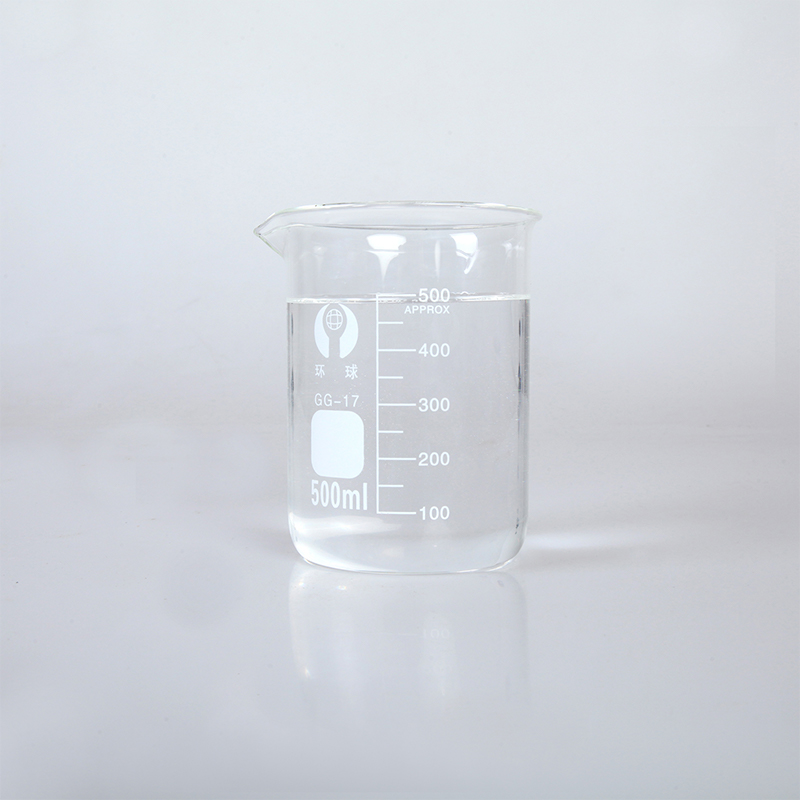 Organosilicone Surfactant for Agricultural Spray MixesA silicone-based adjuvant that lowers surface tension to improve wetting, spreading and penetration of spray solutions. Relevant here because the surrounding text stresses respecting its dose window and rainfast interval on sensitive crops.View Product →
Where Adjuvants Earn Their Keep: Field Applications
The clearest way to answer what an adjuvant is used for is to walk through the situations where it changes the outcome, season after season.
Herbicide programs
Grass weeds carry narrow, vertical, heavily waxed leaves that shed spray, and many systemic herbicides depend on efficient uptake through the cuticle. Add hard water, which deactivates weak-acid actives, and you have three problems in one tank. A super spreader plus a water conditioner addresses all three at once, and extension trials repeatedly show control gains on difficult species when the right adjuvant is added to an otherwise identical spray.
Fungicide and miticide coverage
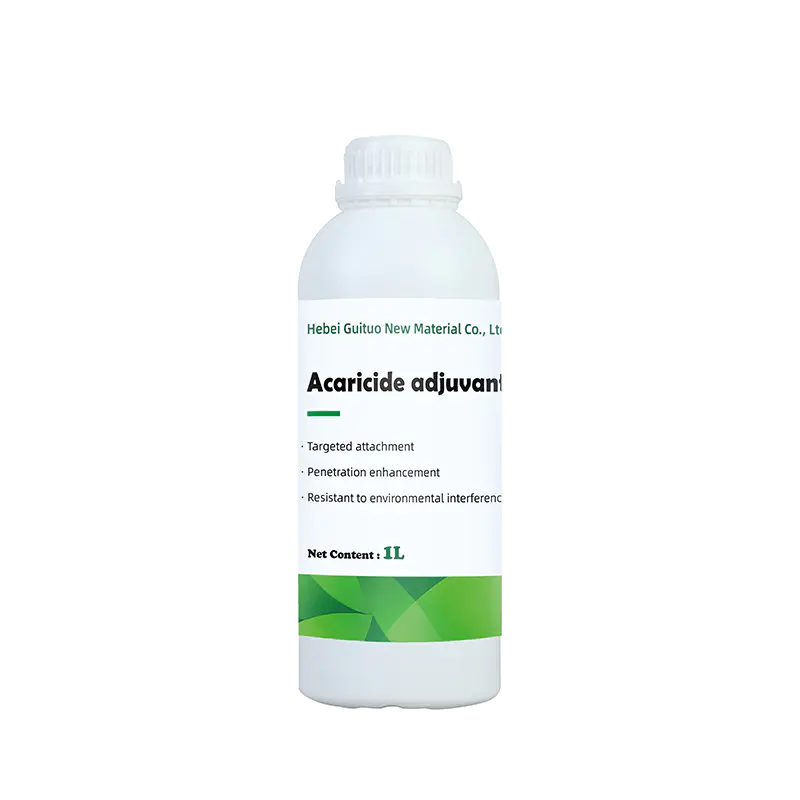
A contact fungicide protects only the surface it actually covers, and a canopy is a three-dimensional target: leaf undersides, stems and fruit clusters. Spreading adjuvants push droplets into those recesses. Miticide programs depend on reaching the underside of the leaf where mites feed and hide, which is why mite control is one of the most common situations where growers see a clear response after adding a dedicated adjuvant.
Insecticide work
For chewing insects, better surface contact means more ingestible deposit. For sucking pests, penetration aids help systemic insecticides reach the plant tissue where the pest feeds. Improved coverage also shortens the time to knockdown, which reduces the window for virus transmission by vectors.
Foliar nutrition and growth regulators
Leaf-applied nutrients face the same cuticle barrier as pesticides, and wetting agents improve the contact that dissolved nutrients need. Growth regulators are active at grams per hectare, so every percentage point of uptake counts, and uniform distribution prevents the uneven growth effects that patchy coverage causes.
Aerial and drone spraying
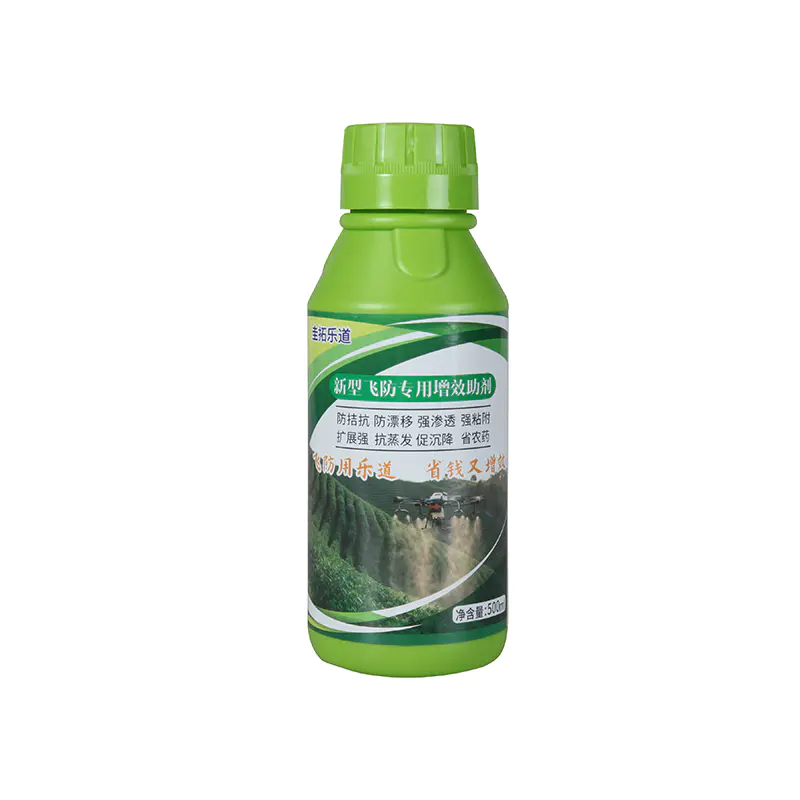
Ground sprayers typically run 100 to 200 litres per hectare; drones often run 10 to 30 litres with droplets around 100 to 250 microns. At those sizes, evaporation and drift dominate the outcome. Aerial adjuvants therefore combine spreading, deposition and anti-evaporation functions in one product, because a general-purpose surfactant designed for boom spraying does not carry the drift control an open-air application needs.
 High-Efficiency Adjuvant for Aerial and Drone SprayingA specialized adjuvant combining adhesion, anti-evaporation, absorption enhancement and drift reduction for low-volume drone applications. It fits this section on small droplets where evaporation and drift dominate spray outcomes.View Product →
| Situation | What to look for | Product family that fits |
|---|---|---|
| Waxy-leaf contact sprays | Very low surface tension, fast spreading | Organosilicone surfactants and super spreading agents |
| Everyday tank-mix support | Consistent wetting across many crops | High-performance drum-mix adjuvants |
| Drone and aerial programs | Spreading plus drift and evaporation control | Aerial spraying dedicated enhancing adjuvants |
| Mite control on leaf undersides | Coverage of hidden feeding sites | Mitekilling adjuvants |
| Foam during filling or recirculation | Fast knockdown at low dose | Silicone defoamers for agricultural spraying |
| Paints, inks and industrial coatings | Wetting and leveling of films | Leveling agents and wetting agents for coatings |
How to Choose the Right Adjuvant: A Seven-Step Checklist
Choosing well is mostly a sequence, not a guess. Run these steps in order and the decision usually makes itself.
- Start with the label. Many pesticide labels name the adjuvant type or even the chemistry required. If the label specifies a nonionic surfactant or an oil concentrate, treat that as the baseline; deviating from it shifts responsibility onto you.
- Test your water. A hardness strip test or a lab report settles the question. Above roughly 150 ppm calcium carbonate, plan a conditioner into the mix, and note the pH while you are at it.
- Read the leaf surface. Waxy crops such as brassicas and onions reward a silicone super spreader. Hairy leaves hold droplets but reduce real contact, so spreading still helps. Young, tender tissue calls for conservative rates.
- Respect the weather window. In heat and low humidity, humectants and penetrants gain value because drying speed becomes the limiting factor. If rain is possible within the label interval, check the rainfast notes before adding a thinner-deposit spreader.
- Match the equipment. Drone and low-volume applications need aerial-specific adjuvants with drift control. High-shear or recirculating systems need a defoamer planned in advance, not improvised after the foam appears.
- Jar test every new combination. Mix the products in a clear jar at spray proportions and spray temperature, then wait 15 to 30 minutes. Look for separation, curds, sediment or heavy foam before the field finds the problem for you.
- Log the result and adjust within bounds. Record the dose, water temperature, hardness and outcome. Adjust between the labeled minimum and maximum based on what the records show, one variable at a time.
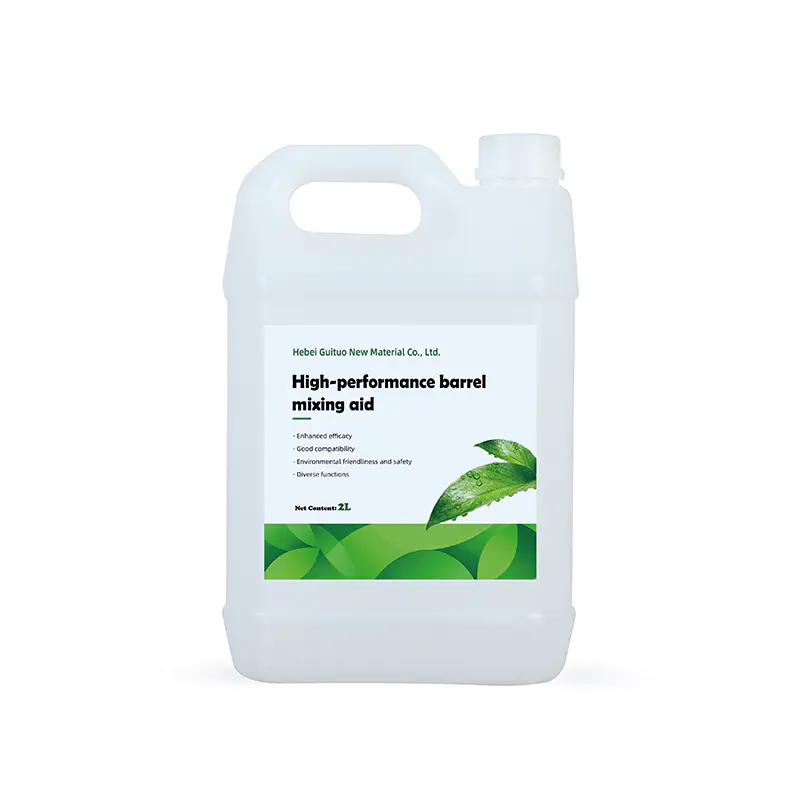
Mixing order matters as much as selection. Half-fill the tank with water, start agitation, add dry formulations first, then suspensions and solutions, then oil-based products, and put the adjuvant in near the end before topping up. This order prevents the adjuvant from being trapped in a concentrated pocket and gives every component a fair chance to disperse.
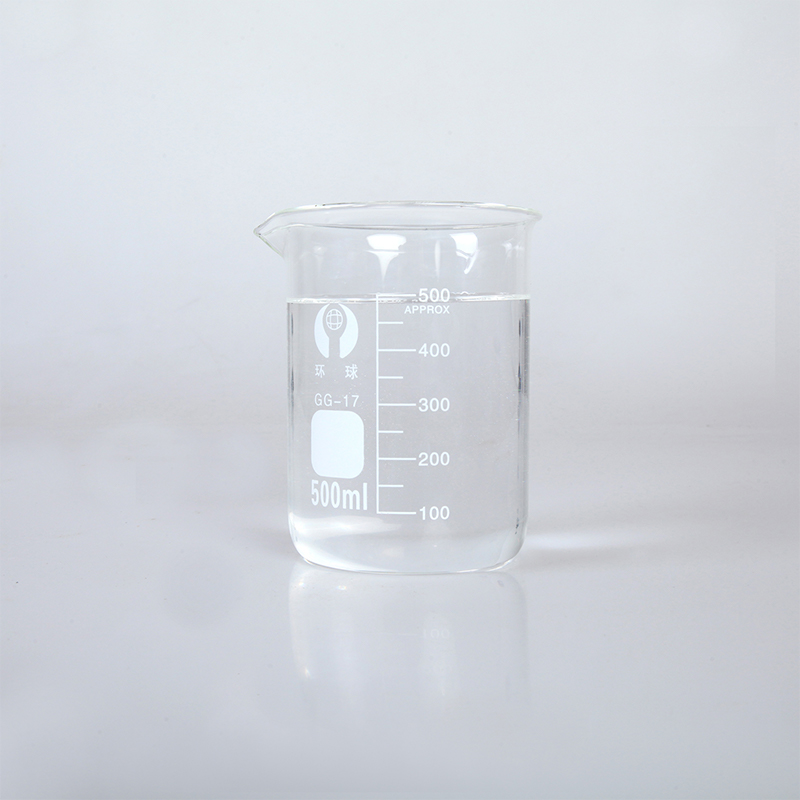 High-Performance Drum-Mix Spray Tank AdjuvantA tank-mix adjuvant added near the end of loading to boost pesticide adhesion, penetration and deposition while resisting drift and evaporation. It pairs well with the mixing-order guidance for dispersing each component evenly.View Product →
Five Mistakes That Waste Adjuvant Money
Most adjuvant budget is wasted in the same handful of ways, and every one of them is avoidable.
- Substituting dish soap. Household detergents use uncontrolled anionic chemistry, foam heavily, carry no rainfast or compatibility data and can injure leaves. The small saving never survives contact with a real field.
- Stacking surfactants. Two products that each contain a surfactant, plus a tank adjuvant, can add up to an overdose. Count what is already in the formulation before deciding what the tank needs.
- Ignoring the water. Water is the largest ingredient in the tank and often the cheapest to fix. Conditioners and buffers cost little and protect expensive actives.
- Doubling the dose for safety. With silicone super spreaders, more does not mean better. Above the labeled window, stomatal flooding and crop injury become real risks while performance stops improving.
- Using one adjuvant for every job. A spreader does not fix alkaline hydrolysis; a defoamer does not improve coverage. Each utility adjuvant solves a specific problem, and using the wrong one simply adds cost.
Before You Commit: What to Verify With an Adjuvant Supplier
One good sample proves little. What you actually buy is batch-to-batch consistency across a whole season, and small formulation drift, in active content, water content or cloud point, shows up in the field as variability you cannot explain. So the questions to ask a supplier are questions about evidence, not adjectives.
- Ask for a certificate of analysis per batch, not just a typical specification sheet, and check whether the values stay inside a narrow band.
- Ask for laboratory data: the surface tension curve at different doses, spread diameter on a standard surface, and cloud point. A manufacturer with its own test lab can produce these quickly; one without them will hesitate.
- Take a sample, then run a small plot. A few rows beside an untreated strip will tell you more than any brochure, and it costs one tank mix.
- Confirm packaging and storage terms: common options run from 20-litre drums to 200-litre barrels and 1000-litre IBC totes, with cool, sealed storage and a shelf life commonly stated around 24 months. Emulsion products deserve a note about frost protection.
- Check the support behind the product: technical documentation, safety data sheets and labels in the destination language, and the ability to produce under OEM or ODM arrangements if you need custom specifications or private-label supply.
This is also where the manufacturer behind the product matters. Hebei Guituo New Material Co., Ltd. is an integrated developer, producer and seller of high-end silicone materials, with its own test laboratory, inspection equipment and a quality control process that runs from raw material to finished delivery, and its Ningbo Guituo Trading Co., Ltd. arm handles international trade. Its agricultural silicone adjuvant line is designated for procurement by leading domestic agrochemical enterprises, is exported to Europe and Southeast Asia with repeat orders, and the company accepts OEM and ODM orders, including development from customer drawings or samples. For a buyer, that combination of in-house testing, production control and export experience is what turns a datasheet into a dependable supply.
Frequently Asked Questions
Is an adjuvant the same as a surfactant?
No. A surfactant is one type of adjuvant, the type that reduces surface tension. Adjuvant is the umbrella term that also covers defoamers, drift reducers, water conditioners, buffers, humectants and more. When a label says add an adjuvant, it usually names the type it expects.
Can dish soap replace a spray adjuvant?
It is a false economy. Household detergents have uncontrolled composition, foam excessively, lack any rainfast or crop-safety data and can phytotoxicity-test badly on tender foliage. A purpose-built adjuvant costs little per hectare and comes with a dose, a datasheet and a known behavior in the tank.
How much organosilicone adjuvant goes into 100 litres of water?
Typical rates fall between 25 and 100 millilitres per 100 litres, but the product label governs. Because these surfactants act at very low doses, small measuring errors are proportionally large, so measure with a graduated container rather than estimating.
Do adjuvants still work in hard water?
Organosilicone surfactants tolerate hardness better than many conventional nonionics, but hardness is a separate problem: calcium and magnesium react with weak-acid herbicides regardless of the surfactant. A water conditioner solves that reaction, and the two products are commonly used together.
The product already contains adjuvants. Do I need to add more?
Formulation adjuvants cover stability and baseline wetting inside the bottle. They cannot anticipate your water hardness, weather or equipment. If the label calls for a tank adjuvant under specific conditions, add it under those conditions; if not, the built-in package is usually enough.
Are silicone adjuvants safe for every crop?
They are safe within the labeled dose window, but some crops are sensitive, and risk rises with overdosing, high temperatures and tender growth stages. Treat any new crop-and-chemical combination as a trial: a small area first, then scale once you have seen the leaves respond normally.
How should adjuvants be stored, and how long do they last?
Keep containers sealed, cool and out of direct sun, protected from frost, especially for emulsion products. Suppliers commonly state a shelf life around 24 months from production when stored correctly, and a clear liquid that stays clear is usually telling you the storage has been right.
Related Reading
If you want to go deeper on the mechanics behind this article, these two pieces expand the parts most readers ask about next.
The practical next step is short: request the technical data sheet, safety data sheet and a sample, run the jar test with your own water, and spray a small block beside an untreated strip. Keep the log of dose, water conditions and weather while you do it. Suppliers who can back that process with real lab data are the ones worth keeping, and suppliers who cannot will usually reveal it at exactly this stage.

Contact Information
Tel : +86-400-138-5268
Email : [email protected]
Phone : +86-15128434888 / +86-13511051998
Add : Xinqiao Environmental Protection Industrial Park, Wen'an County, Langfang City, Hebei Province, China
Contact Information
Copyright © Hebei Guituo New Material Co., Ltd. All Rights Reserved.
