

 English
  Français
  Português
 Home / News / Industry News / How should the compatibility issues between spray adjuvants and pesticides be resolved
 How should the compatibility issues between spray adjuvants and pesticides be resolved
2026-03-02
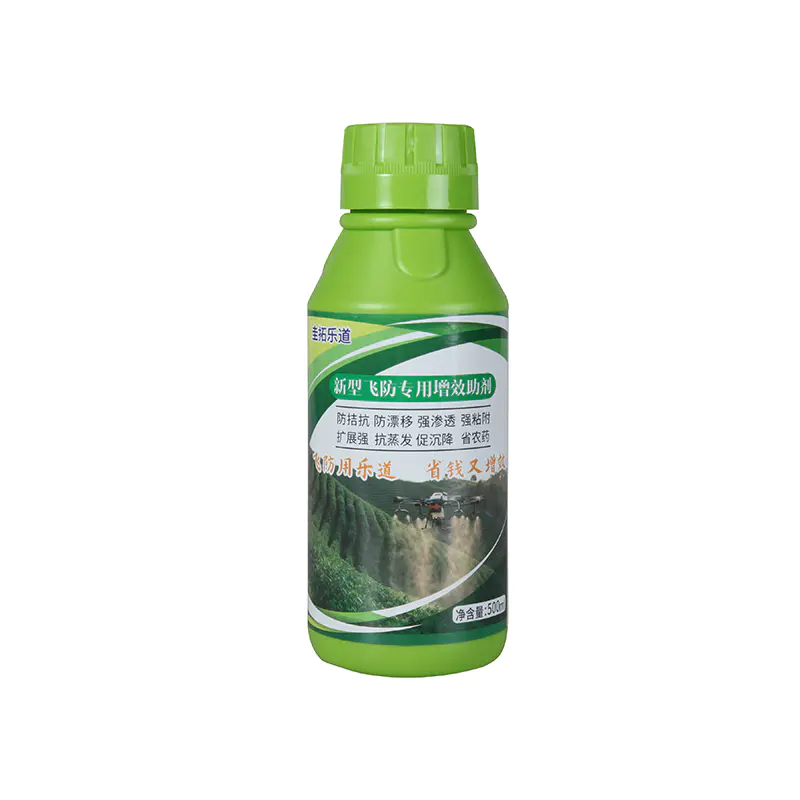
Agrochemical spray adjuvants are essential additives in agricultural applications, helping to enhance pesticide performance, improve spray coverage, and increase pesticide stability. However, when mixed with pesticides, compatibility issues can arise, potentially reducing efficacy, harming crops, or causing environmental damage. Understanding and addressing spray adjuvant compatibility problems is crucial for optimizing pesticide application and ensuring safety and effectiveness.
Types of Spray Adjuvant and Pesticide Compatibility Issues
1. Physical Incompatibility
Physical incompatibility occurs when the spray adjuvant and pesticide form visible precipitates, cloudiness, stratification, or clumping after mixing. This can lead to uneven distribution of active ingredients, reducing pesticide efficacy. Common causes of physical incompatibility include differences in solubility between the adjuvant and pesticide or the aggregation of particles during mixing.
2. Chemical Incompatibility
Chemical incompatibility refers to chemical reactions between the adjuvant and pesticide that may degrade or deactivate the active components of the pesticide. For instance, some adjuvants may react with specific pesticide ingredients, leading to the formation of ineffective or harmful substances. This can result in reduced efficacy or potential phytotoxicity (crop damage).
3. Stability Issues
The stability of the pesticide-adjuvant mixture can be affected by environmental conditions such as temperature and humidity. High temperatures or prolonged storage can cause degradation of the pesticide when mixed with certain adjuvants. In some cases, adjuvants themselves may degrade under specific conditions, compromising both pesticide performance and environmental safety.
Methods to Address Spray Adjuvant and Pesticide Compatibility Issues
1. Choose the Right Spray Adjuvant
When selecting a spray adjuvant, it’s essential to consider both the adjuvant's composition and its compatibility with the pesticide being used. Some adjuvants are formulated for specific pesticide types and will enhance efficacy without causing adverse reactions. For example, non-ionic surfactants are widely compatible with many pesticide formulations, while cationic surfactants might cause compatibility issues with certain pesticides.
2. Conduct Compatibility Testing
To ensure compatibility, it's advisable to perform small-scale mixture tests before full-scale application. Compatibility testing allows users to observe whether the pesticide-adjuvant mixture forms precipitates, separates, or displays any unusual reactions. These tests help determine whether the pesticide’s active ingredients remain intact and if the mixture will be effective during application.
3. Control Application Conditions
Environmental conditions such as temperature, humidity, and wind speed can significantly impact the compatibility of spray adjuvants and pesticides. High temperatures or high humidity can increase the likelihood of adverse chemical reactions. For example, it is best to avoid spraying in extremely hot or windy weather. Instead, aim to apply the pesticide during cooler parts of the day, such as early morning or late evening, when humidity levels are higher.
4. Use Compatibility-Enhanced Formulations
Many commercial spray adjuvants are formulated with special additives that help increase compatibility with a broader range of pesticides. These formulations are designed to minimize adverse physical and chemical reactions between the pesticide and the adjuvant. Choosing such formulations can significantly reduce the risk of compatibility issues during pesticide application.
5. Incorporate Formulation Enhancers
In some cases, the addition of formulation enhancers, such as stabilizers or slow-release agents, can improve the compatibility between adjuvants and pesticides. These enhancers can help delay or reduce chemical reactions and improve the solubility of pesticides in the mixture, ensuring that the spray remains effective throughout the application process.
6. Consider Environmental Interaction
It is essential to consider the interaction between the spray adjuvant and the environmental factors in the region of application. Certain adjuvants may respond differently to varying water qualities, temperatures, and humidity. By selecting adjuvants that are well-suited to the local environmental conditions, farmers can enhance compatibility, reduce pesticide degradation, and minimize environmental impact.
Consequences of Spray Adjuvant and Pesticide Compatibility Issues
1. Reduced Efficacy
The most immediate consequence of compatibility issues is a reduction in pesticide efficacy. Whether through physical incompatibility leading to separation or chemical incompatibility resulting in degradation, compromised mixtures will not deliver optimal pest control. This could lead to ineffective pest management and the potential for pest resistance.
2. Phytotoxicity (Crop Damage)
When incompatibility causes uneven distribution or chemical degradation, it can lead to phytotoxicity. This means that the pesticide may cause damage to crops, such as leaf burn, stunted growth, or even plant death, especially when mixed with the wrong adjuvant. Ensuring compatibility can reduce the risk of crop injury.
3. Environmental Contamination
Spray adjuvants and pesticides that are not compatible may release harmful substances into the environment. This can lead to contamination of water sources, soil degradation, and harm to non-target organisms, including beneficial insects, birds, and aquatic life. Proper compatibility checks help mitigate the environmental risks of pesticide use.

Contact Information
Tel : +86-400-138-5268
Email : [email protected]
Phone : +86-15128434888 / +86-13511051998
Add : Xinqiao Environmental Protection Industrial Park, Wen'an County, Langfang City, Hebei Province, China
Contact Information
Copyright © Hebei Guituo New Material Co., Ltd. All Rights Reserved.
