

 English
  Français
  Português
 Home / News / Industry News / Why Is Agricultural Organosilicone Surfactant the Secret to Better Pesticide Performance
 Why Is Agricultural Organosilicone Surfactant the Secret to Better Pesticide Performance
2026-02-25
The Science of Super-Spreading: Deep Understanding of Agricultural Organosilicone Surfactant
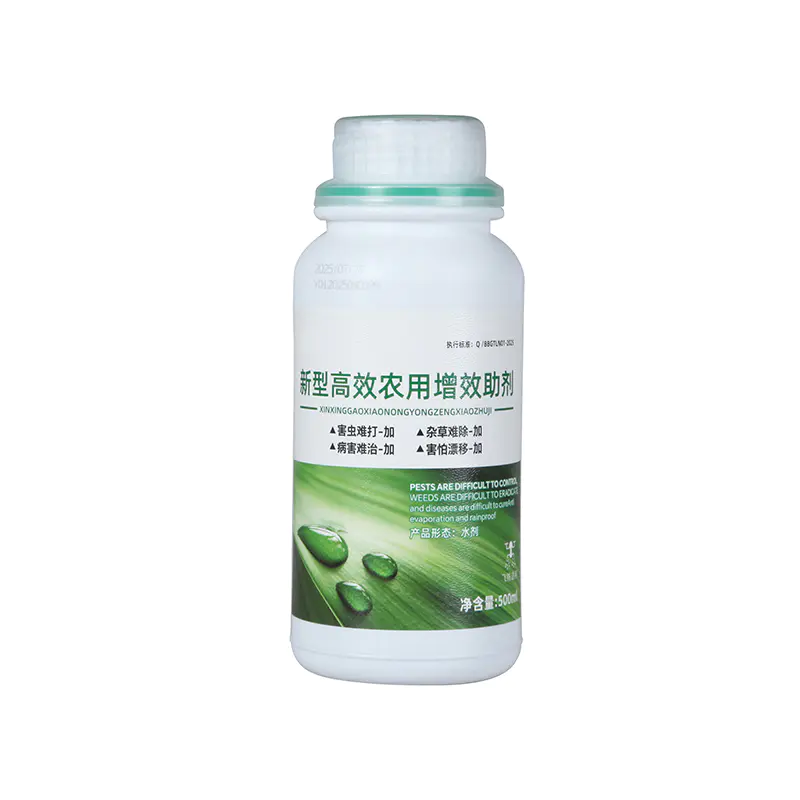
In the arsenal of modern precision agriculture, Agricultural Organosilicone Surfactant is hailed as the "King of Efficiency." It is more than just a simple additive; it is a bio-technical optimization tool capable of altering the physical and chemical properties of spray liquids at a fundamental level. To understand why it possesses such formidable power, we must begin with its unique molecular structure and the principles of surface activity.
Core Chemical Structure: Trisiloxane Ethoxylates
The core component of Agricultural Organosilicone Surfactant is typically polyether-modified trisiloxane. Unlike traditional carbon-chain surfactants (such as fatty alcohol ethoxylates), its backbone consists of Silicon-Oxygen-Silicon (Si-O-Si) bonds.
- Hydrophobic Group: A siloxane skeleton formed by methyl groups arranged around silicon atoms, which possesses extreme flexibility and extremely low surface tension.
- Hydrophilic Group: Polyether chain segments grafted through chemical reactions.
This "T-shaped" or "comb-like" molecular structure allows it to orient itself at air-liquid and liquid-solid interfaces at incredible speeds within an aqueous solution. This specific molecular arrangement is the chemical foundation for its "super-spreading" capability.
Physical Characteristics: Challenging the Limits of Surface Tension
Surface tension is the key metric for determining whether a liquid can wet a plant leaf. The surface tension of pure water is approximately 72 mN/m, while the critical surface tension of plant leaves (especially those with waxy layers) is usually between 25-30 mN/m.
- Traditional Adjuvants: Can only reduce the surface tension of water to 30-35 mN/m. The droplets remain spherical on the leaf and easily slide off.
- Agricultural Organosilicone Surfactant: Can astonishingly reduce surface tension to 20-22 mN/m.
When the surface tension of the chemical liquid is lower than the critical surface tension of the leaf, the liquid no longer maintains a spherical shape but spreads rapidly across the leaf surface like oil. This phenomenon is vital in agricultural applications because it means a smaller spray volume can cover a much larger leaf area.
Performance Parameter Comparison: Organosilicone vs. Traditional Adjuvants vs. Pure Water
To more intuitively understand the performance advantages of Agricultural Organosilicone Surfactant, we can observe its performance in key physical indicators through the following table:
| Performance Indicator | Pure Water | Traditional Non-ionic Surfactant (NIS) | Agricultural Organosilicone Surfactant |
| Equilibrium Surface Tension (0.1% w/w) | 72 mN/m | 30 - 35 mN/m | 20 - 22 mN/m |
| Spreading Ratio (Same volume on wax paper) | 1 (Base) | 2 - 5 times | 50 - 100 times |
| Wetting Time (Immersion test) | > 300 s | 20 - 60 s | < 10 s |
| Stomatal Infiltration Ability | None | Extremely Weak | Extremely Strong |
| Rainfastness | Poor | Moderate | Excellent |
Stomatal Infiltration: The "Shortcut" into the Plant Body
This is the most revolutionary feature of Agricultural Organosilicone Surfactant. Most plant leaf surfaces are covered by a thick waxy cuticle, which serves as a barrier to prevent water loss and also hinders the absorption of pesticides. However, the leaf surface is dotted with thousands of microscopic pores called stomata used for gas exchange. Because these pores are tiny and hydrophobic, ordinary spray liquids cannot overcome capillary pressure to enter them due to high surface tension.
Agricultural Organosilicone Surfactant reduces tension to such an extreme that the liquid can overcome physical resistance and carry active ingredients directly into the plant tissue via "Stomatal Infiltration."
- Instant Absorption: The liquid can be absorbed through the stomata within minutes.
- Risk Mitigation: This rapid entry allows the drug to maintain high efficacy even if it rains immediately after application, greatly improving "rainfastness."
- Systemic Conduction: For systemic fungicides or herbicides, this penetration method significantly enhances biological utilization within the plant.
Core Value of Agricultural Organosilicone Surfactant in Practical Production
In the context of modern farming, the application of Agricultural Organosilicone Surfactant provides several operational advantages.
Significant Improving Pesticide Utilization
In traditional spraying processes, approximately 50% - 70% of the liquid is wasted due to rebounding, rolling off, or wind drift, leading to environmental pollution. After adding Agricultural Organosilicone Surfactant, droplets can instantly "grab" the leaf and spread out. This means farmers can use less water and more precise chemical dosages to achieve or even exceed previous control effects.
Solving the Problem of "Hard-to-Wet" Crops
Certain crops such as cabbage, green onions, garlic, bananas, and citrus have very thick waxy layers or dense hairs on their leaves, making it difficult for ordinary chemicals to stay on the surface. The super wettability of Agricultural Organosilicone Surfactant easily overcomes these "stubborn" crops, ensuring the liquid uniformly covers every blind spot.
Coping with Extreme Weather
Summer thunderstorms are frequent, and it often rains right after spraying, rendering the effort futile. Using a formula containing Agricultural Organosilicone Surfactant drastically reduces the probability of re-spraying because the liquid has already rapidly penetrated through stomata or adhered firmly, saving significant labor and agricultural costs.
Physical and Chemical Properties: In-depth Indicators Defining Quality
As a precision agrochemical preparation, the performance of Agricultural Organosilicone Surfactant is highly dependent on its physicochemical parameters.
Cloud Point and Stability
The cloud point is a key physical parameter for organosilicone adjuvants, referring to the temperature at which a non-ionic surfactant solution turns from transparent to cloudy during heating.
- Practical Significance: When the ambient temperature is higher than the cloud point, the solubility of the adjuvant decreases or even precipitates, resulting in weakened diffusion performance.
- Parameter Suggestion: High-quality Agricultural Organosilicone Surfactant should typically have a cloud point higher than 40°C to adapt to high-temperature summer spraying environments.
pH Sensitivity (Hydrolysis Risk)
This is the most "delicate" aspect of organosilicone adjuvants. The Silicon-Oxygen-Silicon (Si-O-Si) bonds are highly susceptible to hydrolysis under extreme acidic or alkaline conditions.
- Acidic Environment (pH < 5): The molecular chain breaks, losing super-spreading ability.
- Alkaline Environment (pH > 9): It decomposes rapidly, potentially losing effectiveness within hours.
- Optimal Range: To maintain the activity of Agricultural Organosilicone Surfactant, it is recommended to control the pH of the spray liquid between 6.0 - 8.0.
Practical Application: Mastering the Art of Tank Mixing
At the pesticide application site, the correct mixing sequence and dosage control determine whether Agricultural Organosilicone Surfactant acts as an "aid" or a "hindrance."
Mixing Sequence (A.P.P.L.E.S. Rule)
It is strictly forbidden to mix the adjuvant directly with the pesticide technical material. The wrong sequence can lead to colloidal precipitation or phytotoxicity.
- Step 1: Inject Clean Water: Fill the tank with 1/2 - 3/4 water and turn on the agitation system.
- Step 2: Add Pesticides: Follow the order of Wettable Powder, Water Dispersible Granules, Suspension Concentrate, and then Emulsifiable Concentrate.
- Step 3: Stir Thoroughly: Ensure the pesticide is completely dispersed or dissolved in water.
- Step 4: Add Organosilicone: Finally, add the Agricultural Organosilicone Surfactant.
- Step 5: Top off with Water: Spray as soon as possible after completing the mix.
Dosage Precision: Less is More
Due to its super-spreading nature, the required dosage of Agricultural Organosilicone Surfactant is extremely low.
- Standard Concentration: Usually 0.025% - 0.1% of the total spray volume.
- Risk Warning: If the dosage is too high, the surface tension will be too low, causing the liquid to over-accumulate on the leaf and roll off the edges (Run-off), which causes waste and may lead to leaf scorch under high temperatures.
Parameter Comparison: Spreading Diameter at Different Dosages
| Adjuvant Concentration (% v/v) | Spreading Diameter (mm) | Coverage Area Increase Rate | Remarks |
| 0% (Pure Water) | 3 - 5 | Base | Droplets are spherical and roll off easily |
| 0.025% | 15 - 20 | ≈ 400% | Penetration starts to take effect |
| 0.05% | 30 - 45 | ≈ 900% | Ideal Application Concentration |
| 0.1% | 50 + | ≈ 1500% | High risk of run-off loss |
Environmental Impact: Organosilicone from a Green Agriculture Perspective
In the context of sustainable development, the environmental footprint of Agricultural Organosilicone Surfactant attracts much attention.
- Biodegradability: While the siloxane backbone degrades slowly in soil, the polyether side chains have good biodegradability. Because it significantly reduces the total amount of pesticide used, it is considered an environmentally friendly adjuvant from a macro perspective.
- On Bees: Although Agricultural Organosilicone Surfactant has low toxicity, its extreme wettability may reduce the hydrophobic protection on a bee's surface. It is recommended to avoid spraying during the flowering period.
- On Aquatic Life: Direct drift of the liquid into fish ponds or rivers should be avoided.
Common Myths and Scientific Truths
- Myth 1: Organosilicone can replace all adjuvants. Truth: It is primarily responsible for spreading and penetration. If long-term adhesion is required, it sometimes needs to be used in conjunction with polymer stickers.
- Myth 2: All organosilicones are the same. Truth: There are various concentrations of organosilicone on the market. The content of the active ingredient (trisiloxane) in Agricultural Organosilicone Surfactant directly determines its performance.
FAQ:
Q1: Why does the sprayer pressure seem lower after adding organosilicone?
Answer: The pressure hasn't actually changed, but because Agricultural Organosilicone Surfactant alters the surface tension, the droplets produced by the nozzle become finer. This increases drift risk, so it is recommended to work when wind speeds are low.
Q2: What should be noted when using it during dry seasons?
Answer: During dry seasons, plant stomata are often closed to reduce transpiration. While the penetration advantage of Agricultural Organosilicone Surfactant might be slightly reduced, its spreading ability still ensures that the limited spray liquid covers a larger leaf area.
Q3: Can organosilicone be added to all pesticides?
Answer: Not necessarily. Strong acid/base pesticides will destroy the adjuvant structure. Medicines containing heavy metals like copper or sulfur may cause phytotoxicity due to extreme penetration. A small-scale trial spray is recommended first.
Q4: How do I tell if my organosilicone adjuvant has failed?
Answer: The simplest method is the "Glass Plate Test." Take clean water, add the adjuvant at a ratio of 1:10,000, and drop it onto a clean glass plate. If the droplet cannot instantly spread into a water film and instead remains a bead, the Agricultural Organosilicone Surfactant has failed.

Contact Information
Tel : +86-400-138-5268
Email : [email protected]
Phone : +86-15128434888 / +86-13511051998
Add : Xinqiao Environmental Protection Industrial Park, Wen'an County, Langfang City, Hebei Province, China
Contact Information
Copyright © Hebei Guituo New Material Co., Ltd. All Rights Reserved.
