

 English
  Français
  Português
 Home / News / Industry News / What Is Organosilicone Surfactant and Why Do Growers Use It as an Adjuvant
 What Is Organosilicone Surfactant and Why Do Growers Use It as an Adjuvant
2026-07-20
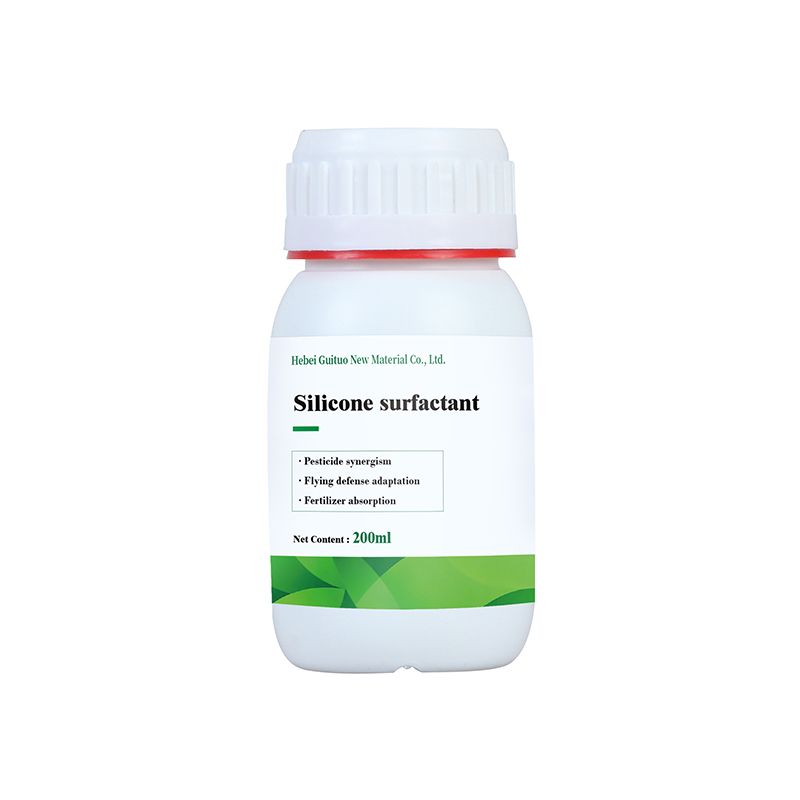
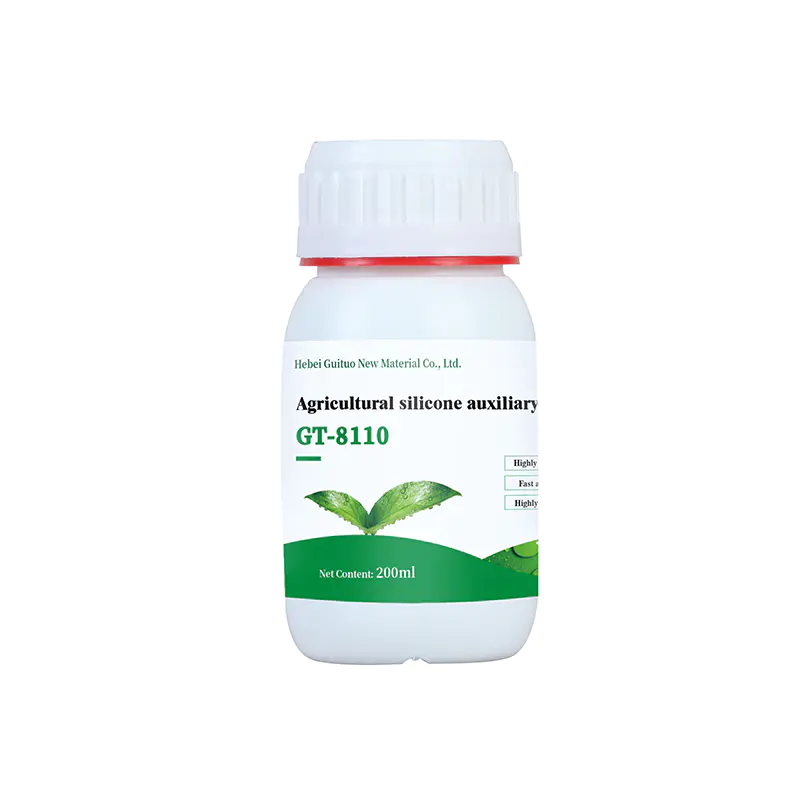
Organosilicone surfactant technology has moved from a specialty chemical curiosity into a core formulation tool across agricultural, coatings, personal care, and water treatment industries. As a manufacturer producing organosilicone surfactants at production scale, we regularly field detailed technical questions from formulators, distributors, and field agronomists who need to know exactly how this chemistry behaves once it leaves the drum. This section walks through the practical, plant-level knowledge that separates organosilicone surfactants from ordinary wetting agents, and lays out the parameters our quality team checks on every production batch before it is released.
Property
Ultra-Low Surface Tension
Aqueous solutions formulated with organosilicone surfactants routinely reach 20-22 mN/m, roughly 30-40% lower than conventional non-ionic chemistries.
Property
Stomatal Infiltration
The trisiloxane backbone allows spray solution to move through leaf stomata, a pathway unavailable to hydrocarbon-based surfactants.
Property
Rain-Fastness
Rapid uptake within 30-60 minutes of application reduces wash-off risk during unexpected rainfall events after spraying.
Property
Formulation Flexibility
Compatible with emulsifiable concentrates, suspension concentrates, water-dispersible granules, and most tank-mix partners at typical field pH.
Molecular Architecture Behind the Performance
Every batch of organosilicone surfactant we manufacture is built on a polydimethylsiloxane backbone modified with polyether side chains. The silicon-oxygen-silicon linkage gives the molecule an unusually flexible, low-cohesion structure, which is the underlying reason organosilicone surfactants can push surface tension down so much further than carbon-chain equivalents. The polyether branches control water solubility and HLB value, and by adjusting the ethylene oxide to propylene oxide ratio during synthesis, we can shift a grade toward faster spreading, higher foam stability, or improved compatibility with acidic tank mixes.
Chain length also plays a role that is often overlooked outside the lab. Shorter trisiloxane structures spread almost instantly but offer weaker film persistence, while longer-chain silicone polyethers trade a small amount of spreading speed for better retention on waxy or pubescent leaf surfaces. Because crop canopies vary so widely — smooth citrus leaves behave nothing like hairy soybean trifoliates — we produce several organosilicone surfactant grades rather than a single universal product, and we match the grade to the intended crop and application method during the ordering process.
Organosilicone Surfactants as Adjuvants for Agrochemicals
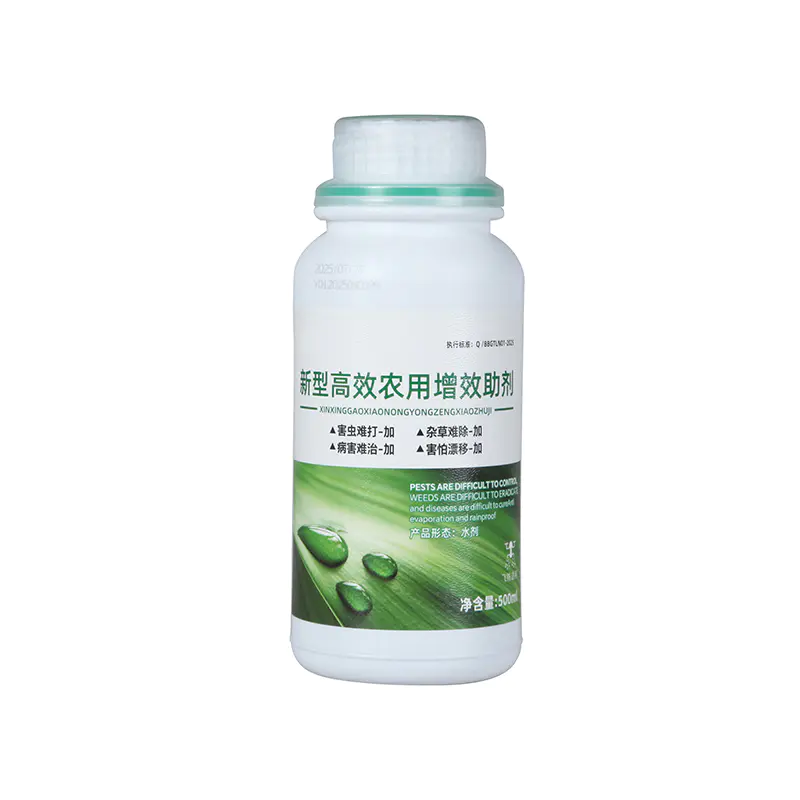
In tank-mix applications, organosilicone surfactants as adjuvants for agrochemicals serve a very specific function: they let the active ingredient reach more leaf surface area with less spray volume. When a systemic herbicide or foliar fertilizer is mixed with an organosilicone adjuvant, the spray droplet stops beading on the cuticle and instead flattens into a thin film covering a far larger fraction of the leaf. This directly increases the amount of active ingredient in contact with absorptive tissue, which is why growers are frequently able to reduce total spray volume per hectare without losing efficacy.
Tank-Mix Practices We Recommend to Distributors
- Add the organosilicone surfactant after the active ingredient and any dry formulations have fully dispersed, not before.
- Agitate gently — organosilicone surfactants can generate fine, persistent foam if mixed too aggressively.
- Check tank water pH; most of our standard grades perform reliably between pH 5 and pH 8.
- Apply within the label-specified window after mixing, since spreading efficiency is highest in fresh solution.
- Avoid combining with hard water above 300 ppm calcium carbonate unless a water conditioner is included in the mix.
Crop safety is a legitimate concern with any high-performance adjuvant, and it deserves a direct answer rather than a vague reassurance. Because organosilicone surfactants drive such fast uptake, phytotoxicity risk rises if application rates are not adjusted downward relative to conventional adjuvants. Our technical data sheets specify use rates in the 0.05%-0.1% v/v range for most foliar applications, compared with the 0.25%-0.5% v/v range typical of non-ionic surfactants, and we advise a small-plot trial before full-field adoption on any crop not already listed on the product label.
Difference Between Organosilicone Surfactant and Non-Ionic Surfactant
Customers frequently ask us to explain, in plain terms, what is organosilicone surfactant and how it differs from the non-ionic surfactants they may already be using. The table below summarizes the parameters our lab tracks when comparing the two chemistries side by side.
| Parameter | Organosilicone Surfactant | Non-Ionic Surfactant |
| Surface tension reduction | Down to 20-22 mN/m | Typically 28-35 mN/m |
| Spreading coefficient | Greater than 40 mN/m | 10-25 mN/m |
| Stomatal penetration | Yes, under favorable humidity | Not capable |
| Time to full leaf spreading | Under 30 minutes | Several hours |
| Rain-fastness after drying | High | Moderate to low |
| Typical use rate (v/v) | 0.05%-0.1% | 0.25%-0.5% |
| Foaming tendency | Moderate to high without defoamer | Low to moderate |
| Stability in strong alkaline mixes | Can hydrolyze above pH 9 | Generally stable |
| Typical cost per active unit | Higher | Lower |
How to Tell If a Surfactant Is Organosilicone
Because organosilicone surfactant and conventional surfactant drums can look identical on a warehouse shelf, we get regular requests on how to tell if surfactant is organosilicone before it goes into a formulation. Four checks are reliable enough for routine incoming-goods verification.
01
Surface Tension Test
Prepare a 0.1% aqueous solution and measure with a tensiometer. A reading below 25 mN/m points strongly to a silicone-based structure.
02
Leaf or Wax Card Spread Test
Place a droplet on a waxy leaf or a hydrophobic test card. Organosilicone surfactant spreads into a thin film within seconds; ordinary surfactants stay beaded.
03
Technical Data Sheet Review
Check for stated silicone or siloxane content, viscosity range, and flash point — organosilicone products typically report a distinct viscosity and flash point profile from hydrocarbon surfactants.
04
FTIR Confirmation
A characteristic Si-O-Si absorption band appears between 1000 and 1100 cm⁻¹, giving a definitive lab-level answer for quality control teams.
Aquatic Organosilicone Surfactant Considerations
Not every application involves foliage. Aquatic organosilicone surfactant grades are formulated for use around ponds, aquaculture systems, irrigation channels, and other water-adjacent environments where environmental compatibility carries as much weight as raw performance. Products intended for this segment are evaluated against a stricter set of criteria than terrestrial-use grades, and our aquatic-labeled organosilicone surfactant is tested against the following benchmarks before it is cleared for release.
| Test | Benchmark We Apply |
| 28-day biodegradation rate | 60% or higher |
| Fish acute toxicity (LC50, 96h) | Reported and disclosed on the safety data sheet |
| Bioaccumulation potential | Low, based on log Kow screening |
| Residual foam in surface water | Dissipates within a defined observation window |
| Compatibility with aquatic herbicide labels | Verified against listed adjuvant restrictions |
Buyers sourcing an aquatic organosilicone surfactant for use near irrigation canals, rice paddies, or aquaculture ponds should always request the full aquatic toxicity dataset rather than relying on a general-purpose safety data sheet, since terrestrial and aquatic thresholds are not interchangeable. We provide batch-specific ecotoxicology documentation on request for any lot shipped under an aquatic-use designation.
What Organosilicone Surfactant Is Used For
The question of what is organosilicone used for comes up often from customers evaluating the chemistry for the first time. Beyond agricultural spraying, organosilicone surfactants show up across a wide span of formulated products, each drawing on a slightly different combination of the same underlying properties.
Crop Protection
Herbicide, fungicide, and insecticide tank mixes benefit from improved canopy coverage and reduced spray volume requirements.
Coatings and Inks
Used as a leveling and defoaming agent to eliminate pinholes, craters, and orange-peel texture in cured films.
Personal Care
Contributes silky spreadability and a lightweight after-feel in lotions, sunscreens, and hair conditioning formulas.
Textile Finishing
Improves dye uptake uniformity and imparts a softer hand-feel during wet processing and finishing stages.
Hard Surface Cleaning
Lowers cleaning solution surface tension so it penetrates grease films and fine surface grooves more effectively.
Construction Chemicals
Acts as a wetting aid in cementitious admixtures and waterproofing membranes to improve substrate contact.
Selecting the Right Grade: Key Specification Parameters
Not all organosilicone surfactants are interchangeable, and choosing the wrong grade for a formulation is one of the most common sourcing mistakes we see. The parameters below are the ones our technical team reviews with a customer before recommending a specific product code.
| Parameter | Typical Range | Why It Matters |
| HLB value | 4-16 | Determines emulsification behavior and water solubility |
| Viscosity (25°C) | 20-60 mPa·s | Affects mixing, dosing accuracy, and dispersion speed |
| Active content | 70%-100% | Sets the actual dosing rate needed in the final formulation |
| Appropriate pH range | 5-9 | Governs compatibility with acidic or alkaline tank mixes |
| Freeze-thaw stability | 3+ cycles without separation | Relevant for cold-climate storage and transport |
| Flash point | Above 60°C for most grades | Affects storage classification and shipping requirements |
Application Guidance for Formulators
Even a technically excellent organosilicone surfactant will underperform if it is dosed or mixed incorrectly. A few practical notes from our applications team help avoid the most common issues we hear about from the field.
- Start dosage trials at the lower end of the recommended range, since organosilicone surfactants are active at far lower concentrations than most formulators expect coming from hydrocarbon chemistry.
- Pre-dilute concentrated organosilicone surfactant in a small volume of water before adding it to a large batch tank, which reduces localized foaming and improves dispersion uniformity.
- When formulating suspension concentrates, evaluate compatibility with the specific dispersant and thickener system already in use, since some cellulose-based thickeners interact with silicone polyethers.
- For humid-climate field use, slightly lower dosage rates are usually sufficient because higher ambient humidity keeps stomata open longer and extends the effective uptake window.
- Store drums between 5°C and 35°C and avoid prolonged exposure to direct sunlight, which can gradually degrade the polyether side chains over extended storage periods.
Frequently Raised Technical Questions
Can organosilicone surfactant be combined with copper-based fungicides?
Compatibility depends on the specific copper formulation and water hardness. A jar compatibility test before full-batch mixing is the safest way to confirm.
Does hard water reduce organosilicone surfactant performance?
Yes, calcium and magnesium ions can interfere with the polyether chains. Water above 300 ppm hardness typically benefits from a conditioning agent in the tank mix.
Is a defoamer needed alongside organosilicone surfactant?
In high-agitation mixing systems, a small dose of compatible defoamer is often useful, since silicone-based surfactants can generate persistent fine foam.
How long does an organosilicone surfactant remain stable in storage?
Most grades carry a shelf life of 24 months from production date when stored in sealed drums away from direct heat and sunlight.

Contact Information
Tel : +86-400-138-5268
Email : [email protected]
Phone : +86-15128434888 / +86-13511051998
Add : Xinqiao Environmental Protection Industrial Park, Wen'an County, Langfang City, Hebei Province, China
Contact Information
Copyright © Hebei Guituo New Material Co., Ltd. All Rights Reserved.
