

 English
 Français
 Português

 Home / News / Industry News / Agricultural Adjuvant Guide: Spreading, Sticking and Rainfastness Explained
Agricultural Adjuvant Guide: Spreading, Sticking and Rainfastness Explained
2026-11-17
An agricultural adjuvant is not a stand-alone pesticide. It is a formulated material added to the spray tank to change how the spray liquid behaves on the way to the leaf, at the leaf surface, and after the deposit has dried. In practical terms, most adjuvant decisions come down to three outcomes: how far a droplet spreads, how much spray remains on the target, and how well the deposit withstands rain or overhead irrigation.
Those three outcomes are related, but they are not interchangeable. A product that spreads a droplet across a waxy leaf does not automatically improve retention on a hairy leaf surface. A product that improves retention does not automatically shorten the rain-free period. For manufacturers, formulators, and purchasing teams, the useful starting point is to separate spreading, sticking, and rainfastness into measurable jobs, then match the chemistry and dose rate to the crop, spray volume, and tank-mix partner.
The Three Jobs: Spreading, Sticking, and Rainfastness
The clearest way to evaluate an agricultural adjuvant is to ask which job it is expected to perform in the spray program. Spreading is mainly about coverage. Sticking is mainly about retention. Rainfastness is mainly about the durability of the deposit and the speed at which the active ingredient can enter or remain on the leaf surface.
When a spray droplet lands on a leaf, it can bounce, shatter, roll off, spread into a thin film, or sit as a compact bead. The leaf surface matters as much as the adjuvant. Waxy cuticles, crystalline wax plates, leaf hairs, and veins all create different retention and coverage patterns. A single adjuvant dose that works well on a smooth broadleaf crop may behave differently on a waxy rice leaf or a dense fruit canopy.
| Function | Main mechanism | Useful measurement | Common field failure |
|---|---|---|---|
| Spreading | Lowers surface tension and contact angle so the droplet wets a larger leaf area | Contact angle, wetted area, surface tension of the spray liquid | Over-spreading, runoff at leaf edges, thin deposit with poor persistence |
| Sticking | Improves droplet attachment and reduces bounce or roll-off | Retention rate, droplet bounce tests, deposit mass per leaf area | Sticky residue, nozzle blockage, uneven distribution, foam |
| Rainfastness | Supports rapid drying, deposit stability, and uptake before rain | Rain-free interval, simulated rain retention, drying time | Washing off before uptake, overstated label claims, re-spray decisions |
This separation helps avoid a common purchasing error: treating every silicone adjuvant as a universal sticker. Organosilicone surfactants are excellent at reducing surface tension and improving spreading, but retention and rainfastness depend on the full formulation, the active ingredient, the spray volume, and the weather at application.
For quality control, request the technical data sheet and batch certificate, then confirm the dilution stability in the water source that will actually be used. Hard water, high pH, and cold tank-mix water can change the behavior of a spray liquid long before it reaches the field.
Spreading: Why Contact Angle Matters More Than Droplet Size
Spreading is controlled by the balance between the surface tension of the spray liquid and the surface energy of the leaf. Water alone has a high surface tension, close to 72 mN/m at room temperature. Many leaf surfaces are hydrophobic, so a water droplet can sit at a contact angle above 90 degrees and cover only a small area.
An organosilicone adjuvant can reduce the dynamic surface tension of the spray liquid to roughly 20 to 22 mN/m under suitable dilution conditions. The result is a lower contact angle and a wider wetted area. That wider area can improve coverage of a contact herbicide, a protectant fungicide, or a foliar nutrient, but it can also increase the risk of runoff if the dose is too high or the spray volume is already excessive.
72 mN/m
Approximate surface tension of water, which often beads on waxy leaves.
20-22 mN/m
Typical dynamic surface tension range achievable with a well-matched organosilicone adjuvant.
>90°
Contact angle on many waxy leaf surfaces when water alone is sprayed.
The practical lesson is that spreading should be evaluated by wetted area and contact angle, not by how thin or watery the adjuvant looks. A small addition of a high-efficiency organosilicone can outperform a much larger addition of a conventional surfactant, but the optimum dose is crop- and formulation-specific. Above a certain dose, additional spreading does not translate into additional efficacy; it often translates into additional runoff.
Spray volume also changes the picture. In low-volume applications, each droplet must do more work, so spreading and retention become more important. In high-volume applications, excessive spreading can move the deposit toward leaf edges, where runoff and degradation are more likely.
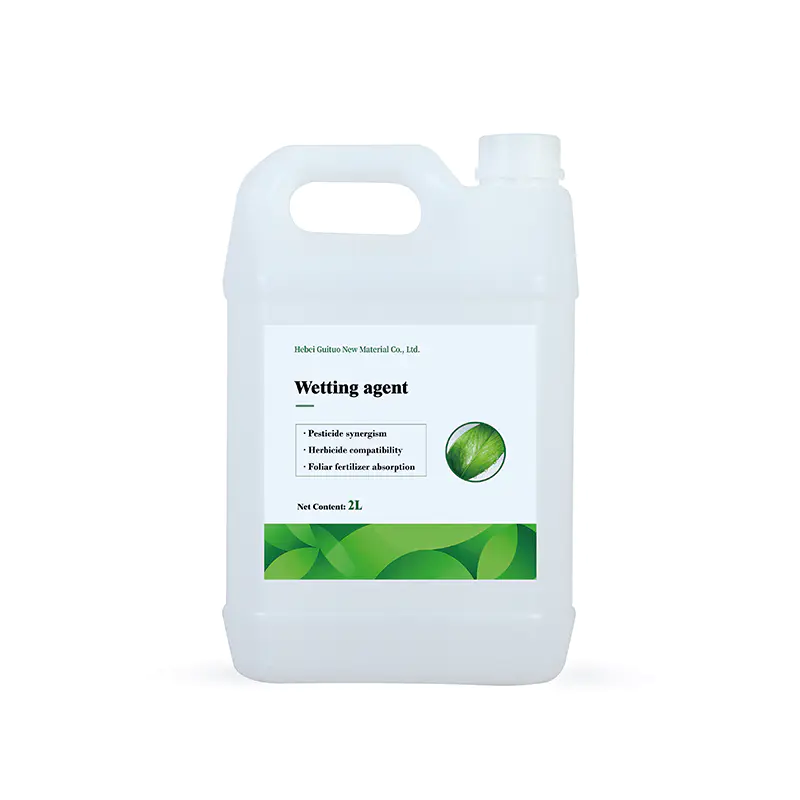
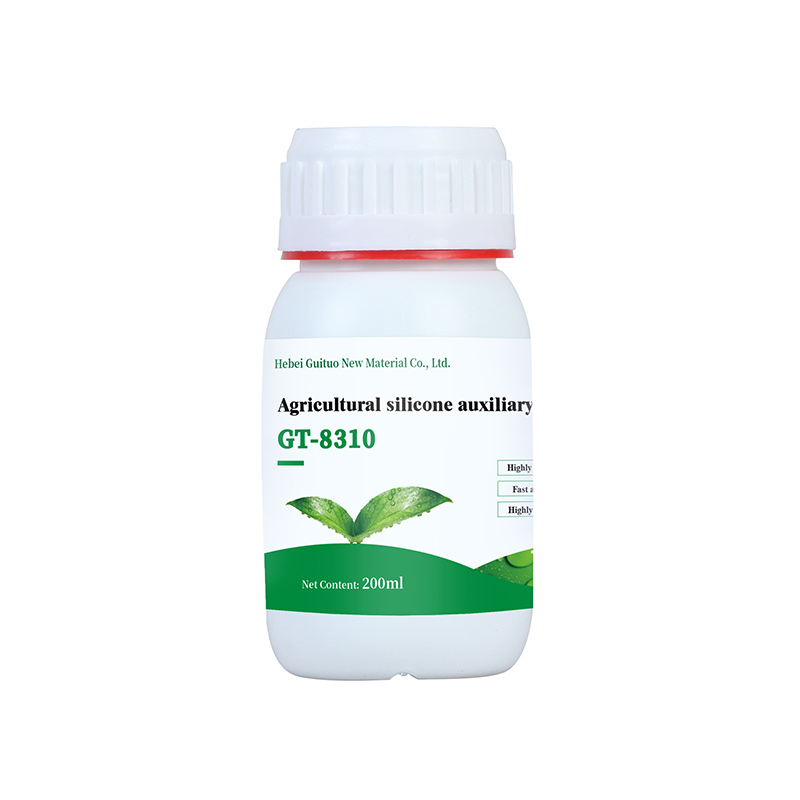 GT-8110 Organosilicone Spray Adjuvant for Tank MixingTrisiloxane concentrate for herbicide, fungicide, insecticide, and foliar nutrient tanks; check water hardness and leaf-surface behavior before use.View Product →
For tank-mix work, a silicone-based tank-mix adjuvant should be checked against the specific pesticide formulation, water hardness, and target leaf surface. A simple jar test and a small leaf-surface trial can reveal more than a generic claim on a product page.
Sticking: Retention Is Not the Same as Adhesion
Sticking is often described as if it were a single property, but retention is the result of several events. A droplet may bounce off a waxy leaf, shatter into smaller droplets, roll into a vein, or remain attached but fail to spread. The goal is not maximum adhesion at any cost; the goal is a uniform deposit that stays on the target long enough to act.
Sticker-type adjuvants usually rely on polymers, oils, or emulsified materials that increase the adhesive tendency of the spray deposit. They can be useful on crops with waxy or hairy leaves, on vertical leaf surfaces, and in situations where spray droplets are prone to bounce. However, stickers can increase spray viscosity, create foam, or leave a visible residue that affects marketable produce.
Retention risk: waxy leaf
Droplets can bead and roll off. A spreading adjuvant helps wet the surface, while a suitable sticker can improve attachment. Test both together rather than assuming one product covers both jobs.
Retention risk: hairy leaf
Leaf hairs can hold droplets away from the cuticle or cause irregular deposition. Very high spreading may not solve the problem, and a retention aid may be more useful than a pure wetter.
Retention risk: low-volume spray
Fewer droplets mean each deposit matters more. Evaporation, drift, and bounce can reduce the amount of active ingredient that reaches the leaf surface.
Organosilicone adjuvants are not automatically stickers. Their strength is reducing surface tension and improving spreading; their effect on retention depends on the formulation and dose. If the label claim is "improves sticking," ask for the test method. Retention can be assessed by measuring deposit mass before and after a standardized wash-off, or by comparing droplet bounce on a representative leaf surface.
In purchasing terms, do not compare products only by price per liter. Compare the use rate, the dilution stability, the effect on spray viscosity, and the risk of phytotoxicity on sensitive crops. A low-cost sticker that causes nozzle wear or uneven coverage can cost more than a higher-priced product that performs predictably.
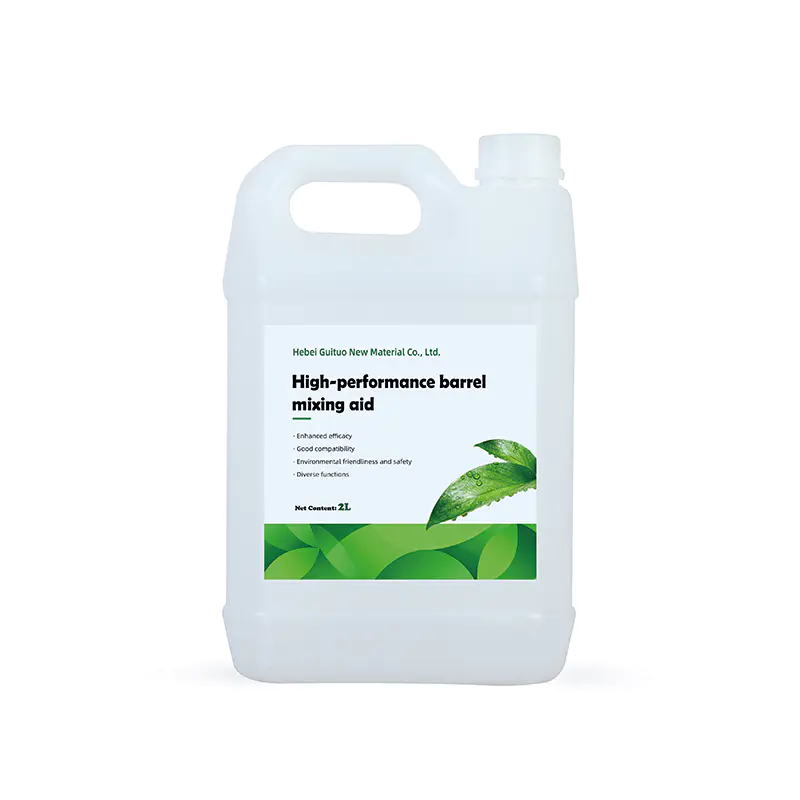
 High-Performance Drum-Mix Adjuvant for Pesticide Tank ProgramsSilicone synergist formulated for direct tank mixing with herbicides, insecticides, and fungicides; review dilution stability, use rate, and compatibility before purchase.View Product →
For drum-mix or tank-mix programs, the best starting point is a compatibility test with the actual formulation. Observe whether the mixture remains uniform, whether foam forms, and whether the droplet behavior changes after standing for 30 to 60 minutes.
Rainfastness: What the Label Number Really Means
Rainfastness is not the same as waterproofing. It describes how quickly a spray deposit becomes resistant to removal by rain or irrigation, and how much active ingredient remains available after a defined rain event. A label statement such as "rainfast in two hours" is meaningful only when the dose, crop, spray volume, adjuvant, and rain intensity are specified.
Organosilicone adjuvants can support rainfastness in two ways. First, they can help the spray liquid spread and dry more quickly, reducing the window in which a droplet can be washed off. Second, some formulations can support uptake through the cuticle or stomata, so the active ingredient is no longer sitting on the surface when rain arrives. Neither effect is unlimited. A heavy rain event shortly after application can still remove a substantial part of the deposit.
Practical rainfastness check: record the application time, spray volume, adjuvant dose, temperature, humidity, and the first rainfall time. Then compare leaf samples from sprayed and unsprayed rows after the rain. A visual difference in deposit or symptom development is more useful than a single label number.
For field decisions, separate three time windows: drying time, uptake time, and wash-off resistance. Drying time is influenced by droplet size, humidity, wind, and adjuvant. Uptake time depends on the active ingredient and formulation. Wash-off resistance depends on the deposit strength and the rain energy. A product that shortens drying time may still perform poorly if the active ingredient needs a long uptake period and rain arrives early.
In trials, use a standardized rain simulator or a measured overhead irrigation event. Record rain intensity in millimeters per hour, duration, and the interval after spraying. A light drizzle and a high-intensity storm are not equivalent tests. For procurement, request the rainfastness test conditions rather than accepting a generic claim.
Silicone Adjuvants vs Conventional Surfactants: A Practical Comparison
The choice between an organosilicone adjuvant and a conventional nonionic surfactant is not a contest with one universal winner. Organosilicone chemistry is typically more efficient at reducing surface tension, which can translate into better spreading at a lower dose. Conventional surfactants may be more forgiving in some tank mixes, have different foam behavior, and may be preferred on crops where very high spreading is not desirable.
| Selection point | Organosilicone adjuvant | Conventional nonionic surfactant | Purchasing implication |
|---|---|---|---|
| Surface tension reduction | Strong, often effective at low use rates | Moderate, usually requires a higher use rate | Compare cost per treated hectare, not cost per liter |
| Spreading on waxy leaves | Usually strong | Variable, often limited | Confirm on the target crop leaf, not only on glass slides |
| Retention and sticking | Formulation-dependent | Formulation-dependent | Ask for retention or wash-off data when sticking is the main claim |
| Tank-mix sensitivity | Requires compatibility checks, especially at extreme pH | Generally broad, but still requires checks | Run a jar test with the actual pesticide and water source |
| Foam and handling | Can foam depending on formulation | Variable | Check pump and nozzle behavior before bulk purchase |
For a manufacturer or formulator, the relevant question is not "which adjuvant is stronger?" but "which adjuvant delivers the required coverage and retention at an acceptable use rate without creating a new problem in the tank or on the crop?" That question can only be answered with a small set of measured tests.
Start with the water source. Measure pH and hardness, then prepare the spray liquid at the intended dilution. Check surface tension if equipment is available. Apply to representative leaves and observe contact angle, wetted area, drying time, and deposit uniformity. Repeat with the pesticide formulation included, because the formulation can change the behavior of the adjuvant.
Where Spreading and Sticking Conflict
Spreading and sticking can work against each other. A highly spreading spray liquid may wet a large area but form a thin deposit that is more vulnerable to runoff, ultraviolet degradation, or wash-off. A strongly retained deposit may stay on the leaf but remain as compact droplets, reducing the area of contact between the active ingredient and the target surface.
The conflict is most visible on waxy leaves, vertical leaves, and crops with dense canopies. On a waxy leaf, a spreading adjuvant helps the droplet wet the surface, but if the spray volume is too high, the liquid can move to the leaf edge and drip. On a vertical leaf, a retention aid may keep the droplet in place, but the deposit may be concentrated on one side of the leaf.
- Use the lowest adjuvant dose that achieves uniform coverage in a leaf-dip or spray-chamber test.
- Check the spray volume. Increasing water volume is not a substitute for better retention.
- Test the full tank mix. The pesticide formulation can change foam, viscosity, and droplet behavior.
- Evaluate the crop before scaling up. Sensitive leaves may show phytotoxicity before efficacy differences appear.
A balanced adjuvant system may combine a low-dose organosilicone for spreading with a formulation that provides adequate retention. The exact combination depends on the target and the application method. For aerial or low-volume spraying, the balance shifts toward rapid spreading and anti-evaporation performance; for high-volume orchard spraying, retention and canopy penetration may matter more.
Tank-Mix Compatibility: The Silent Failure Point
Many adjuvant failures are not caused by the adjuvant alone. They are caused by incompatibility in the tank. A mixture that looks fine in a small jar can still separate in a spray tank after 20 minutes, especially when the water is hard, the pH is high, or the pesticide formulation contains a high load of surfactants and solvents.
Good tank-mix practice starts with the water. Check pH and hardness before adding anything. Add products in the recommended order, usually water first, then the adjuvant or compatibility aid, then the formulated product, with gentle agitation. This order is not universal, so follow the label and the supplier's instructions. When in doubt, perform a jar test at the same dilution and temperature as the field spray.
Watch for flocculation, cream layers, oil separation, excessive foam, and nozzle blockage. A mixture that foams heavily can reduce pump efficiency and cause inaccurate dosing. A mixture that separates can deliver an uneven dose across the field, which is both an efficacy and a resistance-management risk.
For a more detailed compatibility checklist, see this guide to adjuvant-pesticide compatibility checks before changing a tank-mix program. The same discipline applies when comparing a silicone-based agricultural tank mix with a conventional surfactant system.
- Use the actual water source and the actual pesticide formulation.
- Measure the intended dilution and adjuvant dose.
- Mix in a clear container and observe for 30 to 60 minutes.
- Check pH, foam, separation, and sediment.
- Spray a small area before treating the whole block.
Aerial Spraying and Low-Volume Applications
Aerial and drone spraying create a different set of adjuvant demands. Spray volumes are often low, droplets are small, and evaporation or drift can remove a significant part of the spray before it reaches the canopy. In these systems, an adjuvant must support quick wetting, reduce fine-droplet evaporation, and remain compatible with the concentrated tank mix.
Low-volume spraying also magnifies the effect of poor retention. If a droplet bounces off the leaf, there is less spare spray to compensate. If the deposit dries too slowly, the rain-free interval becomes longer. If the adjuvant causes foaming in a small tank, the dose can become inconsistent from one flight to the next.
For aerial programs, test the adjuvant at the intended concentration rather than the conventional ground-spray rate. Check the spray liquid's surface tension, foam height, and drying behavior. Confirm that the product does not clog filters or nozzles and that it remains stable in the tank for the duration of the operation.
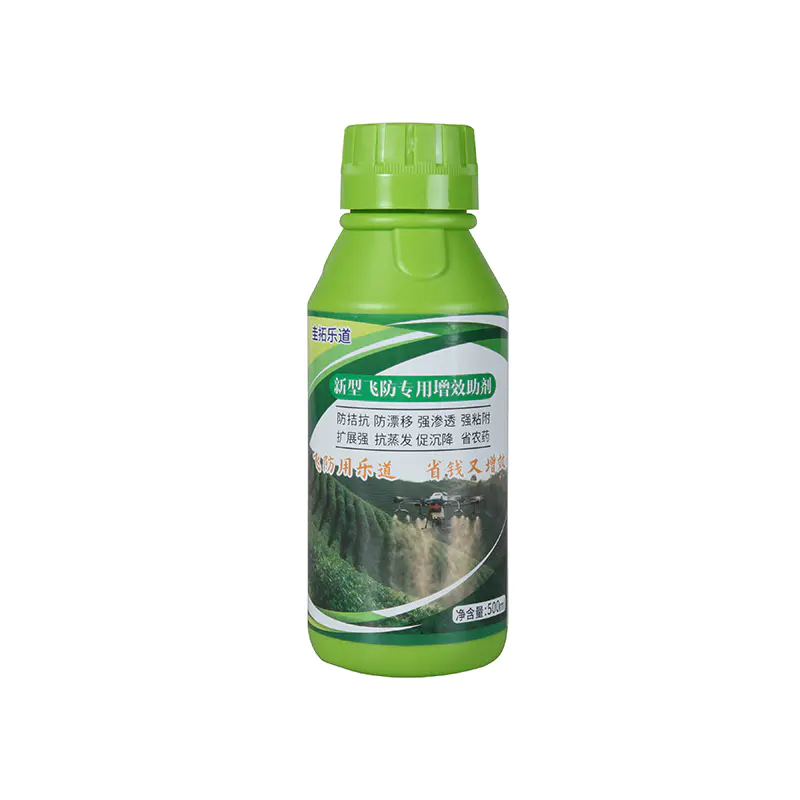
 Aerial Spraying Dedicated Adjuvant for Drone ApplicationsSilicone adjuvant designed for low-volume drone spraying, with anti-drift, anti-evaporation, adhesion, and absorption functions; test concentration and tank stability first.View Product →
Field parameters matter as much as the adjuvant. Wind speed, temperature, humidity, flight height, and droplet spectrum all influence deposition. An adjuvant can improve the odds of retention, but it cannot compensate for spraying in the wrong weather window or with an unsuitable nozzle setup.
Crop and Formulation Scenarios
Different crops expose different weaknesses in a spray program. The following scenarios are not prescriptions; they are starting points for a field trial. Always confirm the dose and compatibility with the product label and a small replicated test.
Rice
Waxy leaves, dense canopy, and frequent overhead moisture make spreading and rainfastness important. Low-volume drone applications need a fast-wetting adjuvant that does not cause excessive runoff.
Fruit trees
Canopy depth and vertical leaves test retention and coverage. Higher spray volumes may help penetration, but the adjuvant must still keep the deposit on the target rather than letting it drip.
Vegetables
Leaf sensitivity and formulation compatibility are the main risks. A low-dose trial should precede any broad change, especially when multiple products are mixed in one tank.
Cotton
Mite and insect control programs often depend on good coverage of the underside of leaves. Spreading helps, but retention and penetration may be equally important in a dense canopy.
For formulation teams, the crop scenario should be translated into measurable targets: contact angle on the target leaf, deposit mass per unit area, drying time, and retention after a simulated rain event. These targets can be written into a purchase specification and checked against incoming batches.
Common Misconceptions About Agricultural Adjuvants
More adjuvant means better performance. This is rarely true. Organosilicone adjuvants often reach a performance plateau at a relatively low dose. Above that dose, the extra product may increase runoff, foam, or phytotoxicity risk without improving coverage.
Silicone adjuvant equals sticker. Organosilicone chemistry is mainly associated with wetting and spreading. Retention and rainfastness depend on the formulation, the active ingredient, and the deposit characteristics. A product can improve spreading without improving sticking.
Rainfast means waterproof. Rainfastness is a time-and-intensity relationship. A deposit that resists a light rain after two hours may still be removed by a high-intensity storm shortly after application.
One adjuvant fits every crop. Leaf surface, spray volume, water quality, and pesticide formulation all change the optimum. A product that performs well on a smooth leaf may fail on a hairy or waxy surface.
Use a simple field record for each trial: crop, growth stage, product, dose, water volume, adjuvant, pH, temperature, humidity, application time, first rain time, and observed coverage. This record is more valuable than a generic recommendation because it connects the adjuvant decision to the actual field result.
How to Evaluate an Adjuvant Before Bulk Purchase
Before committing to a bulk order, ask for a technical data sheet, a batch certificate of analysis, and a clear statement of the recommended use rate and compatibility limits. The data sheet should identify the active content, pH range, dilution behavior, foam tendency, and storage conditions. A supplier that cannot provide batch-level consistency data is a supply risk, especially when the adjuvant is part of a seasonal spray program.
Run a small evaluation with three parts: a jar test, a leaf-surface test, and a field strip test. The jar test checks compatibility and stability. The leaf-surface test checks contact angle, wetted area, and drying time on the actual crop. The field strip test checks crop safety and practical handling in the sprayer.
- Confirm the adjuvant dose at the intended spray volume, not only at a standard laboratory dilution.
- Check the effect of water hardness and pH on dilution stability.
- Observe foam, nozzle wear, and filter blockage during a short spray run.
- Compare treated and untreated strips under the same weather and crop conditions.
- Ask for repeatable batch data before scaling to a full-season program.
For a manufacturer with in-house research, production, and testing capability, the useful partnership goes beyond a catalog listing. It includes formulation support, sample evaluation, and consistent quality from one batch to the next. A supplier that can adjust the adjuvant system to a specific crop and tank-mix program is more useful than one that offers a single generic product for every situation.
FAQ
What does an agricultural adjuvant do?
An agricultural adjuvant changes the physical behavior of a spray liquid. It can improve spreading on the leaf, help the deposit stay on the target, reduce bounce and runoff, support faster drying, or improve rainfastness. It is not a substitute for the pesticide itself.
Is a silicone adjuvant the same as a sticker?
No. A silicone adjuvant is usually selected for wetting and spreading, while a sticker is selected for retention. Some formulations combine both functions, but the label and test data should show which job the product is designed to perform.
How is rainfastness measured?
Rainfastness is measured by applying the spray, allowing a defined drying or uptake period, then applying a controlled rain or irrigation event and measuring the remaining deposit or biological effect. The rain intensity, duration, and interval after spraying must be recorded.
Can I mix an organosilicone adjuvant with every pesticide?
Not automatically. Compatibility depends on the pesticide formulation, water hardness, pH, and mixing order. A jar test with the actual products and water source is the minimum check before a tank-mix application.
Does a higher adjuvant dose always improve coverage?
No. Coverage usually improves up to an optimum dose, then plateaus. Above the optimum, runoff, foam, and phytotoxicity risk can increase. The optimum should be confirmed on the target crop and spray volume.
What should I check before buying an adjuvant in bulk?
Check the technical data sheet, batch certificate, dilution stability, foam behavior, compatibility with the main tank-mix partners, and field performance on the target crop. Compare cost per treated hectare rather than cost per liter.

Contact Information
Tel : +86-400-138-5268
Email : [email protected]
Phone : +86-15128434888 / +86-13511051998
Add : Xinqiao Environmental Protection Industrial Park, Wen'an County, Langfang City, Hebei Province, China
Contact Information
Copyright © Hebei Guituo New Material Co., Ltd. All Rights Reserved.
