

 English
 Français
 Português

 Home / News / Industry News / Choosing an Adjuvant for Drone Spraying: Drift Control and Droplet Behavior Guide
Choosing an Adjuvant for Drone Spraying: Drift Control and Droplet Behavior Guide
2026-11-11
Start With the Droplet Spectrum, Not the Marketing Claim
A drone spray program lives or dies on the droplet spectrum that leaves the nozzle, and the adjuvant choice is the fastest way to shift that spectrum without changing the aircraft. In low-volume aerial application, a small change in droplet size can move a tank from acceptable coverage to unacceptable drift, or from safe drift to poor deposition. The practical question is not which adjuvant is best in general. It is which adjuvant matches the nozzle, the crop canopy, the product label, and the weather at the time of application.
Droplet size is usually described by the volume median diameter, or VMD. If half the spray volume is in droplets smaller than the VMD and half is larger, the VMD gives a single number for comparison. That number is useful, but it is not the whole story. A spray with a 200 μm VMD can still contain a meaningful fraction of droplets below 100 μm, and those fines are the droplets most likely to move off target. For drone work, the fine fraction deserves as much attention as the average droplet size because the aircraft is flying low, often in unstable air, and applying a concentrated mix.
The table below is a working comparison, not a universal prescription. Crop labels, nozzle charts, and local regulations always take priority. Use it to frame the trade-off between drift, coverage, and evaporation before choosing an adjuvant.
| Droplet class | Typical VMD | Drift risk | Canopy coverage | Evaporation risk | Adjuvant implication |
|---|---|---|---|---|---|
| Fine | Under 150 μm | High | High on exposed surfaces, less reliable inside the canopy | High | Avoid unless the canopy and weather are stable |
| Medium-fine | 150–250 μm | Moderate | Balanced coverage and penetration | Moderate | Organosilicone at low dose, followed by a pattern test |
| Medium | 250–350 μm | Lower | Good with rotor downwash | Lower | Drift retardant only when the field exposure requires it |
| Coarse | Over 350 μm | Low | Lower, with more runoff and weaker leaf coverage | Low | Increase volume or use a spreader carefully |
A drone does not need the finest droplets to achieve good coverage. It needs a controlled spectrum with enough droplets in the useful range and few enough fines to stay on target. That is why adjuvant selection should begin with the nozzle and the label, not with a catalogue page.
Why Drone Spraying Changes the Adjuvant Calculation
Ground sprayers carry hundreds of liters per hectare and rely on hydraulic pressure, boom height, and forward speed to create a spray sheet. Drone sprayers work with much lower carrier volumes, often in the range of a few liters per hectare, and the downwash from the rotors changes how droplets reach the canopy. The same adjuvant that works well in a 200 L/ha ground mix can behave differently in a 20 L/ha drone mix because the concentration of the active ingredient and the adjuvant is higher, the droplet residence time in the air is different, and the spray pattern is shaped by rotor wash rather than by a boom.
The higher concentration has two consequences. First, compatibility problems become more visible. A tank mix that looks fine at low concentration can gel, flocculate, or form an oily film when the adjuvant and the formulation are packed into a smaller volume of water. Second, dose response is not linear. Adding more adjuvant does not always improve coverage; past a certain point it can reduce surface tension too far, create a finer spray, increase bounce, or leave a sticky deposit that interferes with the next operation.
Rotor downwash can help or hurt. It can push droplets into the canopy and improve deposition on the underside of leaves, but it can also create turbulence that carries fines sideways, especially when the drone is flying high or fast. Adjuvants that reduce evaporation and keep droplets stable in the air are useful in this environment, but they must not be so viscous that they clog nozzles or distort the spray pattern.
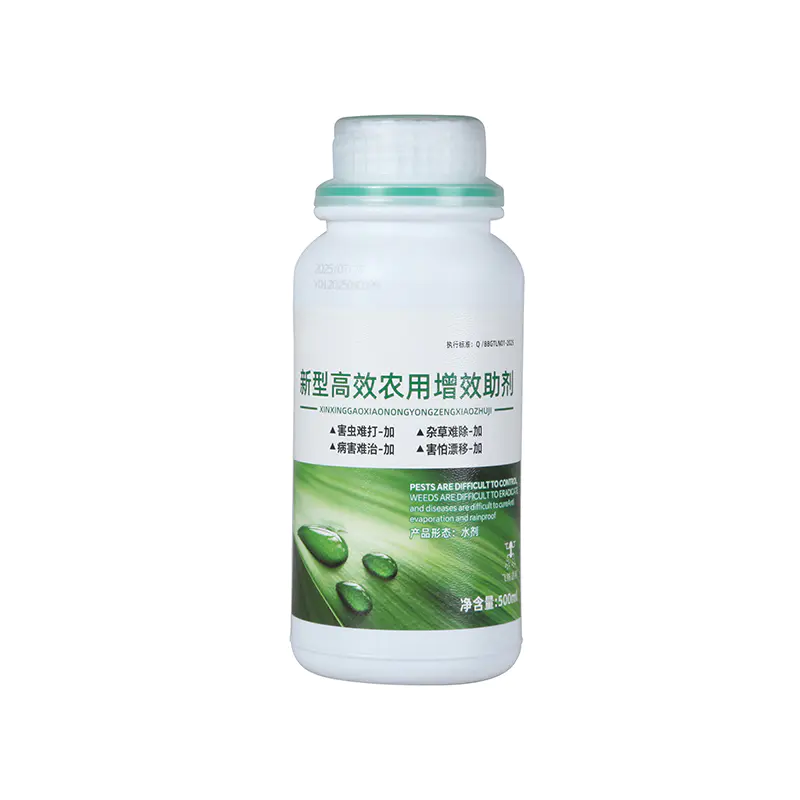
 Aerial Spraying Dedicated Enhancing Adjuvant for Drone ApplicationsSpecialized silicone adjuvant for drone spraying, formulated to reduce drift and evaporation while improving adhesion and absorption under rotor downwash.View Product →
For aerial work, a dedicated aerial-spraying enhancer is often a better starting point than a general-purpose spreader because the dose and the chemistry are matched to low-volume application. The operator still has to confirm compatibility with the specific formulation and run a pattern test.
Low carrier volume
The tank is more concentrated, so compatibility and dose accuracy matter more than they do in a high-volume ground spray.
Rotor downwash
Air movement can improve canopy penetration, but it can also move fines away from the target when the flight height or speed is wrong.
Concentrated tank mix
Jar tests should use the same water, the same ratio, and the same order of addition that will be used in the field.
Short application window
Weather can change before the tank is empty, so the adjuvant strategy should be chosen for the whole spray window, not only the first pass.
Drift Control Is a System, Not a Single Additive
Drift is the movement of spray droplets away from the target area. It is influenced by wind speed, wind direction, temperature, humidity, atmospheric stability, nozzle type, droplet size, nozzle height, flight speed, and the physical properties of the spray liquid. An adjuvant can change the last item, but it cannot compensate for a bad nozzle choice, a wrong flight height, or a wind that is moving across a sensitive crop.
The most common mistake is to treat a drift retardant as a universal fix. Drift retardants usually work by increasing the viscosity of the spray liquid or by promoting the formation of larger droplets. That can reduce the fine fraction, but it can also reduce coverage, increase runoff, and create a more variable spray pattern. In drone application, where carrier volume is already low, a heavy drift retardant can make the mix too thick and cause uneven deposition.
A better approach is to separate the decision into three layers. The first layer is the nozzle and the aircraft settings: choose a nozzle that produces a spectrum appropriate for the label and the crop, then set the flight height and speed to match the pattern. The second layer is the spray liquid: use an adjuvant that improves retention and spreading without creating an unacceptable fine fraction. The third layer is the field: keep buffer zones, monitor wind, and stop when conditions move outside the label or the operator’s risk threshold.
| Layer | Decision | Typical tools | What to verify |
|---|---|---|---|
| Nozzle and aircraft | Set the droplet spectrum | Nozzle size, pressure, rotary speed, flight height | Pattern test and label droplet class |
| Spray liquid | Improve retention and evaporation control | Organosilicone, oil concentrate, drift retardant | Jar test, dose, compatibility |
| Field | Control exposure | Buffer zone, wind monitor, flight speed | Wind speed and direction, inversion risk |
In practice, drift control is a balance between coverage and containment. If the target is a dense canopy and the weather is stable, a moderate spreader can improve deposition. If the target is adjacent to sensitive crops, a drift retardant or a coarser nozzle may be the safer choice, even if coverage on the far side of the canopy is lower. The adjuvant should support that decision, not override it.
For crop-specific choices, this crop-specific adjuvant selection guide is useful because it links the chemistry to the crop surface and the product label rather than to a single generic recommendation.
Reading Droplet Behavior: VMD, Coverage, and Evaporation
Droplet behavior is easier to manage when the terms are separated. The Dv10 is the diameter at which 10% of the spray volume is in smaller droplets. The Dv50 is the VMD. The Dv90 is the diameter at which 90% of the volume is in smaller droplets. A spray with a low Dv10 contains many fines; a spray with a high Dv90 contains many large droplets that may bounce or run off. The full distribution matters because the smallest droplets control drift and the largest droplets control runoff.
Coverage is not the same as deposit. A water-sensitive paper can show a dense pattern of small droplets while the leaf surface receives very little active ingredient, because the droplets evaporate before the product is absorbed. A coarser spray can look less impressive on paper but deliver a better deposit if the droplets are retained and spread across the leaf. The adjuvant’s effect on surface tension, contact angle, and drying time often determines which result occurs.
Fine droplets under 150 μm: relative drift potential
Medium droplets: relative drift potential
Coarse droplets: relative drift potential
These bars are relative indicators, not measured data. They show the direction of the trade-off: as the fine fraction rises, drift potential rises, and as the coarse fraction rises, coverage and retention can fall. The aim is not to eliminate fines or to maximize droplet size, but to keep the spectrum inside a window that the label, the crop, and the weather can tolerate.
Evaporation changes the picture again. A droplet that leaves the nozzle at 180 μm may reach the canopy at 120 μm after losing water in dry air. An adjuvant that slows evaporation can keep the droplet closer to its original size, but it can also change the viscosity and the spray angle. The only way to know how the mix behaves is to test it with the actual nozzle and the actual water.
Adjuvant Chemistry: Organosilicone, Nonionic, Oil, and Drift Retardants
The chemistry of the adjuvant determines what it does to the spray droplet. Organosilicone surfactants are the most aggressive spreaders. They reduce surface tension sharply, often to a level that allows the spray to spread across waxy leaf surfaces and move into stomata or leaf cracks. That can improve uptake of contact herbicides and some systemic products, but it can also increase the risk of runoff and, if the spray is too fine, increase drift.
Nonionic surfactants are more moderate. They improve wetting and retention without reducing surface tension as far as organosilicones. They are often a better fit when the formulation is sensitive to strong spreading or when the crop has a thin cuticle. Oil concentrates improve penetration and slow evaporation, but they can be more difficult to mix and may increase phytotoxicity in hot weather. Drift retardants are designed to reduce the fine fraction; they are not primarily spreaders, and they should not be used as a substitute for a properly sized nozzle.
| Adjuvant chemistry | Main effect | Drift tendency | Best fit | Watchouts |
|---|---|---|---|---|
| Organosilicone | Strong spreading and low surface tension | Can increase if the droplet spectrum becomes finer | Waxy leaves, contact herbicides, dense canopy | Runoff, compatibility, dose |
| Nonionic | Wetting and retention | Moderate | General tank mixes and sensitive formulations | Foam, limited spreading |
| Oil concentrate | Penetration and evaporation reduction | Moderate to low | Systemic products and hot, dry conditions | Phytotoxicity, mixing |
| Drift retardant | Coarser spray and fewer fines | Low | Sensitive neighbors and windy field edges | Reduced coverage, viscosity, nozzle clogging |
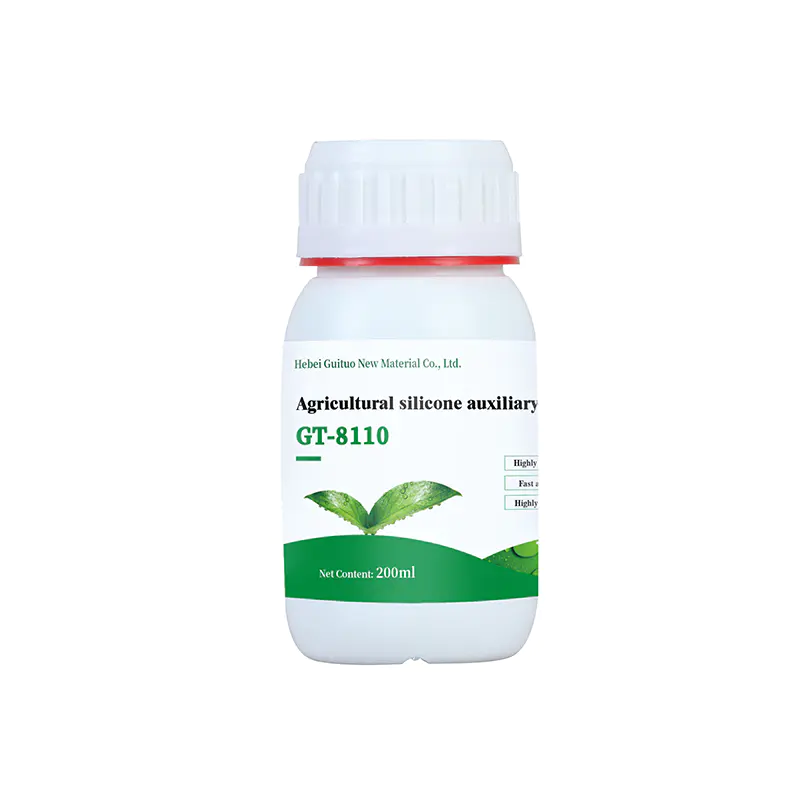
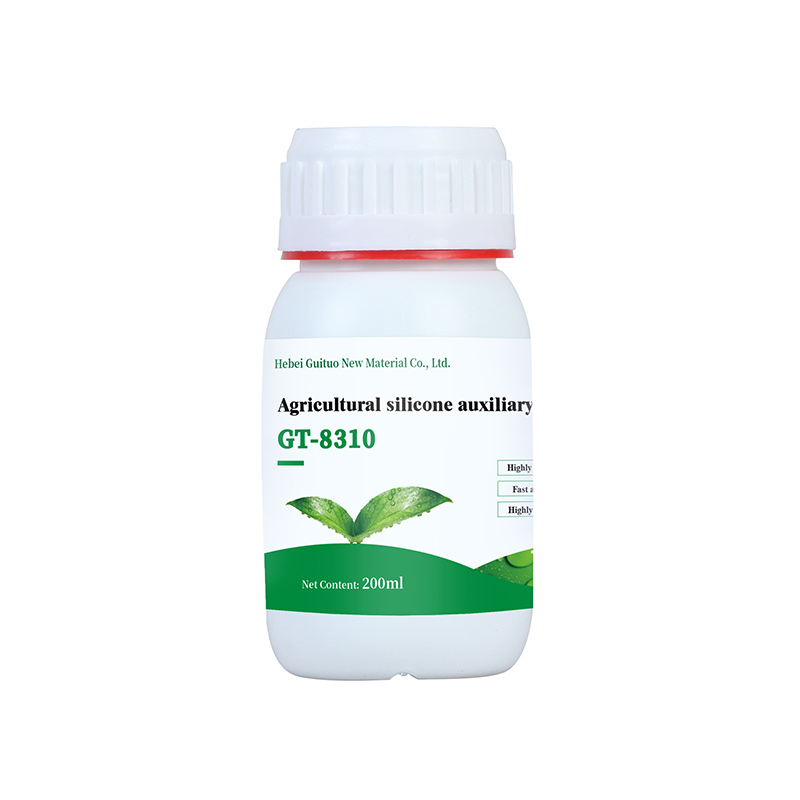 GT-8110 Agricultural Organosilicone Spray Adjuvant ConcentrateTrisiloxane concentrate for tank-mixing with crop-protection products, offering rapid spreading, stomatal infiltration, and rainfastness when a strong organosilicone spreader is appropriate.View Product →
An agricultural organosilicone adjuvant can be an efficient choice when the label allows a spreader and the spray pattern is already under control. Start at the low end of the recommended dose, run a jar test, and check the pattern before treating the whole field.
For herbicide programs, this herbicide silicone surfactant page outlines how spreading and retention interact with the weed surface and the spray timing. The key point is that a spreader is useful only when the droplet lands where it is supposed to land.
A useful rule is to choose the chemistry for the job the droplet must do after it lands. If the droplet must spread and penetrate a waxy leaf, an organosilicone may be appropriate. If the droplet must stay put and resist evaporation, an oil or a moderate nonionic may be better. If the droplet must not leave the field, a drift retardant or a coarser nozzle belongs in the plan.
Compatibility and Tank-Mix Order
Compatibility is the quiet failure point in drone spraying. Because the carrier volume is low, the concentration of salts, formulation, and adjuvant is high. A mix that passes a quick visual check in a bucket can still form a precipitate in the tank or clog a nozzle screen. The risk increases when two or more products are combined, when the water is hard, or when the pH is outside the stability range of the active ingredient.
A jar test is not a formality. Use the same water source, the same concentration ratio, and the same order of addition that will be used in the field. Let the sample stand for the length of a typical spray window, then check for separation, sediment, gel, foam, or a film on the jar wall. If the sample fails, do not assume that a different adjuvant will fix the problem. The formulation or the water may be the cause.
- Fill the jar with the field water to the intended dilution.
- Add the wettable powder or water-dispersible granule first, if the label permits, and mix thoroughly.
- Add suspension concentrates and emulsifiable concentrates in the label order.
- Add the adjuvant last, unless the label says otherwise.
- Check pH if the product is pH-sensitive.
- Observe for 30 to 60 minutes and again after the sample has stood for several hours.
A mix that looks clear is not automatically compatible. Look for haze, oil film, sediment, and nozzle-screen residue after the sample has stood.
Tank-mix order matters because some adjuvants can invert an emulsion or displace a dispersant. Organosilicone adjuvants are usually added last and at low dose. If a drift retardant is used, add it according to its label, because some products need to be hydrated before the other components. Never mix two adjuvants just because each one works alone; test the combination.
Water quality is part of the mix. Hard water contains calcium and magnesium that can react with some formulations and reduce their activity. High pH can break down certain active ingredients, while low pH can affect the stability of others. If the local water is variable, test it at the start of the season and again after heavy rain or a change in the water source.
Field Calibration and Pattern Testing
Pattern testing is the only reliable way to know whether the adjuvant, nozzle, and aircraft settings are working together. Water-sensitive paper placed across the spray swath shows the distribution of droplets and the overlap between passes. It does not tell you the exact deposition on the crop, but it reveals streaking, skips, heavy edges, and excessive fines.
Run the test with the actual tank mix, not with water alone. Adjuvants change droplet size and surface tension, so a water-only pattern can be misleading. Use the same nozzle, flight height, speed, and application volume that will be used in the field. If the pattern shows a high proportion of very small droplets at the edge of the swath, reduce the adjuvant dose, change the nozzle, or adjust the flight parameters before treating the crop.
Nozzle check
Confirm the nozzle size, spray angle, and flow rate. A worn or partly blocked nozzle changes the spectrum before the adjuvant has any effect.
Pattern test
Place papers across the swath and between passes. Check for overlap, skips, and fine droplets at the edges.
Weather check
Record wind at spray height, temperature, and humidity. A pattern that works in still air may fail in a crosswind.
Tank sample
Keep a sample of the mixed tank. If a nozzle clogs or a deposit looks wrong, the sample helps identify the cause.
Record the results. A simple log with date, crop, product, adjuvant, dose, nozzle, flight height, speed, wind, temperature, humidity, and pattern result will be more useful than memory when the next block is sprayed. If a mix performs well, the record explains why. If a mix fails, the record narrows the cause.
Calibration is not a one-time event. Nozzles wear, formulations change, and water sources vary. Recheck the pattern when a new adjuvant lot is opened, when a different product is added to the tank, or when the crop canopy changes from sparse to dense.
Crop and Product Scenarios
Different products demand different droplet behavior. A single adjuvant strategy across all crops usually produces average results at best. The following scenarios show how to match the chemistry to the job.
Herbicides
Contact herbicides need coverage on the leaf surface; systemic herbicides need retention and uptake. Organosilicone spreaders can improve both, but they can also increase the risk of drift if the spray contains too many fines. In fields with sensitive neighbors, choose a coarser nozzle and a drift retardant, then use the lowest effective spreader dose. In dense canopies, a moderate organosilicone dose can improve deposition on the lower leaves.
Fungicides
Fungicides often need coverage on both leaf surfaces and into the canopy. Downwash from the drone can help, but the spray must not evaporate before it reaches the target. An oil concentrate or a moderate nonionic surfactant can slow evaporation and improve retention. Avoid over-spreading, because runoff carries the active ingredient away from the leaf and reduces the dose that remains.
Insecticides and Miticides
Contact insecticides and miticides depend on droplet contact with the pest or its habitat. Fine droplets can improve coverage, but they also increase drift and evaporation. A spreader that helps the droplet wet the leaf and enter sheltered areas can be more useful than a very fine spray. For mite control, coverage of the underside of leaves is critical, and that is often a function of downwash and canopy penetration rather than droplet size alone.
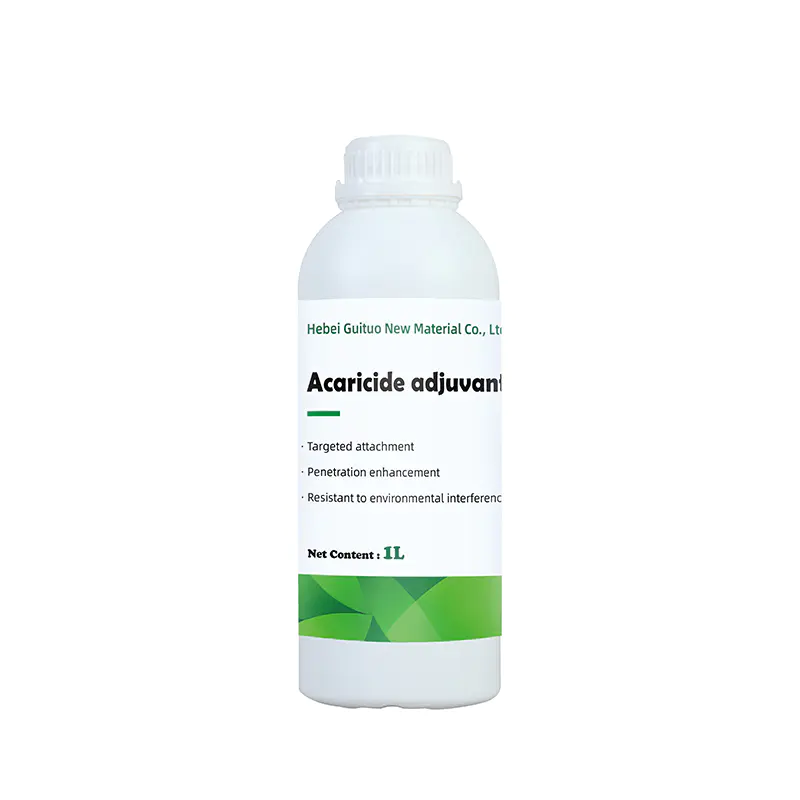
 Mite-Killing Acaricide Synergist Adjuvant for Leaf UndersidesSilicone synergist designed with acaricides to improve adhesion and penetration on mites and leaf undersides, supporting contact coverage where mite control depends on sheltered areas.View Product →
A mite-killing adjuvant is formulated for this kind of contact work, but it still has to be matched to the label and the nozzle. The adjuvant cannot replace full coverage of the underside of the leaf.
Foliar Fertilizers
Foliar fertilizers are salts. They can increase the conductivity of the spray and change the stability of the mix. A spreader can improve coverage, but high salt concentration can also cause phytotoxicity or precipitation. Use a low-dose nonionic or organosilicone, check compatibility, and avoid spraying in the heat of the day.
Dense Canopies and Late-Season Applications
Late-season canopies are deeper and more variable. The droplet has to travel farther to reach the lower leaves, and the air movement from the rotors may not penetrate as evenly as it does in an open canopy. A moderate spreader can help the droplet retain and spread once it lands, but it cannot compensate for a flight speed that is too high or a spray volume that is too low. Reduce speed, increase volume within the label limit, or split the application into two passes when the canopy is very dense.
Cost, Dose, and Risk
Adjuvant cost per hectare is usually small compared with the cost of the active ingredient, the aircraft, and the labor. That does not mean more adjuvant is better. The economic question is whether the adjuvant increases the amount of active ingredient that reaches the target, or whether it only increases the volume of liquid on the leaf. A product that improves retention at 0.05% may cause runoff at 0.1%, and the extra cost buys a worse result.
Dose should be set from the label, the jar test, and the pattern test. Start at the low end of the recommended range and increase only if the field result supports it. In drone application, the margin between helps and hurts is narrow because the carrier volume is low. A dose that is correct for a 200 L/ha ground spray is not automatically correct for a 20 L/ha drone spray.
| Scenario | Adjuvant strategy | Dose approach | Main risk |
|---|---|---|---|
| Sensitive neighbor | Drift retardant or coarse nozzle | Label low end, pattern test | Reduced coverage |
| Waxy leaf, contact herbicide | Organosilicone spreader | Low end, jar test | Runoff and drift |
| Hot, dry weather | Oil or evaporation reducer | Label rate, small plot test | Phytotoxicity |
| Dense canopy | Moderate spreader plus downwash | Split passes, low dose | Uneven deposition |
| Hard water, multiple products | Compatibility-first | Jar test, no extra adjuvant | Precipitation and nozzle clog |
The cheapest adjuvant is the one that works at the lowest effective dose. The most expensive is the one that causes a failed application, a clogged nozzle, or a drift complaint. That is why the purchase decision should include the cost of the jar test, the pattern test, and the operator time needed to calibrate the sprayer.
A small plot test is often worth more than a laboratory claim. Spray a strip with the intended mix and compare it with a strip without the adjuvant or with a lower dose. Look for differences in retention, runoff, and visible coverage. If the difference is not clear, the higher dose is not justified.
Weather Windows and Record Keeping
Weather is not a background variable in drone spraying; it is part of the application. Temperature affects evaporation and the stability of the formulation. Humidity affects droplet lifetime. Wind speed and direction determine where the fines go. Atmospheric stability determines whether those fines stay near the surface or move upward. A spray that is acceptable at 60% relative humidity and 12 km/h wind can be unacceptable at 30% humidity and the same wind.
The safest approach is to set a weather window before the tank is mixed. Check wind at the spray height, not only at the ground. Avoid inversions, which can trap fines and move them unpredictably. Avoid the hottest part of the day when evaporation is high. If the label specifies a maximum wind speed or a minimum humidity, treat that as a limit, not a suggestion.
Wind
Measure at spray height and record direction. A crosswind can move fines beyond the buffer zone even when the ground wind feels light.
Humidity
Low humidity increases evaporation and reduces droplet lifetime. An evaporation-reducing adjuvant may help, but it cannot replace an unsuitable spray window.
Temperature
High temperature can increase volatility and phytotoxicity. Spray early or late when the crop and the formulation can tolerate it.
Inversion
Stable air can trap fines near the surface and carry them in unexpected directions. Stop when the signs of an inversion are present.
Record keeping turns a single successful spray into a repeatable program. Keep the tank mix, the adjuvant lot, the nozzle, the flight parameters, the weather, and the field result. If a customer asks why a block performed differently, the record will show whether the cause was the product, the water, the adjuvant, or the weather.
Records also help with traceability. If a drift complaint or a crop injury appears, the log shows what was applied, at what dose, and under what conditions. That information is more useful than a general recollection of the day.
Frequently Asked Questions
Can I use an organosilicone adjuvant with a drift retardant?
It is possible, but it is rarely a simple addition. Organosilicones reduce surface tension and can promote a finer spray, while drift retardants are designed to reduce fines. The two effects can work against each other. If the label allows both, run a jar test and a pattern test at the intended dose. In many cases, it is better to choose one primary function and adjust the nozzle instead of stacking two adjuvants.
What droplet size should a drone sprayer use?
There is no single number. The target depends on the label, the crop, the product, and the weather. A medium-fine spectrum is often a reasonable starting point for coverage, but sensitive areas may require a coarser spectrum and a drift retardant. The nozzle chart and the label are the first references; the pattern test is the final check.
Does an adjuvant replace a nozzle change?
No. The nozzle sets the initial droplet spectrum. An adjuvant modifies the liquid properties and can shift the spectrum, but it cannot correct a nozzle that is fundamentally wrong for the job. If the pattern test shows skips, streaks, or excessive fines, change the nozzle or the aircraft settings before increasing the adjuvant dose.
How much adjuvant should I add to a drone tank?
Use the label rate for the specific product and the carrier volume. Do not convert a ground-spray dose directly to a drone spray without checking the label and the jar test. Start at the low end of the recommended range, measure accurately, and increase only after a small plot or a pattern test shows a benefit.
Why does my tank mix gel after adding the adjuvant?
Gelling usually indicates an incompatibility between the formulation, the water, and the adjuvant, or a problem with the order of addition. High concentration, hard water, and low pH can make the problem worse. Stop, do not spray the gel, and run a jar test with the same water and the same order. If the gel persists, change the adjuvant or the formulation rather than adding more water.
Can I mix a foliar fertilizer with an organosilicone adjuvant?
Sometimes, but the salt concentration and the pH must be checked. A jar test is essential. High-salt mixes can precipitate or cause phytotoxicity, and the spreader can increase the area of leaf in contact with the salt. Use the lowest effective dose and avoid spraying in high heat.
How do I know if the adjuvant improved the spray?
Compare a treated strip with an untreated strip under the same weather and aircraft settings. Look for differences in retention, coverage, runoff, and visible deposit. Water-sensitive paper helps show the droplet distribution, but the field result is the final measure. If the difference is not visible or does not affect the product’s performance, the adjuvant dose may be unnecessary.
Selection Sequence for the Next Tank
Use this sequence before the next drone load. It keeps the decision in the right order and prevents the adjuvant from becoming a substitute for basic calibration.
- Read the label for the product, the adjuvant, and the crop. Confirm that the adjuvant chemistry is allowed and that the dose range is clear.
- Check the water source. Test hardness and pH if the local water is variable or if a new water source is being used.
- Select the nozzle and flight settings for the target droplet spectrum. Do not start with the adjuvant and work backward.
- Run a jar test with the actual products, the actual water, and the intended order of addition.
- Set the adjuvant dose at the low end of the label range. Measure accurately and record the dose.
- Run a pattern test with the full tank mix. Check for skips, streaks, heavy edges, and excessive fines.
- Spray a small block first. Compare it with a strip without the adjuvant or with a lower dose.
- Record the mix, the weather, the aircraft settings, and the field result before treating the next block.
The adjuvant is a control variable, not a rescue product. When the nozzle, the water, and the weather are right, a modest dose of the correct chemistry is usually enough.
The final choice should be the one that produces a stable tank, a controlled droplet spectrum, and a deposit that stays on the target long enough to work. That is a more useful standard than a catalogue claim, and it is the standard that holds up across crops, products, and weather.

Contact Information
Tel : +86-400-138-5268
Email : [email protected]
Phone : +86-15128434888 / +86-13511051998
Add : Xinqiao Environmental Protection Industrial Park, Wen'an County, Langfang City, Hebei Province, China
Contact Information
Copyright © Hebei Guituo New Material Co., Ltd. All Rights Reserved.
