

 English
  Français
  Português
 Home / News / Industry News / What Is an Adjuvant in Agriculture? Types, Functions and How to Choose the Right One
 What Is an Adjuvant in Agriculture? Types, Functions and How to Choose the Right One
2026-08-31
Two growers spray the same post-emergence herbicide on the same morning, on fields of the same crop, with the same water source. One adds a measured dose of adjuvant to the tank; the other fills the tank with water and pesticide only. Three weeks later, one field is clean and the other is booking a second application, paying for the product, the fuel and the labor all over again. The active ingredient was identical in both tanks. What changed was whether the spray droplet could actually wet, spread and stay on the leaf long enough to work.
That is the practical answer to the question in the title. An adjuvant is a supplemental additive blended into a pesticide spray to improve the performance or the physical properties of the spray solution. It helps the droplet flatten across a waxy leaf instead of beading up, helps the mix survive hard carrier water, helps fine droplets resist evaporation and drift, and helps the active ingredient move into the plant before rain, sunlight or microbes take it away. The adjuvant itself rarely kills anything. It decides how much of the active ingredient you paid for actually gets the chance to work.
Quick answer
An agricultural adjuvant is a non-pesticide additive added to a spray mixture to enhance the performance or physical properties of the active ingredient, for example by lowering surface tension so droplets spread across a leaf instead of rolling off, or by conditioning hard water so dissolved calcium cannot tie up weak-acid herbicides.
This guide covers the definition in working terms, the main adjuvant families and what each one actually changes in the tank, the situations where an adjuvant earns its cost and the ones where it is wasted money, and a selection sequence you can run before every season. The examples lean toward organosilicone chemistry because that is what we manufacture and test daily, but the selection logic applies to every adjuvant class on the shelf.
What Exactly Is an Adjuvant in Agriculture?
The working definition first: an agricultural adjuvant is a supplemental substance added to a pesticide formulation or spray mixture to enhance the performance of the active ingredient and/or the physical properties of the spray. The word comes from the Latin adiuvare, to help, and the job description has not changed since. Adjuvants are sometimes called spray additives, spray modifiers or, in the case of our own product family, agricultural silicone synergists - different names, same function.
Three boundaries keep the definition clean:
- An adjuvant is not an active ingredient. Most adjuvants have little or no direct toxicity to the target pest. Their effect is measured through the performance of the product they travel with.
- An adjuvant is not a fertilizer or a stand-alone crop input. A few nitrogen-based materials blur the line by serving both roles, but their adjuvant function is what happens in the tank, not in the soil.
- An adjuvant does not rewrite the label. It changes the physics of the spray and, with activator types, the pace of biological activity, but rate, timing and permitted mixtures remain governed by the plant protection product's label.
Formulation adjuvants: built in before the jug reaches you
Every emulsifiable concentrate, suspension concentrate and wettable powder on the market already contains adjuvants chosen by the formulator. Emulsifiers let the concentrate dilute into a stable milky liquid instead of splitting into layers. Suspending agents keep the milled solid particles from settling into a hardened layer at the bottom of the container. Anti-foam components, dyes, anti-freeze agents and drift-reduction polymers may be in there too. These formulation adjuvants are invisible on the label as something you add, because they are part of the product itself - and they were optimized for that specific product, not for your water, your nozzles or your crop canopy.
Spray adjuvants: the ones you dose at the tank
Spray adjuvants, also called tank-mix adjuvants, are products you add to the spray solution yourself, and they exist because the built-in package cannot know what your carrier water contains, how waxy the target leaf is at that growth stage, how hot and dry the next two hours will be, or whether the three products you are stacking are compatible. When a pesticide label says add a non-ionic surfactant at 0.25 percent v/v, or use only with an ammonium sulfate water conditioner, the label is calling for a spray adjuvant. Everything else in this guide is about this group.
What an Adjuvant Actually Changes Inside the Spray
The fastest way to understand adjuvants is to follow one droplet from nozzle to leaf.
Pure water holds a surface tension of roughly 72 mN/m. That tension pulls the liquid into the roundest possible bead, which is exactly what a raindrop should do and exactly what a spray droplet should not do on a leaf that the plant has covered in wax crystals to shed water. On cabbage, onion, cereals past the juvenile stage and many broadleaf weeds, an untreated droplet can sit on the surface like a ball of glass, touching only a fraction of the area it covers. When the boom passes a leaf edge, some of those beads simply roll off and land on the soil. What stays has poor contact with the cuticle, and an active ingredient that barely touches the target transfers into the plant slowly or not at all.
Adjuvants intervene at defined points in that droplet's short life:
- Wetting and spreading: surfactants lower surface tension so the droplet flattens into a film, multiplying the contact area between product and leaf.
- Retention: deposition and sticker components help droplets that do hit a hydrophobic or vertical surface resist bouncing and shattering off.
- Uptake: oil-based and organosilicone activators assist the active ingredient across the cuticle, shortening the hours in which UV light, washoff and surface degradation can erase the deposit.
- Behavior in flight: drift-reduction agents shift the droplet spectrum upward so fewer fines hang in the wind; anti-evaporation components keep small droplets alive in hot, dry air long enough to land.
- Carrier conditioning: water conditioners neutralize dissolved calcium, magnesium and iron in hard water that would otherwise bind weak-acid active ingredients into poorly soluble salts.
Surface tension of the spray carrier and adjuvant options (typical values, mN/m)
Representative published ranges. Exact values depend on the specific product, the dose and the mineral content of the carrier water.
The scale of that last bar is the entire commercial argument for modern adjuvant chemistry. A droplet that spreads across several times its original footprint does not merely cover more surface; it places the active ingredient where pests feed and where fungal spores germinate, and it removes the unwaxed refuges where an insect can stand beside a treated surface without ever touching a lethal dose. This is why two applications with identical chemistry can produce opposite field results, and why adjuvant selection deserves the same seriousness as product selection.
The Main Types of Agricultural Adjuvants
Agronomists sort spray adjuvants into two functional groups. Activator adjuvants increase the biological activity of the active ingredient. Utility adjuvants, sometimes called special-purpose adjuvants, fix physical problems in the tank or in flight without aiming at the pest at all. Knowing which group a product belongs to is the first selection decision, and it comes straight from asking what failure you are trying to prevent.
Activator adjuvants
These are the products that change how much active ingredient reaches and enters the target. The main families:
- Non-ionic surfactants (NIS). The default activator and the one most labels call for by name. NIS products do not ionize in solution, which keeps them broadly compatible with herbicides, fungicides and insecticides across a wide pH range. Typical rates sit near 0.25 percent v/v, about 250 mL per 100 L of spray.
- Crop oil concentrates (COC). Roughly 80 to 85 percent paraffinic oil with emulsifiers. COC improves penetration through waxy cuticles and is a classic partner for grass herbicides in cereals, dosed near 1 percent v/v.
- Methylated seed oils (MSO). Methyl esters of seed oils such as soybean or rapeseed. Generally stronger cuticle penetration than COC, which makes them effective on hard-to-control weeds in dry conditions - and also more punishing when overdosed, since the same pathway moves active ingredient into the crop.
- Nitrogen-based activators. Ammonium sulfate (AMS) and urea-ammonium nitrate solutions act as both water conditioners and activity enhancers, especially with weak-acid herbicides.
- Organosilicone super-spreaders. Trisiloxane ethoxylates, the chemistry behind agricultural silicone synergists. They drive surface tension far below any hydrocarbon surfactant and work at 0.025 to 0.1 percent v/v - a fraction of the conventional dose.
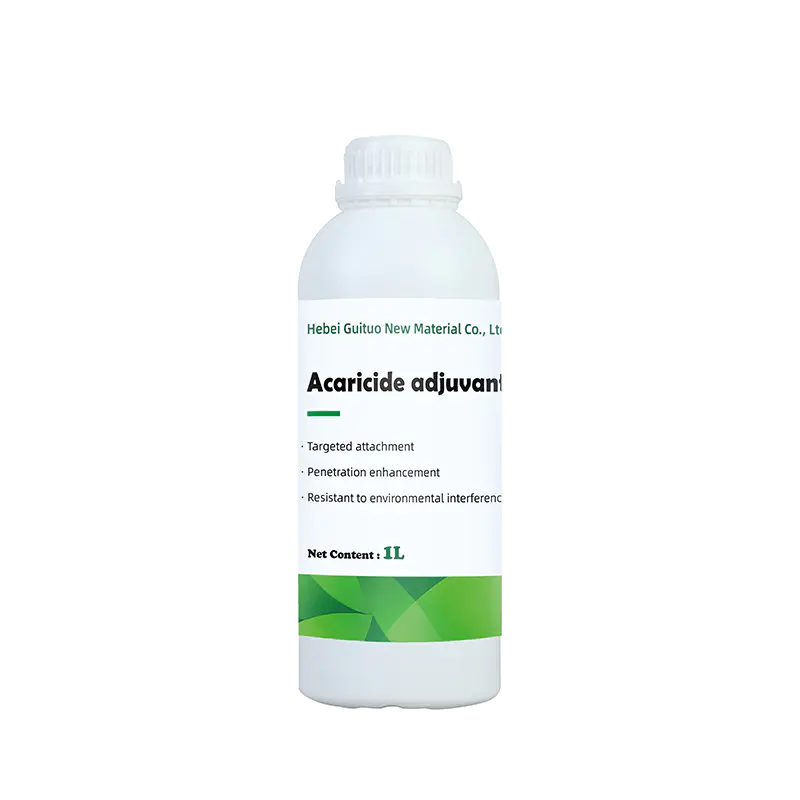
 Organosilicone Surfactant for Agricultural SprayingThis surfactant reduces surface tension, improves wetting and penetration, and can disperse or emulsify spray mixtures. It fits here as the core activator family that helps more active ingredient reach and enter the target.View Product →
The table below condenses the activator families into the three questions a sprayer operator actually asks: how much, for which job, and what can go wrong.
| Adjuvant family | Typical tank rate | Where it fits best | Points to watch |
|---|---|---|---|
| Non-ionic surfactant (NIS) | About 0.25% v/v (250 mL per 100 L) | General wetting and spreading across herbicide, fungicide and insecticide sprays; the default when a label says "add a surfactant" | Limited penetration boost on very waxy leaves; some products foam under high agitation |
| Crop oil concentrate (COC) | About 1% v/v (1 L per 100 L) | Grass herbicides and products that need help crossing the cuticle; hardened-off leaf surfaces | More aggressive on the crop as well as the weed; not interchangeable with every product |
| Methylated seed oil (MSO) | 0.5-1% v/v | Difficult weeds and dry conditions where stronger uptake is required | Highest crop-injury risk when overdosed; check crop and growth-stage sensitivity |
| Organosilicone super-spreader | 0.025-0.1% v/v (25-100 mL per 100 L) | Hard-to-wet targets, low-volume and drone spraying, short rain windows | Faster uptake can injure sensitive crop and product combinations; some labels restrict it |
| Ammonium sulfate (AMS) | About 1-2% w/v, per label | Hard carrier water and weak-acid herbicides; mild activator effect | Must dissolve completely before other products go in; undissolved crystals are abrasive to pumps |
Utility adjuvants
Utility adjuvants do not make the active ingredient more active. They stop the spray solution from defeating itself before it reaches the field - foam that will not break, products that separate into sludge, fines that drift two fields over, alkaline water that hydrolyzes an active ingredient inside the tank. Many spray failures blamed on "bad product" trace back to one of these physical problems.
| Utility adjuvant | Problem it solves | Typical situation |
|---|---|---|
| Water conditioner (AMS) | Calcium, magnesium or iron in the carrier water binding weak-acid actives | Hard water sources; weak-acid herbicides such as glyphosate and the sulfonylurea family |
| Drift retardant / deposition aid | Fine droplets leaving the target area | Applications adjacent to sensitive neighboring crops, vineyards or waterways |
| Anti-foam agent | Foam build-up that blocks pumps and sight gauges | Surfactant-heavy tank mixes and high-agitation systems |
| Compatibilizer | Products that separate, flocculate or gel when combined | Multi-product tank mixes, especially with liquid fertilizer carriers |
| Buffer / acidifier | Alkaline carrier water degrading certain actives in the tank | High-pH water and alkalinity-sensitive products |
| Dye / foam marker | Losing track of treated versus untreated passes | Large blocks, custom application work and spot-treatment records |
A note on multi-purpose adjuvant products that claim to do everything at once: convenience has a price measured in active content. When one jug promises conditioning, drift control, wetting and sticking together, the practical question is how much of each functional component is actually inside, and at what concentration. Reading the guaranteed analysis - and asking the manufacturer for the component breakdown - separates real multi-function products from water with a label.
Silicone Surfactants vs Conventional Surfactants: Where the Difference Shows
Conclusion first: on an easy-to-wet crop with decent water, a standard non-ionic surfactant is usually sufficient, and there is no reason to pay for more. The gap between conventional and silicone chemistry opens on three specific fronts - very hydrophobic leaf surfaces, very low spray volumes, and very short rain windows. If your season includes any of those, the silicone class deserves a deliberate evaluation.
The difference is structural. Conventional surfactants are hydrocarbon chains; organosilicone surfactants are trisiloxane ethoxylates, built on a siloxane backbone that is flexible and methyl-rich. That backbone lowers surface tension to roughly 20 to 22 mN/m, versus about 30 to 35 for good conventional surfactants - and, more importantly, it produces a spreading behavior that hydrocarbon chemistry cannot reach. A droplet containing an organosilicone super-spreader does not just flatten; on a waxy surface it expands rapidly into a thin continuous film, and on some surfaces it can carry a water film into stomatal openings and leaf-surface pockets that conventional droplets never enter.
Three practical consequences follow, and each one cuts both ways:
- Dose efficiency. Effective rates of 25 to 100 mL per 100 L mean a silicone super-spreader typically works at one-fifth to one-tenth of the volume of a conventional activator, which changes the per-hectare cost calculation even when the price per liter is higher.
- Speed. Rapid spreading and uptake shorten the rainfast window and reduce the hours in which weather can erase the application - valuable, and also the reason some labels restrict organosilicone with products or crops where accelerated uptake has caused injury.
- Coverage pattern. Super-spreading moves deposit into places conventional droplets miss, but an overdose can push liquid off leaf edges and into growing points where it was never intended. Rate discipline matters more with this class, not less.
Typical adjuvant dose per 100 L of spray solution (% v/v)
Indicative label ranges shown for comparison only. The label of the plant protection product you are mixing decides the rate you actually use.
For growers and formulators evaluating this class in detail, our overview of silicone super-spreading agents goes deeper into the surface chemistry and the crop situations where the spreading advantage is largest.
When an Adjuvant Earns Its Place - and When to Hold Back
The pesticide label is the first filter, and it is not a formality. Labels either require an adjuvant, recommend a class, name specific products or prohibit additions. After the label, the decision comes down to four field situations where an adjuvant reliably repays its cost:
Hard carrier water
Dissolved calcium and magnesium bind weak-acid herbicides into compounds the plant absorbs poorly. If your water leaves scale in the kettle, the same chemistry is working against your tank mix. AMS or a dedicated water conditioner restores the active ingredient.
Hard-to-wet targets
Waxy, hairy or upright leaves - brassicas, onions, cereals, advanced weed growth - shed untreated droplets. Surface-tension reduction converts bounce-off into film coverage, which extra water volume alone cannot fully replace.
Low-volume and drone work
Small droplets at low water volumes live or die on retention and anti-evaporation. Adjuvants designed for these applications protect droplets that would otherwise evaporate or drift before they ever land.
A tight rain window
When the forecast gives you four hours instead of twelve, fast-drying, uptake-accelerating adjuvants reduce washoff risk - which is why they are standard practice in rainy-season spraying programs.
Just as important are the situations where restraint is the better decision:
- When the label says none, or names a specific one. Some products are formulated complete, and adding surfactant can push uptake past what the crop tolerates. Certain fungicide labels restrict organosilicone explicitly.
- On sensitive crops or growth stages with an aggressive activator. Overdosing any activator buys leaf burn, streaking and complaints, not extra kill.
- With untested tank partners. An adjuvant that rescues one combination can crash another - emulsion inversion, gelling, settling. The jar test in the next section exists for exactly this reason.
- When the real problem is elsewhere. No adjuvant repairs spraying at the wrong growth stage, with the wrong nozzle, or after the pest has moved past its vulnerable window. Adjuvants optimize a correct application; they do not rescue an incorrect one.
And the rule that saves the most money: more is not better. Rates above the label range do not purchase additional activity. They purchase phytotoxicity risk, excess foam, residue questions and wasted spend.
Choosing the Right Adjuvant: A Sequence That Works
Treat adjuvant selection as a fixed sequence rather than a shelf decision. The order matters because each step eliminates options for the next:
- Read the pesticide label first. It may require, recommend, restrict or prohibit adjuvant classes. A label instruction overrides every other source of advice, including this article and any manufacturer recommendation.
- Test the carrier water. Hardness, pH and iron content shape the decision before any product choice does. High-hardness water pushes you toward a water conditioner regardless of which activator you prefer; alkaline water adds a buffer to the shopping list.
- Match the class to the job. NIS for general wetting; COC or MSO where cuticle penetration is the bottleneck; organosilicone super-spreaders for hard-to-wet targets, low volumes and tight rain windows; utility types for the specific physical failure you are preventing.
- Run a jar test on any new combination. Ten minutes with two bottles protects a full tank and a season's worth of trust in the program.
- Respect the order of addition. The same products added in the wrong order can produce the very failure the jar test was supposed to catch.
- Record what you used. Adjuvant, rate, water volume, water source, temperature and wind. Records turn one good season into a repeatable system instead of an anecdote.
The jar test, in four steps
- Prepare a proportionally scaled sample - typically 500 mL to 1 L of water carrying the same product ratios as the full tank.
- Add each component in the planned order of addition, with gentle agitation between additions and after the last one.
- Observe immediately, then again after 30 minutes: precipitate, flocculation, gels, oily layers, unexpected heat and foam that will not break are all disqualifying results.
- If the sample stays uniform, scale up with confidence. If it does not, change the combination or the order - before the failure happens in a 1000 L tank.
Order of addition, in general terms
- Water first, then the water conditioner such as AMS, fully dissolved.
- Dry products - wettable powders and water-dispersible granules - pre-slurried before they enter the tank.
- Suspension concentrates, agitated thoroughly.
- Emulsifiable concentrates and soluble liquids.
- Activator adjuvants near the end, followed by the remaining water volume under continuous agitation.
- Anti-foam agent at the start if the water source or the first additions are known foamers.
Where a label specifies a different order, the label wins. Where the tank holds liquid fertilizer instead of water, treat every combination as new and jar test without exception - fertilizer carriers are where compatibility problems concentrate.
Operations that prefer to standardize on one drum across many crops often settle on a high-performance drum-mix adjuvant, which packages the activator and utility functions into one simple dosing routine:
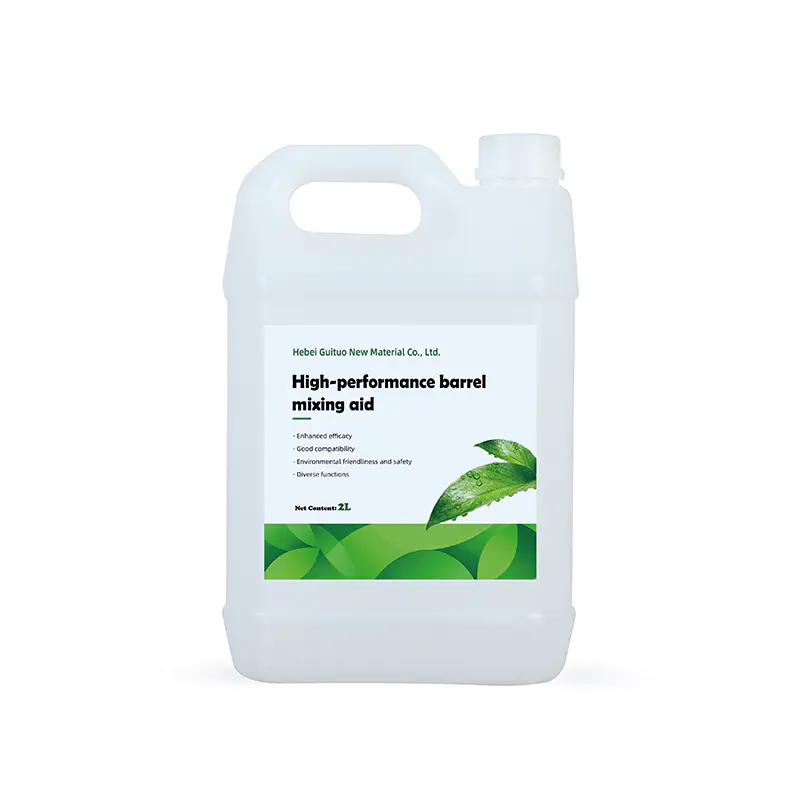
 High-Performance Drum-Mix AdjuvantA tank-mix adjuvant offering anti-drift, anti-evaporation, and deposition-promoting functions with broad pesticide compatibility. It suits growers who want one drum across many crops and a simple, consistent dosing routine.View Product →
Drones, Low Volumes and the New Adjuvant Requirements
Low-volume aerial application is the clearest case where adjuvant technology moved from a nice-to-have to a required part of the application plan. A ground hydraulic sprayer commonly delivers 100 to 300 L per hectare. A field drone often operates between 8 and 30 L per hectare with droplets a fraction of the size. Both changes punish the spray: a small droplet carries a large surface-to-volume ratio, so it evaporates quickly in warm air, and it stays airborne long enough to drift onto neighboring crops, residences and waterways.
Adjuvants developed for aerial and drone work are built around that reality. They typically combine anti-evaporation components that keep droplets alive in flight, drift-management behavior that moderates the fines in the spectrum, deposition aids that hold what lands on the leaf, and enough spreading activity to keep coverage uniform at very low water volumes. Tank chemistry is less forgiving at these concentrations as well - with ten times less water, every solubility limit and compatibility weakness in the mix is magnified, which is why jar testing matters even more for drone programs than for ground rigs.
For operations running both ground and aerial programs, dedicated aerial formulations avoid the compromise of stretching a ground-market product across both jobs:
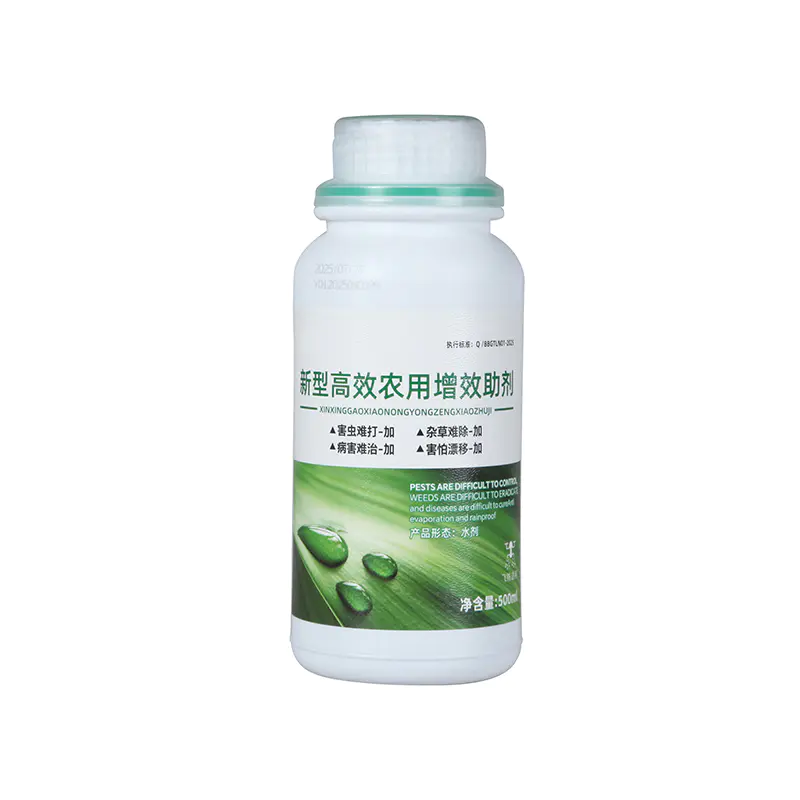
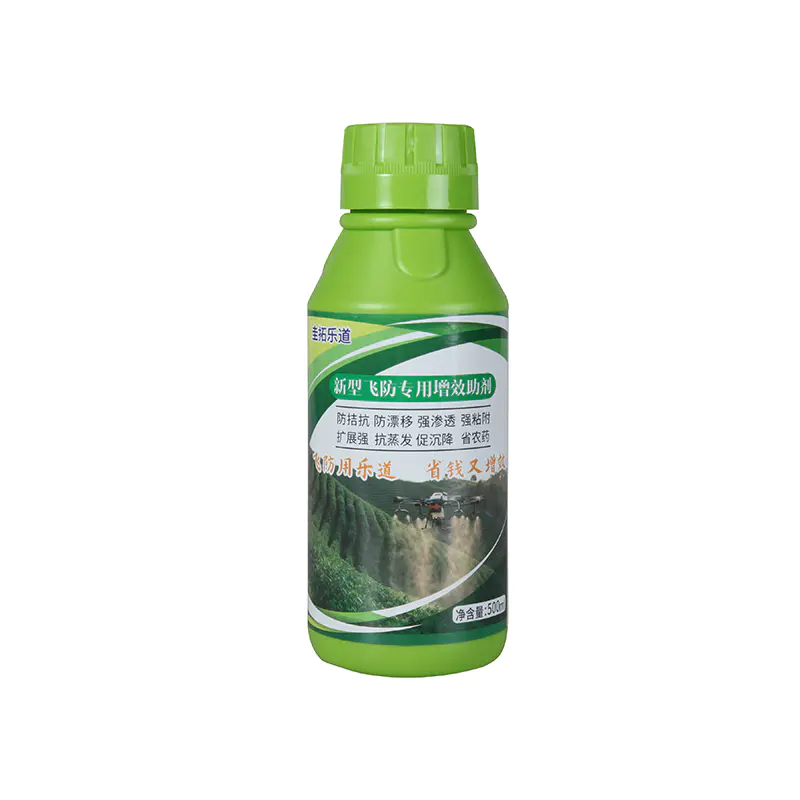
 Aerial Spraying Dedicated Enhancing AdjuvantFormulated for plant-protection drones, it improves droplet adhesion, slows evaporation, reduces drift, and speeds absorption. It addresses the low spray volumes and small droplets that punish aerial applications.View Product →
Before You Commit: Quality Checks That Protect a Season
Adjuvant quality problems rarely announce themselves. They show up as one drum that mixes perfectly and the next that foams for twenty minutes, or a batch that works in spring and behaves differently in summer heat. For a grower, that is an annoyance. For a formulator or distributor building adjuvants into their own product line, it is a season-level risk: every complaint in the field lands on the label that sold the product, not on the raw material supplier behind it.
Whether you are buying finished adjuvant for your own spraying or sourcing silicone intermediates for your formulations, the same checks protect both cases:
- Batch certificates of analysis that state active content, not only appearance, color and pH.
- A defined active-content window, with several recent certificates from different production dates so you can judge batch-to-batch consistency instead of a single flattering report.
- Core physical data: water content, pH range, viscosity behavior across storage temperatures and, for silicone surfactants, cloud point.
- Compatibility evidence with the formulation types you actually use, and a supplier willing to run a jar test on your specific combination before you order.
- Samples for small-plot testing ahead of the season, sized for real field sprayers rather than bench sprayers only.
- Packing and supply terms stated plainly: drum and IBC options, private-label packing if you sell under your own brand, and realistic lead times you can plan a production schedule around.
One more check that buyers frequently skip: evaluate the laboratory behind the product. A manufacturer with its own testing lab and a documented quality process from raw material to finished batch can show trend data across months of production, not just a passing result for the sample you received. As a manufacturer of agricultural organosilicone adjuvants, we treat that difference - between a passing sheet and a stable process - as the real definition of quality, and it is the standard we hold every outgoing batch to before it ships to Europe, Southeast Asia or a domestic plant protection partner.
Frequently Asked Questions About Agricultural Adjuvants
Is an adjuvant a pesticide?
Functionally, usually not. Most adjuvants have little or no direct activity against the target pest; their measurable effect comes through the product they are sprayed with. Regulatory treatment varies by country - some jurisdictions register spray adjuvants like plant protection products, others treat them as spray additives - so check the rules that apply where you operate. What does not vary: when a pesticide label calls for an adjuvant, following that instruction is part of using the product legally and effectively.
What is the difference between a surfactant and an adjuvant?
Adjuvant is the umbrella term for anything added to the spray to improve it. Surfactant is one family inside the activator group. Every surfactant is an adjuvant, but most adjuvants are not surfactants - water conditioners, drift retardants, anti-foam agents, buffers, compatibilizers and dyes are all adjuvants with no surfactant function at all.
Can household dish soap replace a surfactant?
We advise against it, and not just because the label says so. Dish detergents have unknown and uncontrolled surfactant concentration, foam heavily in spray tanks, carry fragrances and degreasers that can injure leaf tissue, and vary from batch to batch in ways no field program can account for. A correctly formulated field surfactant costs a fraction of one failed application and behaves the same every time.
How much adjuvant should I add to the tank?
Start from the pesticide label, not the adjuvant bottle. As orientation, typical label ranges are about 0.25 percent v/v for non-ionic surfactants, around 1 percent v/v for crop oil concentrates, 0.5 to 1 percent for methylated seed oils and 0.025 to 0.1 percent for silicone super-spreaders. Exceeding the range does not improve performance; it increases crop-injury and foam risk while raising cost.
My product already contains a built-in adjuvant. Do I still need one?
The adjuvants inside the formulation were chosen to keep that product stable and functional in the jug and in a standard spray solution. They cannot correct your water hardness, your waxy target leaves or your weather. If the label states that a tank adjuvant is required, add it. If the label is silent, base the decision on carrier water, target surface and conditions - and when the answer is unclear, a jar test plus a small field strip settles it with evidence.
Do silicone super-spreaders work with fungicides and insecticides too?
Yes. Better coverage generally benefits contact fungicides and insecticides, which must physically reach the spore or the pest to work. The same caution applies in both directions: faster uptake is an advantage until it delivers active ingredient into a sensitive crop faster than the crop tolerates, which is why labels state whether organosilicone is permitted and at what rate. Test any new crop and product combination on a small area first.
Does a super-spreader improve rainfastness?
In practice, usually yes. Rapid spreading and uptake shorten the time the deposit sits exposed on the surface, which reduces washoff in the critical first hours. The exact rainfast interval, however, is a label statement tied to the specific pesticide, so treat the interval printed on the label as binding rather than relying on general class behavior.
Related Reading
If you need technical data sheets, samples or a custom formulation for your own product line, the Service section of this site describes how we work with partners - including development from a customer drawing or sample and private-label packing under your own brand.
An adjuvant is one of the smallest line items on the input bill and one of the largest variables in whether the rest of the bill performs. If you are standardizing an adjuvant program across multiple crops, evaluating silicone-based activators for the first time, or sourcing organosilicone raw materials for your own formulations, our team can supply technical data sheets, application-rate guidance and samples for small-plot testing - and every batch we ship, whether one drum or a full container, passes through the same in-house laboratory checks described above before it leaves the plant.

Contact Information
Tel : +86-400-138-5268
Email : [email protected]
Phone : +86-15128434888 / +86-13511051998
Add : Xinqiao Environmental Protection Industrial Park, Wen'an County, Langfang City, Hebei Province, China
Contact Information
Copyright © Hebei Guituo New Material Co., Ltd. All Rights Reserved.
