

 English
 Français
 Português

 Home / News / Industry News / What Is the Most Commonly Used Adjuvant? Vaccine vs Spray Tank Answers
What Is the Most Commonly Used Adjuvant? Vaccine vs Spray Tank Answers
2026-10-12
What Is the Most Commonly Used Adjuvant? The Direct Answer
In human vaccines, the most commonly used adjuvant is alum, the family of aluminium salts that includes aluminium hydroxide, aluminium phosphate and aluminium potassium sulfate. It has appeared in licensed vaccines for more than eighty years and it remains the benchmark against which every newer adjuvant platform is measured. In agricultural spraying, the answer is a class rather than a single molecule: nonionic surfactants are the most commonly used adjuvant by volume, crop oil concentrates and methylated seed oils sit close behind, and organosilicone adjuvants are the fastest growing option in the tank.
The question has two answers because the word adjuvant carries two meanings. In immunology it describes a substance that amplifies the immune response to an antigen. In crop protection it describes a substance added to a spray tank to change how a pesticide deposits, spreads, penetrates the leaf surface or survives a rain event. Both definitions rest on the same principle. An adjuvant does not control the pest and does not protect the plant on its own. It changes how the active ingredient is delivered to the target.
| Sector or application | Most commonly used adjuvant | Typical inclusion rate | Primary function |
|---|---|---|---|
| Human vaccines | Aluminium hydroxide and aluminium phosphate, collectively called alum | 0.2 to 0.8 mg of aluminium per dose | Antigen adsorption, depot effect, local immune stimulation |
| Veterinary and laboratory immunology | Freund complete and Freund incomplete adjuvant | Equal volume emulsion per protocol | Strong and sustained antibody response in animals |
| Crop protection, surfactant type | Nonionic surfactant, usually an alcohol ethoxylate | 0.1 to 0.5 percent by volume | Wetting, droplet adhesion, spray coverage |
| Crop protection, oil type | Crop oil concentrate or methylated seed oil | 0.5 to 2.0 percent by volume | Cuticle softening and active ingredient penetration |
| Crop protection, silicone type | Organosilicone, a polyether modified trisiloxane | 0.025 to 0.1 percent by volume | Super spreading, stomatal flooding, fast rainfastness |
80+
Years of continuous use for aluminium salt adjuvants in licensed vaccines
0.025%
Lowest practical use rate for an organosilicone spray adjuvant
21-25
Surface tension in millinewtons per metre after silicone addition
5-10x
Increase in droplet spread area on a waxy leaf surface
Those four numbers explain why the two industries keep answering the question differently. Vaccine work is driven by immune biology and regulatory history. Spray work is driven by surface chemistry, water quality, droplet physics and crop tolerance, which is why a single tank can contain three different adjuvant functions at once.
Why Aluminium Salts Have Held First Place in Vaccines for Decades
Aluminium hydroxide and aluminium phosphate work by adsorbing antigen onto a particle surface. The antigen is then presented to the immune system in a concentrated, particulate form. A depot forms at the injection site, antigen release is slowed, and the particle itself triggers local inflammation through the NLRP3 inflammasome pathway. The practical result is a stronger and longer lasting antibody response than the antigen would produce alone, at a cost per dose that remains among the lowest of any adjuvant platform.
What the newer vaccine adjuvants changed
- MF59, a squalene oil-in-water emulsion, improved responses in older adults.
- AS03, also an oil-in-water emulsion, was used in pandemic influenza programmes.
- AS04 combines alum with a detoxified lipid A derivative and is used in some licensed vaccines.
- AS01 pairs a liposomal formulation with two immunostimulants and is used in shingles and malaria vaccines.
- CpG 1018, a TLR9 agonist, is used in hepatitis B vaccines and in several candidates in development.
Even with this wider toolbox, aluminium salts still account for the largest single share of adjuvanted vaccine doses produced globally. For anyone reading the immunology literature, that is the answer to the question. For anyone standing next to a spray tank, the useful answer starts with the chemistry of water and the waxy surface of a leaf.
The Agricultural Answer: What Actually Enters the Spray Tank
In crop protection the adjuvant market splits into four working families. Each one solves a different physical problem, and each one has a different cost per hectare and a different risk profile.
Nonionic surfactants: the volume leader
Alcohol ethoxylates and similar nonionic surfactants are the most commonly used adjuvant class in agriculture. Use rates run from 0.1 to 0.5 percent by volume. They lower the surface tension of water from about 72 millinewtons per metre to roughly 30 to 35, which is enough to stop droplets from beading on a waxy leaf. They are inexpensive, broadly compatible with most actives, and easy to source. Their limitation is spreading: a nonionic surfactant improves contact but does not flood the leaf surface the way a silicone does.
Crop oil concentrates and methylated seed oils
These products combine a petroleum or vegetable oil with an emulsifier package. Use rates sit between 0.5 and 2.0 percent by volume, which makes them the heaviest addition to a tank by weight. The oil phase softens the waxy cuticle and improves uptake of lipophilic active ingredients, which is why they perform well with grass herbicides and with actives that need to move through the leaf. The trade-off is crop safety in warm conditions and a higher chance of leaf burn in sensitive crops.
Organosilicone adjuvants
Organosilicone adjuvants are polyether modified trisiloxanes. They are used at 0.025 to 0.1 percent by volume, they push surface tension down to about 21 to 25 millinewtons per metre, and they spread a droplet across a leaf surface far more aggressively than any surfactant or oil. Because the dose is so low, a 200 litre drum treats a very large area, and the logistics cost per treated hectare is usually lower than a bulkier oil.
Chart note. Indicative share of agricultural adjuvant volume by class, based on typical regional usage patterns. Shares shift by country, crop and label recommendation, and in many markets the oil and silicone categories are growing faster than nonionic surfactants.
Head to Head: How the Adjuvant Classes Compare in Practice
Comparing adjuvants by chemistry alone is misleading. The useful comparison is what each class does inside the tank and on the leaf, at the dose the label allows. The table below uses working dilution figures rather than concentrate specifications, because that is what the droplet experiences.
| Adjuvant class | Typical use rate | Surface tension | Spread on waxy leaf | Rainfastness | Crop safety risk | Relative cost per hectare |
|---|---|---|---|---|---|---|
| Water alone | None | About 72 mN/m | Minimal, droplets bead | Poor | None | Zero |
| Nonionic surfactant | 0.1 to 0.5 percent | 30 to 35 mN/m | Moderate | Slow, hours | Low to moderate | Low |
| Crop oil concentrate | 0.5 to 2.0 percent | 28 to 32 mN/m | Moderate | Moderate | Moderate to high in heat | Medium |
| Methylated seed oil | 0.5 to 1.5 percent | 27 to 31 mN/m | Moderate to good | Moderate | Moderate | Medium |
| Organosilicone | 0.025 to 0.1 percent | 21 to 25 mN/m | Very high | Fast, minutes | Low to moderate | Low to medium |
| Silicone and oil blend | 0.1 to 1.0 percent | 23 to 28 mN/m | High | Fast to moderate | Low to moderate | Medium |
The pattern is consistent. As surface tension falls, spreading rises, and the amount of spray liquid that stays on the leaf increases. The cost curve, however, is not linear, because a product used at 0.05 percent is carrying a fraction of the freight, drum and storage cost of a product used at 1.5 percent.
Why Organosilicone Keeps Taking Share From Older Chemistries
Contact angle decides whether a droplet stays or rolls off
Water at around 72 millinewtons per metre forms a contact angle of 90 degrees or more on a waxy leaf. At that angle the droplet sits like a bead, and a light wind or a slightly tilted leaf sends it to the ground. Reducing surface tension to 21 to 25 millinewtons per metre collapses the contact angle toward zero, so the droplet collapses outward instead of sitting up. That single change is responsible for most of the coverage improvement growers see.
Stomatal flooding shortens the drying window
When the spreading pressure is high enough, the spray film does not stop at the edge of the droplet. It travels across the leaf, reaches the stomatal openings, and enters them under the pressure of the spreading front. Actives that would otherwise wait for slow cuticular diffusion get a second, faster route into the plant. This is why silicone adjuvants are so often paired with contact herbicides and with products where speed of knock-down matters more than total uptake.
Rainfastness measured in minutes, not hours
A conventional surfactant spray may need four to six hours of dry weather. An organosilicone formulation can dry to a rainfast state in fifteen to thirty minutes under normal conditions, because the spreading film is thin and the water leaves it quickly. In monsoon climates and in irrigated blocks, that difference can decide whether a spray needs to be repeated.
Water Nonionic Crop oil Seed oil Silicone
Chart note. Relative leaf coverage score during a standard spray trial with the same nozzle, water volume and active ingredient, changing only the adjuvant. Scores are indexed to the best performing treatment.
Specification Sheet: What to Measure Before You Buy a Silicone Adjuvant
Two organosilicone products can share the same headline description and behave completely differently in the field. The difference sits in active content, cloud point and the balance of the polyether chain. Ask for the following data on every batch, not only on the first sample.
| Parameter | Typical target | How it is measured | Why it matters in the field |
|---|---|---|---|
| Active content | 70 to 100 percent for a concentrate | Gas chromatography or gravimetric | Determines the real dilution rate and the true cost per hectare |
| Surface tension at 0.1 percent | 21 to 25 mN/m | Wilhelmy plate or du Nouy ring | Predicts spreading and stomatal uptake |
| Cloud point | Below 25 degrees Celsius for fast spreading grades | Heated water bath observation | Fast grades spread best but can break down in hot tank water |
| pH of a 1 percent solution | 5.5 to 8.0 | Calibrated pH meter | Signals compatibility risk with sensitive actives |
| Viscosity | 20 to 60 centipoise at 25 degrees | Brookfield viscometer | Affects pumping, dosing accuracy and drum emptying |
| Foam height | Low, under 20 mm after 30 seconds | Standard shake or sparge test | Foaming wastes tank volume and can starve the pump |
| Dilution stability | Clear solution at 0.025 to 0.5 percent | Visual check in standard hard water | Prevents scum, gel and clogged filters |
| Heat and freeze stability | No separation after 14 days at 54 degrees, no crystallisation at 0 degrees | Accelerated storage test | Confirms the product survives sea freight and cold storage |
Cloud point deserves a separate mention. A low cloud point, often between 20 and 30 degrees Celsius, is a feature rather than a defect in fast spreading grades, because the surfactant loses solubility just above that temperature and deposits on the leaf surface instead of staying in solution. The side effect is that the same product in very warm tank water can turn hazy before it ever reaches the nozzle. Knowing the cloud point lets you adjust water temperature, order of addition and spray timing instead of blaming the pesticide.
Matching the Adjuvant to the Job in Front of You
Herbicides
Herbicide programmes are the largest single use case for organosilicone adjuvants. Contact herbicides such as glufosinate and paraquat benefit from rapid spreading and fast rainfastness. Systemic herbicides such as glyphosate benefit from improved coverage of the leaf, but they already contain their own surfactant system, so an added silicone should be dosed conservatively. With grass herbicides such as clethodim or quizalofop, a crop oil concentrate is often the better partner because the active needs an oil phase to cross the cuticle. Hard water above 300 parts per million is a separate problem, and it is usually solved with an ammonium sulfate addition rather than with more adjuvant. A useful starting point is to check the label wording first, then adjust the organosilicone rate between 0.025 and 0.05 percent for systemic products and 0.05 to 0.1 percent for contact products.
For a dedicated herbicide partner product, see the silicone surfactant for herbicide application range, which is formulated for tank stability with common herbicide actives.
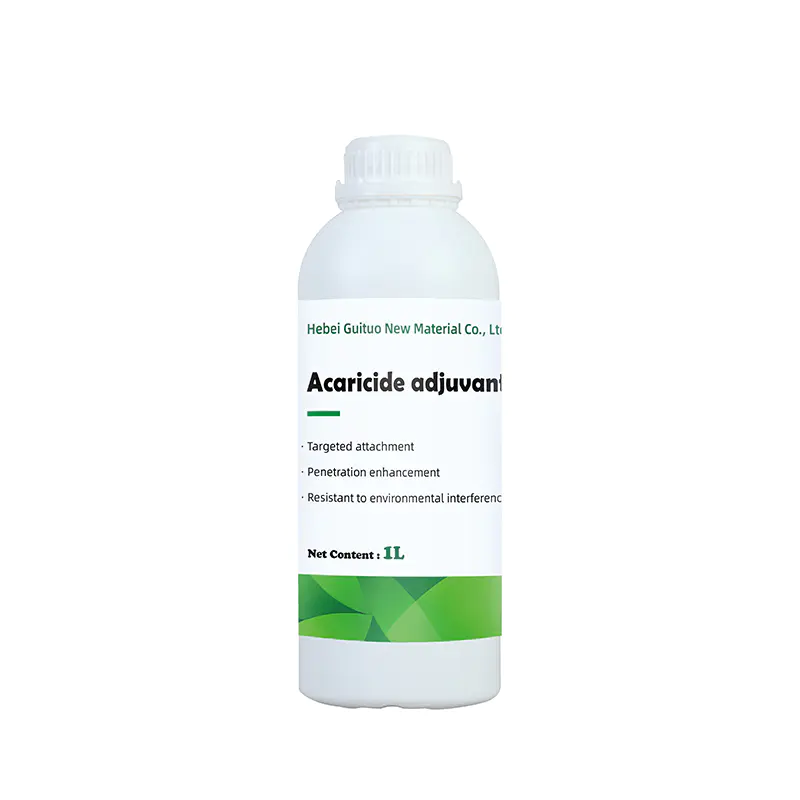
Miticides and acaricides
Mites live on the underside of leaves, in the boundary layer of air where sprays struggle to reach. Two-spotted spider mite and related species also develop resistance quickly, so coverage failures turn into control failures. Silicone adjuvants help here for a mechanical reason: the spreading film wraps around the leaf margin and reaches surfaces that a beaded droplet never touches. Adding a mite killing adjuvant at low dose can lift control without raising the active ingredient rate, which matters when resistance management limits how often you can use a given mode of action.
Fungicides
Protectant fungicides need a continuous film on the leaf, and systemic fungicides need enough residence time for uptake. Silicone adjuvants improve both, but the dose matters. Above roughly 0.1 percent, spreading becomes so aggressive that the film can thin to the point where less active remains per unit area. For protectant products, stay on the lower end and increase water volume instead. For downy mildew programmes in vine and vegetable crops, a fast spreader combined with good spray timing gives measurably better rainfastness.
Foliar fertilisers and biostimulants
Foliar nutrient sprays are salt solutions, and salts burn leaf edges when they dry in concentrated droplets. Spreading the droplet over a larger area reduces the local salt concentration and reduces the burn risk, which is why silicone adjuvants are used in foliar calcium, boron and micronutrient programmes. The same spreading effect improves uptake of amino acid and seaweed based biostimulants.
Aerial and drone application
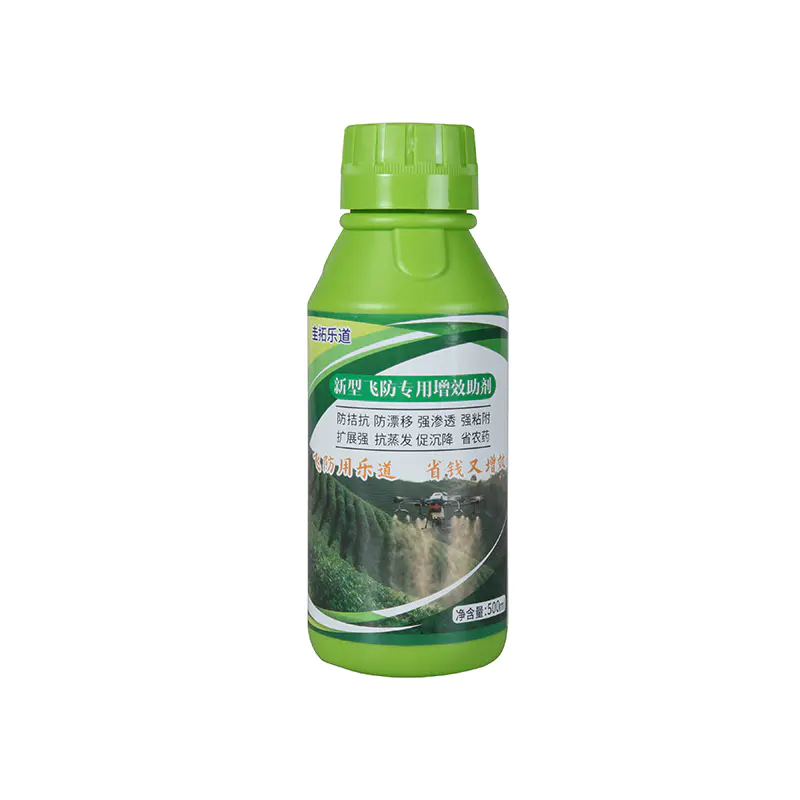
Aerial and unmanned sprayers typically apply 10 to 50 litres per hectare, which is a fraction of a ground rig volume. Droplets are small, evaporation is fast, and drift is a constant risk. At these volumes the adjuvant is no longer optional, because there is not enough water to carry the active to the target without spreading and anti-evaporation help. Rates usually sit at the higher end of the label range, and compatibility with the anti-drift and evaporation control package should be confirmed before the season starts.
The Cost Side: What 0.05 Percent Actually Changes
Adjuvant decisions are usually made on price per litre and should be made on cost per treated hectare and cost per unit of active ingredient delivered. The table below models a single hectare of a contact herbicide application.
| Item | No adjuvant | Nonionic surfactant at 0.25 percent | Organosilicone at 0.05 percent |
|---|---|---|---|
| Spray volume | 200 litres | 200 litres | 150 litres |
| Adjuvant volume used | 0 | 0.5 litres | 0.075 litres |
| Assumed adjuvant price | Not applicable | Low per litre | Higher per litre |
| Adjuvant cost per hectare | Zero | Baseline | Roughly 40 to 60 percent lower |
| Active ingredient delivered to leaf | Reduced by run-off and beading | Improved | Improved further through spreading |
| Rainfast window | Long, four to six hours | Long to moderate | Short, fifteen to thirty minutes |
| Likely respray risk | High in wet weather | Moderate | Low |
| Water and pumping cost | Highest | Highest | Lower, less water carried |
Three effects compound here. First, the silicone dose is small, so the adjuvant line in the budget shrinks even when the price per litre is higher. Second, less water per hectare means fewer tank fills, less fuel and fewer hours in the field. Third, a shorter rainfast window reduces the probability of a respray, and one avoided respray usually costs more than the adjuvant for the whole season. That is the commercial argument, and it holds whenever the adjuvant is matched to the right active, the right water quality and the right crop stage.
Compatibility, Mixing Order and the Jar Test
Most adjuvant failures reported by growers are not product failures. They are mixing failures. Adjuvants are surfactants, and surfactants interact with everything else in the tank, including other surfactants, oils, fertilisers, hard water salts and the formulation package already built into the pesticide.
Add products in this order
- Fill the tank to three quarters with clean water and start agitation.
- Add water conditioners and ammonium sulfate first, and let them dissolve fully.
- Add dry formulations such as wettable powders and water dispersible granules.
- Add suspension concentrates and capsule suspensions.
- Add emulsifiable concentrates and oil based products.
- Add the organosilicone adjuvant last, then top up to final volume.
Run a jar test before every new combination
- Use one litre of the same water source you will spray with, not distilled water.
- Add the products in the same order and at the same ratios as the field tank.
- Stir for one minute and let the sample stand for thirty minutes.
- Look for cream, gel, flocculation, oil film or rapid separation.
- Measure the pH and record it. Most silicone adjuvants are stable between pH 5 and pH 9.
- Repeat with water heated to about 30 degrees Celsius if you spray in the heat of the day.
Warning signs. A hazy solution at 0.05 percent is acceptable in most fast spreading grades. A milky, curdled or oily layer is not, and the combination should be reformulated rather than forced through the sprayer.
Tank mix order matters most when the pesticide already carries a heavy surfactant load. Adding a silicone on top of an already saturated system can push the emulsion past its stability limit, and the result is a tank that separates between the mix tank and the boom. Reducing the silicone rate, adding a compatibility agent, or splitting the application into two passes are all practical fixes.
Six Field Problems and Their Real Causes
Leaf burn after spraying
Usually caused by too much oil or silicone in hot, dry conditions, or by spraying a stressed crop. Reduce the rate, spray early or late, and increase water volume.
Foam filling the tank
Often traced to over-agitation, a high foam surfactant, or two surfactants fighting each other. Slow the agitator, add an antifoam, and confirm the silicone foam height before the season.
Cream or gel in the tank
An incompatibility between an emulsifiable concentrate and a high-load surfactant. The jar test catches it in fifteen minutes instead of after a full tank.
Spray washed off by rain
Either the rainfast window was longer than the label stated, or the dose was too low to form a continuous film. Check the adjuvant rate against water volume, not against tank size alone.
Uneven coverage across the field
Usually a nozzle and pressure issue rather than an adjuvant issue. Silicone improves what lands on the leaf, but it cannot correct a boom that is too high or a nozzle that is worn.
Sudden loss of activity in hard water
Calcium and magnesium ions tie up anionic actives and some surfactants. A water conditioner added before the pesticide is the standard fix.
Sourcing Checklist for Importers, Formulators and Private Label Programmes
When you buy agricultural silicone adjuvants in commercial volume, the product is only part of what you are buying. Consistency between batches, documentation that satisfies a customs or registration authority, and a supplier who can hold a specification for years are worth more than a small price difference on the invoice.
- Certificate of analysis for every batch, with active content, surface tension, pH, viscosity and appearance recorded.
- Surface tension test method stated explicitly, because plate and ring methods do not always agree.
- Cloud point declared as a range, not a single figure, and confirmed on the production batch.
- Accelerated heat stability data, typically fourteen days at 54 degrees Celsius, plus a freeze thaw cycle.
- Safety data sheets in the language of the destination market, with correct transport classification.
- Packaging options that fit your channel, from one litre bottles and twenty litre drums to two hundred litre drums and intermediate bulk containers.
- Lead time and production capacity confirmed in writing, especially before a seasonal peak.
- Custom formulation and private label capability if your market needs a different active content or a blended package.
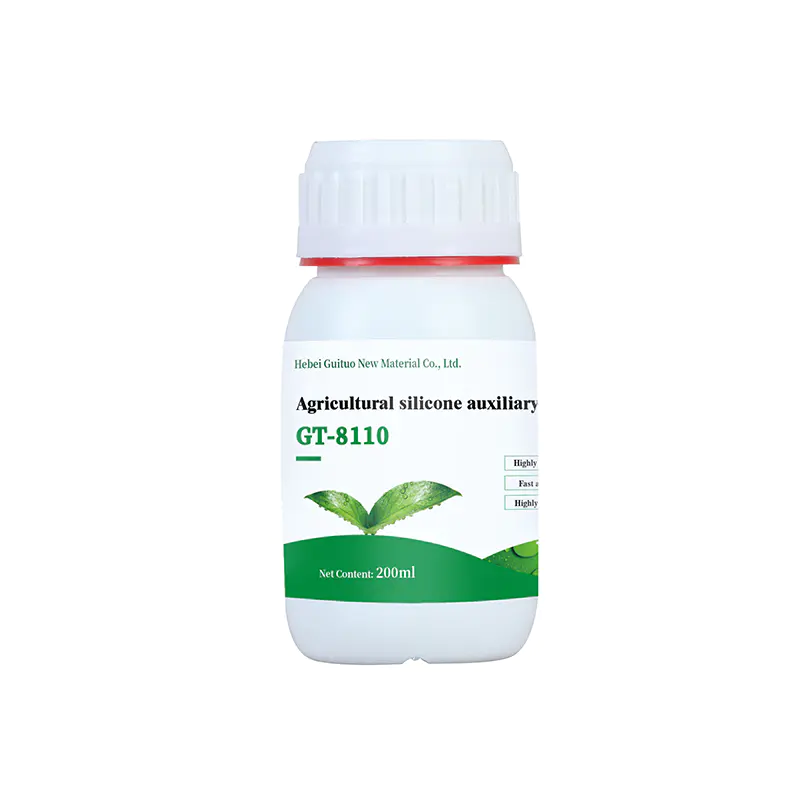
For buyers building a differentiated portfolio, a high-performance agricultural adjuvant with a documented specification is the anchor item, and the high performance silicone agricultural adjuvant range is built around that requirement. Formulators who need a specific cloud point, a low foam profile or a particular active content can usually be served through custom development rather than being pushed into a catalogue product that only approximately fits.
Frequently Asked Questions
So which adjuvant is the most commonly used one overall?
If the context is vaccines, it is alum, the aluminium salt family. If the context is crop spraying, it is the nonionic surfactant class by volume, followed by crop oils, with organosilicone adjuvants the fastest growing segment. There is no single molecule that leads both lists, because the two industries are solving completely different problems.
Is an organosilicone adjuvant the same as a nonionic surfactant?
No. A nonionic surfactant is typically an alcohol ethoxylate with a hydrocarbon backbone. An organosilicone adjuvant has a siloxane backbone with polyether groups attached, which gives it a much lower surface tension and much stronger spreading on waxy and hairy leaf surfaces. The two are often blended, but they are chemically distinct and behave differently at the same dose.
Can I add a silicone adjuvant to every pesticide?
Almost, but not automatically. Products that already contain a heavy surfactant load, some emulsifiable concentrates and a few biological products can be destabilised by an additional high-performance spreader. Run a jar test, start at the low end of the rate range, and check the label for explicit warnings about added surfactants.
What dose should I use?
For contact actives, 0.05 to 0.1 percent by volume is a common working range. For systemic actives with a built-in surfactant, 0.025 to 0.05 percent is usually enough. The correct figure depends on water volume per hectare rather than tank size, so always convert the label rate into millilitres per hundred litres and check it against your actual spray volume.
Does an adjuvant let me reduce the pesticide rate?
It can improve the amount of active that reaches and stays on the target, which sometimes allows a lower rate within the registered range. It does not replace the registered rate, and cutting below the label in a resistance management programme is a poor trade. Treat the adjuvant as a delivery improvement, not as a substitute for active ingredient.
Why do my miticide sprays keep failing?
Mites feed on the underside of the leaf, where spray coverage is poorest and where resistance develops fastest. Poor deposition is one of the most common reasons a miticide underperforms even when the active is still effective. Adding a mite specific adjuvant improves contact with the underside, the leaf margins and the webbing, and it reduces the number of mites that survive at the edge of the spray pattern.
How do I check rainfastness without a laboratory?
Spray a small untreated block, let it dry for the interval you want to test, then run a sprinkler or a watering can over part of the block for a set period. Compare damage on the watered section against an unwatered section sprayed at the same time. Repeat the test with and without the adjuvant. The difference in control after simulated rain tells you more than any laboratory number.
How should silicone adjuvants be stored?
Keep drums closed, out of direct sunlight and within a moderate temperature range. Two years of shelf life is typical when the container stays sealed and the product is not exposed to repeated freeze thaw cycles. If a drum has been open for months, check for a skin or a change in appearance before use, and never mix a separated product into a tank.
Is one adjuvant enough for the whole season?
No. A contact herbicide programme, a systemic fungicide programme, a foliar nutrient programme and a drone application have different physical requirements. Most professional spray programmes use two or three adjuvant types across a season, chosen by active ingredient, water quality, spray volume and weather window rather than by habit.

Contact Information
Tel : +86-400-138-5268
Email : [email protected]
Phone : +86-15128434888 / +86-13511051998
Add : Xinqiao Environmental Protection Industrial Park, Wen'an County, Langfang City, Hebei Province, China
Contact Information
Copyright © Hebei Guituo New Material Co., Ltd. All Rights Reserved.
