

 English
 Français
 Português

 Home / News / Industry News / What Is an Organosilicone Adjuvant and How Does It Work in Agriculture
What Is an Organosilicone Adjuvant and How Does It Work in Agriculture
2026-11-04
What Is an Organosilicone Adjuvant?
An organosilicone adjuvant is a trisiloxane-based surfactant added to agricultural spray solutions to improve wetting, spreading, and penetration. Its molecule consists of a silicone backbone (Si-O-Si), terminal trimethylsiloxy groups, and a short ethylene oxide chain. This compact structure is the reason it can lower the surface tension of water from about 72 mN/m to roughly 21 mN/m at concentrations as low as 0.02% to 0.1% v/v. A standard non-ionic surfactant, by comparison, only reaches 32 to 35 mN/m at a higher dose.
That 10 to 12 mN/m difference changes what a droplet actually does when it lands. On a waxy cabbage leaf, plain water forms beads with a contact angle near 105 degrees. The same water with 0.05% organosilicone adjuvant forms a thin film with a contact angle of 15 to 25 degrees. A droplet that used to cover 3 mm² of leaf area can now cover 80 to 100 mm². This extraordinary spreading is why organosilicone agents are commonly called "super-spreaders" in crop protection literature.
The practical result for a farmer or formulator is straightforward: more of the active ingredient touches the target, less is lost to runoff and evaporation, and the spray becomes less sensitive to rain that falls soon after application. Organosilicone adjuvants are used with herbicides, fungicides, insecticides, plant growth regulators, foliar fertilizers, and desiccants, and they are especially valuable on hard-to-wet surfaces such as waxy cereal leaves, hairy weed foliage, and mature citrus fruit.
Core fact: an organosilicone adjuvant works mainly by reducing the surface tension of the spray liquid below the critical surface tension of most plant waxes (25–35 mN/m). Once that threshold is crossed, droplets stop beading and start spreading.
How an Organosilicone Adjuvant Works in the Spray Tank
The action of an organosilicone adjuvant happens in four stages: adsorption at the liquid surface, surface tension reduction, dynamic superspreading, and stomatal penetration. Each stage contributes to a different benefit in the field, so it helps to understand them separately.
Stage 1: Adsorption at the Air-Water Interface
When organosilicone is mixed into water, the trisiloxane molecules migrate to the air-water interface. The hydrophobic methyl groups point toward the air, while the ethoxy chains stay in the water. Because the molecule is branched and compact, it packs more tightly at the interface than a linear alcohol ethoxylate of similar molecular weight. This dense packing is what allows such a small dose to produce such a large drop in surface tension.
Stage 2: Rapid Spreading Driven by a Surface Tension Gradient
A droplet hitting a leaf does not sit still. Organosilicone molecules at the front edge of the droplet are continuously pulled away as the liquid advances, which creates a zone of lower surface tension at the front and higher surface tension at the back. Liquid is then physically dragged from the back to the front to balance the difference. This phenomenon, called the Marangoni effect, is what turns a static droplet into an actively expanding film. The spreading happens in seconds, not minutes, which matters when spray droplets land on a hot leaf surface and have little time to settle.
Surface tension of spray liquids at label rates (20°C)
Pure water
72 mN/m
Non-ionic surfactant 0.1%
32 mN/m
Organosilicone 0.05%
21 mN/m
Stage 3: Stomatal Flooding
Stomata are natural pores on the leaf surface that regulate gas exchange. A spray liquid can enter a stomatal pore only if its surface tension is low enough to overcome the capillary resistance of the pore geometry. In practice, that means roughly below 25 to 30 mN/m. An organosilicone adjuvant at 21 mN/m is below this threshold, so the liquid can flood the sub-stomatal cavity and deliver the active ingredient directly into the internal leaf tissue. This shortcut is particularly valuable for systemic products and for diseases that colonise the lower leaf surface, where conventional contact droplets rarely reach.
Stage 4: Shorter Rain-Fast Time
Rain-fastness is a measure of how quickly a spray deposit becomes resistant to wash-off. Two mechanisms are involved. First, the thinner film left by an organosilicone adjuvant dries faster than a beaded droplet, so the active ingredient deposits more quickly. Second, the fraction that enters via stomata is already inside the leaf and cannot be washed away. In many published evaluations, glyphosate, glufosinate, and contact fungicides applied with an organosilicone adjuvant retained activity when rain fell 1 to 2 hours after application, compared with 6 to 24 hours for a spray without it. The exact window always depends on the active ingredient, the crop, and the weather.
Measured Performance Comparison: Organosilicone vs. Non-Ionic Surfactant
The following table summarises typical laboratory values measured at 20°C on a paraffin wax surface. They illustrate the difference in behaviour between pure water, a standard non-ionic surfactant, and an organosilicone adjuvant. Actual field numbers will vary with water hardness, leaf species, temperature, and the other products in the tank, but the relative order remains consistent.
| Property | Pure water | Non-ionic surfactant (0.1% v/v) | Organosilicone adjuvant (0.05% v/v) |
|---|---|---|---|
| Surface tension (mN/m) | 72 | 32–35 | 21–23 |
| Contact angle on wax (degrees) | 105–110 | 65–80 | 15–25 |
| Spread area of a 5 µL droplet (mm²) | ≈3 | ≈28 | ≈95 |
| Time to reach maximum spread | — | ≈8 s | ≈2 s |
| Typical rain-fast time | — | 6–8 h | 1–2 h |
| Stomatal penetration | No | Rarely | Yes, into sub-stomatal cavities |
The rows worth reading most carefully are the spread area and the rain-fast time. If you are buying an organosilicone adjuvant for a post-emergence herbicide, the rain-fast row is your main justification. If you are buying it for a contact fungicide on a waxy crop, the spread area row matters more. A product that performs only at 35 mN/m will not give you either benefit reliably, which is why it is important to request documented surface tension and contact angle data before committing to a regular supply.
Types of Organosilicone Adjuvants and Formulation Differences
Not every organosilicone adjuvant behaves the same, and choosing the wrong type is a common reason field results disappoint. The chemistry can be grouped into four families.
- Unmodified trisiloxane ethoxylates: the classical super-spreader. Fastest spreading, lowest surface tension, but also the most sensitive to hydrolysis in alkaline water. Best used in neutral tank water at low rates.
- Modified or stabilised trisiloxanes: the Si-O-Si bond is protected by chemical modification to resist hydrolysis. Surface tension is slightly higher (23–25 mN/m), but stability in hard or alkaline water improves significantly. This type is preferred when the tank pH cannot be controlled.
- Organosilicone and non-ionic surfactant blends: mid-range spreading with larger, heavier droplets that are less prone to drift. These are a good general-purpose choice for field crops where canopy penetration matters more than maximum spread.
- Organosilicone and organic oil blends: combine superspreading with oil solubility for very waxy weed species, insect eggs, and situations where slow drying is wanted.
Formulation type also affects performance. Concentrated liquids containing more than 50% active trisiloxane are the most economical on a per-hectare basis, but they are more viscous and require thorough agitation. Emulsifiable concentrates are easier to measure but contain solvents that can contribute to crop injury on sensitive foliage. Powder formulations exist but are rare because of the difficulty of loading the liquid trisiloxane onto a soluble carrier.
When comparing offers from different suppliers, look at the declared active content first. A product that contains only 10% trisiloxane may look cheaper per litre, but you will need five times more of it to reach the same surface tension, and the extra solvents or co-surfactants can change the spray behaviour in ways the label never warns about. The best way to evaluate a new product is to ask for a certificate of analysis showing surface tension at the recommended use rate, not just the density and pH.
Use Rates and Mixing Instructions
For most foliar applications, the recommended rate of a concentrated organosilicone adjuvant is 20 to 100 mL per 100 L of spray solution, which equals 0.02% to 0.1% v/v. The lower end of this range is enough for systemic products on easy-to-wet leaves; the upper end is reserved for waxy or hairy targets and for high-volume applications where the spray is diluted a lot. Aerial and drone applications usually use 20 to 50 mL per 100 L because the spray volume itself is lower and the droplet spectrum is finer.
Mixing order matters. The standard sequence in a spray tank is: fill two-thirds of the water, add wettable powders or water-dispersible granules first, then suspension concentrates, then emulsifiable concentrates, then soluble liquids, then the organosilicone adjuvant, and finally any fertilizer or pH buffer. The organosilicone should be added only after the pesticide is already well dispersed. Adding it too early can coat undissolved particles and delay their hydration.
Before scaling up to a full field, run a jar test using the same water, the same products, and the same mixing order. Fill a 1 L glass jar with water, add the products at the exact field rates, shake gently, and let it sit for 10 minutes. Look for three things: cream or oil floating on top, flakes or sediment at the bottom, and any sudden change in viscosity. A stable sample stays uniform. If any of these appear, adjust the mixing order or change the adjuvant type.
One caution applies to every rate recommendation: an organosilicone adjuvant is a performance enhancer, not a water conditioner. Increasing the dose beyond the label rate does not produce proportionally better spreading once the surface tension is already around 21 mN/m. It mainly increases the risk of phytotoxicity and drift, especially in fine droplet applications.
Stability and Compatibility Issues
The most important chemical limitation of organosilicone chemistry is hydrolysis of the Si-O-Si bond in water. This bond breaks most slowly at a pH between 5 and 7, which is the natural range of most clean spray water. Above pH 8, the hydrolysis rate rises quickly and the super-spreading property is progressively lost. The practical consequences are simple: do not prepare organosilicone spray solutions in advance, do not leave them sitting overnight, and do not mix the adjuvant into water that has been heavily buffered to an alkaline pH without checking the label.
Chlorine is another destroyer of trisiloxane activity. If your source water is treated with chlorine or hypochlorous acid, the active ingredient can degrade before the spray leaves the nozzle. The same applies to tank-mix partners with strong oxidising properties, such as peracetic acid or hydrogen peroxide products. Cases of "the super-spreader stopped spreading" are almost always traced back to alkaline water, chlorinated water, or a tank that was mixed hours earlier.
Hard water with a calcium and magnesium concentration above 400 ppm can destabilise the emulsion of some formulated products. The trisiloxane molecule itself is non-ionic and tolerates hard water well, but the emulsifier package around it may not. This is another reason to request a hard-water stability test from your supplier. Low storage temperature also changes the picture: products with a high active content can become cloudy or even crystalline below 0°C. The label normally states whether such crystals redissolve on warming and how strongly to agitate before use.
If you are building a tank mix with a concentrated fertilizer, keep the concentration moderate. Highly saline solutions can salt out the surfactant from the emulsion and produce an oily film on the water surface. When in doubt, mix the full recipe in a jar test first. A five-minute check is less expensive than a blocked nozzle or a failed application in the middle of the season.
Where Organosilicone Adjuvants Deliver the Largest Benefit
The response to an organosilicone adjuvant is not the same on every crop. It is largest where the leaf surface is naturally difficult to wet, and smallest where the spray already spreads easily. Recognising these categories helps you spend money only where it returns value.
- Waxy broadleaf crops: cabbage, broccoli, cauliflower, kale, onion, garlic and leek carry a thick crystalline wax layer. Plain water nearly rolls off these leaves. An organosilicone adjuvant can improve coverage more than any other single change to the spray recipe.
- Cereal crops: wheat, barley and rice leaves are upright, hairy and covered with silica bodies. The fine hairs trap an air layer that prevents droplets from reaching the surface. Superspreading pushes that air out and allows the liquid to contact the epidermis.
- Citrus and top fruit: mature fruit and the underside of leaves are difficult to cover with contact products. Stomatal penetration also gives systemic fungicides a faster route into the tissue during weather periods that alternate between rain and spray windows.
- Post-emergence herbicide programs: the rain-fast benefit is the main reason growers add an organosilicone adjuvant to glyphosate, glufosinate and contact herbicide mixes, especially when a shower is forecast within a few hours.
- Foliar fertilizers: micronutrient sprays such as zinc, boron and manganese are applied at low doses. Better wetting means a larger proportion of the applied nutrient stays on the leaf instead of dripping off or drying as a concentrated speck.
There are also situations where the adjuvant adds little value. In crops that are already easily wetted, such as fresh tomato or cucumber leaves in humid weather, the response may be small because the spray already spreads adequately. In high-volume BFS spraying of the same crop, the cost of the adjuvant may be justified less by coverage than by drift control, and a blend with a lower spread profile is often a better choice. The skill is fitting the chemistry to the target, not automatically adding the strongest available product.
What to Check When Buying Organosilicone Adjuvants
Procurement decisions for agricultural spray additives should be based on measurable specifications, not on marketing language. The list below reflects the points a production-minded purchaser should verify before accepting a new batch or switching suppliers.
- Active trisiloxane content on the certificate of analysis. A genuine organosilicone adjuvant should state the percentage of active trisiloxane ethoxylate, not just "silicone content".
- Surface tension performance at the recommended dose. Ask the supplier to document a value of 21 to 23 mN/m at 0.05% v/v in distilled water at 20°C. If they cannot provide this, the product is unlikely to behave as a true super-spreader.
- Viscosity at low temperature. A product that pours easily at 25°C may become a gel at 5°C. Request the viscosity value at 5°C and check whether the product remains homogeneous after freeze-thaw cycling.
- pH and non-ionic nature. The product label should clearly state the pH of the concentrate and confirm that it is non-ionic, which is the basis of its wide compatibility.
- Hydrolytic stability data. A responsible manufacturer tests its own formulation at pH 7, 8 and 9 over several hours. Ask for that data instead of discovering a problem in the field.
- Packaging and batch consistency. For repeated supply, confirm the packaging sizes, drum closures, and whether the lot number is traceable to a certificate of analysis.
Not all agricultural silicone super-spreading agents are the same, even when the active ingredient name looks identical. Differences in the stabiliser system, the co-surfactant package, and the manufacturing process show up in the hard-water test and the jar test long before they show up in the field. The same logic applies to reading technical reports: it is worth comparing the chemistry of the specific product with typical agronomic observations found in grower-orientated references such as this review of how growers select organosilicone surfactants. A responsible supplier should be able to explain exactly which type of trisiloxane is in the drum and why the formulation was designed that way.
Organosilicone Adjuvants in Our Product Range
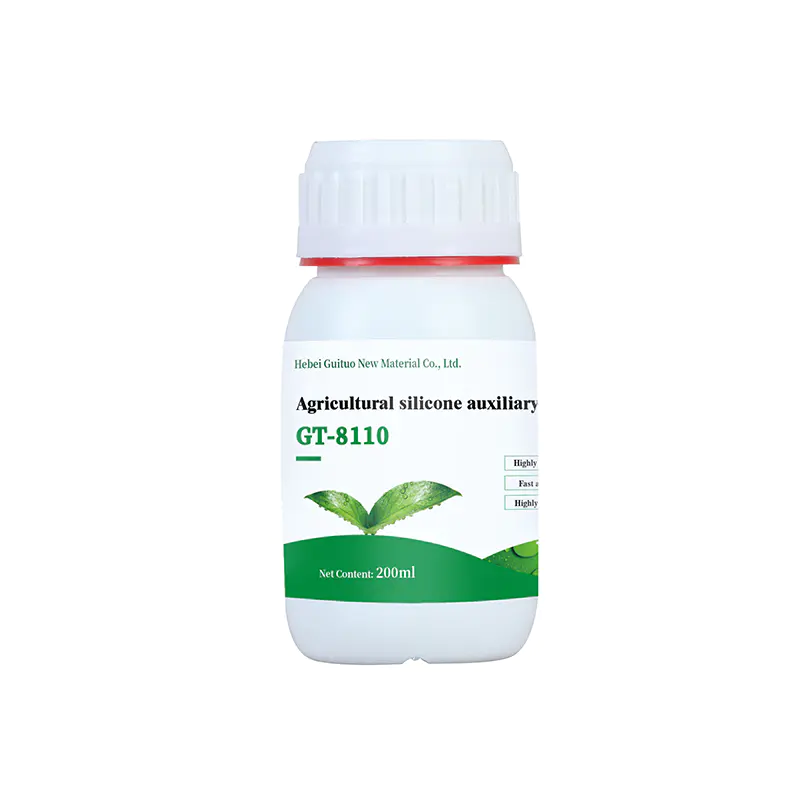
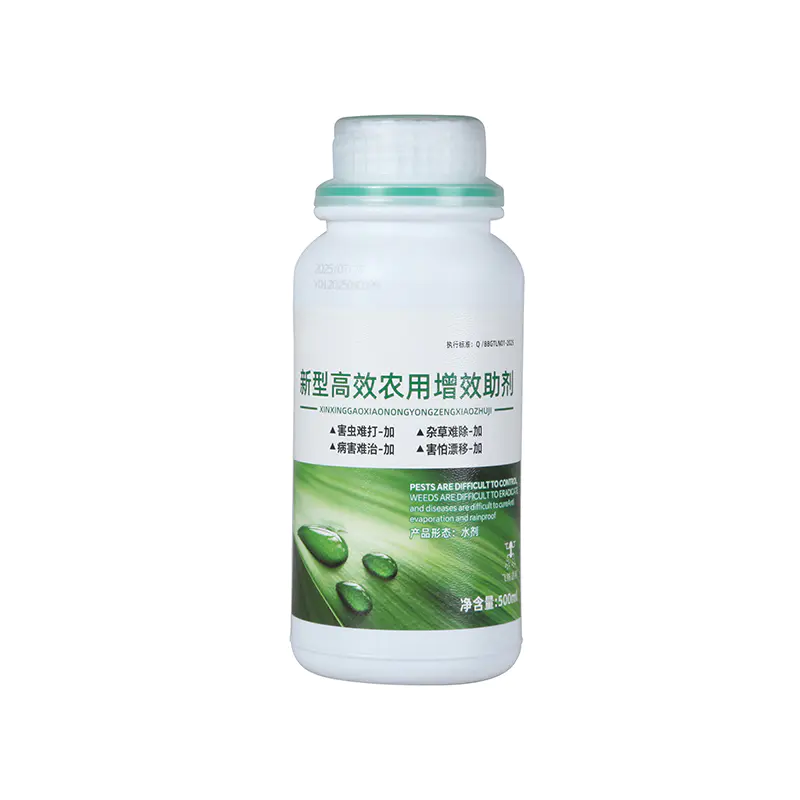
We manufacture organosilicone adjuvants for agricultural spray applications across three practical formats. All are built on the same trisiloxane core chemistry but differ in dilution behaviour, tank-mix compatibility, and target use case.
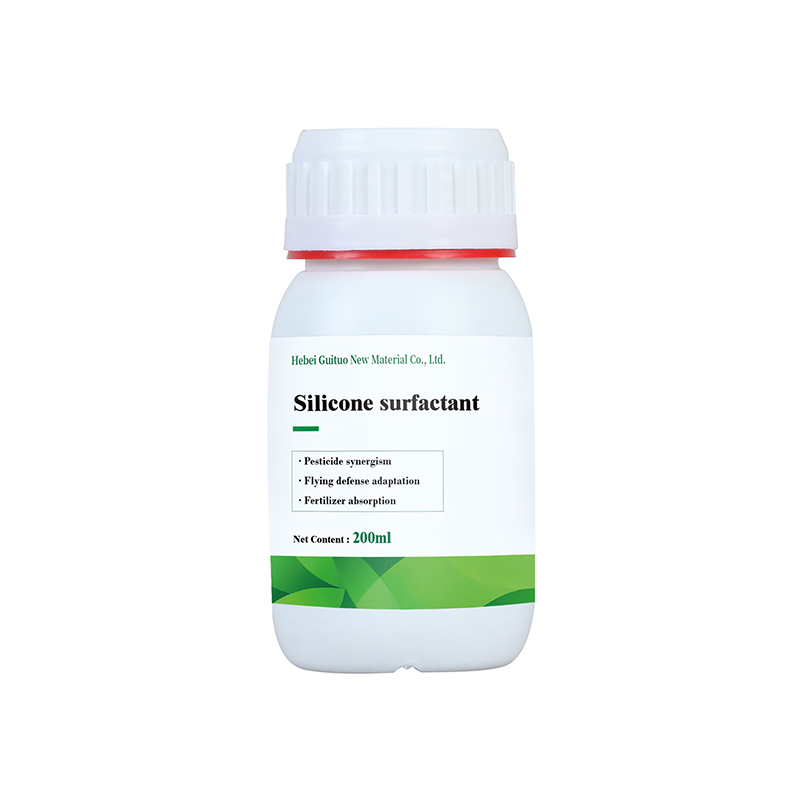
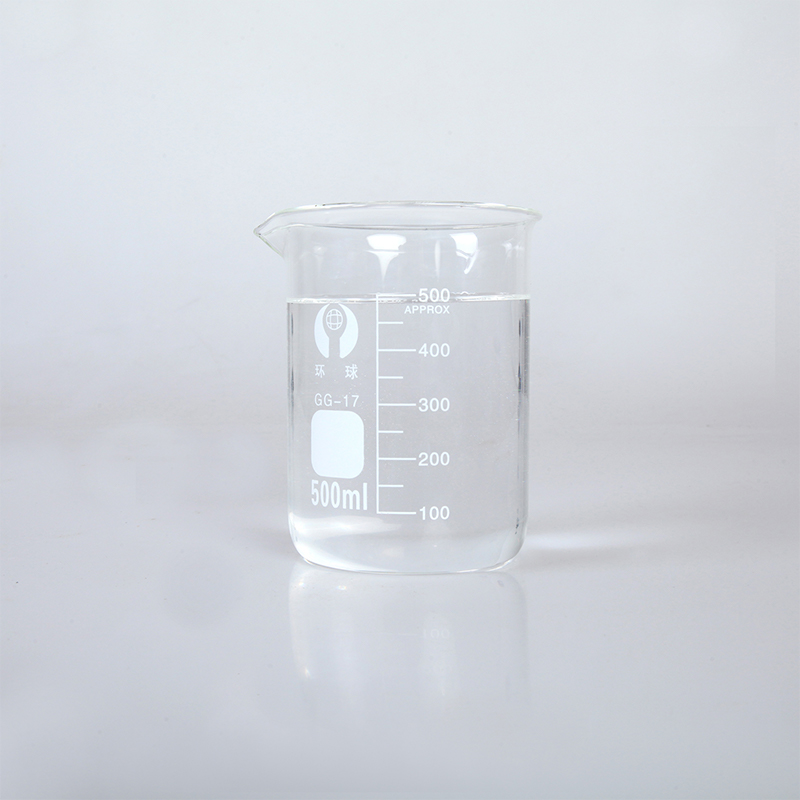 Trisiloxane-Based Organosilicone Surfactant for Agricultural Spray ApplicationsThis versatile surfactant reduces surface tension and improves wetting, penetration, and spreading. It suits various formulations and blends seamlessly with the three formats discussed here.View Product →
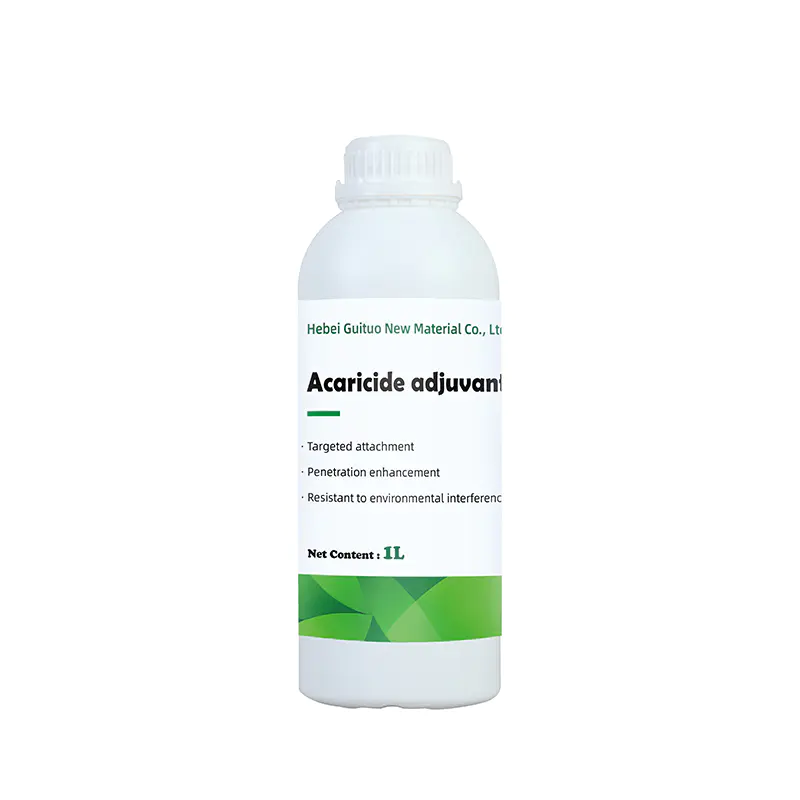
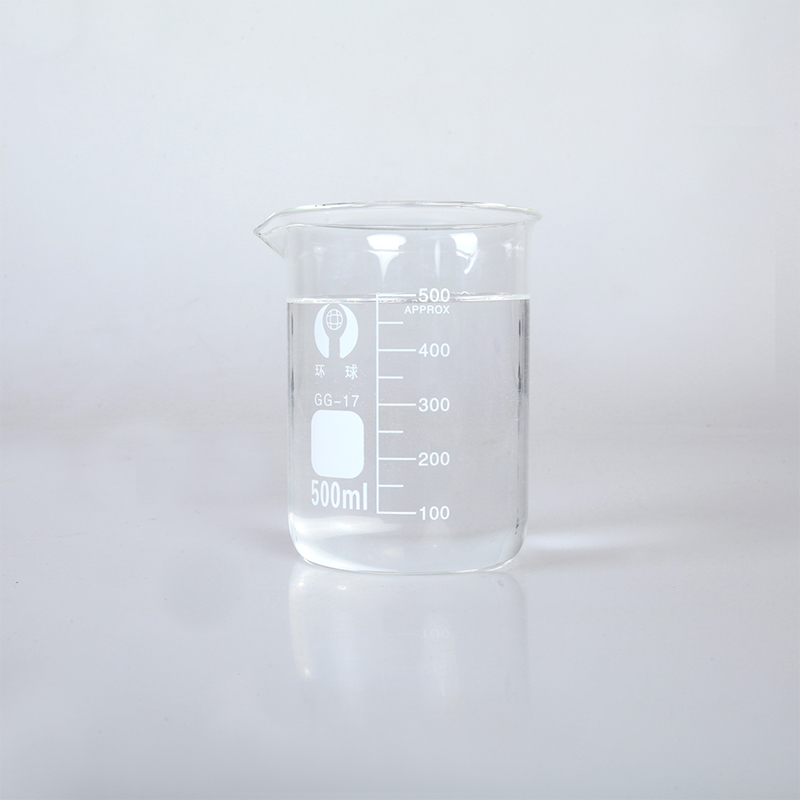 High-Performance Drum-Mix Adjuvants for Tank-Mix Pesticide EnhancementDesigned for direct tank mixing, this adjuvant boosts adhesion, penetration, and compatibility with most pesticides. Its eco-friendly formula also supports anti-drift and drone spraying.View Product →
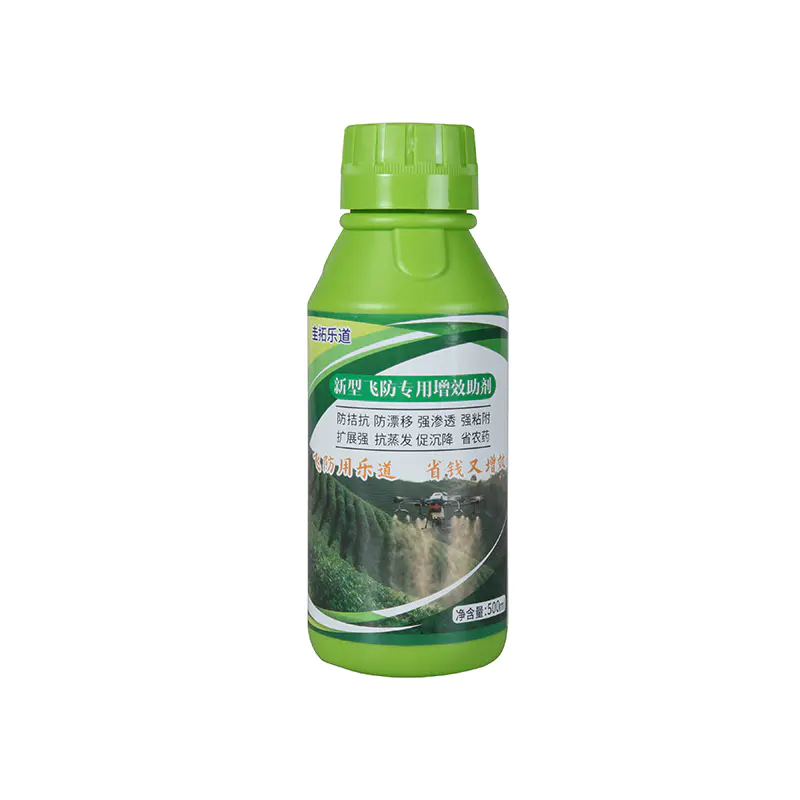
 Aerial Spraying Dedicated Enhancing Adjuvants for Drone ApplicationsSpecialized for plant-protection drones, it improves spray utilization by up to 50% through strong adhesion, anti-evaporation, and drift reduction, even in hot, dry conditions.View Product →
Each product is manufactured with internally measured batch release testing for surface tension, pH, viscosity and emulsion stability, so the specification you receive with the first order is the specification you receive with every order. If you are developing a private label or a custom dilution, we can discuss the formulation parameters directly.
Frequently Asked Questions
How much organosilicone adjuvant should I add to 100 litres of water?
For most foliar sprays, add 20 to 50 mL per 100 L when using a high-active concentrate. This is equivalent to 0.02% to 0.05% v/v. For waxy leaves such as cabbage, onion or mature weeds, increase to 50 to 100 mL per 100 L, up to a maximum of 0.1% v/v. Never exceed the rate printed on the label of the pesticide, because some pesticide labels already contain a built-in surfactant and an additional adjuvant could push the total surfactant load too high.
Can I mix an organosilicone adjuvant with foliar fertilizer?
Yes, but the fertilizer must be diluted first. Add the fertilizer to the water, mix thoroughly, then add the pesticide, and add the organosilicone adjuvant last. Concentrated fertilizer solutions, especially those with a high salt content, can destabilise the emulsion if they contact the undiluted adjuvant directly. Always run a jar test with the actual recipe before loading the full tank.
Why did my spray stop spreading after I added the organosilicone?
The most common cause is alkaline water. If the tank pH is above about 8, the trisiloxane bond hydrolyses and the product loses its spreading power within the first hour. Chlorinated water and strong oxidising tank-mix partners have the same effect. Check the pH of the final tank solution, and if it is high, reduce the alkalinity before adding the adjuvant. A second cause is adding the adjuvant too early in the mixing sequence, before the pesticide has fully dispersed.
Which is better: an organosilicone adjuvant or a standard non-ionic surfactant?
Neither is strictly better; they solve different problems. A non-ionic surfactant is cheaper, more forgiving, and perfectly adequate for easy-to-wet targets. An organosilicone adjuvant spreads further, penetrates stomata, and shortens rain-fast time, but it is more sensitive to water quality and carries a higher risk of crop injury if overdosed. On waxy weeds, difficult canopies, or when rain is imminent, the organosilicone is the clearer choice. For routine broadcast sprays on easy crops, a non-ionic surfactant is often the more cost-effective option.
Can an organosilicone adjuvant damage my crop?
Yes, if the rate is excessive. The same superspreading that improves coverage can flood stomatal cavities and the intercellular spaces of young leaves, causing water-soaking symptoms known as phytotoxicity. Sensitive situations include tender new growth, ornamentals, and fruits near harvest. Staying within 0.02% to 0.1% v/v and avoiding repeated applications to the same sensitive crop are the two key protective measures.
How soon after spraying can rain fall without losing the effect?
With an organosilicone adjuvant, many trials show effective rain-fastness within 1 to 2 hours for products like glyphosate and certain contact fungicides. Without an adjuvant, the same products may require 6 to 24 hours of dry weather. The rain-fast window depends on the active ingredient, the rate used, the leaf condition, and the drying speed that day, so treat the 1 to 2 hour figure as a planning guide rather than a guarantee. When a heavy storm is expected within minutes after spraying, no adjuvant can fully protect the deposit.

Contact Information
Tel : +86-400-138-5268
Email : [email protected]
Phone : +86-15128434888 / +86-13511051998
Add : Xinqiao Environmental Protection Industrial Park, Wen'an County, Langfang City, Hebei Province, China
Contact Information
Copyright © Hebei Guituo New Material Co., Ltd. All Rights Reserved.
