

 English
  Français
  Português

What Is a Mold Release Agent? Types, How It Works & Selection Guide
2026-08-03
Imagine a freshly molded rubber gasket fused to a steel mold cavity. The press opens, the part stays behind, and an operator pries it out without damaging the tool. This failure scenario is what mold release agents prevent — a thin chemical coating decides whether production runs smoothly or fights itself all day.
What Is a Mold Release Agent?
A mold release agent is a chemical substance applied to a mold surface before molding. It forms a thin, uniform barrier between the mold and the material being shaped, allowing the finished part to be removed cleanly. Release agents are supplied as liquids, sprays, pastes, or wipes, with chemistries such as silicone, wax, fatty acid esters, and metal soaps.
The purpose is simple: the part should stick to itself, not to the tool that shapes it. Without a release layer, molded materials bond to the mold, causing pulled edges, torn surfaces, and stuck pieces. In severe cases, ejection becomes impossible and the tool may be damaged.
Why Is It Called a "Release" Agent?
In molding terminology, release means the clean separation of a finished part from the mold. You will also hear the terms parting agent, anti-stick agent, and mold release used for the same job. Whatever the label, the function is identical: control the interface so separation happens at the right time.
How Does a Mold Release Agent Work?
A mold release agent works by forming an ultra-thin release film on the mold surface, typically one to two microns thick. This film is a chemical barrier that prevents the molding material from wetting the tool. When the part cools or cures, it holds together but does not bond to the coated surface.
The decisive property is low surface energy. A coating with very low surface energy resists being wetted by molten plastic, uncured rubber, or liquid resin. At the same time, the coating must anchor firmly to the mold. This selective adhesion — strong to the tool, weak to the part — is what makes clean release possible.
Silicone coatings, for example, have a surface energy of roughly 20 to 24 mN/m, far below most cured polymers. That gap is why silicone chemistry dominates release technology.
The Role of Surface Energy in Mold Release
Think of water beading on a waxed car hood. The wax stops the water not by being thick but by being hard to wet. A low-surface-energy coating keeps the polymer from spreading into intimate contact with the tool. The higher the contact angle, the weaker the tendency to stick — which is why one product releases effortlessly while another causes headaches.
Main Types of Mold Release Agents
Semi-permanent release agents bond to the mold and provide multiple releases per application. They require a clean, dry mold and reward that preparation with fewer interruptions. Sacrificial agents are consumed during each ejection and must be reapplied every cycle; they give operators direct control over coating thickness, an advantage on high-gloss parts where residue is unacceptable.
By carrier, the common groups are solvent-based, water-based, and co-solvent systems. By active chemistry, they are silicone, wax, fatty acid esters, or metal soaps. Solvent-based products dry quickly but bring VOC and flammability concerns; water-based products are safer but need longer drying; co-solvent systems balance evaporation speed with lower VOC.
Water-Based vs. Solvent-Based Release Agents
The choice between water-based and solvent-based release agents comes down to drying speed, wetting, compliance, and safety. Solvent-based systems flash off quickly and wet complex geometry with ease, suiting fast-cycle lines. Water-based systems reduce VOC and fire risk. The trade-off is longer drying time and greater sensitivity to surface cleanliness.
| Selection criterion | Water-based release agents | Solvent-based release agents |
|---|---|---|
| Drying speed | Slower; the film needs time to set | Fast; suits high-output lines |
| Environmental profile | Low VOC and reduced fire hazard | Higher VOC; requires ventilation |
| Wetting on complex molds | Requires clean, prepared tool surfaces | Spreads easily over intricate geometry |
Silicone vs. Non-Silicone Release Agents
Silicone-based release agents are the workhorses of molding. Their low surface energy, thermal stability, and thin-film behavior make them effective across rubber vulcanization and thermoplastic injection. Many formulations are built on methyl silicone oil, a base fluid that delivers consistent release. To improve water dispersibility, formulators add polyether-modified silicone oil, which stabilizes water-based systems without sacrificing efficiency.
 Polyether-Modified Silicone Oil Manufacturers, SuppliersGuituo New Material is China polyether-modified silicone oil manufacturers and suppliers, offer custom polyether-modified silicone oil, i...View Product →
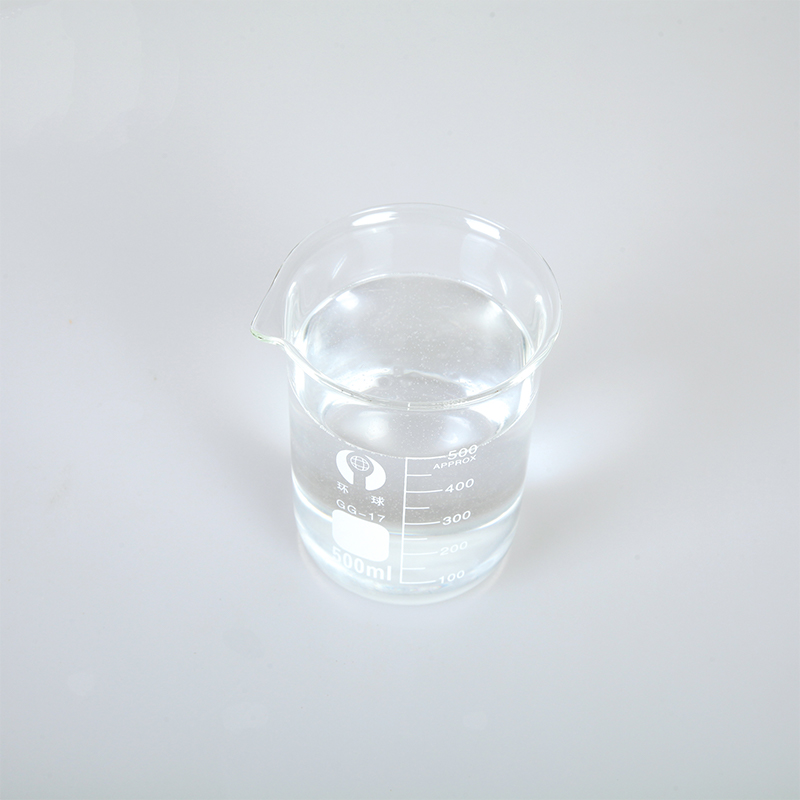 Custom 201 Methyl Silicone Oil Manufacturers, SuppliersAs China 201 methyl silicone oil manufacturers and suppliers, Guituo New Material offers custom 201 methyl silicone oil, features enhance...View Product →
The main limitation is migration: silicone residues can transfer to parts and interfere with painting, printing, or bonding. Where downstream adhesion is critical, non-silicone alternatives such as waxes, metal soaps, and fatty esters are preferred. Some processors also avoid silicone in cosmetic or cleanroom applications where contamination is unacceptable.
How to Choose the Right Mold Release Agent for Your Process
Selection is rarely one-size-fits-all. The right release agent depends on your mold, material, cycle time, and part surface requirements. Use this four-step framework.
- Identify the mold material and surface condition. Steel, aluminum, and chrome-plated tools behave differently; a dirty or damp mold defeats even the best product.
- Identify the molding material and process temperature. Rubber vulcanization, thermoplastic injection, and polyurethane casting place different demands on the film.
- Determine release frequency. For multiple releases without reapplication, choose a semi-permanent system; for maximum control on glossy parts, apply a sacrificial product each cycle.
- Check end-use surface requirements. If parts will be painted, printed, glued, or coated, silicone may cause adhesion problems — use a non-silicone formulation instead.
If your team is unsure, run a short trial on the actual mold and material combination. When in doubt, consult your supplier about customized OEM and ODM services to obtain a release agent tailored to your molding conditions.
Matching Release Agents to Mold Materials
Steel molds accept nearly all release chemistries, though surface finish matters. Aluminum molds conduct heat quickly and need a film that covers uniformly. Chrome-plated molds are extremely smooth, so the coating must adhere tenaciously to the plating. Always clean and dry the mold before applying a new semi-permanent layer; otherwise the coating fails within a few cycles.
Application Methods: Spray, Brush, and Wipe
Spraying is the most common method because it is fast and even; keep the nozzle at a consistent distance and use short sweeping passes. Brushing suits tight spots such as ribs and undercuts. Wiping produces the thinnest film and is best for precision molds. Avoid over-application: excess product accumulates on the tool, forms build-up, and transfers to parts.
Key Benefits of Using a Mold Release Agent
A well-matched release agent improves the economics of a molding operation in four measurable ways.
- Higher part quality: clean release prevents tearing, surface marks, and distortion, so more parts leave as first-quality product.
- Faster cycles: parts eject cleanly on the first try, reducing cycle time and manual intervention.
- Longer mold life: without forced prying or mechanical stripping, parting lines and thin cores wear much more slowly.
- Lower total cost: fewer rejects, less downtime, and less mold maintenance add up quickly, often exceeding the cost of the release product itself.
Saving a few seconds per cycle and a few scrap parts per shift adds up quickly in busy presses.
Common Molding Problems That Release Agents Solve
Sticking is the most obvious symptom. When a part refuses to eject, operators may pry or strip the tool, damaging both part and mold. The right release agent eliminates this battle at its source.
- Tearing: soft elastomers and low-durometer plastics tear when removed aggressively; a release film reduces interface adhesion so the surface stays intact.
- Build-up: the wrong agent — or too much of the right one — leaves deposits on the tool. Application control matters as much as product selection.
- Deformation: a part that sticks on one side can warp during ejection; uniform release coverage prevents uneven stress.
- Parting line damage: repeated sticking creates flash and burrs; reliable release keeps the parting line clean.
One caution: release agents are not cure-alls. If a part keeps failing, check temperature, pressure, cure time, and tool finish before changing chemistry. Sometimes the fastest fix is a corrected process parameter, not a new product.
Mold Release Agents in Plastic and Rubber Molding
Plastic and rubber molding are the largest application areas for release agents, and they place different demands on the chemistry.
In thermoplastic injection and compression molding, the release agent must withstand melt temperatures without decomposing and must not leave residues that interfere with downstream operations. In rubber molding, it must survive vulcanization heat, sometimes exceeding 160°C, and prevent cured rubber from bonding to the tool. Sulfur-cured compounds are especially aggressive, so rubber molders favor release systems with strong affinity for metal surfaces.
Anionic-type release agents, which contain negatively charged surfactant components, are generally understood to adsorb uniformly on metal surfaces, forming a release film that combines good wetting with dependable ejection. For plastic and rubber molding applications, an anionic plastic and rubber mold release agent offers a balanced combination of wetting performance and release efficiency, and it is available in formulations suited to spray and wipe application.
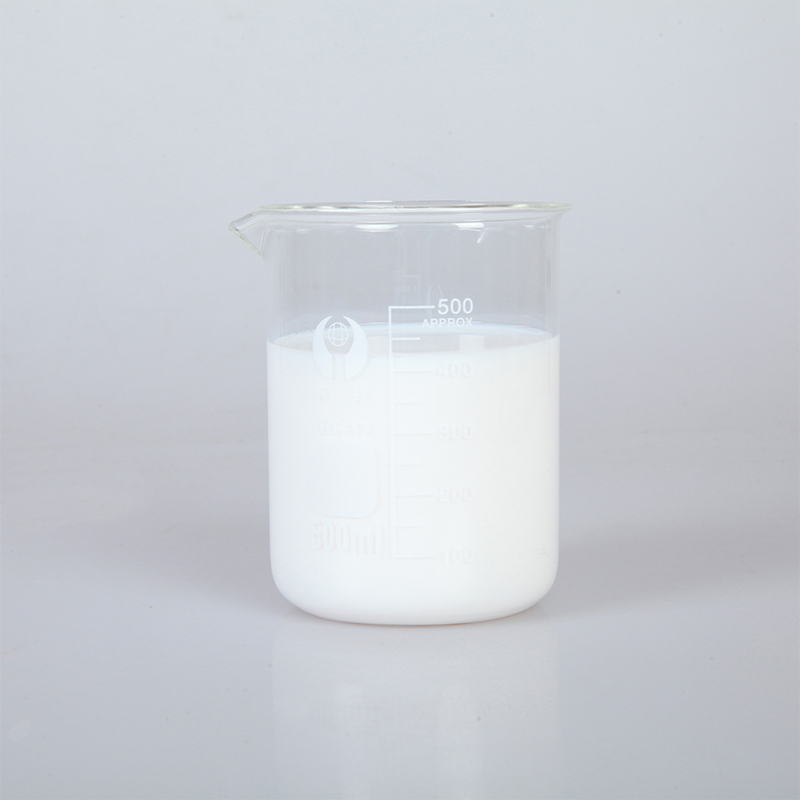 Anionic Plastic/Rubber Mold Release Agent Manufacturers, SuppliersAs China plastic mold release agent manufacturers and rubber mold release agent suppliers, Guituo New Material custom anionic plastic/rub...View Product →
Application practice also differs. On plastic parts with fine surface texture, a thinner film is safer because excess coating can fill micro-details and dull the finish. In rubber molding, operators often prefer a semi-permanent product that lasts several demolding cycles, since frequent reapplication inside a hot mold is slow. These process realities should guide both chemistry choice and application method.
Conclusion
Here is what matters: release agents are chemical barriers applied to a tool surface; they work by forming a thin, low-surface-energy film; they come in semi-permanent and sacrificial forms; and the right choice depends on your mold, process, frequency, and part surface requirements.
Choosing the right release agent is as important as choosing the right molding material. It affects scrap rate, cycle time, mold life, and product appearance. For manufacturers seeking a tailored release solution, our R&D and manufacturing capabilities cover development, production, and supply, so the release system you run can match the real conditions on your press.

Contact Information
Tel : +86-400-138-5268
Email : [email protected]
Phone : +86-15128434888 / +86-13511051998
Add : Xinqiao Environmental Protection Industrial Park, Wen'an County, Langfang City, Hebei Province, China
Contact Information
Copyright © Hebei Guituo New Material Co., Ltd. All Rights Reserved.
