

 English
  Français
  Português
 Home / News / Industry News / Why Are agricultural organosilicon additives the Secret to Preventing Spray Washout
 Why Are agricultural organosilicon additives the Secret to Preventing Spray Washout
2026-05-18
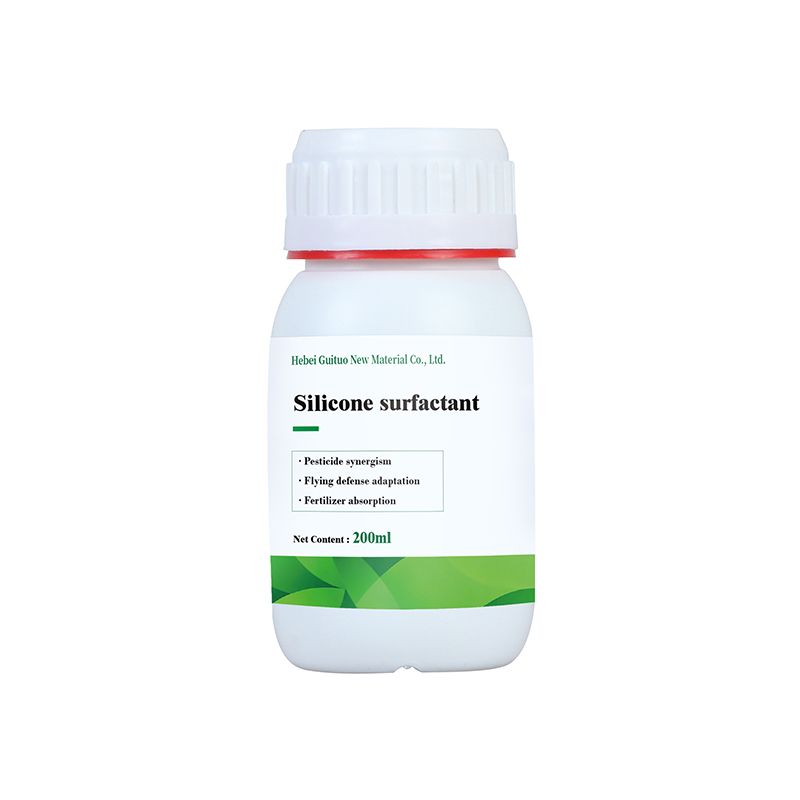
In modern precision agriculture and plant protection operations, how to improve the utilization rate of chemical solutions on targets, reduce loss, and enhance rain washfastness has always been a core topic for elevating crop protection effects. As a class of high-performance interfacial active substances, agricultural organosilicon additives, by virtue of their unique physicochemical characteristics, are becoming crucial technical formulations for optimizing spraying quality and improving agricultural input efficiency.
Super Wetting and Spreading: Breaking Through the Physical Barrier of Leaf Waxy Layers
The vast majority of plant leaf surfaces are covered with a natural waxy layer, cuticle, or trichomes, which exhibit strong hydrophobicity. Conventional additives struggle to overcome this surface tension, causing the sprayed liquid to form spherical water droplets that roll off and result in massive waste.
The core advantage of agricultural organosilicon additives lies in their ability to drastically reduce the surface tension of aqueous solutions. The surface tension of an ordinary water droplet is approximately 72 mN/m, and conventional surfactants can reduce it to around 30 mN/m, whereas high-quality organosilicon additives can further depress the tension to 20 to 23 mN/m.
This ultra-low surface tension endows the spray solution with extreme spreading capabilities. Upon contacting the leaf, the liquid can rapidly spread out within seconds, reaching a coverage area dozens of times larger than that of an ordinary water droplet. This enables the agent to be evenly distributed on the back of leaf surfaces, growth points, and crevices that are difficult to reach with conventional spraying methods.
Stomatal Infiltration and Rain Washfastness Mechanisms
In addition to surface spreading, another critical feature of agricultural organosilicon additives is promoting "stomatal infiltration." Plant leaf surfaces are populated with numerous tiny stomata, whose opening diameters usually impose strict technical requirements on droplet penetration. Due to the extreme low surface tension brought by organosilicon additives, the chemical solution can spontaneously infiltrate directly into the leaf tissues through the plant stomata.
Rapid absorption: The active ingredients can be absorbed by the plant within minutes after spraying, reducing the probability of photodegradation or volatilization caused by exposure to sunlight.
Excellent washfastness: This rapid systemic conduction characteristic ensures that even if sudden rainfall occurs shortly after application, there is no need for re-spraying, thereby securing the persistence and stability of the chemical efficacy.
Physical Parameters and Performance Comparison of Different Formulation Types
To provide a more intuitive understanding of how technical indicators affect practical applications, the following lists the comparison of key technical parameters between standard specification organosilicon additives and traditional hydrocarbon-modified additives:
| Physical and Application Parameter Indicators | Standard type agricultural organosilicon additives | Traditional polyoxyethylene ether additives | Basic mineral oil-based additives |
|---|---|---|---|
| Aqueous Surface Tension (0.1% Concentration) | 20.5 to 23.0 mN/m | 30.0 to 35.0 mN/m | 35.0 to 40.0 mN/m |
| Contact Angle (on highly hydrophobic waxy leaf surface) | Less than 10 degrees (instantaneous complete spreading) | 40 to 60 degrees | 50 to 70 degrees |
| Stomatal Infiltration Capability | Extremely strong (possesses spontaneous infiltration features) | None | Extremely weak |
| Rain Washfastness Time | Resists rain 15 to 30 minutes after application | Requires 2 to 4 hours without rain after application | Requires 1 to 2 hours without rain after application |
| Typical Recommended Dilution Factor | 2000 to 4000 times | 500 to 1000 times | 100 to 300 times |
Precise Compatibility and Application Technical Regulations in Spraying Operations
Correct and standardized use of agricultural organosilicon additives is essential to maximize their physical efficacy. Due to their extremely high interfacial activity, strict adherence to the corresponding technical points is required during the actual preparation and spraying process:
Strict Control of Application Concentration
Due to the ultra-strong spreading capability of organosilicon additives, excessive or over-dosed use will instead cause the liquid sprayed on the leaf to aggregate at the edges and run off due to gravity (the "over-run" phenomenon). The generally recommended field application concentration is controlled between 0.025% and 0.1%, which means adding 25 to 100 mL of the additive per 100 L of spray solution is sufficient.
Regulation of Spray System Pressure and Nozzles
When using solutions containing organosilicon additives, it is recommended to appropriately lower the pressure of the spray system and select nozzles that produce slightly larger atomized particles. Because the additive significantly alters fluid dynamic characteristics, excessively high pressure can easily lead to the generation of fine mist droplets, thereby triggering droplet drift. Larger droplets can still achieve perfect instantaneous spreading with the assistance of silicone.
Technical Management of Solution Acidity and Alkalinity (pH Value)
Most organosilicon additives with a trisiloxane structure are most stable under neutral environments (pH = 6.5 to 7.5). If the pH value of the spray system is too low (strongly acidic) or too high (strongly alkaline), the silicon-oxygen bonds of the silicone are prone to hydrolytic cleavage, thereby losing the ultra-spreading performance. Therefore, the chemical solution should be prepared for immediate use, avoiding long-term storage of the mixture exceeding 24 hours.

Contact Information
Tel : +86-400-138-5268
Email : [email protected]
Phone : +86-15128434888 / +86-13511051998
Add : Xinqiao Environmental Protection Industrial Park, Wen'an County, Langfang City, Hebei Province, China
Contact Information
Copyright © Hebei Guituo New Material Co., Ltd. All Rights Reserved.
