

 English
  Français
  Português

Polyether Modified Heptamethyltrisiloxane Surfactant
Heptamethyltrisiloxane-polyether copolymer offered across three EO-chain-length grades — select near-maximum, balanced, or stability-optimized spreading intensity from one chemistry platform.
Explore our adjuvant range
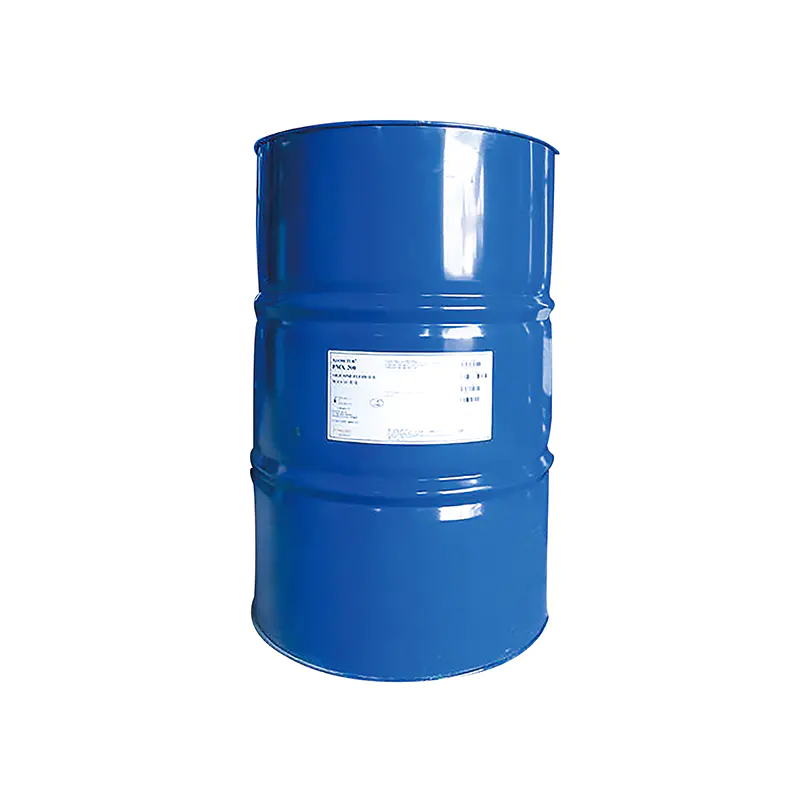
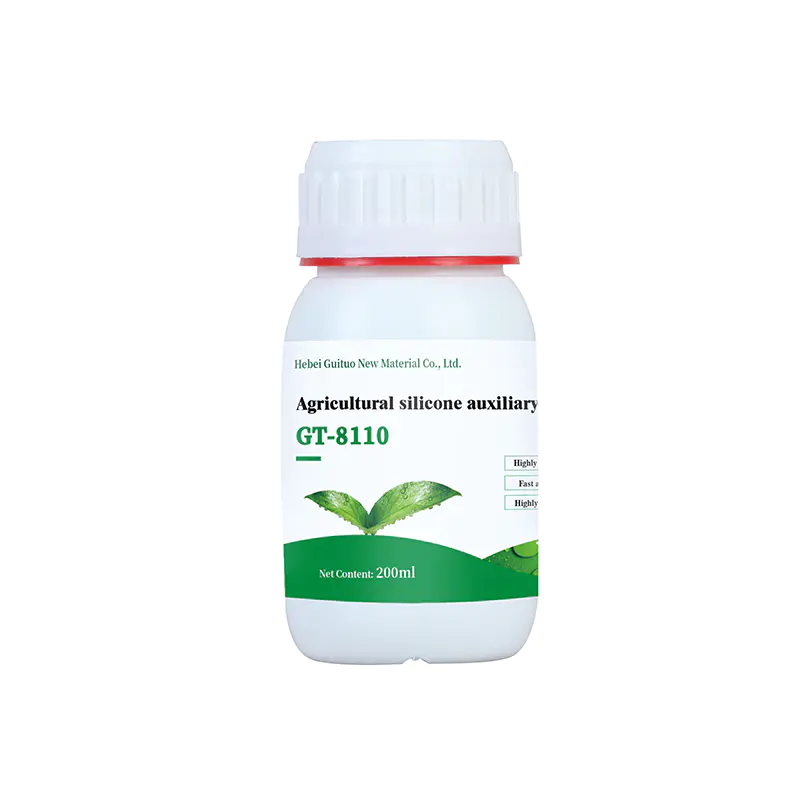

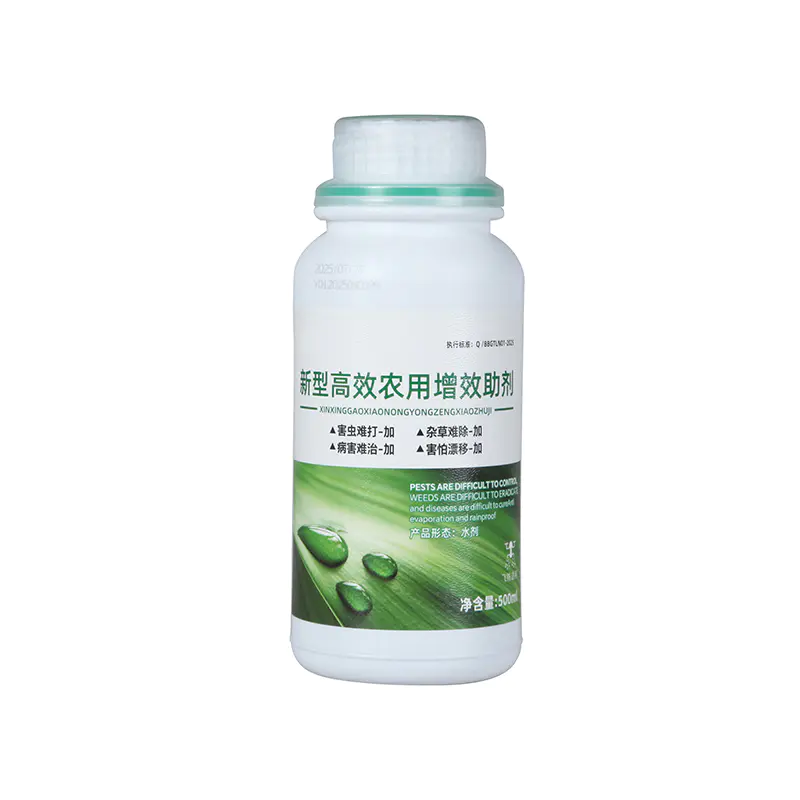
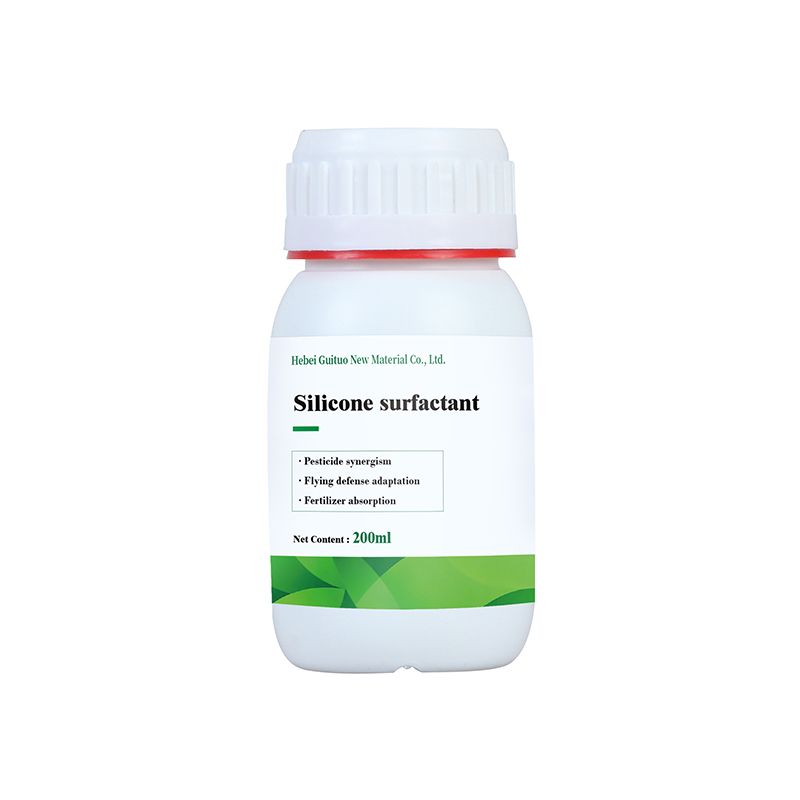
A Graded Product Line for Selectable Spreading Intensity
Polyether Modified Heptamethyltrisiloxane Agricultural Surfactant starts from the same heptamethyltrisiloxane backbone responsible for true super-spreading behaviour, but applies a controlled polyether (ethylene oxide) modification to that backbone — offered across multiple grades distinguished by EO chain length — so that formulators and growers can select a specific point on the spreading-intensity spectrum rather than being limited to either an unmodified super-spreader's maximum intensity or a general wetting agent's more moderate behaviour.
Three standard grades are offered: a short-EO-chain grade retaining close to 90% of unmodified heptamethyltrisiloxane's spreading intensity (surface tension ~21 mN/m) for applications needing near-maximum spreading with slightly improved formulation stability; a mid-EO-chain grade at approximately 23–24 mN/m offering a balance of strong spreading with improved handling and reduced volatility versus the unmodified backbone; and a long-EO-chain grade at approximately 25–26 mN/m providing moderate, more controllable spreading with the best formulation stability and the lowest foam tendency of the three grades.
This graded approach directly addresses a practical formulation and application challenge: unmodified heptamethyltrisiloxane super-spreaders, while extremely effective, can present formulation stability and handling challenges (volatility, foam, narrower effective concentration windows) that the polyether modification specifically mitigates, with the degree of mitigation tunable by EO chain length — shorter chains preserve more of the original intensity and instability trade-offs, longer chains sacrifice some intensity for meaningfully improved stability and handling.
Selecting among the three grades allows a formulator or grower to match spreading intensity to the specific application: the short-chain grade for grassy weed or waxy-leaf targets needing maximum coverage, the mid-chain grade as a versatile general-purpose spreading adjuvant, and the long-chain grade where formulation stability, reduced foam, or gentler application (such as on sensitive ornamental or greenhouse crops) is prioritized over absolute maximum spreading intensity.
All three grades share the same core heptamethyltrisiloxane-polyether copolymer platform and manufacturing quality standards, differing systematically only in EO chain length, which simplifies technical comparison and grade-switching for formulators evaluating which point on the spectrum best fits a given product.
Why a Graded Product Line
Mechanism of action
Polyether Modified Heptamethyltrisiloxane Agricultural Surfactant starts from the heptamethyltrisiloxane backbone that drives true Marangoni-flow super-spreading, then attaches polyether (ethylene oxide) side chains of controlled, systematically varied length across the three product grades.
Shorter EO chains leave more of the backbone's inherent surface activity intact, preserving spreading intensity closer to the unmodified molecule, while longer EO chains increasingly moderate that surface activity, trading some spreading intensity for improved formulation stability, reduced volatility, and lower foam tendency.
Because all three grades share the same core synthesis platform, the relationship between EO chain length and resulting performance is systematic and predictable, allowing formulators to select or blend grades to hit a specific target surface tension or spreading-area specification.
Surface tension increases systematically with EO chain length, giving predictable grade-to-grade performance steps.
Product specifications
| Parameter | Value |
|---|---|
| Appearance | Clear, mobile liquid (all grades) |
| Backbone | Heptamethyltrisiloxane, polyether-modified |
| Grades offered | Short-chain / mid-chain / long-chain EO |
| Viscosity (25°C) | 16 – 28 cSt (grade dependent) |
| Density (25°C) | 0.99 – 1.03 g/cm³ |
| Flash point | > 90°C (all grades) |
| pH (1% aq.) | 5.5 – 7.0 |
| Storage stability | 24 months (cool, dry, all grades) |
Performance data


- 2021
Company Establishment
- 10000m²
Advanced Factory
- 50+
Exporting Country
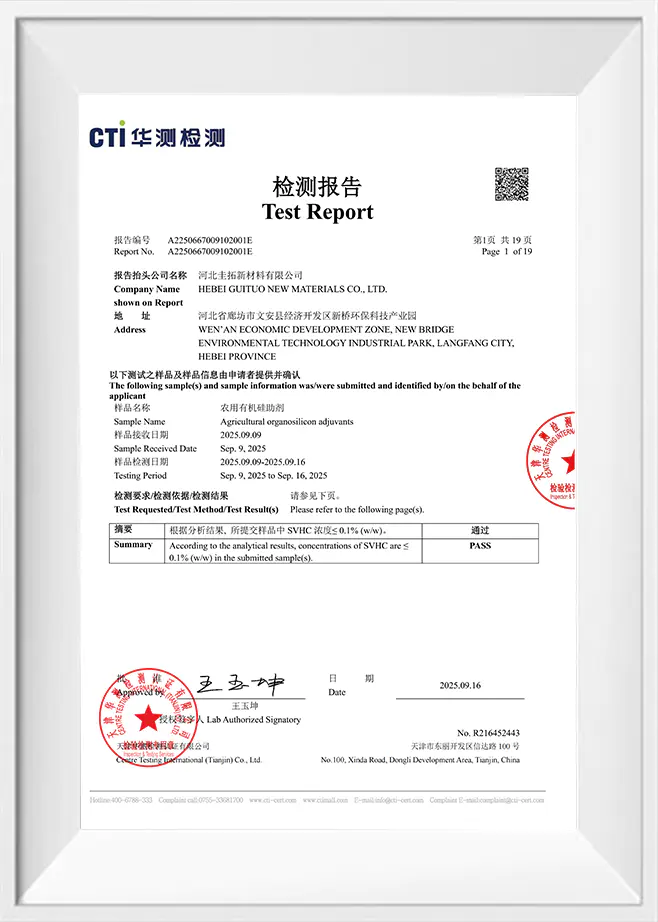
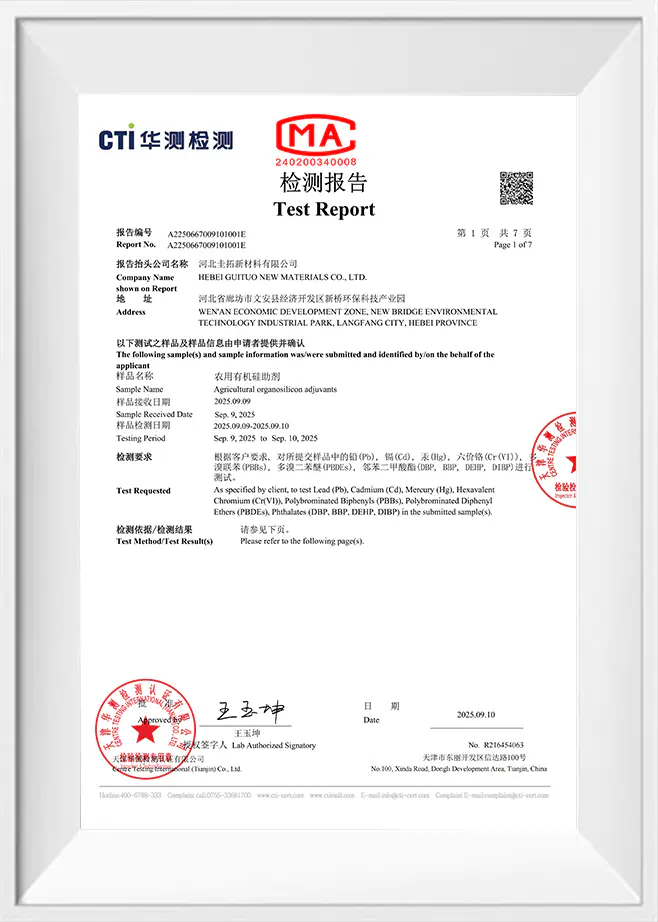
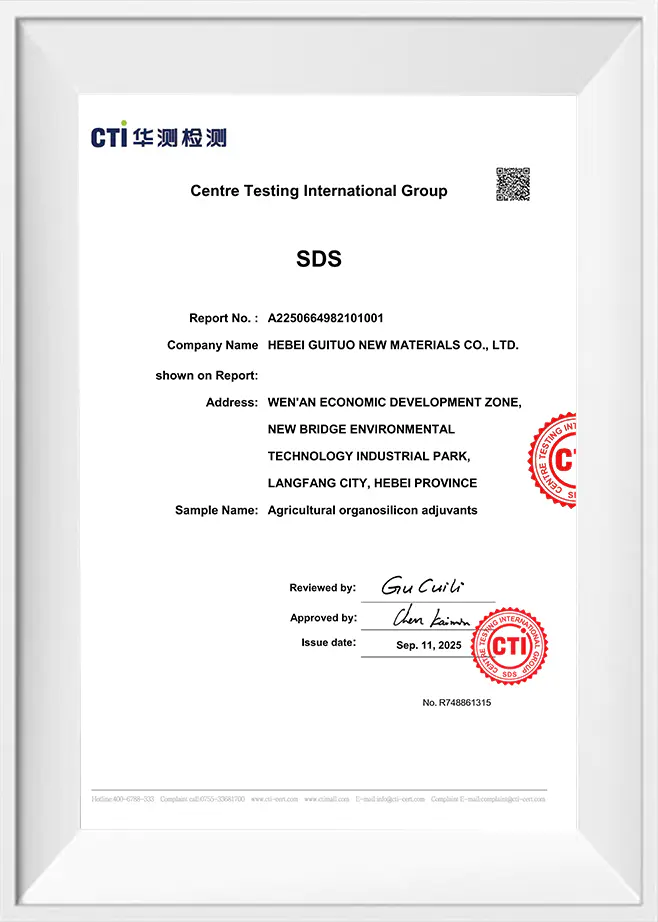
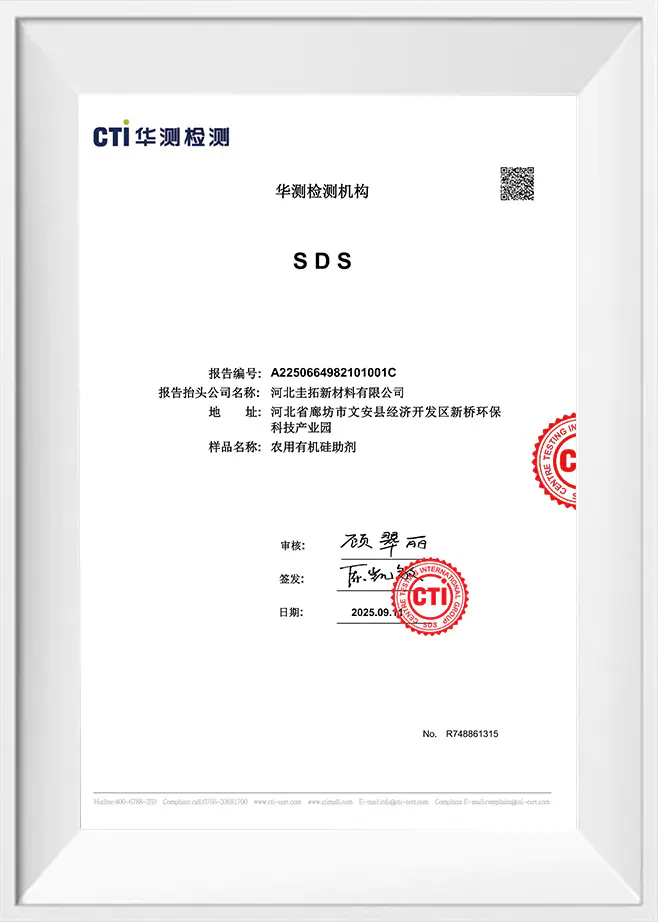
Our Certifications
And Partners
Professional scale factory production. We can customize finished products wholesale and export, OEM production, and distribution.
I just wanted to let you know that welcome to inquire and place orders.



Performance benchmark
| Property | This graded surfactant line | Unmodified super-spreader | Standard polyether-modified oil |
|---|---|---|---|
| Grade options available | 3 (short/mid/long EO) | 1 (fixed) | 1 (fixed) |
| Spreading intensity range | 21–26 mN/m selectable | 20.5 mN/m fixed | 23 mN/m fixed |
| Formulation stability tuning | Yes, via EO chain length | No | No |
| Foam tendency control | Selectable via grade | Fixed, higher | Fixed, moderate |
| Platform consistency across options | Yes, same core chemistry | N/A | N/A |
Grade-selection performance comparison
Source: comparative grade performance testing, internal laboratory trials, 2024–2025.
Tank-mix compatibility
Fully compatible Test before full mix
Dilution calculator
Select your grade and enter tank volume to estimate the recommended dose (0.035% v/v typical across grades).
How to apply
Safe use guidelines
- Personal protection — Wear gloves, goggles, and long sleeves during mixing (all grades).
- First aid — Rinse skin/eyes with plenty of water; if ingested, seek medical advice.
- Storage — Keep in original container, tightly closed, cool and dry (5–40°C), all grades.
- Environmental — Biodegradable (OECD 301) across all grades; low toxicity to fish.
- Disposal — Dispose of empty containers per local regulations; do not contaminate water sources.
- Grade selection safety — Long-chain grade recommended for sensitive crops where gentler application is needed.
Crops & use cases
- Grassy weed control programs — short-chain grade for maximum coverage on waxy, narrow-leaf targets.
- General row crop spraying — mid-chain grade as a versatile, balanced default choice.
- Greenhouse & ornamental production — long-chain grade for gentler, low-foam application on sensitive crops.
- Formulation development labs — selecting or blending grades to hit specific target specifications.
Also used by formulators building private-label adjuvant products who want a documented, systematic grade range to select from.
Why it outperforms
- One chemistry, three intensities — matches spreading performance to the specific application need.
- Improved stability at higher grades — polyether modification reduces volatility and foam vs. unmodified backbone.
- Predictable, systematic grading — EO chain length differences produce consistent, documented performance steps.
- Flexible for formulators — grades can be selected or blended for precise target specifications.
Application guidelines
- Grade selection: choose based on target application: maximum spreading, general use, or gentle/low-foam
- Sensitive crops: use the long-chain grade for greenhouse and ornamental applications
- Blending grades: grades can be blended to fine-tune a specification between the three standard points
- Documentation: request grade-specific technical data sheets before formulation development
Packaging & shelf life
- Packaging: 1 L, 5 L, 20 L, 200 L drums / IBC totes, per grade.
- Storage: cool, dry, away from direct sunlight; 5–40°C.
- Shelf life: 24 months in unopened original container, all grades.
Global quality benchmarks
| Test item | Standard requirement | Our performance |
|---|---|---|
| Grade options | 1 (fixed) | 3 (short/mid/long EO) |
| Surface tension range | Fixed, single value | 21–26 mN/m selectable |
| Foam tendency control | Not adjustable | Adjustable via grade selection |
| Platform documentation | Single product data sheet | Grade-specific data sheets, consistent platform |
| Biodegradability | OECD 301 | Readily biodegradable, all grades |
Frequently asked questions
Latest articles & guides
Polyether Modified Silicone Oil Surfactant
overview Copolymer Chemistry That Bridges Oil and Water Phases Polyether Modifi
Agricultural Spreading and Penetrating Adjuvant
overview Dual-Action Adjuvant for Soil-Applied Pesticide Programs Agricultural
Agricultural Silicone Penetrant and Spreader
overview Penetration-Focused Adjuvant for Translocated Actives Agricultural Sil
Agricultural Silicone Super Spreading Agent
overview Extreme Leaf-Surface Coverage Through True Super-Spreading Agricultura
Agricultural Grade Silicone Wetting Agent
overview Certified, Traceable Wetting Agent Built for Registration-Grade Consist
Agricultural Pesticide Silicone Wetting Additive
overview A Wetting Additive Built Into the Powder, Not Added After Agricultural
Super Spreading Silicone Agricultural Surfactant
overview Super-Spreading Performance for Turf, Ornamentals, and Nursery Producti
Agricultural Spray Adjuvant Wetting Agent
overview The General-Purpose Workhorse Adjuvant for Everyday Spray Programs Agr
Silicone Surfactant for Agricultural Chemicals
overview Multi-Functional Silicone Surfactant for Agrochemical Formulation Sili
Pick your point on the spreading spectrum
Free samples across all three grades · Technical grade-selection support
cnguituonewmaterial.com · Agricultural adjuvants & new materials

Tel : +86-400-138-5268
Email : [email protected]
Phone : +86-15128434888 / +86-13511051998
Add : Xinqiao Environmental Protection Industrial Park, Wen'an County, Langfang City, Hebei Province, China
Copyright © Hebei Guituo New Material Co., Ltd. All Rights Reserved.
