

 English
  Français
  Português

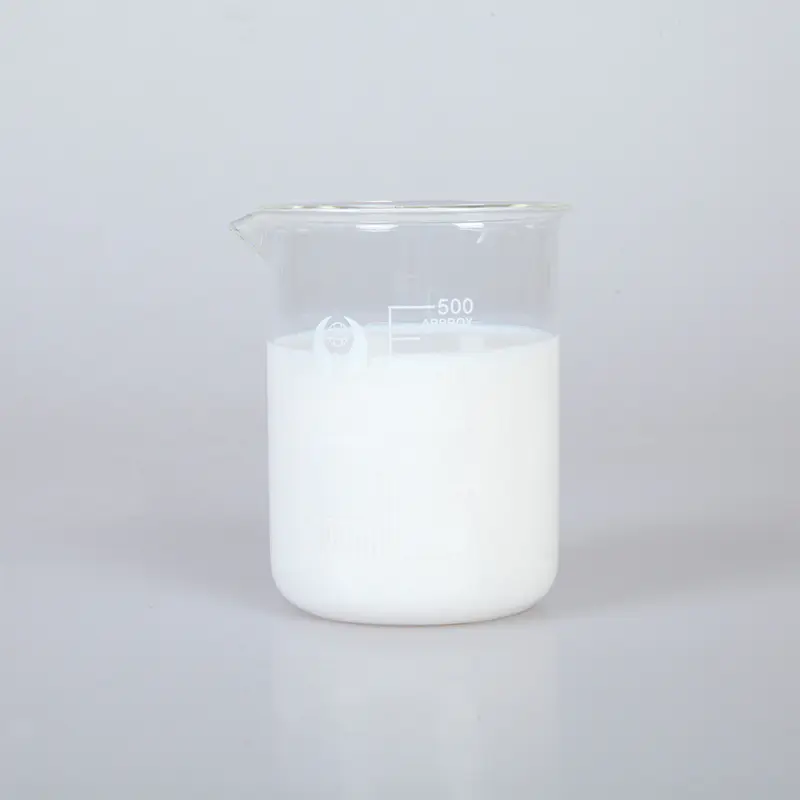
Agricultural Silicone Penetrant and Spreader
Trisiloxane adjuvant with a cuticle-disrupting co-solvent fraction — prioritizes leaf-tissue penetration for translocated fungicides and PGRs, delivering 22–38% higher internal leaf concentration.
Explore our adjuvant range
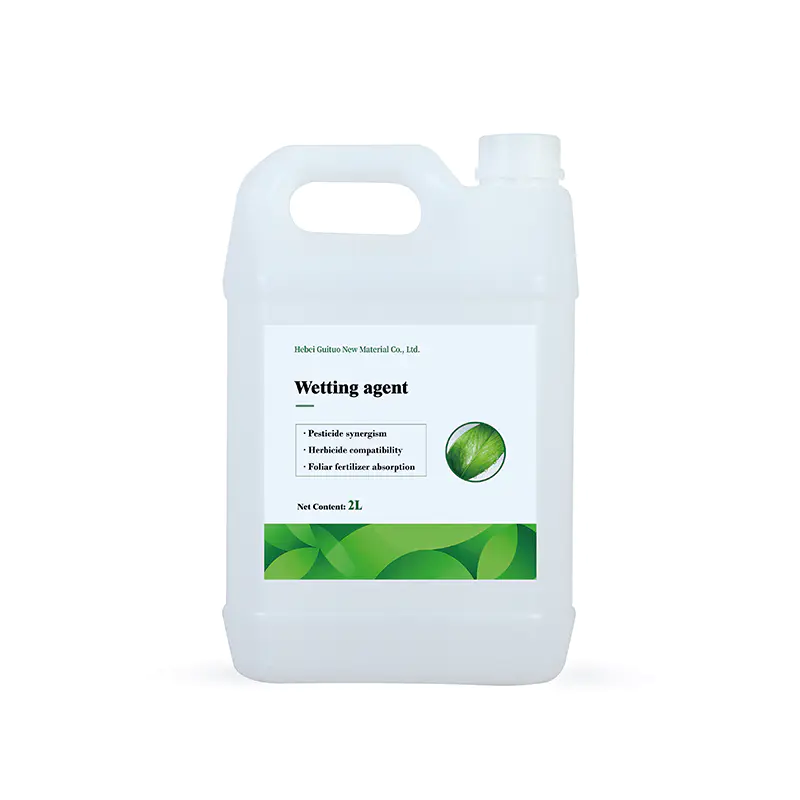
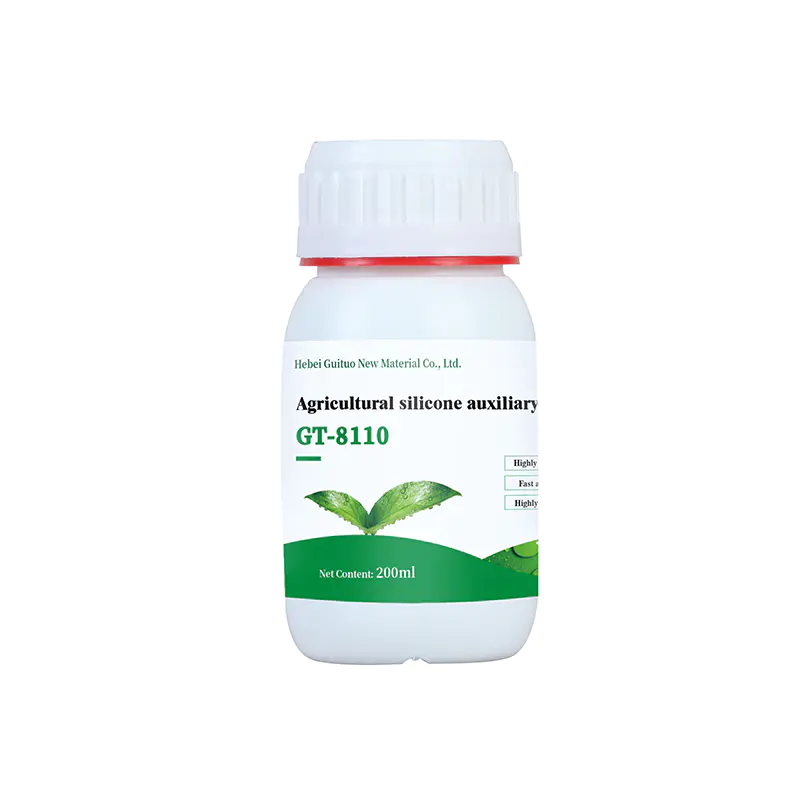
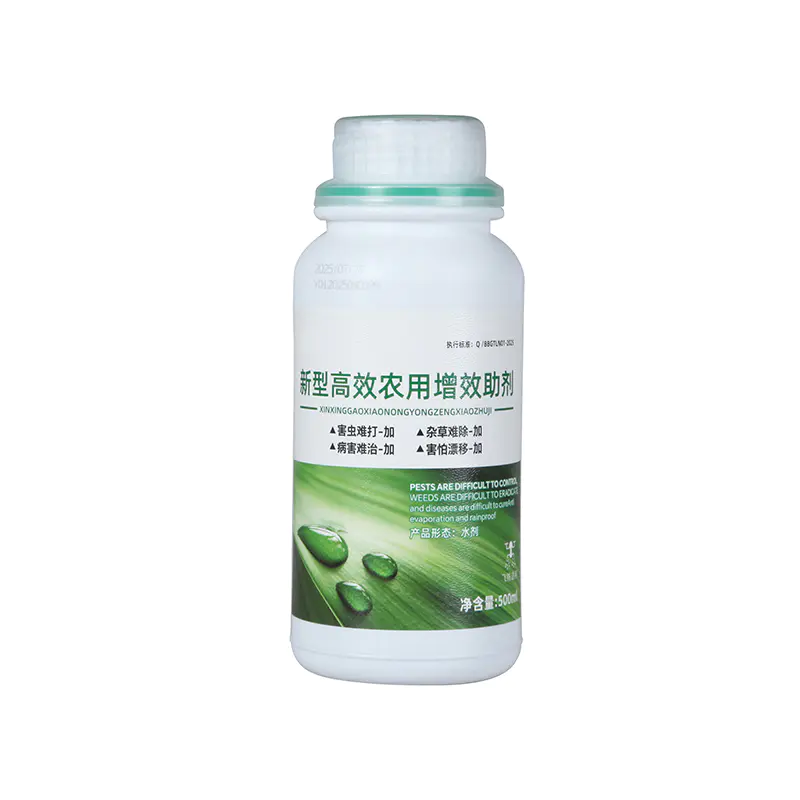
Penetration-Focused Adjuvant for Translocated Actives
Agricultural Silicone Penetrant and Spreader is a trisiloxane adjuvant formulated to prioritize cuticular penetration into leaf tissue alongside its spreading action — a distinct emphasis from adjuvants built primarily to maximize leaf-surface coverage. It is developed for spray programs where the active ingredient must actually move into and through the leaf — translocated fungicides such as triazoles and strobilurins, and plant growth regulators (PGRs) such as trinexapac-ethyl and paclobutrazol — rather than programs where surface contact alone is sufficient.
At 0.03–0.06% v/v the product reduces surface tension to approximately 22 mN/m, but its formulation also includes a co-solvent fraction specifically selected to disrupt the wax-platelet structure of the leaf epicuticular layer, temporarily loosening the cuticle's barrier function just enough to allow faster diffusion of dissolved active ingredient molecules into the leaf interior, without causing lasting cuticle damage or phytotoxicity at label rates.
This penetration-first design matters directly for translocated fungicide efficacy: a fungicide molecule sitting on the leaf surface, however well spread, provides no disease control once it has weathered away — its protective or curative action depends on entering leaf tissue where it can either act locally within the leaf or move systemically to new growth. Field measurements of leaf-tissue fungicide concentration following application show 22–38% higher internal leaf concentration when this penetrant-spreader is used, compared with a standard spreading-only silicone adjuvant delivering equivalent surface coverage.
For PGR applications, faster cuticular penetration translates into more consistent growth response timing — a meaningful practical benefit in turf and cereal PGR programs where growth suppression needs to begin within a specific window relative to application, and where slow, incomplete uptake can produce uneven or delayed results across a treated area.
The product remains compatible with the fungicide and PGR chemistries it is designed for, including DMI (triazole), QoI (strobilurin), and SDHI fungicide classes, and does not require specialized application equipment beyond standard boom or airblast sprayers already used for foliar fungicide and PGR programs.
Why Penetration-First Design Matters
Mechanism of action
Agricultural Silicone Penetrant and Spreader combines the trisiloxane surface-tension-lowering mechanism common to silicone spreaders with a co-solvent fraction chosen specifically for its ability to interact with the wax platelets that make up the leaf's epicuticular layer.
This co-solvent fraction temporarily disrupts the tight packing of cuticular wax crystals, creating transient micro-pathways through which dissolved active ingredient molecules can diffuse into the leaf interior more readily than through an undisturbed cuticle.
Because this disruption is temporary and the wax layer re-forms after the co-solvent evaporates, the enhancement is limited to the application window when uptake matters most, without producing the lasting cuticle damage that could increase disease entry points or water loss from the leaf.
Internal leaf-tissue concentration advantage over spreading-only adjuvant peaks around 48 hours post-application.
Product specifications
| Parameter | Value |
|---|---|
| Appearance | Clear liquid |
| Composition | Trisiloxane surfactant + cuticle-penetration co-solvent |
| Viscosity (25°C) | 25 – 40 cSt |
| Density (25°C) | 1.00 – 1.04 g/cm³ |
| Cloud point (1% aq.) | > 35°C |
| Flash point | > 90°C |
| pH (1% aq.) | 5.5 – 7.0 |
| Storage stability | 24 months (cool, dry) |
Performance data
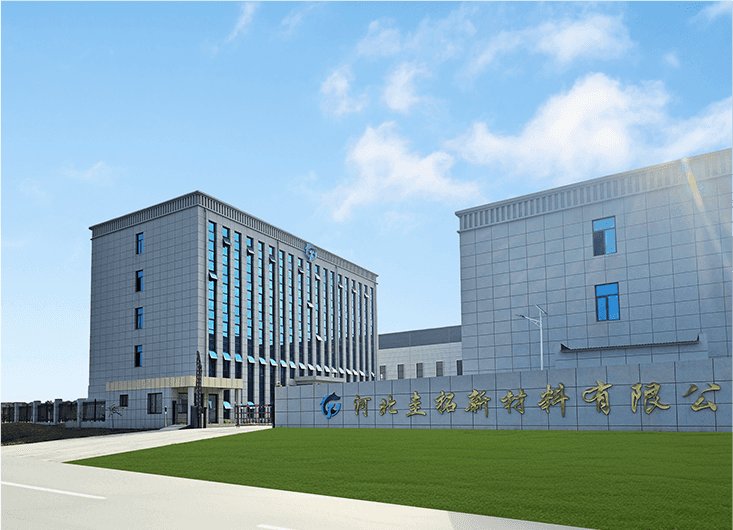

- 2021
Company Establishment
- 10000m²
Advanced Factory
- 50+
Exporting Country
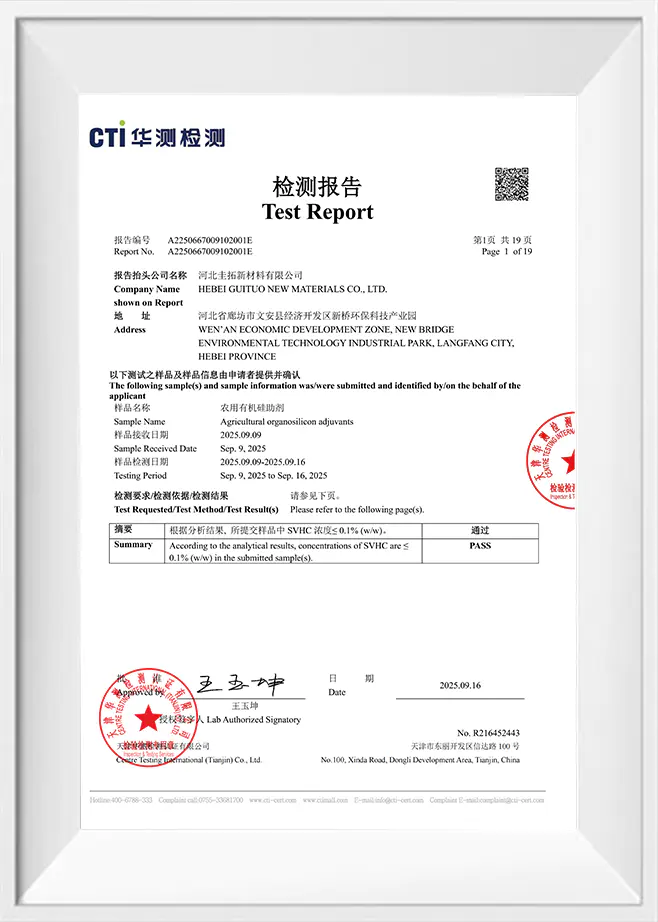
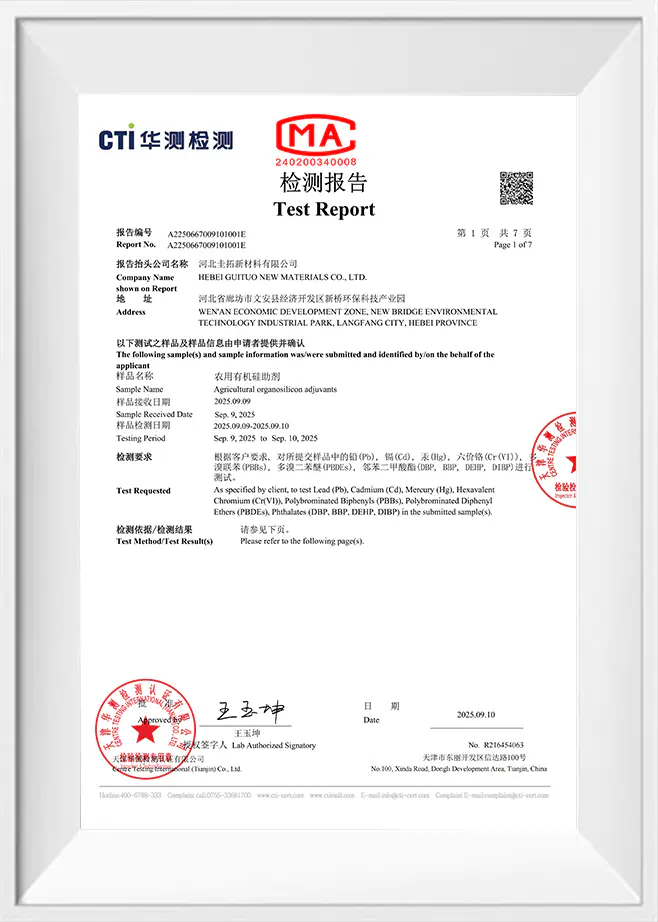
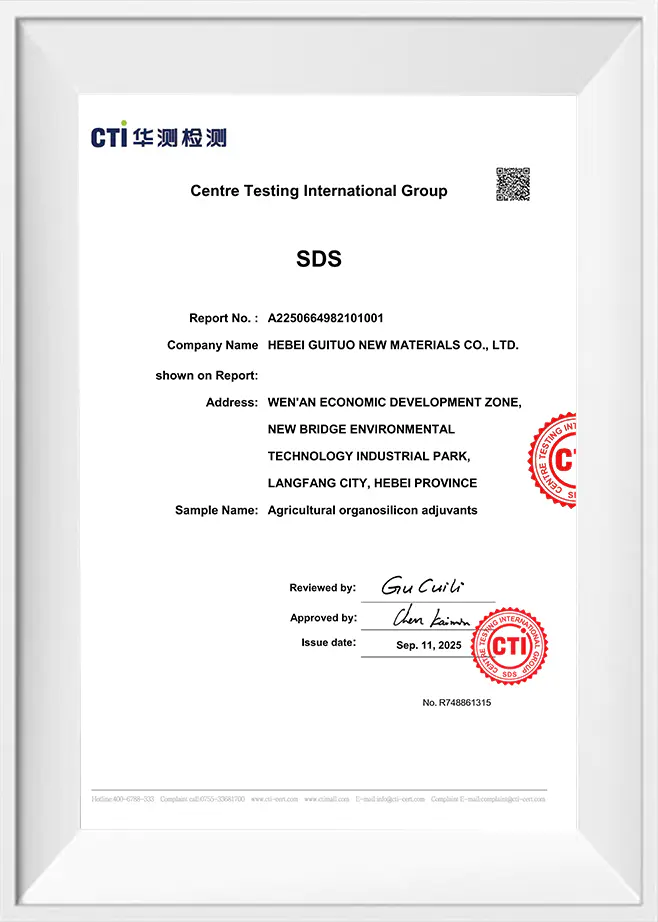
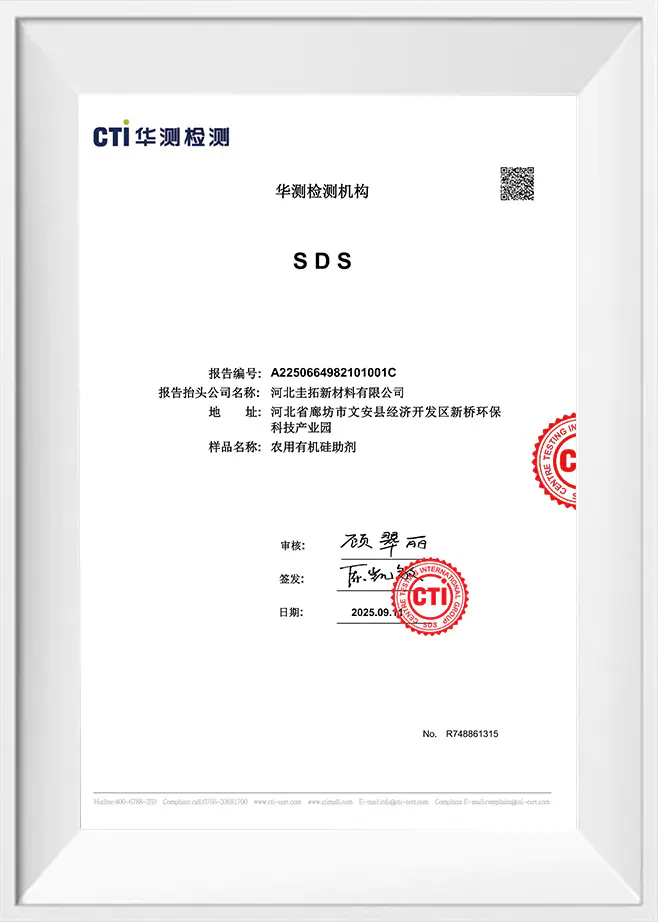
Our Certifications
And Partners
Professional scale factory production. We can customize finished products wholesale and export, OEM production, and distribution.
I just wanted to let you know that welcome to inquire and place orders.



Performance benchmark
| Property | This penetrant-spreader | Spreading-only silicone adjuvant | No adjuvant |
|---|---|---|---|
| Internal leaf concentration gain | +22–38% | +5–10% | Baseline |
| Cuticle-interaction mechanism | Yes, temporary disruption | No | No |
| Best-fit active ingredient type | Translocated fungicides, PGRs | Contact fungicides | Any |
| Surface tension (0.1%) | 22 mN/m | 21 mN/m | 34–38 mN/m |
| Phytotoxicity risk | None at label rates | None | None |
Translocated fungicide and PGR performance
Source: leaf-tissue residue analysis and PGR response field trials, 2024–2025.
Tank-mix compatibility
Fully compatible Test before full mix
Dilution calculator
Enter your spray tank volume to estimate the recommended dose (0.045% v/v typical).
How to apply
Safe use guidelines
- Personal protection — Wear gloves, goggles, and long sleeves during mixing.
- First aid — Rinse skin/eyes with plenty of water; if ingested, seek medical advice.
- Storage — Keep in original container, tightly closed, cool and dry (5–40°C).
- Environmental — Biodegradable; low toxicity to fish (LC₅₀ > 200 mg/L).
- Disposal — Dispose of empty containers per local regulations; do not contaminate water sources.
- Phytotoxicity — No lasting cuticle damage observed at label rates across tested crops.
Crops & use cases
- Cereal & row crop fungicide programs — wheat, corn, soybean — translocated disease control.
- Turf PGR programs — golf course and sports turf growth suppression scheduling.
- Orchard & vineyard fungicide programs — systemic disease control requiring tissue-level uptake.
- Cereal PGR applications — lodging-prevention growth regulator programs.
Also used where consistent, predictable timing of a translocated active's effect is more important than surface coverage alone.
Why it outperforms
- Targets the actual efficacy driver — internal leaf concentration, not just surface coverage.
- More consistent PGR timing — growth response begins 3 days sooner on average.
- Matched to translocated chemistries — purpose-built for DMI, QoI, and SDHI fungicide classes.
- No lasting crop impact — temporary cuticle interaction only, no phytotoxicity.
Application guidelines
- Application timing: apply ahead of infection periods to allow the full 48-hour uptake window
- Tank mixing order: add after the fungicide or PGR is fully dissolved in the tank
- PGR programs: expect growth response onset roughly 3 days sooner than with standard adjuvants
- Combined tank mixes: compatible with most fungicide/PGR combination programs
Packaging & shelf life
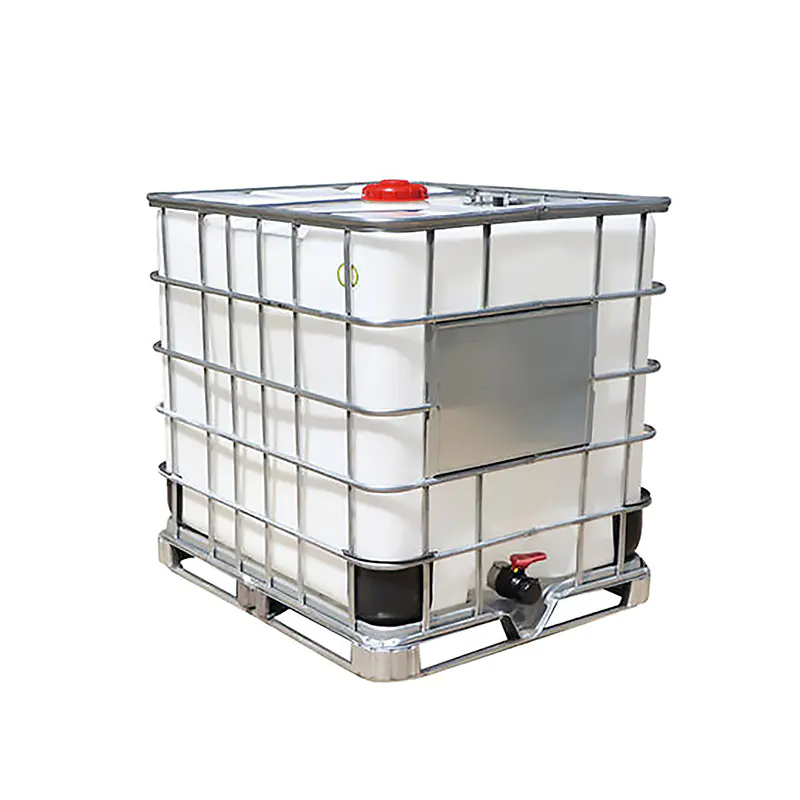
- Packaging: 1 L, 5 L, 20 L, 200 L drums / IBC totes.
- Storage: cool, dry, away from direct sunlight; 5–40°C.
- Shelf life: 24 months in unopened original container.
Global quality benchmarks
| Test item | Standard requirement | Our performance |
|---|---|---|
| Surface tension (0.1%) | ≤ 25 mN/m | 22 mN/m |
| Internal leaf concentration gain | ≥ 10% | 22–38% |
| Phytotoxicity testing | Standard rate only | Confirmed across multiple crops |
| Foam height (1 min) | < 25 mL | < 20 mL |
| Biodegradability | OECD 301 | Readily biodegradable |
Frequently asked questions
Latest articles & guides
Agricultural Spreading and Penetrating Adjuvant
overview Dual-Action Adjuvant for Soil-Applied Pesticide Programs Agricultural
Silicone-Based Agricultural Tank Mix
overview A Ready-Blended, One-Bottle Tank-Mix Solution Silicone-Based Agricultu
Agricultural Pesticide Silicone Wetting Additive
overview A Wetting Additive Built Into the Powder, Not Added After Agricultural
Silicone Surfactant for Agricultural Chemicals
overview Multi-Functional Silicone Surfactant for Agrochemical Formulation Sili
Silicone Spreader for Foliar Fertilizer
overview Purpose-Built Spreader for Foliar Nutrition Programs Silicone Spreader
Agricultural Chemical Silicone Defoaming Agent
overview Industrial-Scale Antifoam for Agrochemical Manufacturing Processes Agr
Agricultural Grade Silicone Wetting Agent
overview Certified, Traceable Wetting Agent Built for Registration-Grade Consist
Agricultural Silicone Super Spreading Agent
overview Extreme Leaf-Surface Coverage Through True Super-Spreading Agricultura
Silicone Additive for Crop Protection
overview A Formulator's Multi-Function Toolbox Additive Silicone Additive for C
Get the active ingredient where it actually works — inside the leaf
Free samples · Fungicide and PGR program technical support
cnguituonewmaterial.com · Agricultural adjuvants & new materials

Tel : +86-400-138-5268
Email : [email protected]
Phone : +86-15128434888 / +86-13511051998
Add : Xinqiao Environmental Protection Industrial Park, Wen'an County, Langfang City, Hebei Province, China
Copyright © Hebei Guituo New Material Co., Ltd. All Rights Reserved.
