

 English
  Français
  Português

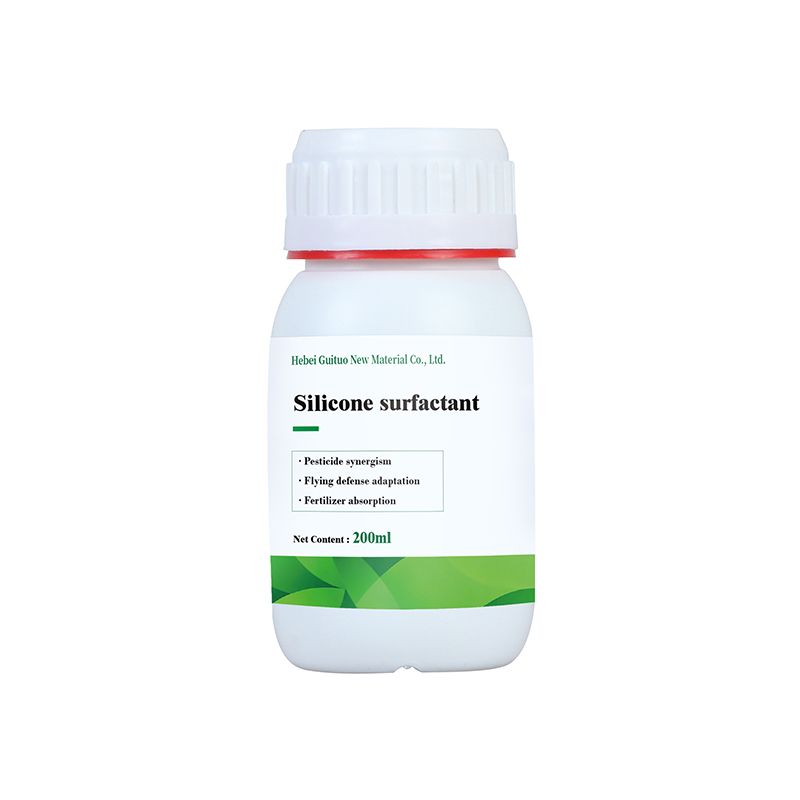
Silicone Surfactant for Agricultural Chemicals
Polyether-modified organosilicone surfactant for agrochemical formulation — improves emulsification, dispersion, and storage stability across EC, SC, WP, and WG systems. HLB adjustable 8–12.
Explore our adjuvant range
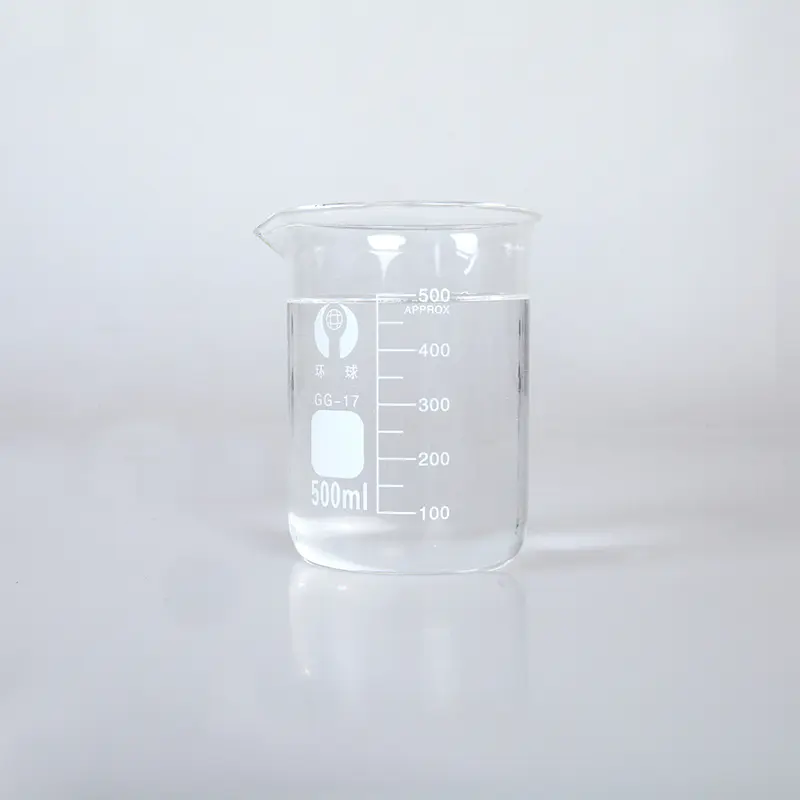
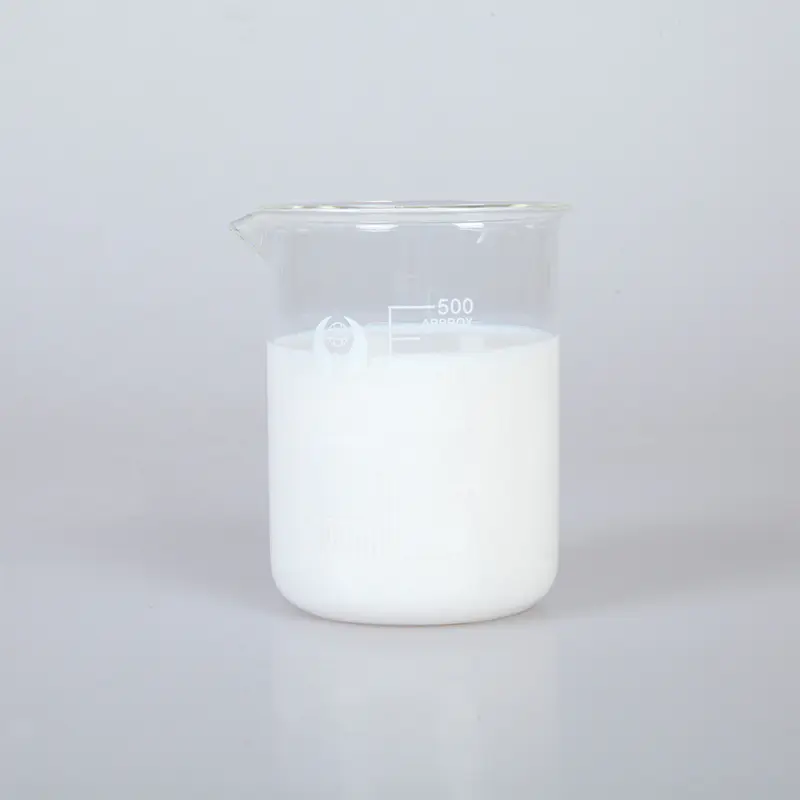
Multi-Functional Silicone Surfactant for Agrochemical Formulation
Silicone Surfactant for Agricultural Chemicals is a modified polyether-siloxane surfactant designed for use inside agrochemical formulations rather than only as a tank-mix additive. Formulators use it as an emulsifier, dispersant, and wetting agent when manufacturing emulsifiable concentrates (EC), suspension concentrates (SC), wettable powders (WP), and water-dispersible granules (WG). Its siloxane backbone gives it a much lower surface tension than conventional hydrocarbon surfactants, which translates into better particle wetting, faster dispersion, and more stable emulsions during production and storage.
Because the polyether side chains can be adjusted during synthesis, this surfactant is supplied with an HLB (hydrophilic-lipophilic balance) in the 8–12 range, allowing formulation chemists to fine-tune emulsion stability for a wide variety of active ingredients — from oil-soluble pyrethroids to water-soluble growth regulators. At typical formulation dosages of 1–3% w/w, it reduces static surface tension to around 23 mN/m, well below the 30–38 mN/m typical of alkylphenol ethoxylates or fatty alcohol ethoxylates commonly used in older formulations.
In finished-product testing, formulations containing this surfactant show improved cold-storage stability (no creaming or phase separation after 14 days at 0°C), better re-dispersibility of WP/WG powders after 24-hour suspension tests, and a smaller average droplet size distribution during dilution in the spray tank. These properties matter directly to end users: a well-dispersed formulation delivers more consistent active ingredient exposure per unit leaf area, which supports the efficacy claims a manufacturer wants to stand behind.
The surfactant is also valued for its compatibility across active ingredient classes. It performs reliably with organophosphates, triazole fungicides, sulfonylurea herbicides, and neonicotinoid insecticides without promoting hydrolytic degradation of the active. Regulatory toxicology data indicate low mammalian oral toxicity and ready biodegradability under OECD 301 protocols, which supports registration dossiers in most major agrochemical markets.
Supplied as a clear to pale-yellow liquid with a viscosity of 300–500 cSt at 25°C, the surfactant blends easily into both aqueous and solvent-based systems using standard high-shear mixing equipment, without the need for specialized dispersion machinery.
Why Formulators Choose This Surfactant
Mechanism of action
Silicone Surfactant for Agricultural Chemicals works at the formulation level, not just in the spray tank. Its siloxane backbone anchors at the oil-water interface during manufacturing, lowering interfacial tension so that active ingredient droplets or particles disperse into much smaller, more uniform sizes.
The polyether side chains extend into the aqueous phase, creating a steric and electrostatic barrier that prevents droplets or particles from re-coalescing or settling during storage. This is what gives finished formulations their extended shelf stability.
When the formulation is later diluted in a spray tank, the same surfactant continues to lower surface tension of the diluted mixture, giving a secondary wetting benefit on the leaf surface at the point of application.
Surface tension reduction plateaus above 3% dosage, the typical formulation ceiling.
Product specifications
| Parameter | Value |
|---|---|
| Appearance | Clear to pale-yellow liquid |
| Active content | ≥ 95% (polyether-siloxane copolymer) |
| Viscosity (25°C) | 300 – 500 cSt |
| Density (25°C) | 1.02 – 1.06 g/cm³ |
| HLB value | 8 – 12 (adjustable on request) |
| Flash point | > 110°C |
| pH (1% aq.) | 6.0 – 8.0 |
| Storage stability | 18 months (cool, dry, sealed) |
Performance data


- 2021
Company Establishment
- 10000m²
Advanced Factory
- 50+
Exporting Country
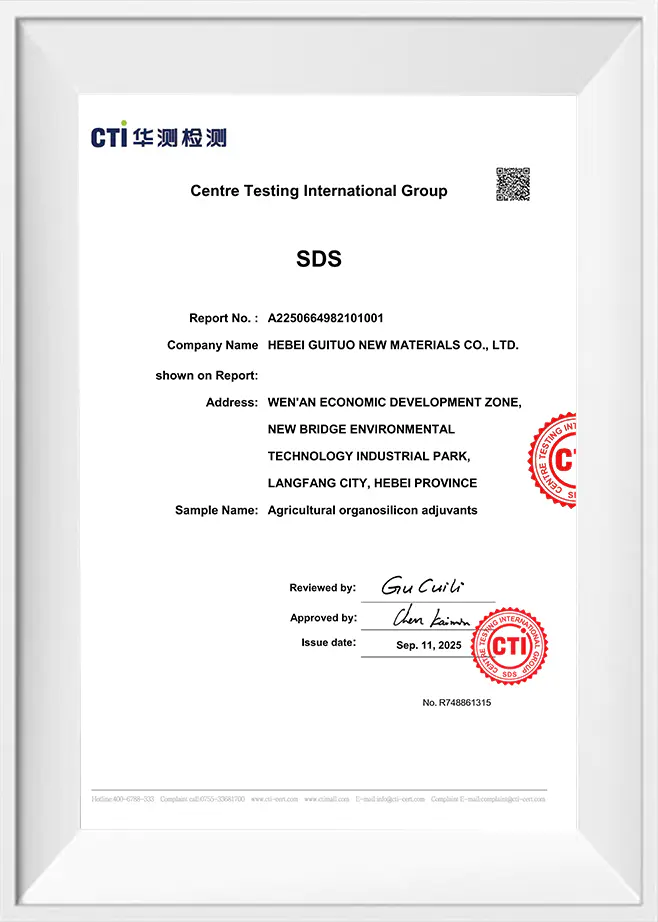
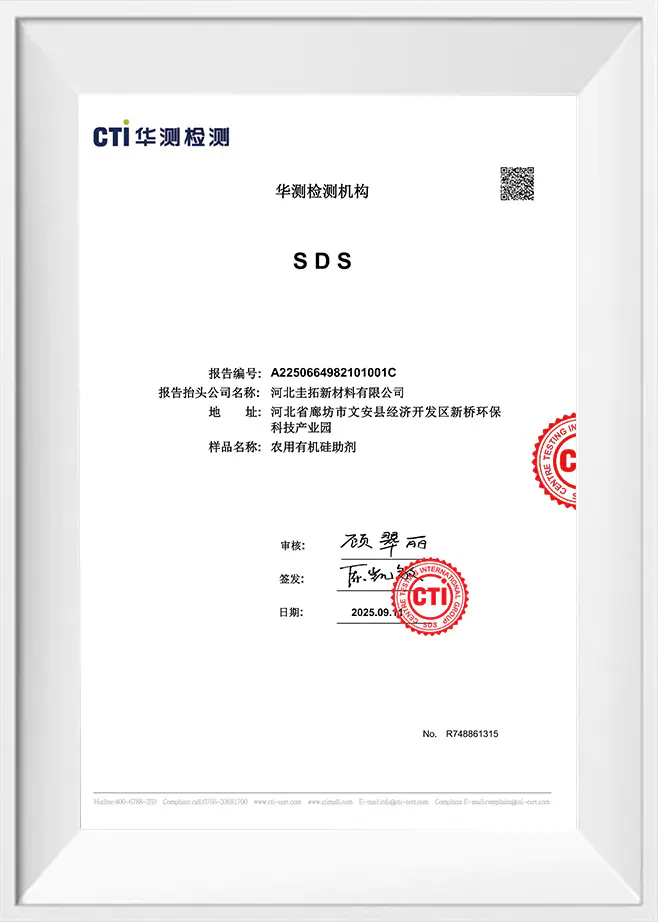
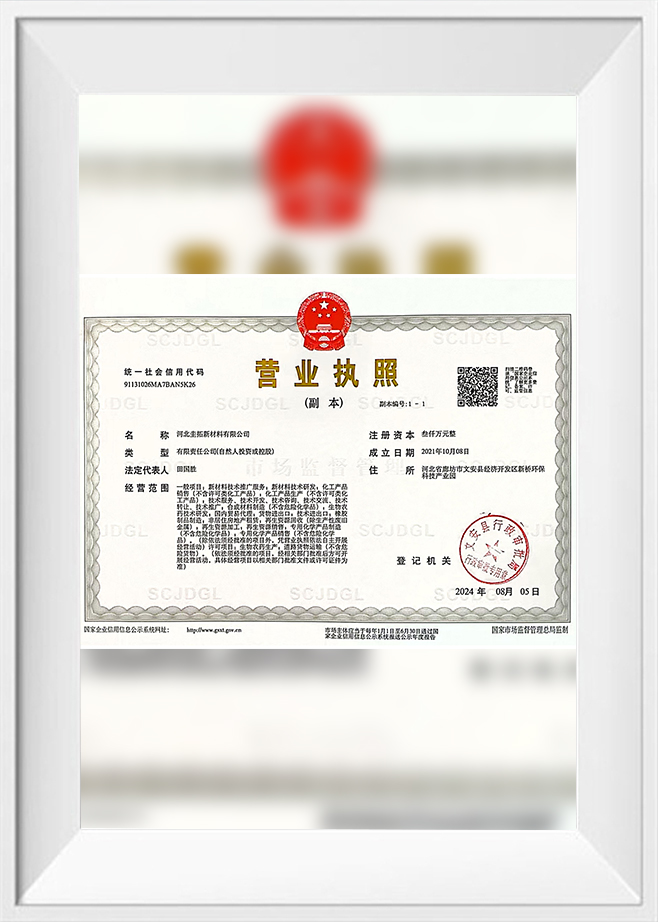
Our Certifications
And Partners
Professional scale factory production. We can customize finished products wholesale and export, OEM production, and distribution.
I just wanted to let you know that welcome to inquire and place orders.


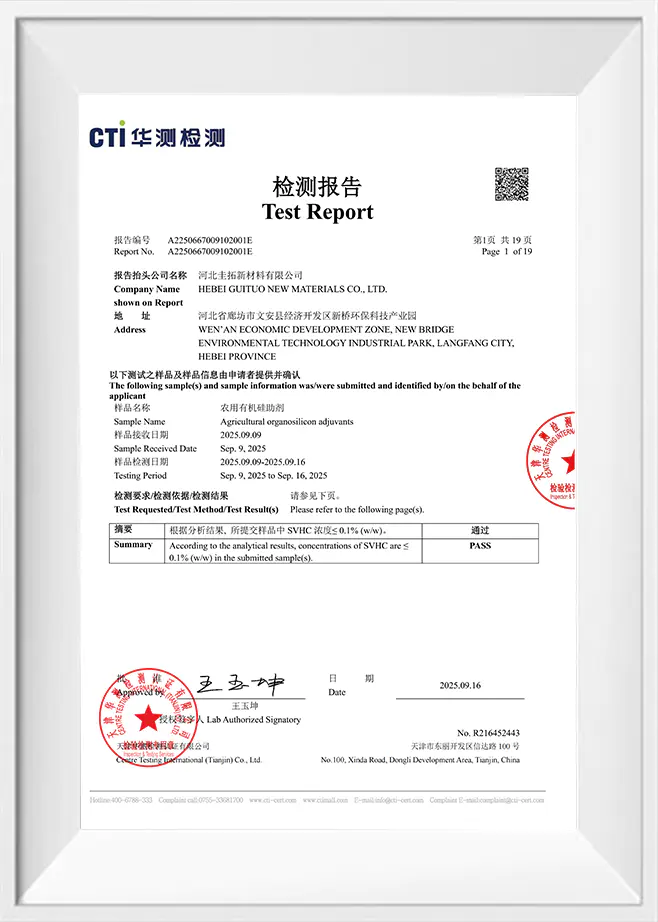
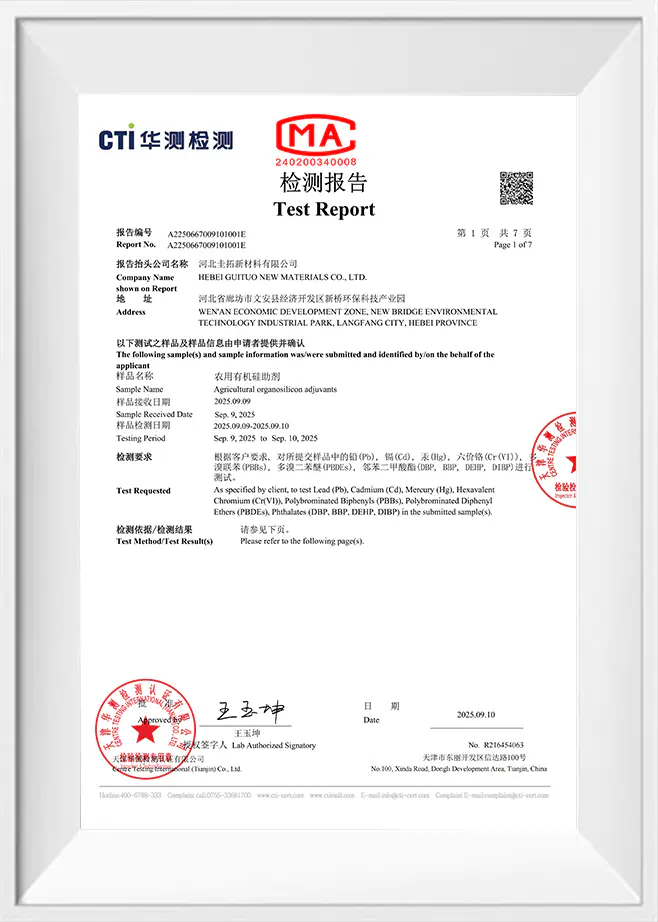
Performance benchmark
| Property | This surfactant | Alkylphenol ethoxylate | Fatty alcohol ethoxylate |
|---|---|---|---|
| Surface tension (0.1%) | 23 mN/m | 34–38 mN/m | 27–31 mN/m |
| HLB tunability | Wide (8–12) | Fixed, narrow | Not applicable |
| Cold-storage stability | Excellent | Moderate | Poor |
| Re-dispersibility (WP/WG) | High | Moderate | Low |
| Compatible AI classes | Very broad | Moderate | Narrow |
Formulation performance vs. surfactant package
Source: internal formulation laboratory trials, 2024–2025, average of 8 active ingredient systems.
Tank-mix compatibility
Fully compatible Test before full mix
Dilution calculator
Enter your formulation batch size to estimate the recommended surfactant addition (2% w/w typical).
How to apply
Safe use guidelines
- Personal protection — Wear gloves and eye protection during formulation handling and weighing.
- First aid — Rinse skin/eyes with water; if ingested, seek medical advice.
- Storage — Keep sealed, cool, and dry; avoid prolonged exposure above 40°C.
- Environmental — Readily biodegradable (OECD 301); low aquatic toxicity.
- Disposal — Dispose according to local formulation-facility waste regulations.
- Shelf life — 18 months in original sealed container.
Crops & use cases
- EC & SC manufacturers — for pyrethroid, triazole, and sulfonylurea-based products.
- WP & WG manufacturers — for wettable powders and water-dispersible granules.
- Co-formulation labs — blending multi-active combination products.
- Contract formulators — toll manufacturing of branded and generic agrochemicals.
Also used in seed-treatment slurry formulations requiring fine, stable particle dispersion.
Why it outperforms
- Reduced surfactant package cost — effective at lower dosage than ethoxylate blends.
- Fewer formulation reworks — improved batch-to-batch emulsion consistency.
- Dual-function benefit — acts in the factory and again on dilution in the field.
- Regulatory-friendly profile — supports biodegradability claims in registration packages.
Application guidelines
- Addition order: add during oil-phase blending or before wet-milling, not as a final-step afterthought
- Mixing: use standard high-shear mixing; no specialized dispersion equipment required
- Dosage trial: run a small formulation trial at 1%, 2%, and 3% to select the optimum HLB response
- Compatibility check: jar-test with new active ingredients before full-batch production
Packaging & shelf life
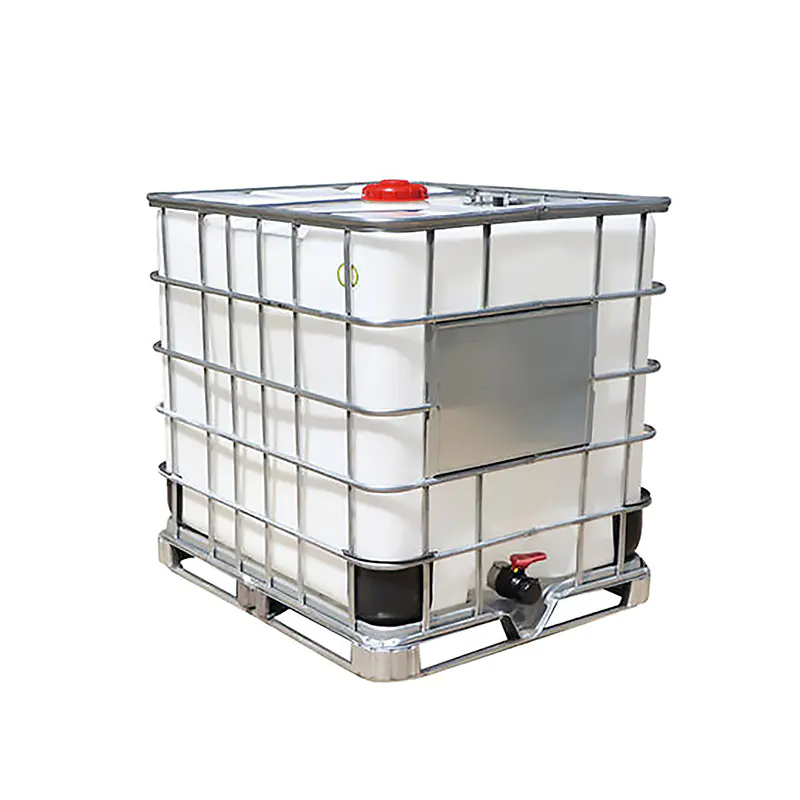
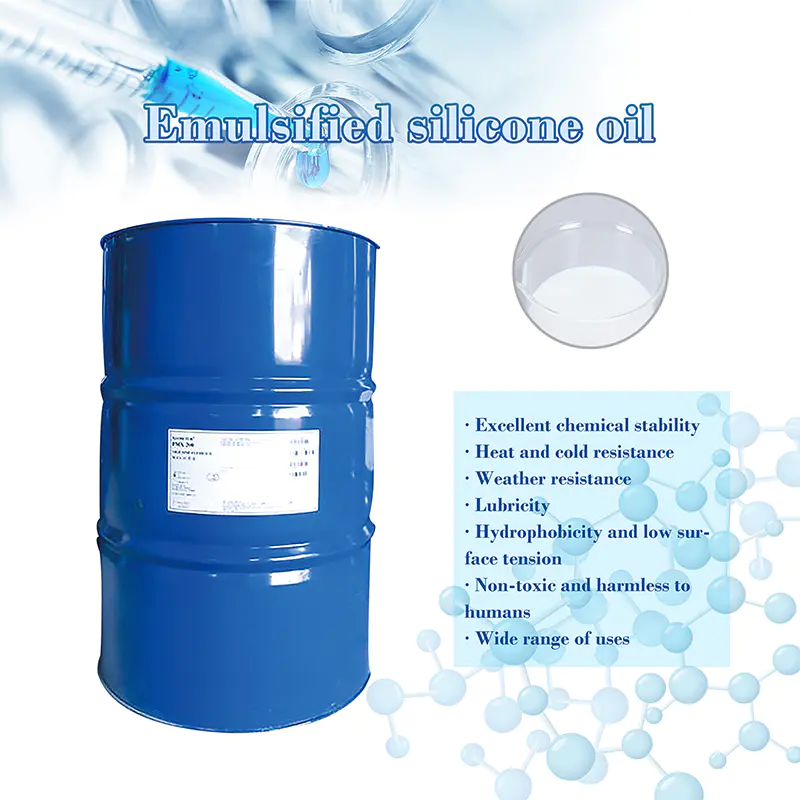
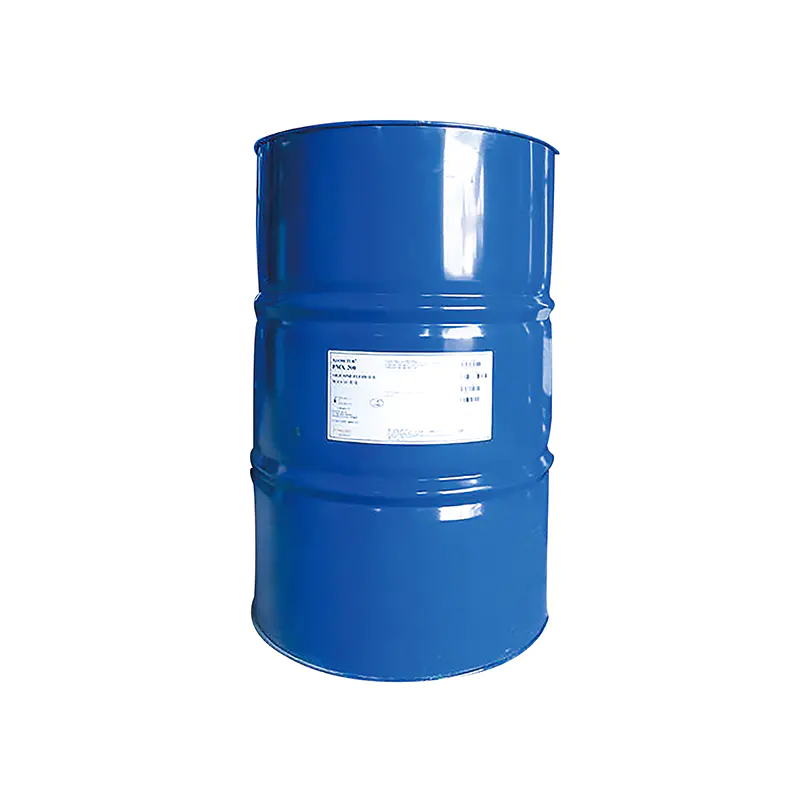
- Packaging: 25 kg drums, 200 kg drums, 1000 kg IBC totes.
- Storage: cool, dry warehouse, sealed container, 5–40°C.
- Shelf life: 18 months in unopened original packaging.
Global quality benchmarks
| Test item | Standard requirement | Our performance |
|---|---|---|
| Active content | ≥ 90% | ≥ 95% |
| Surface tension (0.1%) | ≤ 27 mN/m | 23 mN/m |
| Heavy metals | < 10 ppm | < 5 ppm |
| Biodegradability | OECD 301 | Readily biodegradable |
| Batch-to-batch HLB variance | ± 1.0 | ± 0.3 |
Frequently asked questions
Latest articles & guides
Silicone Surfactant for Herbicide Application
overview Purpose-Built for Broadleaf and Grass Weed Herbicide Programs Silicone
Agricultural Silicone Penetrant and Spreader
overview Penetration-Focused Adjuvant for Translocated Actives Agricultural Sil
Silicone-Based Antifoam for Agriculture
overview Foam Control for On-Farm Liquid Storage, Fertigation, and Slurry System
Silicone Adjuvant for Fungicide Spray
overview Adjuvant Built Around the Disease-Control Weather Window Silicone Adju
High Performance Silicone Agricultural Adjuvant
overview The Flagship Adjuvant for High-Value Crop Programs High Performance Si
Agricultural Chemical Silicone Defoaming Agent
overview Industrial-Scale Antifoam for Agrochemical Manufacturing Processes Agr
Silicone Spreader for Foliar Fertilizer
overview Purpose-Built Spreader for Foliar Nutrition Programs Silicone Spreader
Agricultural Pesticide Silicone Wetting Additive
overview A Wetting Additive Built Into the Powder, Not Added After Agricultural
Super Spreading Silicone Agricultural Surfactant
overview Super-Spreading Performance for Turf, Ornamentals, and Nursery Producti
Upgrade your formulation's emulsion stability
Free formulation trial samples · Technical formulation support · Custom HLB grades
cnguituonewmaterial.com · Agricultural adjuvants & new materials

Tel : +86-400-138-5268
Email : [email protected]
Phone : +86-15128434888 / +86-13511051998
Add : Xinqiao Environmental Protection Industrial Park, Wen'an County, Langfang City, Hebei Province, China
Copyright © Hebei Guituo New Material Co., Ltd. All Rights Reserved.
