

 English
  Français
  Português

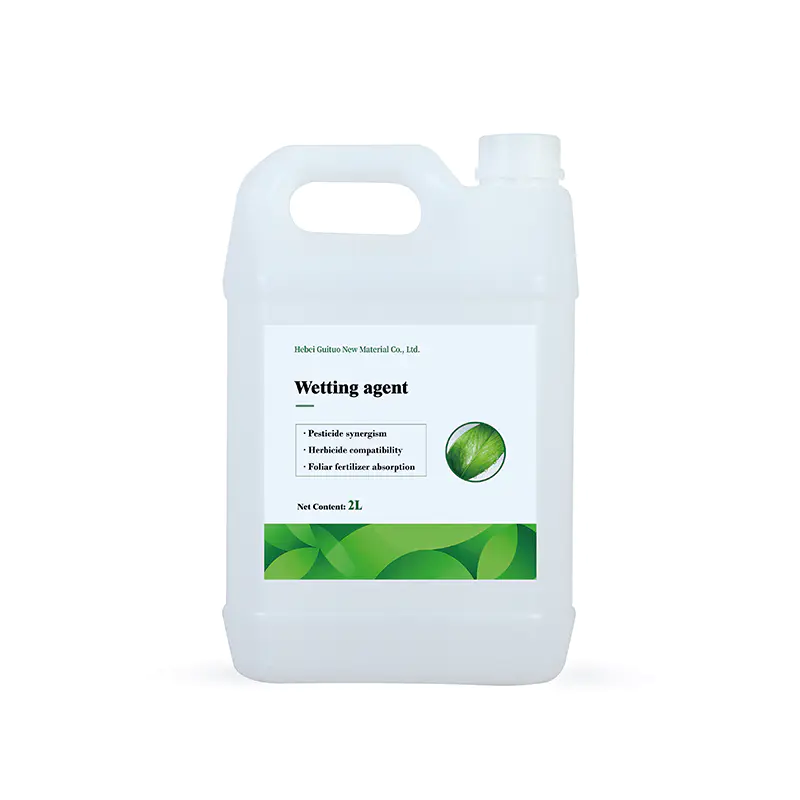
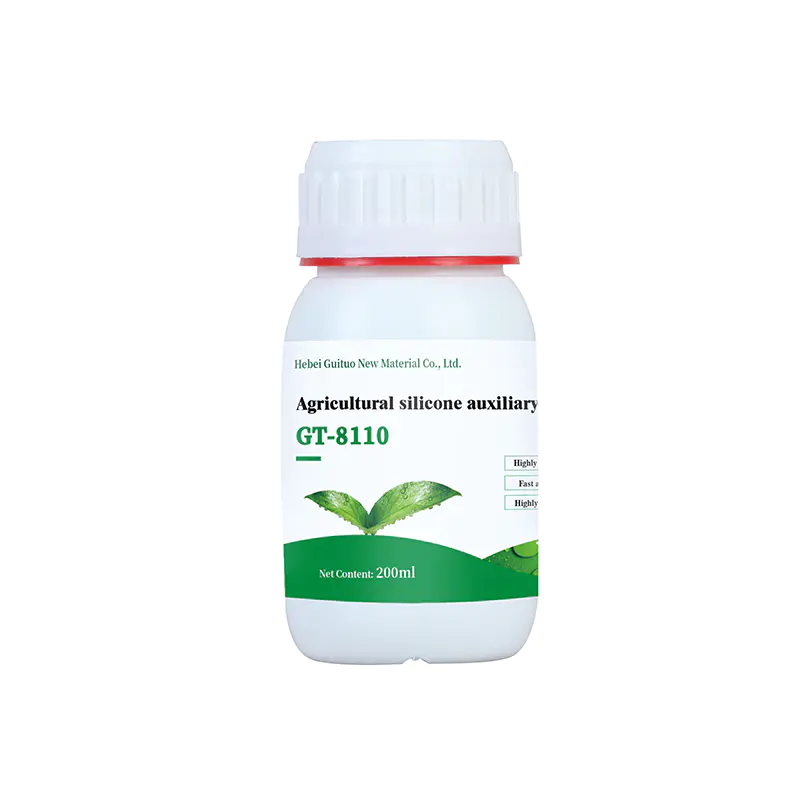
Polyether Modified Silicone Oil Surfactant
PDMS-polyether graft copolymer with adjustable EO/PO ratio — tunable HLB from 4 to 16 for use as emulsifier, compatibilizer, and moderate wetting agent across agrochemical formulations.
Explore our adjuvant range
Copolymer Chemistry That Bridges Oil and Water Phases
Polyether Modified Silicone Oil Surfactant is a graft copolymer built from a polydimethylsiloxane (PDMS) backbone onto which polyether (EO/PO) side chains are grafted at controlled intervals along the siloxane chain. This structure gives the molecule dual character: the silicone backbone provides low surface energy and spreading power, while the polyether side chains provide water solubility and can be tuned to control the balance between the two. It is this tunability — not spreading alone — that makes the product distinct from single-purpose wetting or spreading adjuvants.
By adjusting the ethylene oxide (EO) to propylene oxide (PO) ratio and the graft density during synthesis, the effective HLB of this surfactant can be set anywhere from roughly 4 (strongly lipophilic, water-in-oil emulsifier) to 16 (strongly hydrophilic, oil-in-water emulsifier and wetter). This is a much wider adjustable range than fixed-structure trisiloxane wetting agents, which is why formulators reach for this chemistry specifically when they need a single ingredient to perform multiple roles — emulsifying an oil phase, wetting a powder, and moderating foam — within one formulation.
In agrochemical use, the mid-HLB grades (8–10) function as a compatibilizer between oil-based adjuvant components and water-based spray solutions, preventing phase separation in tank mixes that combine crop oil concentrates with water-soluble actives. Lower-HLB grades (4–7) are used as primary or secondary emulsifiers in EC and oil-dispersion (OD) formulations, where their siloxane backbone gives better emulsion fineness than conventional non-silicone emulsifiers at equivalent dosage.
Because the polyether modification also moderates the surfactant's inherent tendency toward extreme spreading, this product behaves less aggressively than trisiloxane super-spreaders — surface tension typically bottoms out around 24–26 mN/m rather than the sub-21 mN/m of dedicated super-spreaders — making it a more controllable, general-purpose formulation ingredient rather than a maximum-spread field adjuvant.
Viscosity is generally higher than simple trisiloxane surfactants, in the 150–250 cSt range at 25°C, reflecting the larger, more complex copolymer structure, but the product remains pourable and blends readily using standard formulation equipment.
Why This Copolymer Chemistry
Mechanism of action
Polyether Modified Silicone Oil Surfactant is a graft copolymer: a PDMS backbone with polyether (EO/PO) branches attached at intervals. The siloxane segments orient toward oil/hydrophobic phases while the polyether segments orient toward water, allowing the same molecule to sit stably at an oil-water interface.
Because the EO/PO ratio and graft density are adjustable, formulators can shift the molecule's effective HLB to favour either water-in-oil or oil-in-water emulsification, or to sit in a mid-range where it acts primarily as a phase compatibilizer between oil adjuvants and water-based sprays.
The polyether branches partially shield the siloxane backbone's extreme surface activity, which is why this surfactant produces moderate, controlled spreading rather than the aggressive super-spreading of unmodified trisiloxanes — useful where formulators want emulsification and wetting without excessive drift-prone spreading.
Surface tension reaches its lowest point around HLB 10–13, the balanced-compatibilizer range.
Product specifications
| Parameter | Value |
|---|---|
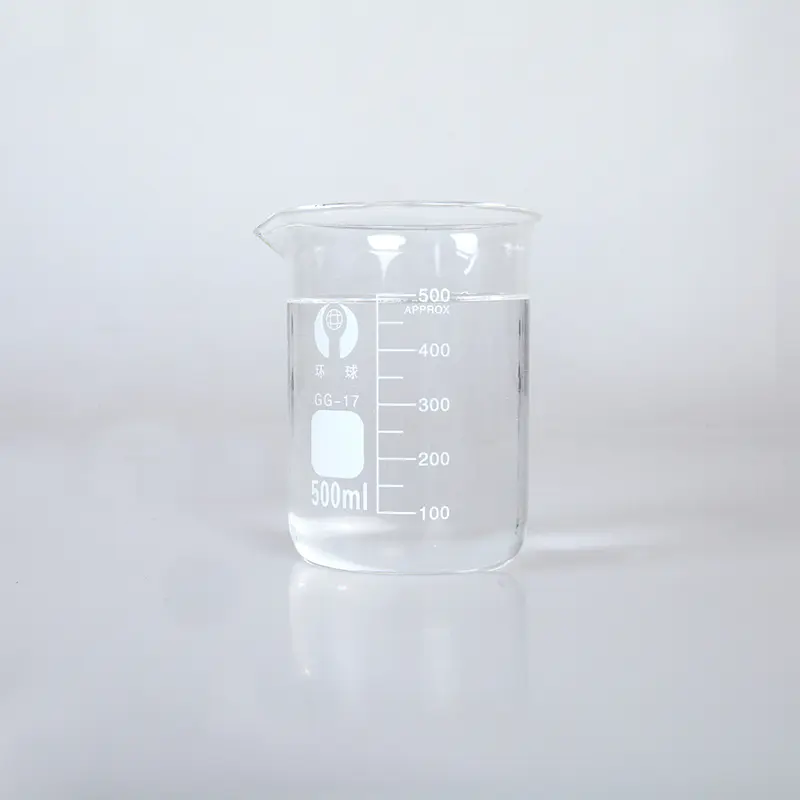
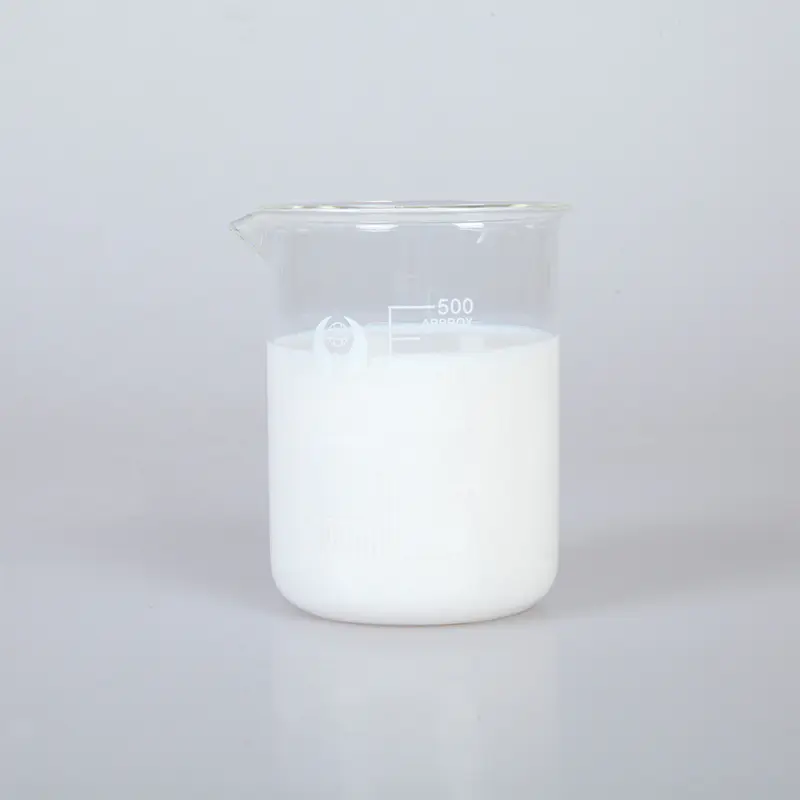
| Appearance | Clear to slightly hazy liquid |
| Active content | ≥ 96% (PDMS-polyether graft copolymer) |
| Viscosity (25°C) | 150 – 250 cSt |
| Density (25°C) | 1.02 – 1.08 g/cm³ |
| HLB value | 4 – 16 (custom grades available) |
| Flash point | > 105°C |
| pH (1% aq.) | 5.5 – 7.5 |
| Storage stability | 24 months (cool, dry) |
Performance data


- 2021
Company Establishment
- 10000m²
Advanced Factory
- 50+
Exporting Country
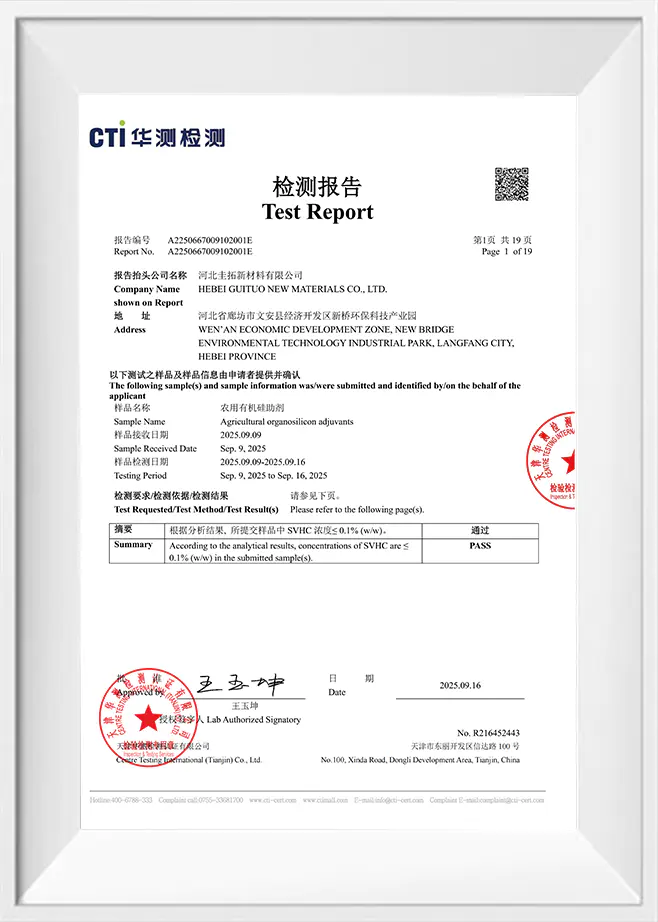
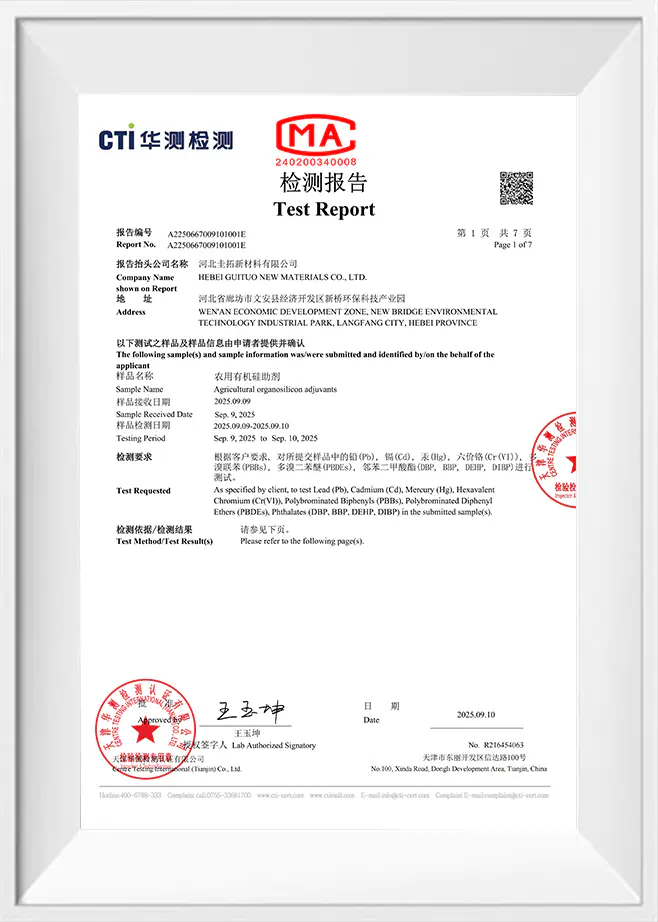
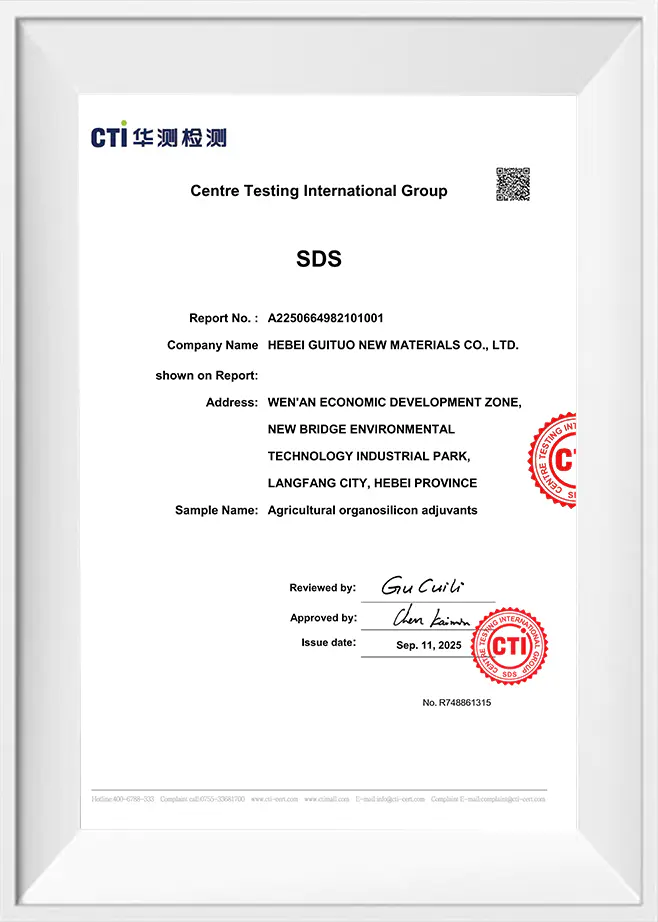
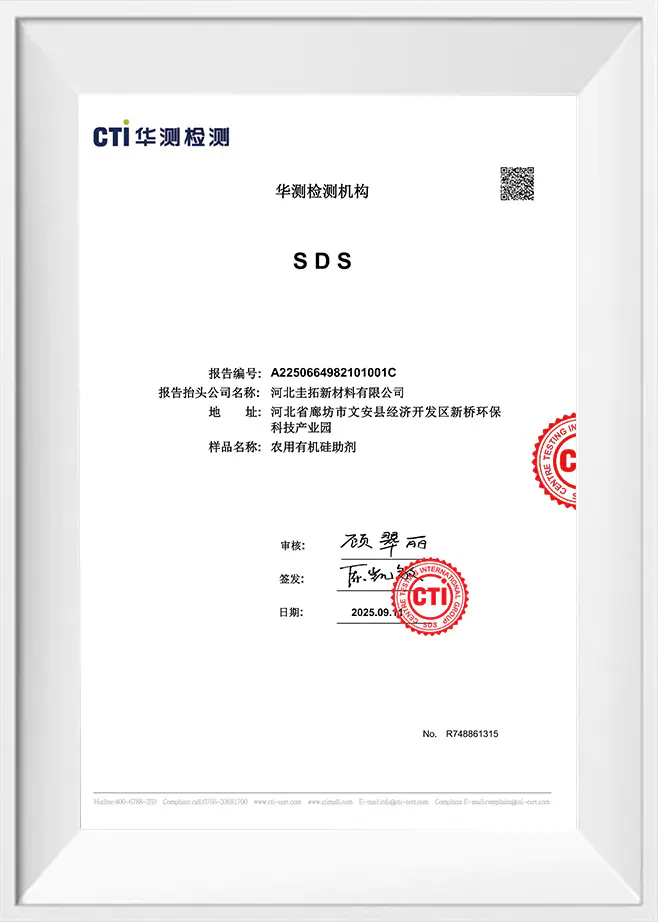
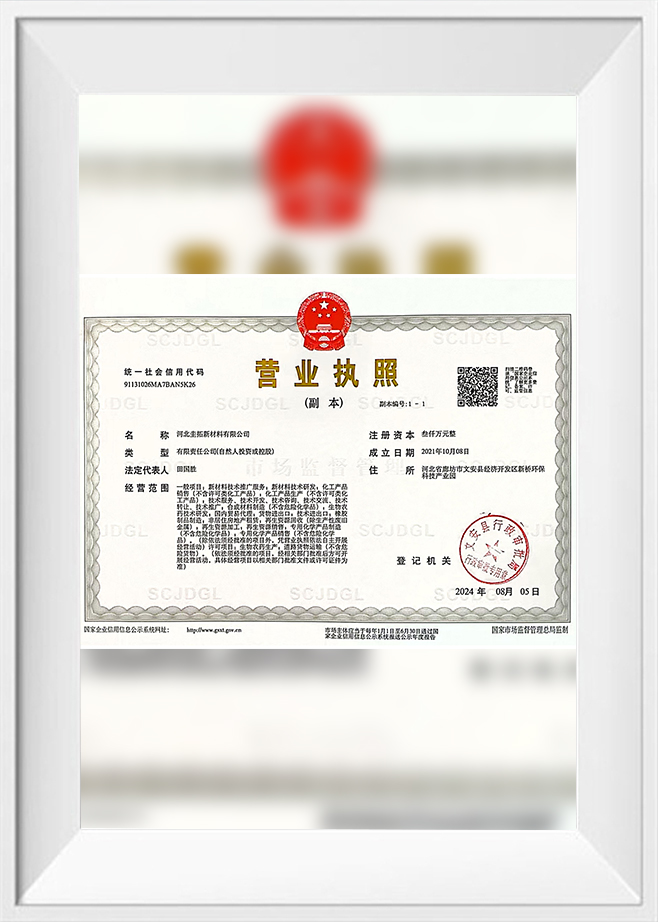
Our Certifications
And Partners
Professional scale factory production. We can customize finished products wholesale and export, OEM production, and distribution.
I just wanted to let you know that welcome to inquire and place orders.


Performance benchmark
| Property | This copolymer | Non-silicone emulsifier | Fatty alcohol ethoxylate |
|---|---|---|---|
| HLB adjustability | 4–16 (very wide) | Fixed | Fixed, narrow |
| Surface tension floor | 24–26 mN/m | 30–35 mN/m | 32–37 mN/m |
| Emulsion fineness | D50 < 2 µm | D50 5–8 µm | D50 4–6 µm |
| Phase compatibilization | Excellent | Poor | Moderate |
| Spreading behaviour | Moderate, controlled | Minimal | Low |
Emulsification and phase stability results
Source: internal formulation laboratory trials, 2024–2025.
Tank-mix compatibility
Fully compatible Test before full mix
Dilution calculator
Enter formulation batch or tank volume to estimate the recommended compatibilizer dose (1.5% w/w typical).
How to apply
Safe use guidelines
- Personal protection — Wear gloves and eye protection when handling concentrate.
- First aid — Rinse skin/eyes with water; if ingested, seek medical advice.
- Storage — Keep sealed, cool, and dry; avoid prolonged exposure above 40°C.
- Environmental — Biodegradable; low aquatic toxicity across HLB grades.
- Disposal — Dispose according to local formulation-facility waste regulations.
- Shelf life — 24 months in original sealed container.
Crops & use cases
- EC & OD manufacturers — for pyrethroid, triazole, and oil-based herbicide formulations.
- Tank-mix compatibilizer use — growers combining COC/MSO oil adjuvants with water-based tank mixes.
- Multi-active co-formulations — stabilizing blends of oil- and water-soluble actives.
- Custom formulation labs — selecting bespoke HLB grades for specific active ingredient systems.
Also used as a secondary dispersant in suspension concentrate (SC) formulations alongside primary wetting agents.
Why it outperforms
- One chemistry, many roles — emulsifier, compatibilizer, and mild wetting agent in a single ingredient.
- Finer emulsions — D50 below 2 µm versus 5–8 µm for conventional emulsifiers.
- Reduces tank-mix separation — prevents costly phase-separation failures in oil/water blends.
- Custom-tunable — HLB grade selected to match the specific formulation's chemistry.
Application guidelines
- Grade selection: choose HLB based on oil-to-water ratio of the target formulation before purchase
- Addition order: add during oil-phase emulsification, not after water phase is already combined
- Mixing: standard high-shear mixing is sufficient; no specialized equipment required
- Jar test: always jar-test new oil/water combinations before full-batch production or tank-mixing
Packaging & shelf life
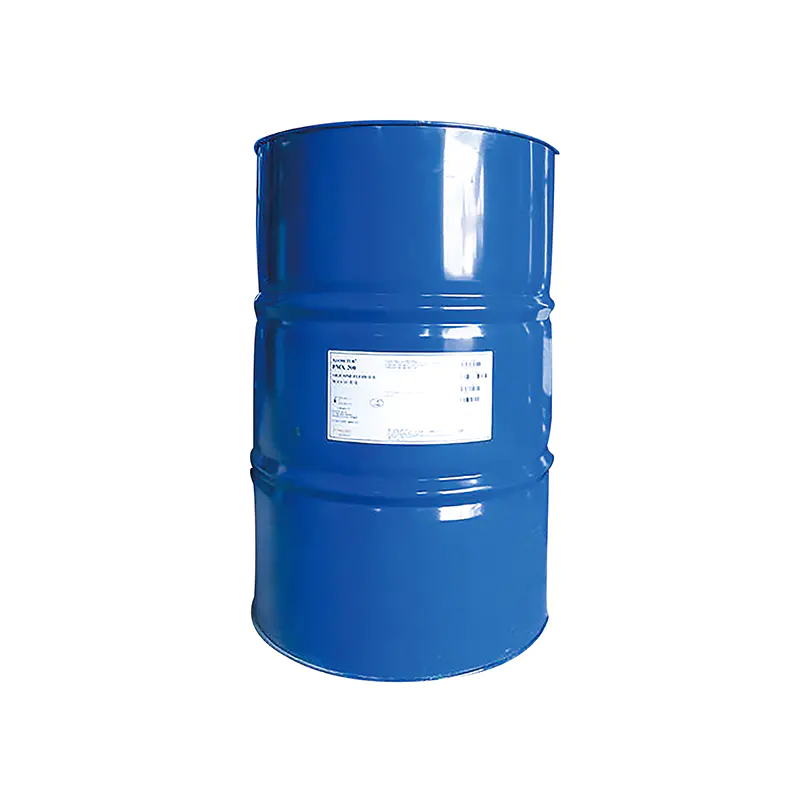
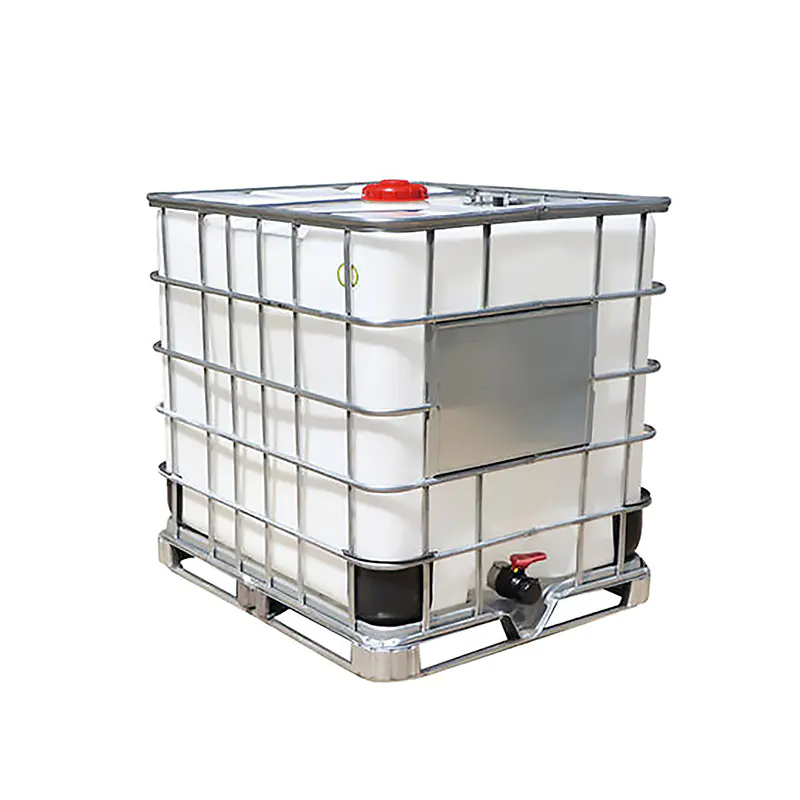
- Packaging: 25 kg drums, 200 kg drums, 1000 kg IBC totes.
- Storage: cool, dry warehouse, sealed container, 5–40°C.
- Shelf life: 24 months in unopened original packaging.
Global quality benchmarks
| Test item | Standard requirement | Our performance |
|---|---|---|
| Active content | ≥ 90% | ≥ 96% |
| Emulsion droplet size | D50 < 5 µm | D50 < 2 µm |
| HLB accuracy | ± 1.0 | ± 0.5 |
| Phase stability (30 days) | No requirement | No visible separation |
| Biodegradability | OECD 301 | Readily biodegradable |
Frequently asked questions
Latest articles & guides
Polyether Modified Heptamethyltrisiloxane Agricultural Surfactant
overview A Graded Product Line for Selectable Spreading Intensity Polyether Mod
Modified Silicone Fluid for Agriculture
overview Functional Silicone Fluid for Agricultural Films, Coatings, and Textile
Silicone Surfactant for Herbicide Application
overview Purpose-Built for Broadleaf and Grass Weed Herbicide Programs Silicone
Silicone Surfactant for Agricultural Chemicals
overview Multi-Functional Silicone Surfactant for Agrochemical Formulation Sili
Silicone Spreader for Foliar Fertilizer
overview Purpose-Built Spreader for Foliar Nutrition Programs Silicone Spreader
Low Surface Tension Silicone Surfactant
overview Technical-Grade Surfactant Engineered Around a Single Specification Lo
Non-Ionic Polymeric Silicone Surfactant
overview High-Molecular-Weight Architecture for Extended Residual Performance N
Silicone Adjuvant for Fungicide Spray
overview Adjuvant Built Around the Disease-Control Weather Window Silicone Adju
Silicone-Based Antifoam for Agriculture
overview Foam Control for On-Farm Liquid Storage, Fertigation, and Slurry System
One copolymer, tuned to your formulation
Free formulation samples · HLB grade selection support · Custom EO/PO ratios
cnguituonewmaterial.com · Agricultural adjuvants & new materials

Tel : +86-400-138-5268
Email : [email protected]
Phone : +86-15128434888 / +86-13511051998
Add : Xinqiao Environmental Protection Industrial Park, Wen'an County, Langfang City, Hebei Province, China
Copyright © Hebei Guituo New Material Co., Ltd. All Rights Reserved.
