

 English
 Français
 Português

 Home / News / Industry News / Drone Spraying Adjuvant Notes for Orchards, Rice Paddies and Cotton Fields
Drone Spraying Adjuvant Notes for Orchards, Rice Paddies and Cotton Fields
2026-11-23
Carrier Volume Comes First: 15 to 40 L/ha Changes the Adjuvant Maths
A 30 L/ha drone pass puts roughly one-sixth of the water on a field that a 200 L/ha boom sprayer would use. The adjuvant has to earn its place inside that much smaller pail. The working rule for aerial and drone work is short: dose the adjuvant as a percentage of the carrier you actually load, not as a copy of the ground-rig rate per hectare, and pick the chemistry to match the leaf surface you are wetting.
Most mixing errors we see in the field come from carrying a 0.05% habit into a 20 L tank without recalculating, or from pouring a ground-rig dose of 200 mL/ha into a 25 L load and pushing the concentration to twice the label figure. Both directions cost money. One leaves the droplet sitting on top of a waxy leaf; the other burns margins and can lift driftable fines.
| Parameter | Ground boom | Drone or aerial | Adjuvant implication |
|---|---|---|---|
| Carrier volume | 100 to 250 L/ha | 15 to 40 L/ha on rice and cotton, 40 to 80 L/ha in orchards | Percentage in the tank matters more than litres per hectare |
| Typical droplet size | 200 to 400 microns | 100 to 180 microns | Far more surface area per litre, faster evaporation |
| Working speed | 5 to 12 km/h | 15 to 25 km/h | Shorter deposition window, less time to correct a bad pass |
| Deposit target | 30 to 60 deposits per cm² | 20 to 40 deposits per cm² | Every droplet has to count, so spreading and sticking matter more |
| Mixing point | Sprayer tank, often on-site | Small tank, often refilled in a field headland | Jar tests and marked jugs prevent concentration drift |
Spread
Lower dynamic surface tension so a droplet flattens on a waxy or hairy leaf instead of beading and rolling off.
Retention
Keep the deposit on the leaf long enough for the active ingredient to pass the cuticle, especially at low volume.
Penetration
Carry the active into leaf angles, stem junctions and the underside of the canopy where the drone air stream pushes it.
Droplet Size, Dynamic Surface Tension and What an Adjuvant Can and Cannot Fix
An adjuvant changes how a droplet behaves after it lands. It does not change where the droplet flies. That distinction matters on a drone, where a rotary atomiser or a fine flat fan can throw a large share of the spray below 100 microns and put it into the air rather than onto the crop.
Plain water sits at about 72 mN/m surface tension. A good organosilicone adjuvant pulls the dynamic figure down to roughly 21 to 25 mN/m within seconds, which is fast enough to act during the fraction of a second a 120 micron droplet spends settling and spreading. Nonionic surfactants typically land in the low 30s and take longer, which is why they are less effective at very low carrier volumes.
Where the adjuvant stops helping
Adding more surfactant will not push a droplet into a dense cotton canopy, and it will not rescue a pass flown in a 15 km/h crosswind. It also will not compensate for an atomiser that is already producing a fog. If the water-sensitive papers at the top of the canopy show heavy deposit and the cards near the boll line show almost nothing, the problem is air and angle, not chemistry.
There is a second limit worth flagging to any grower moving from a boom to a drone. Organosilicone adjuvants cut surface tension sharply, and at high concentration with fine atomisation they can widen the share of small droplets. Keep the dose at the label percentage, keep the atomiser in the medium-coarse band, and check drift-sensitive neighbours before the first pass. For a closer look at how wetting agents behave at low carrier volumes, see our notes on agricultural spray adjuvant wetting agents.
Orchards: Reaching the Inner Canopy Without Soaking the Outer Leaves
Orchard drone work is usually the highest-volume segment of the three crops covered here, often 40 to 80 L/ha, and it is the segment where coverage distribution matters more than total deposit. A citrus or apple canopy presents a dense outer shell. If the spray wets that shell and stops, the inner fruit and the lower leaf faces stay unprotected while the sprayer log looks perfect.
Set the volume from canopy, not from field area
Tree row volume is a more honest starting point than hectares. A young block at 1.5 m canopy diameter and a mature block at 4 m need very different carrier volumes even if the field size is identical. Most growers over-spray young blocks and under-spray the mature ones. Adjust the litres per hectare to the canopy, then hold the adjuvant percentage steady against whatever carrier you end up with.
Adjuvant dose in orchard tank mixes
A typical organosilicone dose in an orchard tank is 0.025 to 0.05% v/v, which at 60 L/ha works out to 15 to 30 mL per hectare. That is a small volume, so measure it with a graduated cylinder rather than judging by eye. In blocks with hard water above 500 ppm calcium carbonate, run a jar test first; high electrolyte loads can knock a silicone adjuvant out of solution and leave an oily film on the tank wall.
Spray direction also matters. Flying down the row with the air stream angled into the canopy gives better deposition on the underside than crossing rows at speed. If you cannot fly below 2.5 m/s over the canopy without visible drift on the drift cards, postpone the pass; most orchard labels assume droplets in the 120 to 180 micron band and a wind under 3 m/s.
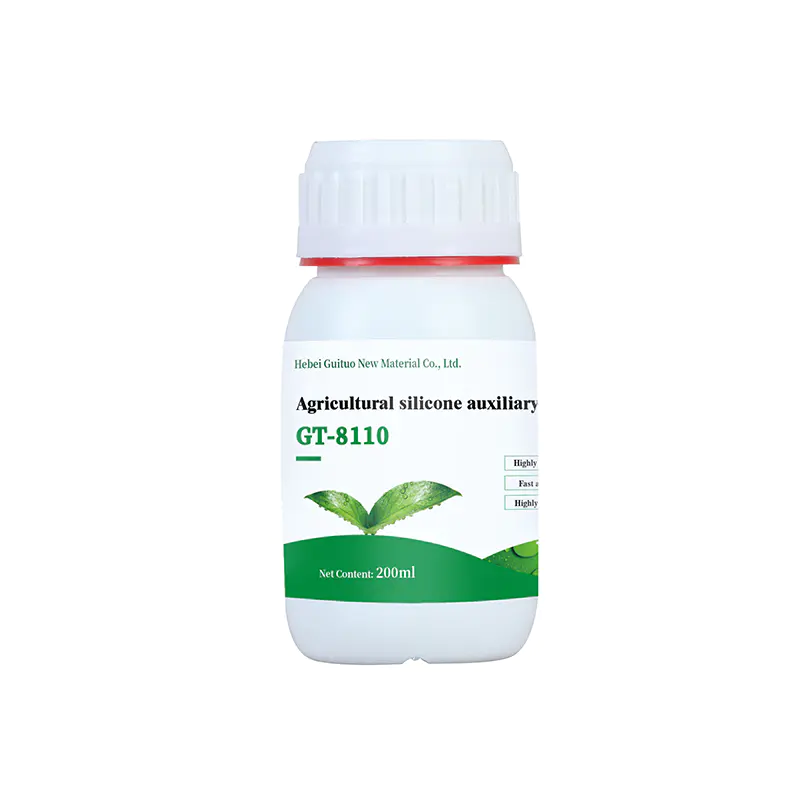
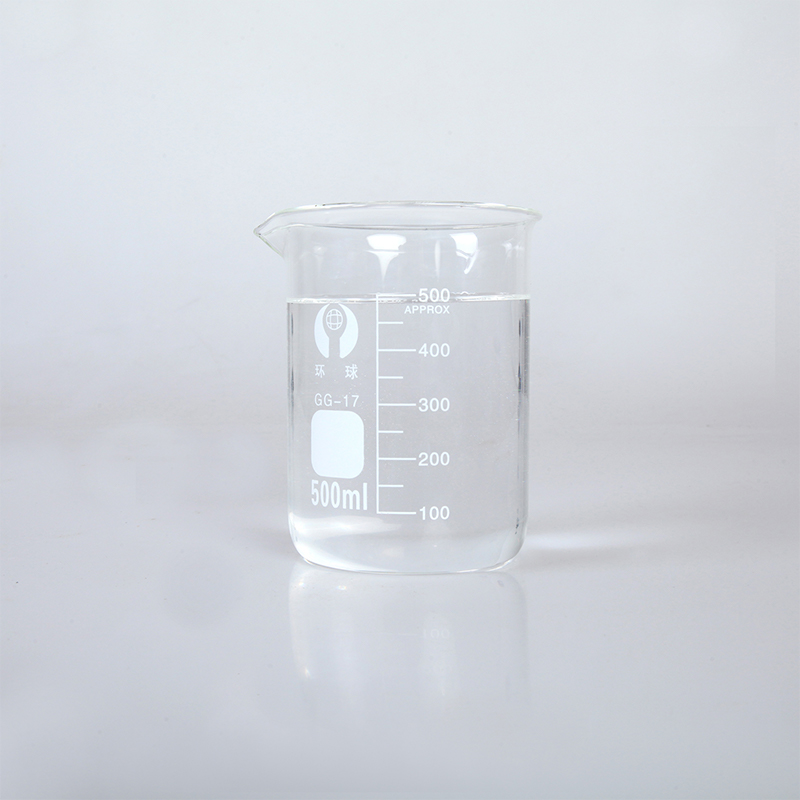 Organosilicone Surfactant Agricultural Spray AdjuvantAgricultural silicone adjuvant for pesticide and foliar fertilizer formulations, supporting wetting, spreading, and penetration; relevant where waxy rice leaves resist droplet deposits.View Product →
Rice Paddies: Superhydrophobic Leaves, High Humidity and Narrow Drift Windows
Rice is the hardest leaf surface of the three. The rice leaf carries a dense wax and papillae structure that pushes contact angles above 140 degrees. A water droplet applied without an adjuvant bounces or rolls off within a second. In a paddy, adjuvant is not a performance tweak, it is the difference between a deposit and no deposit.
Why rice rewards a fast-acting silicone
Because the droplet lifetime on a rice leaf is so short, the adjuvant has to reduce surface tension during impact rather than afterwards. That is exactly where organosilicone chemistry wins over conventional nonionics: the spread happens in milliseconds, the droplet anchors on the leaf, and the active ingredient has a surface to absorb from.
At 15 to 30 L/ha, a 0.05% dose equals 7.5 to 15 mL per hectare, and those small numbers are easy to round up by accident. A 30 L tank serving one hectare needs 15 mL. A 40 L tank serving one hectare needs 20 mL. Write the figure on the tank lid in permanent marker; it removes the arithmetic from a hot headland at midday.
Humidity helps, wind does not
Paddy humidity is usually above 70%, which slows evaporation and lets fine droplets survive longer than they would over a dry orchard. That is helpful for coverage, but it also means small droplets hang in the air and travel. Keep an eye on the 1 to 3 m/s wind band, avoid spraying during the thermal inversion that forms around dawn over flooded fields, and leave a buffer strip next to any susceptible neighbouring crop.
For rice weed programs, remember that many herbicides are far less forgiving than insecticides. An over-dosed silicone adjuvant can increase uptake enough to produce leaf burn on the crop, particularly with contact-acting products applied in strong sunlight. Use the label rate, apply in the cooler part of the day, and never add a second surfactant on top of a formulated product that already contains one.
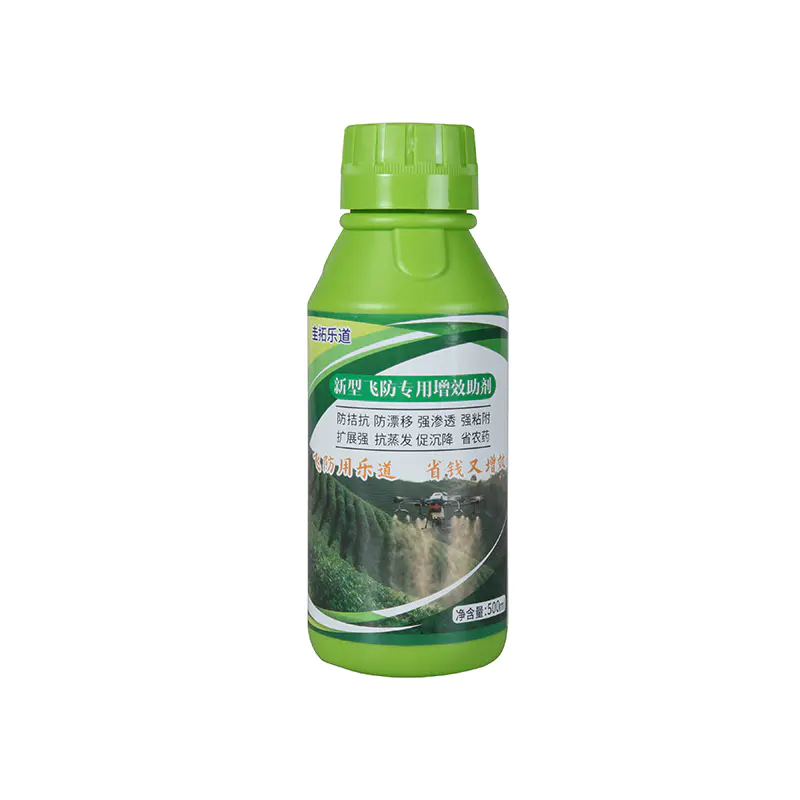
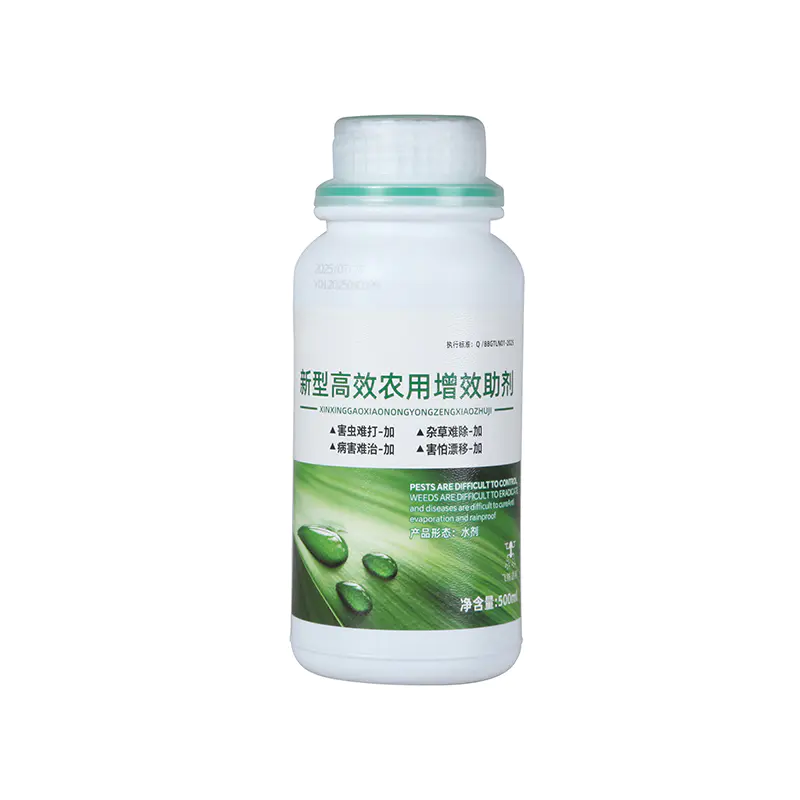
 Drone Spraying Enhancement Adjuvant for Aerial ApplicationsAgricultural silicone adjuvant designed for low-volume drone spraying, with adhesion, anti-evaporation, absorption, drift-reduction, and de-flocculation functions; useful when aerial passes need more uniform deposition.View Product →
Cotton Fields: Mite Pressure, Boll Coverage and Late-Season Defoliation
Cotton adds two complications that rice and orchards do not: a mite complex that hides on leaf undersides, and a harvest-aid pass late in the season when the canopy is closed and the leaves are leathery. Both reward a well-chosen adjuvant, and both punish the wrong dose.
Mite control depends on where the droplet lands
Two-spotted spider mite colonies sit on the underside of leaves, often three or four nodes below the terminal. Drone air streams can turn leaves over, which is one reason drone miticide passes work better than expected, but only if the droplets are small enough to travel under the leaf and wet the surface once they are there. A 0.05% silicone dose at 20 to 30 L/ha gives a workable balance. Repeat at the interval on the label, usually 7 to 10 days, and rotate active ingredients to slow resistance.
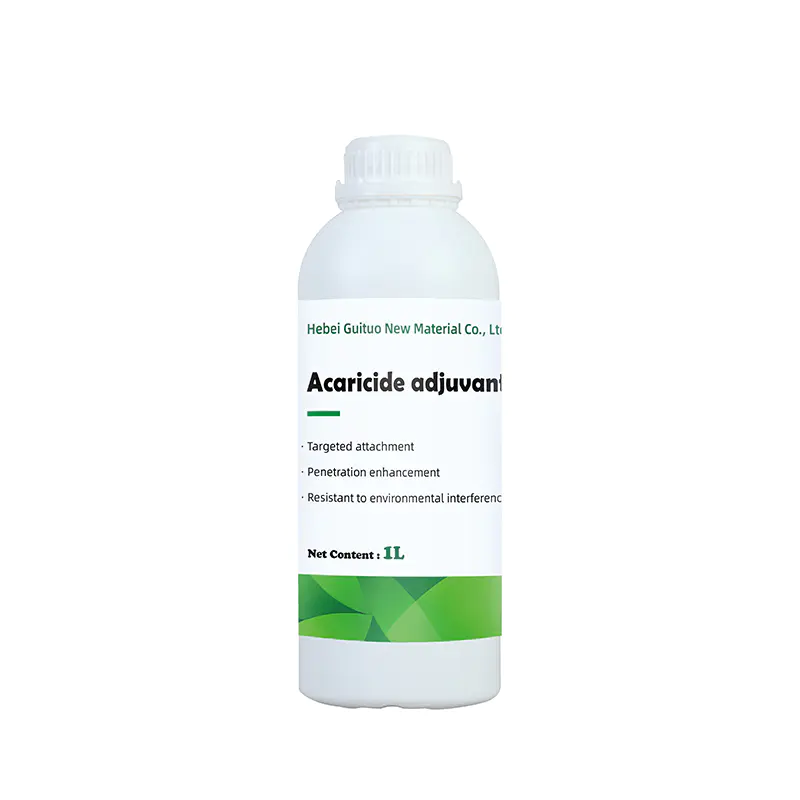
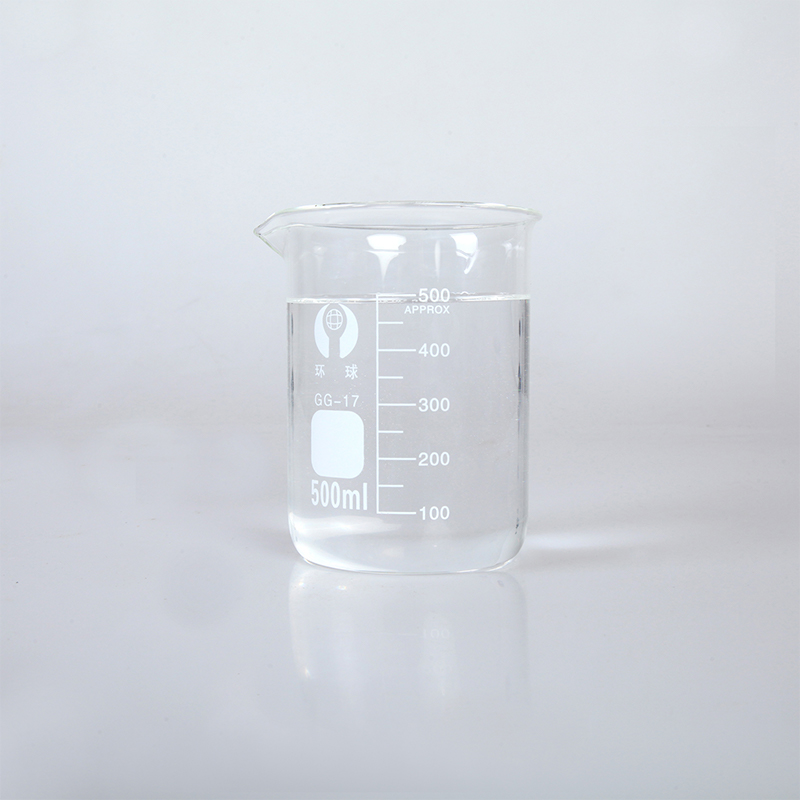 Mite-Killing Silicone Adjuvant for Acaricide SpraysSilicone adjuvant for use with acaricides, formulated to improve adhesion and penetration on leaf undersides and mite surfaces; suits miticide passes targeting hidden colonies.View Product →
Defoliation and boll opening
Harvest aids are contact products and they need thorough coverage of every leaf they are meant to drop. At the same time, the surfactant load has to stay controlled: too much spreading agent in hot, humid conditions can drive the product into leaf tissue and produce the scorch that shows up as dark, papery margins three days later. Drop the adjuvant to the lower end of the label range for defoliation passes, keep the carrier at 25 to 40 L/ha, and fly when the canopy is dry.
Also check compatibility before mixing a harvest aid with a silicone adjuvant. Some thidiazuron and diuron formulations already carry surfactants and crop oils, and stacking a third surfactant on top is where phytotoxicity complaints usually originate.
Tank-Mix Order, Jar Tests and Compatibility Red Flags
A drone tank is small, which makes a bad mix obvious quickly and expensive to dump. Run a jar test with the actual field water before the first load of the season, and again whenever a new product enters the program. One litre of water, the same ratio of products you intend to use, and thirty minutes of watching is cheap insurance.
- Half-fill a clear 1 L jar with the water you will actually spray.
- Add products in the standard order: water conditioners first, then wettable powders and granules, then suspension concentrates, then emulsifiable concentrates, then adjuvants last.
- Stir gently between additions and look for lumps, cream layers, oil rings or heat.
- Let the jar stand for 30 minutes and check again. A mix that separates in half an hour will separate in the tank.
- Add the adjuvant last and stir only enough to disperse it; violent agitation can foam a silicone adjuvant and make dosing inaccurate.
- Record the result in the spray log with water source, pH and temperature.
Three signals mean stop: an oily ring on the glass after a silicone addition, a sudden thickening that will not pour, and fine foam that will not collapse. Any of these points to an antagonistic pair. Our technical note on compatibility between spray adjuvants and pesticides covers the common antagonistic pairs in more detail.
Water Quality: pH, Hardness and How Long a Mix Stays Usable
Organosilicone adjuvants are stable in neutral water and progressively less happy as pH climbs. Above pH 8, the siloxane backbone begins to hydrolyse, the surface tension benefit falls away, and the mix can start to look cloudy. In practice, treat any mix older than 24 hours as suspect, and in alkaline water aim to spray within four to six hours.
| Parameter | Comfortable range | Action if outside the range |
|---|---|---|
| pH | 5.5 to 7.5 | Buffer the water, or shorten the mixing-to-spray interval |
| Hardness | Below 300 ppm as calcium carbonate | Jar test, consider a water conditioner, expect a slightly higher adjuvant demand |
| Mix age | Under 12 hours | Dump and remix rather than topping up an old load |
| Temperature | 10 to 30 degrees C | Pre-mix in the cooler part of the day; do not store a hot tank in direct sun |
| Turbidity | Clear to slightly cloudy | Filter the fill water; silt binds surfactant and wastes the dose |
Hardness is the parameter most often ignored in drone programs because the fill point is a field tank or a canal. Take a sample once, send it for a basic panel, and you will know for the rest of the season whether you need to adjust.
Dose Reference Table for Three Crops
The figures below are starting points for a 0.05% v/v organosilicone adjuvant, which is the middle of the common label band. Always check the product label and the tank-mix partner before loading.
| Crop | Carrier volume | Adjuvant at 0.05% | Notes |
|---|---|---|---|
| Orchard, mature canopy | 60 L/ha | 30 mL/ha | Split passes down the row for better inner coverage |
| Orchard, young trees | 40 L/ha | 20 mL/ha | Reduce carrier before reducing adjuvant percentage |
| Rice, herbicide | 20 L/ha | 10 mL/ha | Fly in the cooler window, avoid inversion hours |
| Rice, fungicide | 25 L/ha | 12.5 mL/ha | Add a sticker only if the label permits it |
| Cotton, miticide | 25 L/ha | 12.5 mL/ha | Target leaf undersides, repeat per label interval |
| Cotton, defoliation | 35 L/ha | 17.5 mL/ha | Use the lower end of the range in hot, humid weather |
Field Troubleshooting: Symptom, Likely Cause, Fix
| Symptom | Likely cause | Fix on the next load |
|---|---|---|
| Droplets beading on leaves, visible white spots after drying | Adjuvant under-dosed, or a nonionic used at very low volume | Recalculate to 0.05% v/v of the actual carrier and confirm the product is silicone based |
| Heavy deposit on upper leaves, nothing on lower leaves | Flight height or angle, not chemistry | Lower the pass, angle the air stream, slow down, add water-sensitive cards |
| Fine foam in the tank that will not break | Over-agitation during mixing | Stir gently, add the adjuvant last, use an antifoam only if the label allows |
| Leaf margin scorch two to three days after application | Excess surfactant combined with heat, or an already-surfactant-loaded partner | Drop to the lower label band, spray in the evening, review the tank-mix partner |
Cost per Hectare, Packaging and What to Specify When Ordering
At a 0.05% dose, one litre of adjuvant treats roughly 2,000 litres of spray solution, which on a 25 L/ha drone program covers about 80 hectares. That arithmetic changes the purchasing conversation. The cost per hectare is tiny compared with the cost of a failed pass, so the decision should be driven by batch consistency and measured performance rather than by price per drum.
Batch consistency
Ask for a certificate of analysis with each lot, including active content and dynamic surface tension, so a new drum behaves like the last one.
Packaging fit
For small drone tanks, 1 L and 5 L packs reduce the risk of over-pouring. Bulk drums suit a professional spraying service with a fixed mixing station.
Custom supply
Contract and private-label supply is available for buyers who need their own label, packaging and specification sheet.
Ask suppliers three questions before the first order: what is the dynamic surface tension at the recommended dilution, how does the product behave at 500 ppm hardness, and what is the recommended interval between mixing and spraying. A supplier who answers all three with numbers is easier to work with than one who answers with adjectives.
Frequently Asked Questions
Can I use the same adjuvant rate in a 30 L drone tank as in a 200 L boom sprayer?
No. The percentage in the tank is what matters, so a 0.05% rate means 15 mL in a 30 L load regardless of the equipment. Copying a per-hectare rate from a boom program onto a drone program is the single most common way to over-dose.
Does a silicone adjuvant increase drift?
It can widen the fine fraction if the dose is too high or the atomiser is set very fine. Keep the dose within the label band, choose a medium-coarse atomiser setting, and fly in the 1 to 3 m/s wind window. The adjuvant is rarely the main drift cause; speed and wind are.
How long can a mixed load sit before it loses performance?
Up to 12 hours is comfortable in neutral water. In alkaline water above pH 8, aim to finish within four to six hours. If a load has been standing overnight in a hot tank, dump it.
Do systemic products still need an adjuvant?
Yes, but the reason is different. The adjuvant is not helping penetration through the cuticle, it is helping the droplet stay on the leaf long enough for absorption to begin, which matters even more when there are only 25 L of water per hectare to work with.
Will an adjuvant help against mite eggs?
Not directly. Eggs need an ovicide or repeated applications that catch the hatch. What the adjuvant does is improve underside coverage so the product you apply reaches the colony in the first place.
Can I tank-mix a silicone adjuvant with foliar fertiliser?
Usually yes, with a jar test. High-salt fertiliser loads and hard water together can push a silicone mix out of solution, so test with the actual field water and the actual fertiliser rate.
Does the adjuvant improve rainfastness?
Indirectly. Faster spreading and quicker drying help the deposit set, and many organosilicone products improve uptake within the first few hours, which shortens the vulnerable window. It does not make a product waterproof.
What should be recorded in the spray log?
Carrier volume per hectare, adjuvant millilitres per hectare, water pH and hardness source, mix time, wind speed and drift-card result. Six lines of data are enough to explain any unusual result later.

Contact Information
Tel : +86-400-138-5268
Email : [email protected]
Phone : +86-15128434888 / +86-13511051998
Add : Xinqiao Environmental Protection Industrial Park, Wen'an County, Langfang City, Hebei Province, China
Contact Information
Copyright © Hebei Guituo New Material Co., Ltd. All Rights Reserved.
