

 English
 Français
 Português


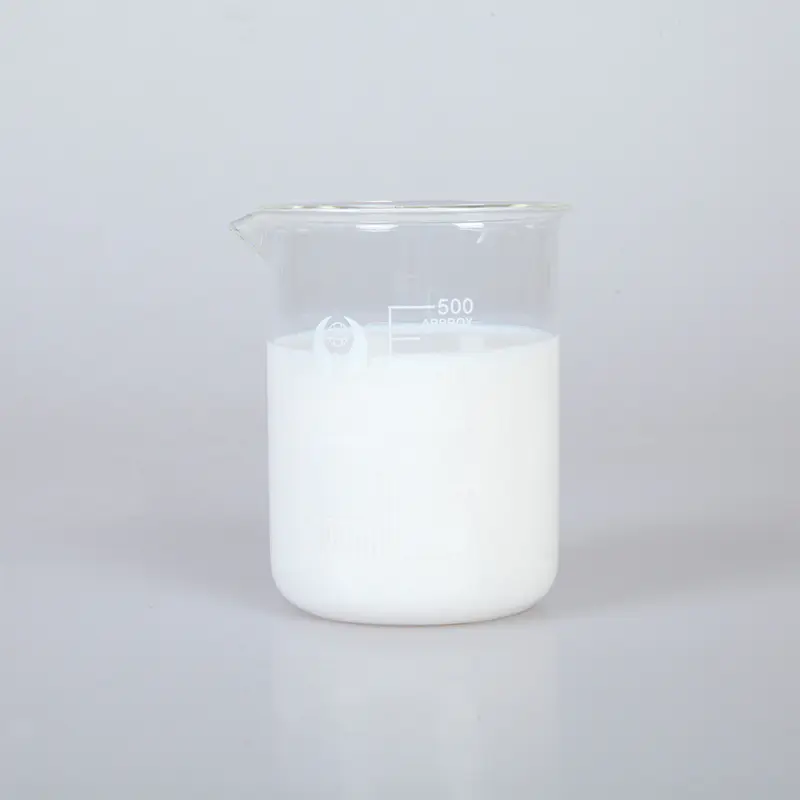
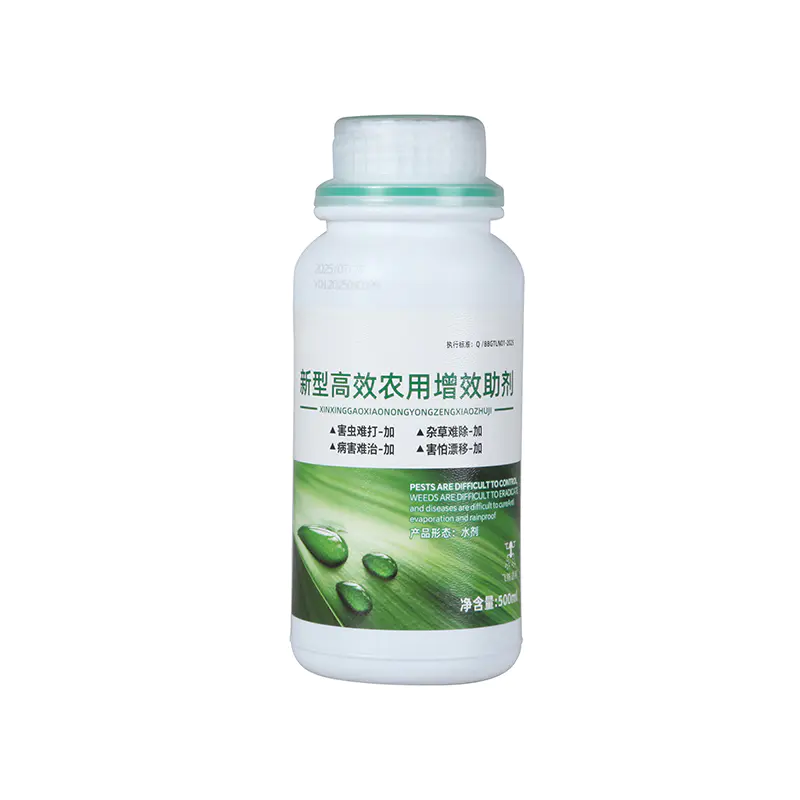
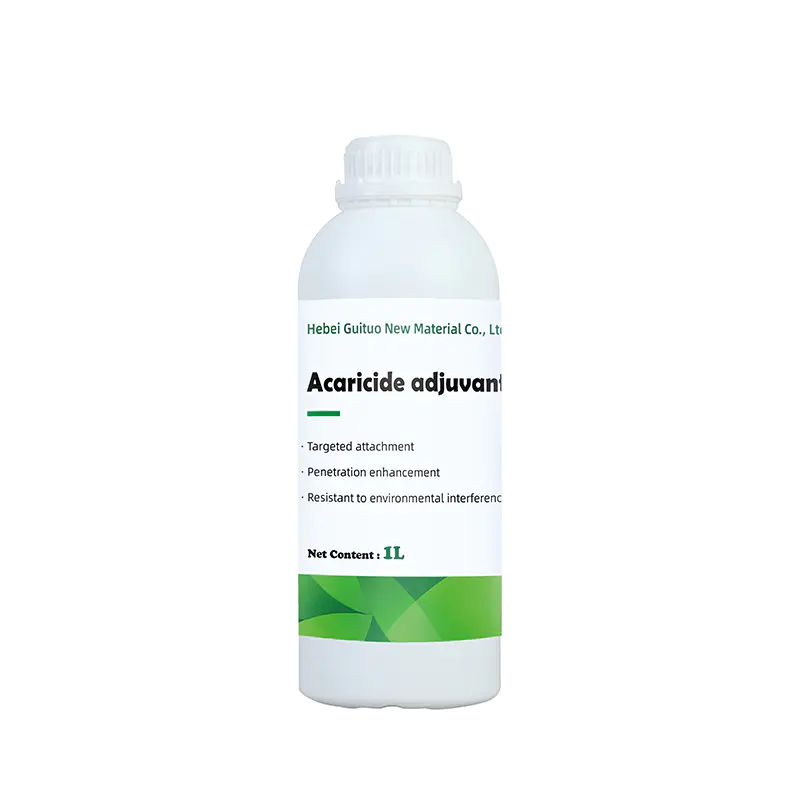
Tank Mix Organosilicone Spray Adjuvant
Trisiloxane wetter plus polymeric compatibility package — cuts 200-mesh residue from 1.8% to 0.08% in six-product tank mixes and prevents sediment, creaming, and gelling.
Explore our adjuvant range
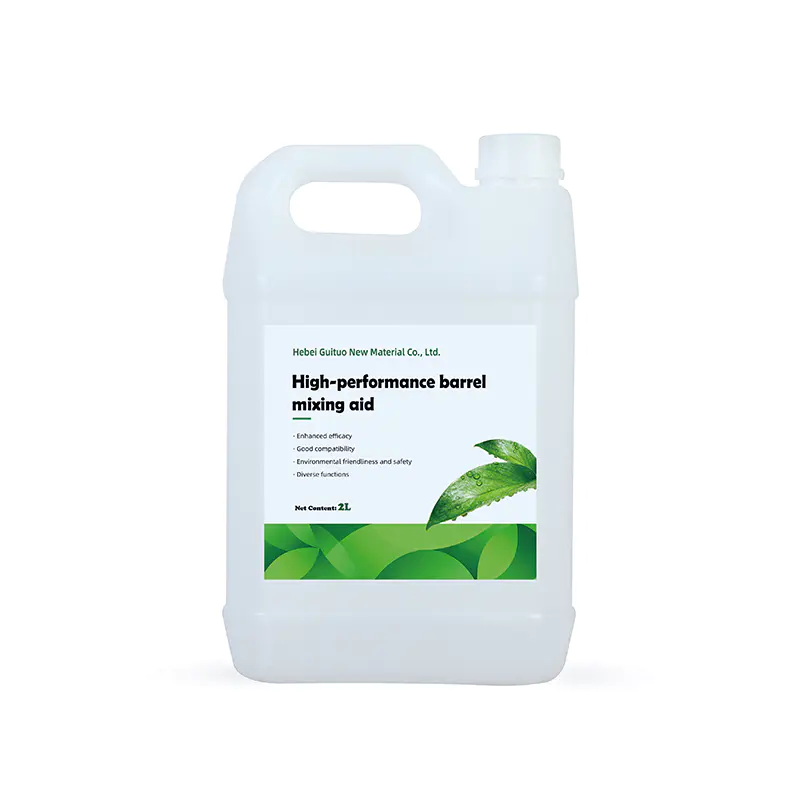
A Compatibility Adjuvant for Crowded, Multi-Product Tank Mixes
Tank Mix Organosilicone Spray Adjuvant is built for the situation applicators dread: four, five, or six products in one tank — a herbicide, a fungicide, an insecticide, a liquid fertilizer, and an oil adjuvant — where something may flocculate, cream, gel, or leave a sludge that blocks nozzles. Combining products saves passes across the field, but every added formulation brings its own surfactants, solvents, and salts, and when those meet in hard water the result can be a physically incompatible mixture that no amount of agitation fixes.
This adjuvant combines a trisiloxane wetter with a polymeric compatibility package based on a low-molecular-weight polycarboxylate dispersant and a non-ionic stabilizer. The polymer keeps fine particles of suspension concentrates and wettable powders apart; the stabilizer keeps emulsifiable concentrates and oil adjuvants finely dispersed; and the silicone wetter supplies the spreading benefit that most users add an adjuvant for in the first place.
The effect is measurable. In a standard tank-mix sieve test, a six-product mixture containing a WP, an SC, an EC, a UAN liquid fertilizer, and a crop oil in 500 ppm hard water left 1.8% residue on a 200-mesh screen after 30 minutes without the adjuvant. With 0.1% v/v of this adjuvant the residue fell to 0.08%, and sediment after two hours dropped from 12 mL to under 1 mL. Separate tests showed no phase separation or gelling of the same mixture after 4 hours at 25°C.
Mixing order still matters, and the product's technical literature gives it prominence. The recommended order follows the standard sequence — water, wettable powders and dry granules, agitation, liquids and suspensions, emulsifiable concentrates, then adjuvants and surfactants last. This adjuvant is added in the final position so that its dispersants act on the fully mixed tank, with a jar test advised for any new combination of more than three products.
Compatibility is not a guarantee for every possible mixture, and the product label states this plainly. It is designed to widen the safe operating range of combinations that are already allowed by the product labels, never to make a prohibited combination permissible.
Why Complex Tank Mixes Need a Compatibility Adjuvant
Mechanism of action
Tank Mix Organosilicone Spray Adjuvant works on three fronts at once. A polycarboxylate dispersant adsorbs onto the surface of fine particles from wettable powders and suspension concentrates and keeps them electrostatically and sterically separated, so they do not clump into sludge.
A non-ionic stabilizer holds oil droplets from emulsifiable concentrates and crop oil adjuvants finely dispersed, preventing them from merging into a floating cream layer in the presence of high-salt liquid fertilizers.
Finally, the trisiloxane wetter lowers surface tension so that the finished spray spreads across leaves, providing the coverage benefit that is the original reason for adding an adjuvant.
Residue falls steeply and levels off by 0.1%, the recommended standard rate.
Product specifications
| Parameter | Value |
|---|---|
| Appearance | Clear to slightly hazy liquid |
| Composition | Trisiloxane wetter + polycarboxylate dispersant + non-ionic stabilizer |
| Active content | ≥ 90% |
| Viscosity (25°C) | 40 – 80 cSt |
| Density (25°C) | 1.02 – 1.07 g/cm³ |
| Flash point | > 95°C |
| Recommended tank pH | 6.0 – 8.0 |
| Storage stability | 24 months (cool, dry) |
Performance data

- 2021
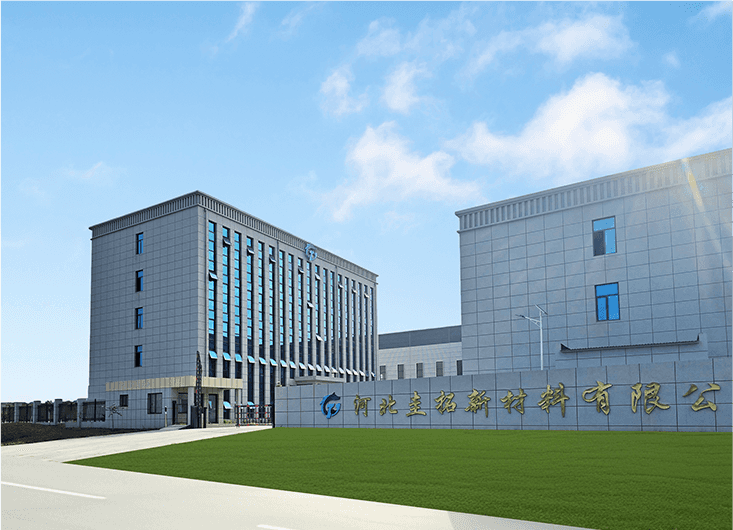
Company Establishment
- 10000m²
Advanced Factory
- 50+
Exporting Country
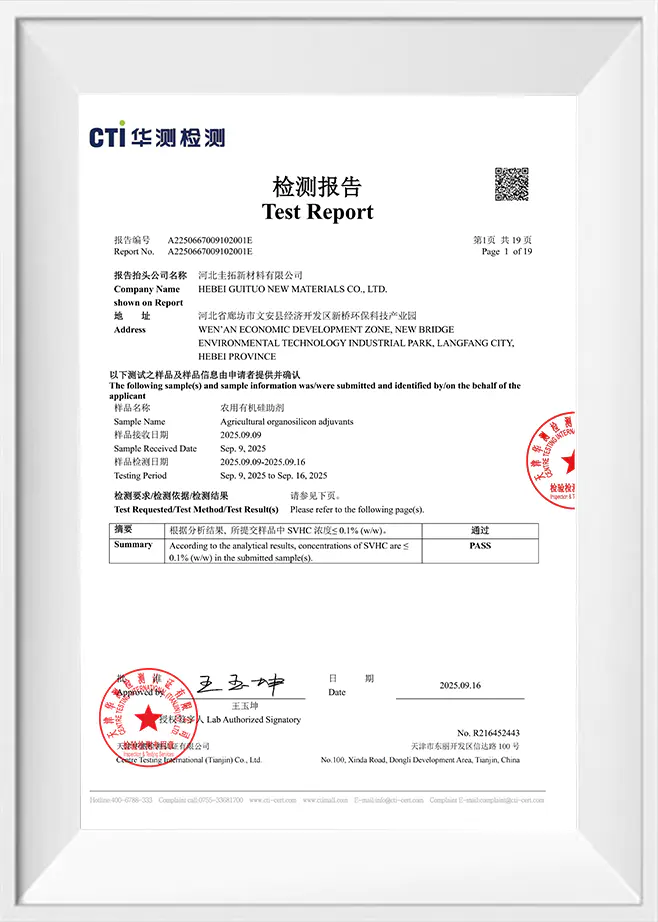
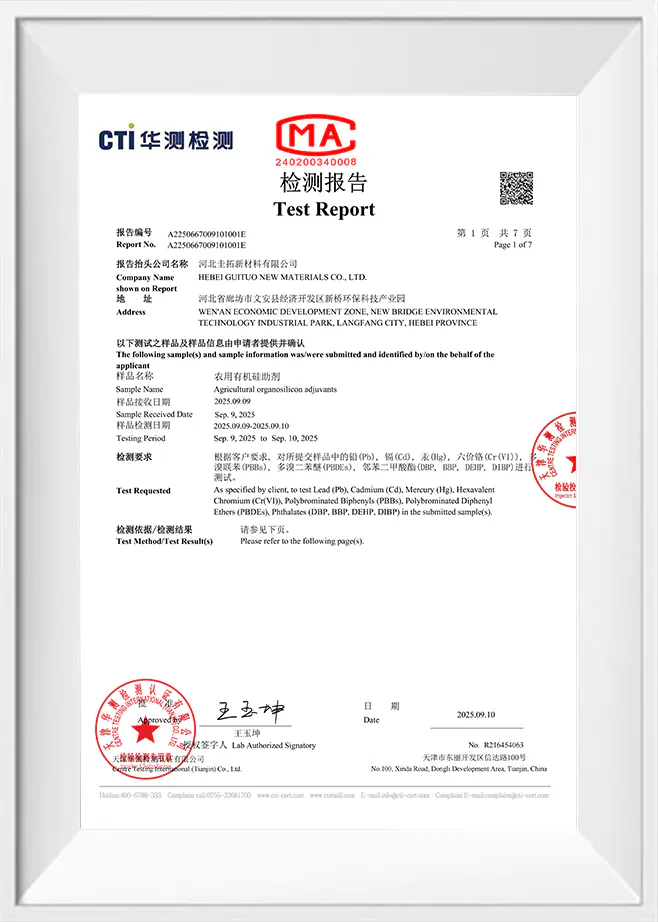
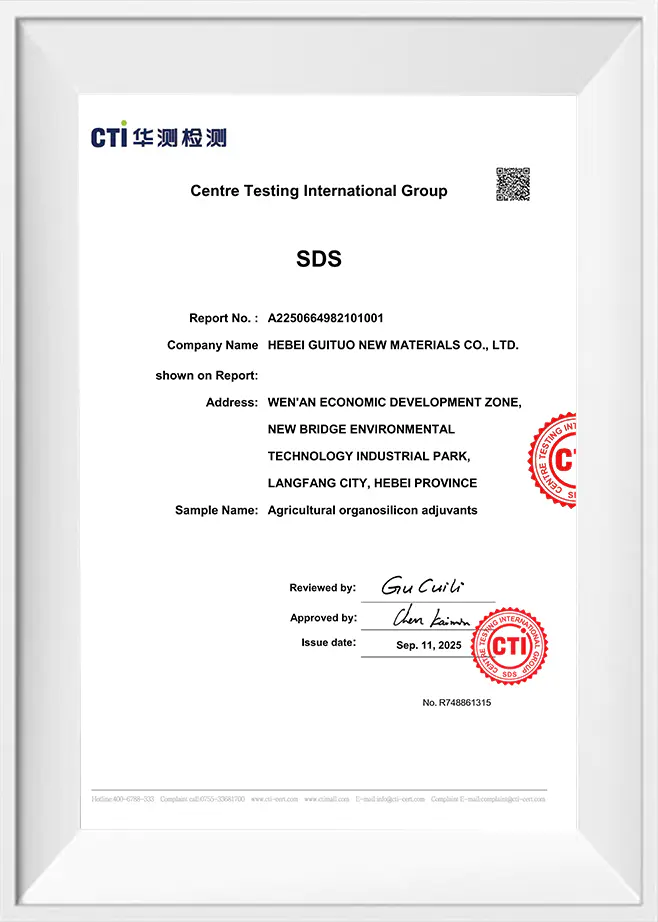
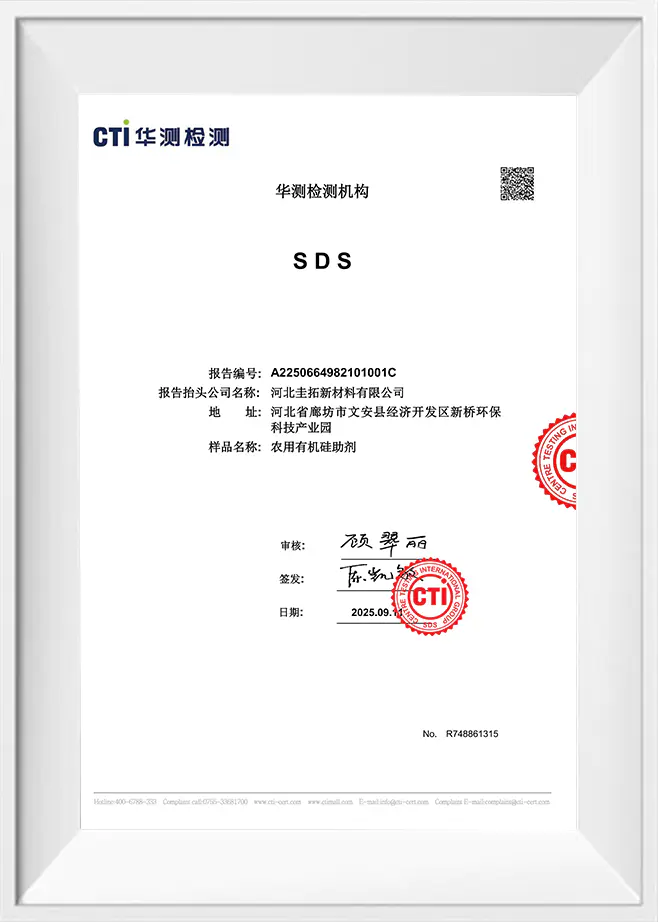
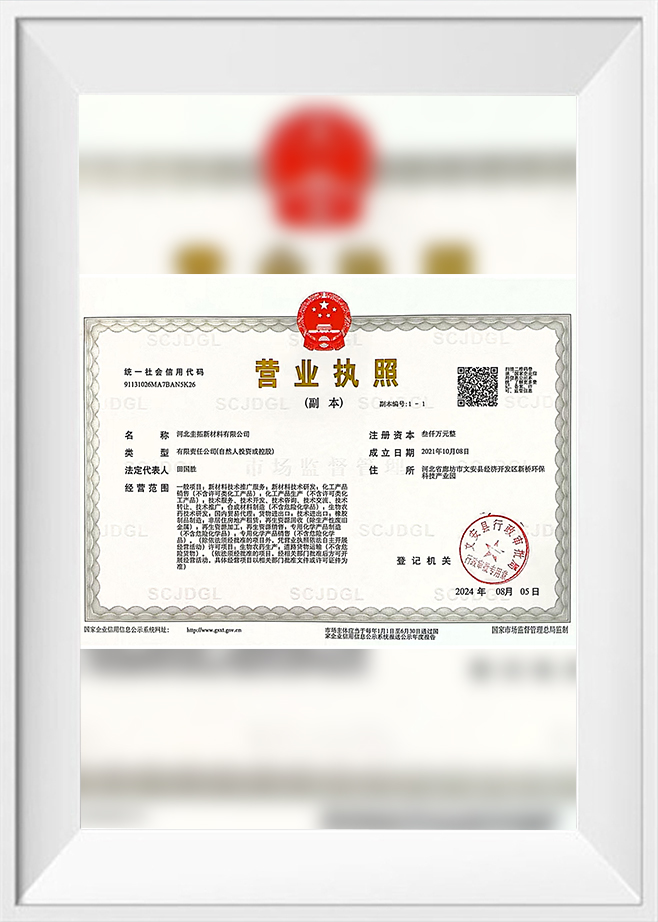
Our Certifications
And Partners
Professional scale factory production. We can customize finished products wholesale and export, OEM production, and distribution.
I just wanted to let you know that welcome to inquire and place orders.


Performance benchmark
| Property | This compatibility adjuvant | Standard silicone wetter | No adjuvant |
|---|---|---|---|
| 200-mesh residue, 6-product mix | 0.08% | 1.1% | 1.8% |
| Sediment after 2 h | < 1 mL | 6 mL | 12 mL |
| Emulsion stability with fertilizer | Stable 4 h | Creaming at 1 h | Creaming at 30 min |
| Spreading benefit | Yes (24 mN/m) | Yes (22 mN/m) | None |
| Hard water tolerance | Up to 1000 ppm | Up to 600 ppm | — |
Six-product tank-mix test results
Source: laboratory tank-mix tests (WP + SC + EC + UAN + crop oil, 500 ppm hard water), 2024–2025.
Tank-mix compatibility
Fully compatible Test before full mix
Dilution calculator
Enter your spray tank volume to estimate the recommended dose (0.1% v/v typical for multi-product mixes).
How to apply
Safe use guidelines
- Personal protection — Wear gloves and eye protection during mixing.
- First aid — Rinse skin/eyes with water; if ingested, seek medical advice.
- Storage — Keep sealed, cool, and dry, away from direct sunlight.
- Environmental — Biodegradable; low aquatic toxicity.
- Disposal — Dispose of containers per local regulations; do not contaminate water sources.
- Label compliance — Only mix products that the individual labels allow to be tank-mixed.
Crops & use cases
- Large farms combining passes — herbicide + fungicide + fertilizer in one trip.
- Spray contractors — varied client programs with many different product combinations.
- Greenhouse and orchard programs — multi-product schedules with oil and fertilizer components.
- Drone and low-volume spraying — concentrated mixes with tighter compatibility margins.
Also valuable where hard or variable water causes unexpected incompatibilities.
Why it outperforms
- Fewer blocked nozzles — lower residue and sediment in crowded mixes.
- Saves field passes — makes multi-product tank mixes practical.
- Keeps spreading benefit — silicone wetter is built in.
- Handles hard water — tested up to 1000 ppm CaCO₃.
Application guidelines
- Mixing order: water, WP/WG, agitate, SC and liquids, EC, then this adjuvant
- Jar test: always for mixes of more than three products or any new combination
- Agitation: keep the agitator running throughout filling and spraying
- Label check: confirm each product label permits tank-mixing with the others
Packaging & shelf life
- Packaging: 5 L, 20 L, 200 L drums / IBC totes.
- Storage: cool, dry, away from direct sunlight; 5–40°C.
- Shelf life: 24 months in unopened original container.
Global quality benchmarks
| Test item | Standard requirement | Our performance |
|---|---|---|
| 200-mesh residue (6-product mix) | ≤ 0.5% | 0.08% |
| Sediment after 2 h | ≤ 3 mL | < 1 mL |
| Phase separation after 4 h | None | None |
| Hard water stability | 500 ppm CaCO₃ | Stable up to 1000 ppm |
| Biodegradability | OECD 301 | Readily biodegradable |
Frequently asked questions
Latest articles & guides
Organosilicone Adjuvant for Insecticide Spray
overview Coverage Built Around Chewing Pests, Larvae, and Egg Masses Organosili
Organosilicone Surfactant for Pesticide Spray
overview Purpose-Built Adjuvant for Insecticide and Pesticide Spray Efficacy Or
Silicone-Based Agricultural Tank Mix
overview A Ready-Blended, One-Bottle Tank-Mix Solution Silicone-Based Agricultu
Agricultural Spray Adjuvant Wetting Agent
overview The General-Purpose Workhorse Adjuvant for Everyday Spray Programs Agr
Organosilicone Wetting and Spreading Agent
overview Balanced Dual-Function Performance for Powder Dissolving and Leaf Sprea
Silicone Adjuvant for Fungicide Spray
overview Adjuvant Built Around the Disease-Control Weather Window Silicone Adju
Silicone Spray Adjuvant for Herbicides
overview Faster Burndown and Reliable Control When the Weather Isn't Ideal Sili
High Performance Silicone Agricultural Adjuvant
overview The Flagship Adjuvant for High-Value Crop Programs High Performance Si
Agricultural Spreading and Penetrating Adjuvant
overview Dual-Action Adjuvant for Soil-Applied Pesticide Programs Agricultural
Mix more products in one pass, with fewer surprises
Free samples · Tank-mix jar-test support
cnguituonewmaterial.com · Agricultural adjuvants & new materials

Tel : +86-400-138-5268
Email : [email protected]
Phone : +86-15128434888 / +86-13511051998
Add : Xinqiao Environmental Protection Industrial Park, Wen'an County, Langfang City, Hebei Province, China
Copyright © Hebei Guituo New Material Co., Ltd. All Rights Reserved.
