

 English
  Français
  Português

Organosilicone Surfactant for Pesticide Spray
Trisiloxane pesticide adjuvant — drives translaminar movement to reach underside-leaf pests, improves cuticular penetration on contact insects, and provides rainfastness across repeated IPM spray cycles.
Explore our adjuvant range
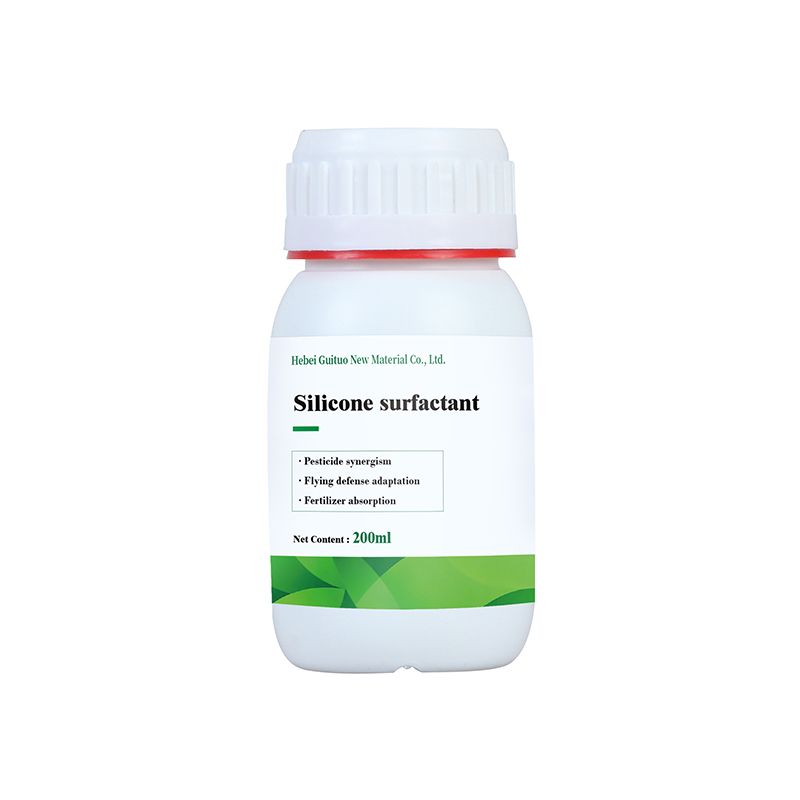
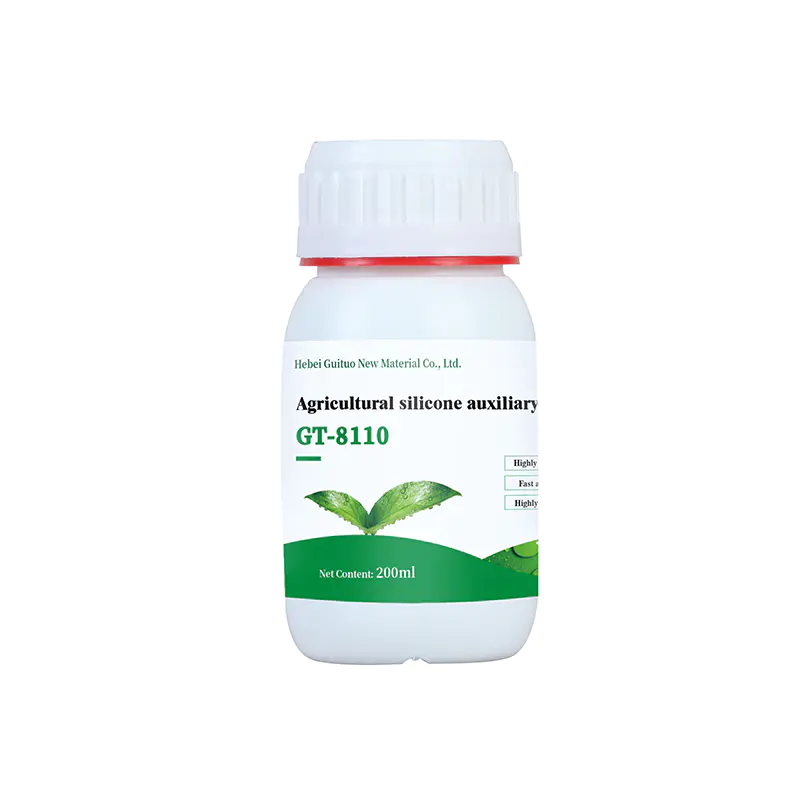
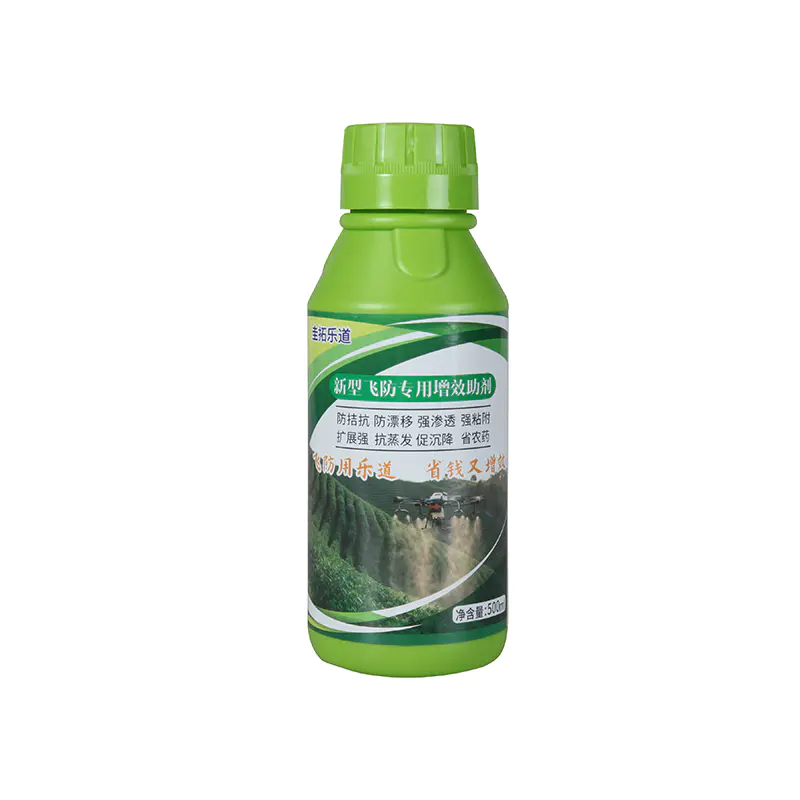
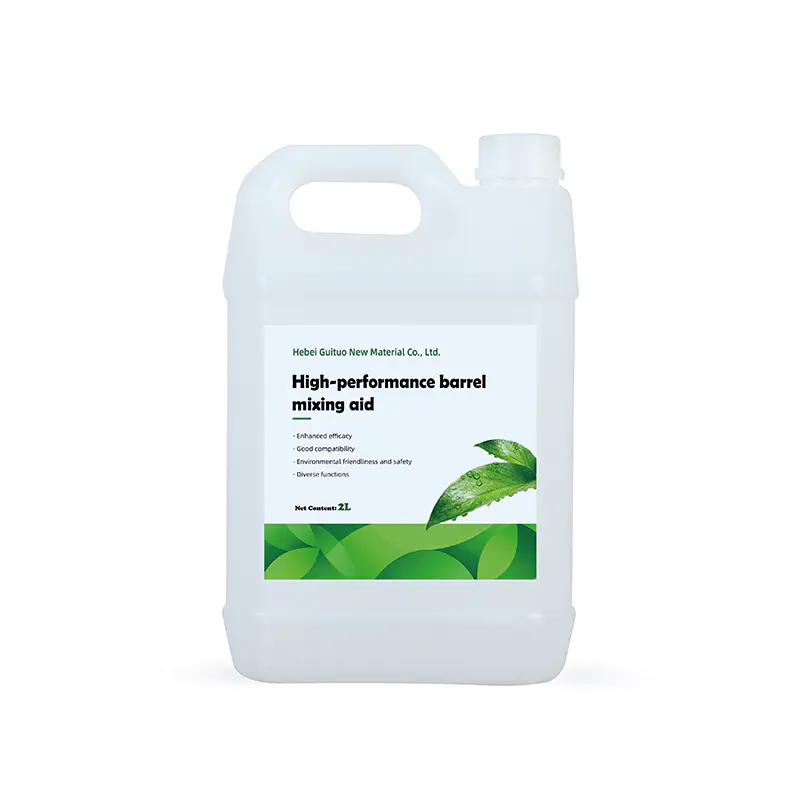
Purpose-Built Adjuvant for Insecticide and Pesticide Spray Efficacy
Organosilicone Surfactant for Pesticide Spray is a trisiloxane-based tank-mix adjuvant formulated specifically to improve the efficacy of insecticide and general pesticide spray applications, with particular emphasis on the translaminar and systemic movement pathways that matter most for insect pest control. While many silicone adjuvants are marketed primarily around herbicide performance, this product's development and field validation focus on pesticide-specific challenges — reaching pests hidden on the underside of leaves, penetrating the waxy insect cuticle after contact, and supporting systemic insecticide uptake into plant tissue that sap-feeding pests then ingest.
At its recommended rate, the adjuvant reduces spray solution surface tension to approximately 21.5 mN/m, allowing droplets to spread fully across leaf surfaces and, critically, to move translaminarly — migrating through leaf tissue from the treated upper surface to reach pests such as whiteflies, aphids, and spider mites that colonize the leaf underside where direct spray contact is often incomplete. Field trials show translaminar movement of systemic insecticides can improve underside-leaf pest control by 20–35% compared to the same active ingredient applied without this adjuvant.
For contact insecticides such as pyrethroids and certain diamides, the adjuvant's low surface tension also improves direct cuticular penetration into the insect itself once contact is made, since the same physical mechanism that helps a droplet spread across a waxy plant leaf also assists penetration through the waxy outer cuticle of many insect pests — an effect documented in efficacy trials against soft-bodied pests including aphids and thrips.
The adjuvant provides the rainfastness expected of trisiloxane chemistry, forming a hydrophobic residue film within 30–60 minutes of application that resists wash-off — a meaningful benefit for insecticide programs where reapplication after rainfall adds significant cost and can accelerate resistance development through inconsistent dosing. It remains low-foaming and compatible with the full range of insecticide chemistries, including neonicotinoids, pyrethroids, diamides, spinosyns, and insect growth regulators.
Because pest pressure often requires tighter spray intervals than weed control, the adjuvant is also formulated for consistent tank-mix behaviour across repeated, closely spaced applications, maintaining stable performance whether used in a single treatment or as part of an integrated pest management rotation program.
Why Choose This Pesticide Adjuvant
Mechanism of action
Organosilicone Surfactant for Pesticide Spray reduces spray solution surface tension to approximately 21.5 mN/m, promoting rapid spreading and wetting of the treated leaf surface, the same foundational mechanism shared with other trisiloxane adjuvants.
What distinguishes its use for pest control is the emphasis on translaminar movement — the adjuvant helps the active ingredient migrate through leaf tissue from the sprayed upper surface toward the lower surface, where many key pests such as whiteflies and spider mites reside and where direct spray contact is frequently incomplete.
On contact with the insect itself, the same low-surface-tension chemistry assists penetration through the pest's waxy cuticle, supporting faster onset of contact-mode insecticides such as pyrethroids against soft-bodied pests like aphids and thrips.
Surface tension drops sharply and plateaus near 0.05%, the recommended pesticide tank-mix rate.
Product specifications
| Parameter | Value |
|---|---|
| Appearance | Clear to slightly hazy liquid |
| Active content | ≥ 98% (trisiloxane surfactant) |
| Viscosity (25°C) | 20 – 40 cSt |
| Density (25°C) | 1.00 – 1.03 g/cm³ |
| Cloud point (1% aq.) | > 38°C |
| Flash point | > 95°C |
| pH (1% aq.) | 5.5 – 7.5 |
| Storage stability | 24 months (cool, dry) |
Performance data
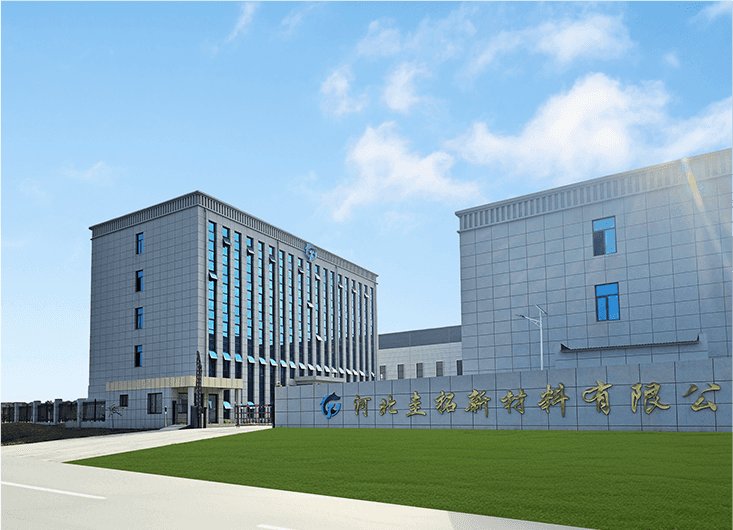

- 2021
Company Establishment
- 10000m²
Advanced Factory
- 50+
Exporting Country
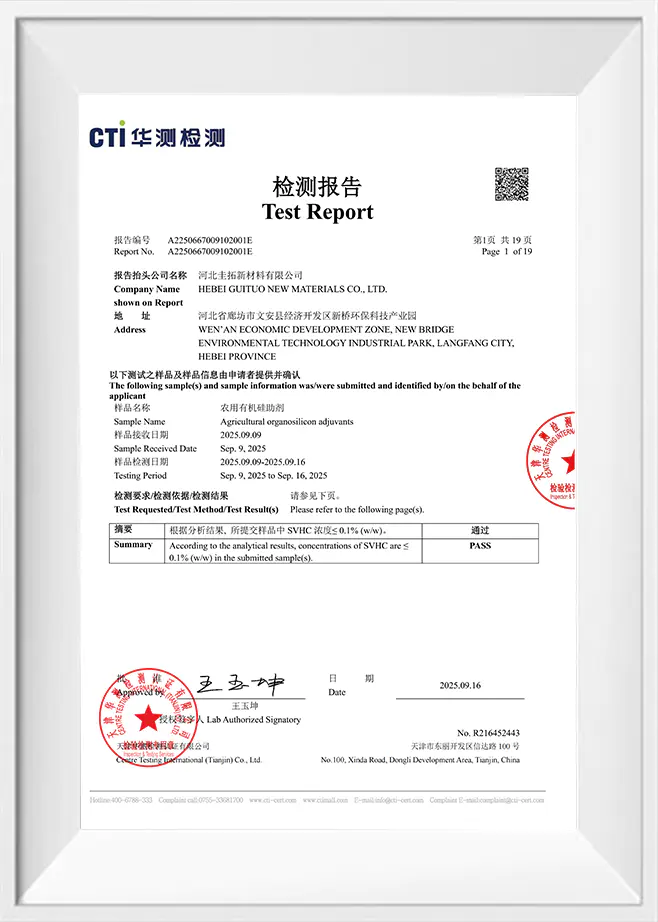
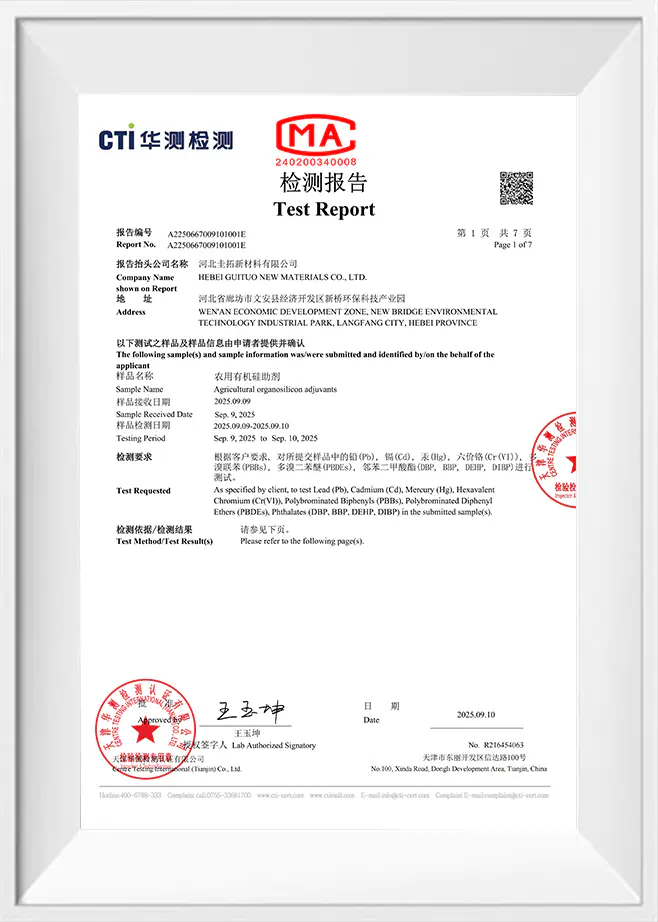
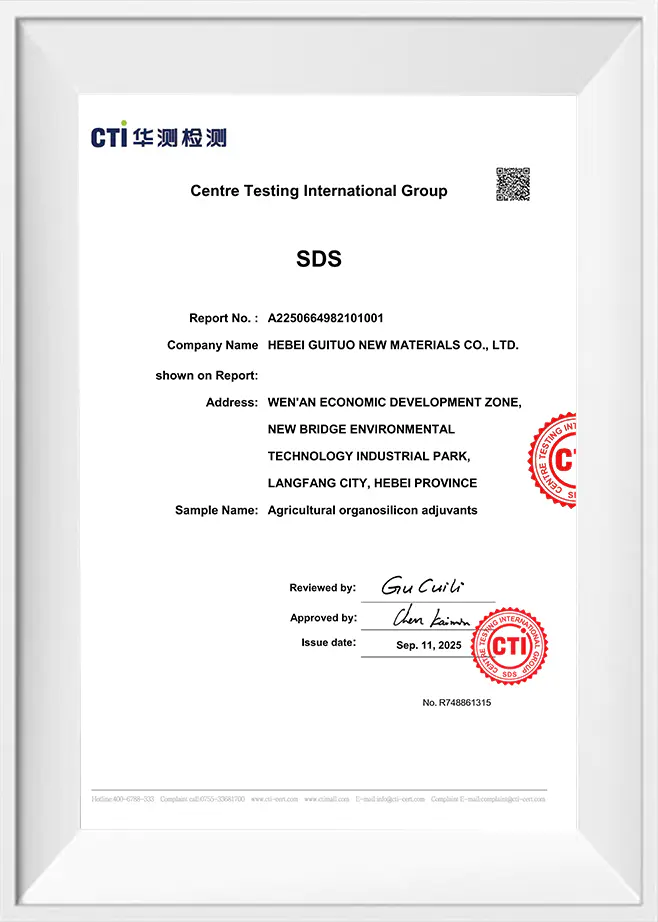
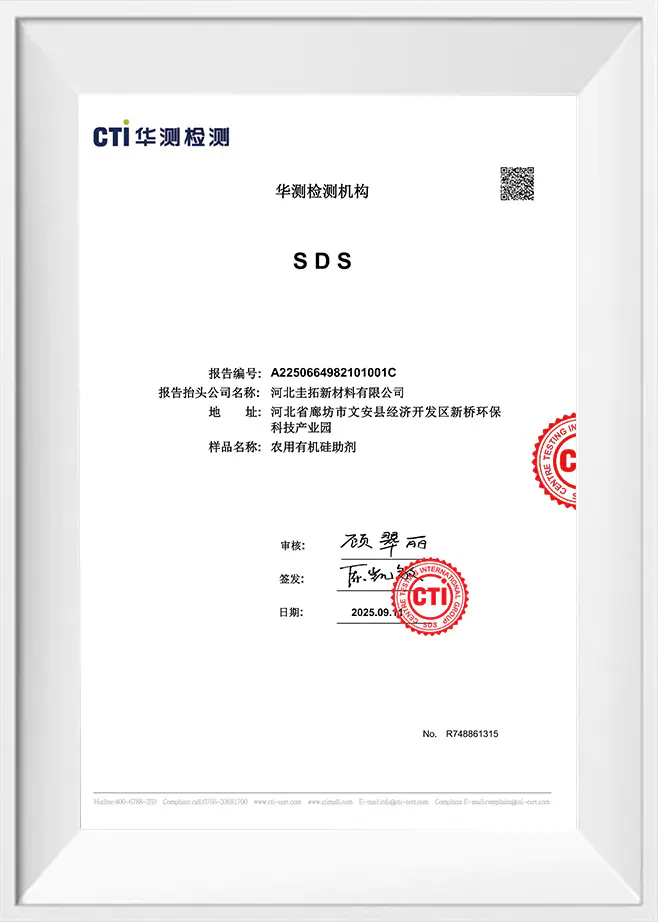
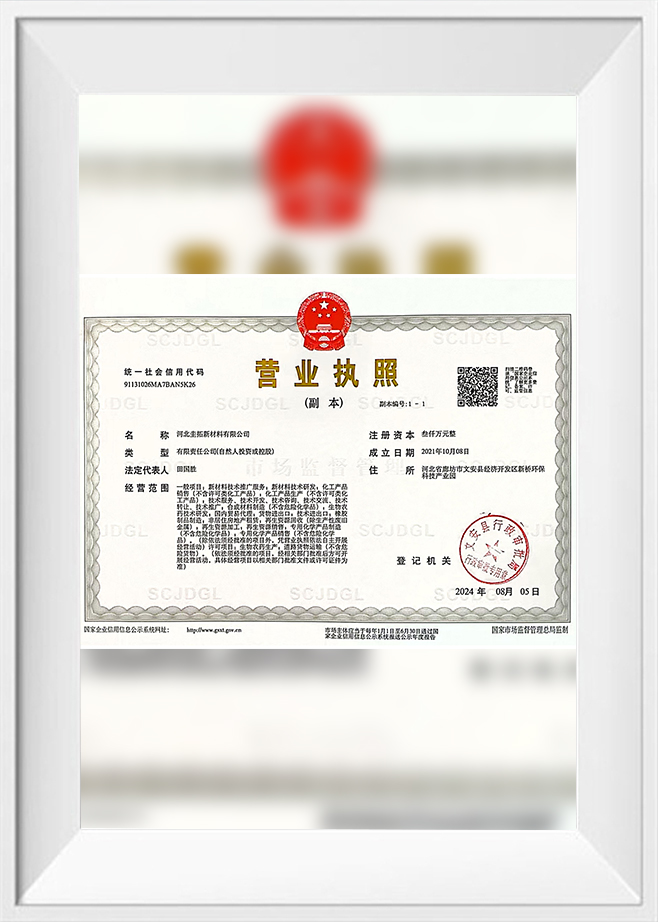
Our Certifications
And Partners
Professional scale factory production. We can customize finished products wholesale and export, OEM production, and distribution.
I just wanted to let you know that welcome to inquire and place orders.


Performance benchmark
| Property | This pesticide adjuvant | Conventional NIS | Vegetable oil adjuvant |
|---|---|---|---|
| Surface tension (0.1%) | 21.5 mN/m | 32–36 mN/m | 28–32 mN/m |
| Underside-leaf pest control | +20–35% | Baseline | +5–10% |
| Cuticular penetration aid | Yes | Minimal | Minimal |
| Rainfastness (1 hour) | Excellent | Poor | Fair |
| Insecticide compatibility | Very broad | Moderate | Moderate |
Insect pest control performance
Source: independent field trials against sap-feeding pests, 2024–2025, average of 9 locations.
Tank-mix compatibility
Fully compatible Test before full mix
Dilution calculator
Enter your spray tank volume to estimate the recommended pesticide adjuvant dose (0.05% v/v typical).
How to apply
Safe use guidelines
- Personal protection — Wear gloves, goggles, and long sleeves during mixing.
- First aid — Rinse skin/eyes with plenty of water; if ingested, seek medical advice.
- Storage — Keep in original container, tightly closed, cool and dry (5–40°C).
- Environmental — Biodegradable (OECD 301); low toxicity to fish (LC₅₀ > 200 mg/L).
- Disposal — Dispose of empty containers per local regulations; do not contaminate water sources.
- Resistance management — Improved rainfastness supports consistent dosing within IPM resistance-management plans.
Crops & use cases
- Vegetable & fruit crops — tomato, cucurbits, citrus — key hosts for whiteflies, aphids, mites.
- Row crops — cotton, soybean — sap-feeding pest programs benefiting from translaminar delivery.
- Greenhouse & protected crops — closely spaced IPM spray cycles requiring consistent adjuvant performance.
- Ornamentals & nursery stock — underside-leaf pest control on dense-canopy plantings.
Also used in resistance-management rotation programs mixing contact and systemic insecticide modes of action.
Why it outperforms
- Reaches hidden pests — translaminar movement improves control on the leaf underside by 20–35%.
- Faster contact-kill — cuticular penetration support speeds action of contact insecticides.
- Holds up through rain — 30–60 minute rainfast onset reduces reapplication costs.
- IPM-program consistent — stable performance across repeated, closely spaced applications.
Application guidelines
- Tank mixing order: add insecticide first, then the adjuvant as the last addition
- Underside coverage: combine with air-assisted or directed spray equipment for best translaminar effect
- Spray quality: fine to medium droplets (100–250 µm) for best coverage on target pests
- IPM rotation: maintain consistent adjuvant use across mixed contact/systemic rotation programs
Packaging & shelf life
- Packaging: 1 L, 5 L, 20 L, 200 L drums / IBC totes.
- Storage: cool, dry, away from direct sunlight; 5–40°C.
- Shelf life: 24 months in unopened original container.
Global quality benchmarks
| Test item | Standard requirement | Our performance |
|---|---|---|
| Surface tension (0.1%) | ≤ 24 mN/m | 21.5 mN/m |
| Underside pest control gain | ≥ 10% | 20–35% |
| Rainfastness onset | ≤ 90 minutes | 30–60 minutes |
| Aquatic toxicity (fish) | LC₅₀ > 100 mg/L | LC₅₀ > 200 mg/L |
| Biodegradability | OECD 301 | Readily biodegradable |
Frequently asked questions
Latest articles & guides
Organosilicone Wetting and Spreading Agent
overview Balanced Dual-Function Performance for Powder Dissolving and Leaf Sprea
Silicone Surfactant for Agricultural Chemicals
overview Multi-Functional Silicone Surfactant for Agrochemical Formulation Sili
Silicone Adjuvant for Fungicide Spray
overview Adjuvant Built Around the Disease-Control Weather Window Silicone Adju
Silicone Surfactant for Herbicide Application
overview Purpose-Built for Broadleaf and Grass Weed Herbicide Programs Silicone
Polyether Modified Heptamethyltrisiloxane Agricultural Surfactant
overview A Graded Product Line for Selectable Spreading Intensity Polyether Mod
Agricultural Pesticide Silicone Wetting Additive
overview A Wetting Additive Built Into the Powder, Not Added After Agricultural
Low Surface Tension Silicone Surfactant
overview Technical-Grade Surfactant Engineered Around a Single Specification Lo
Non-Ionic Polymeric Silicone Surfactant
overview High-Molecular-Weight Architecture for Extended Residual Performance N
Silicone-Based Antifoam for Agriculture
overview Foam Control for On-Farm Liquid Storage, Fertigation, and Slurry System
Reach the pests your spray is missing
Free samples · Technical support · IPM program consultation
cnguituonewmaterial.com · Agricultural adjuvants & new materials

Tel : +86-400-138-5268
Email : [email protected]
Phone : +86-15128434888 / +86-13511051998
Add : Xinqiao Environmental Protection Industrial Park, Wen'an County, Langfang City, Hebei Province, China
Copyright © Hebei Guituo New Material Co., Ltd. All Rights Reserved.
