

 English
 Français
 Português


Organosilicone Adjuvant for Insecticide Spray
Trisiloxane adjuvant for caterpillar and beetle programs — builds a continuous leaf film for ingestion, wets larval cuticle for contact, and reaches into egg masses, lifting coverage from 35% to above 80%.
Explore our adjuvant range
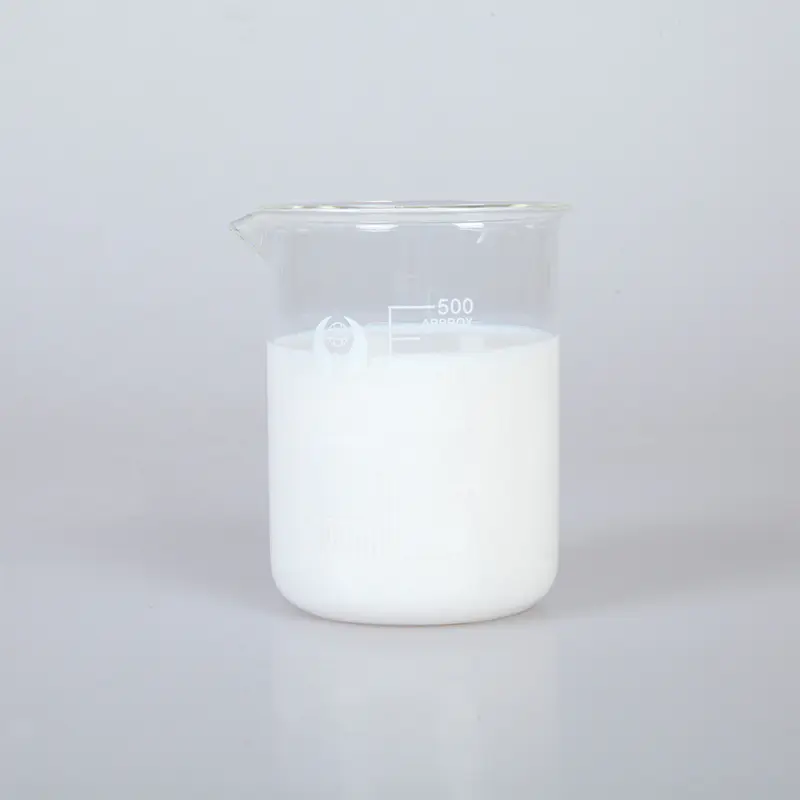
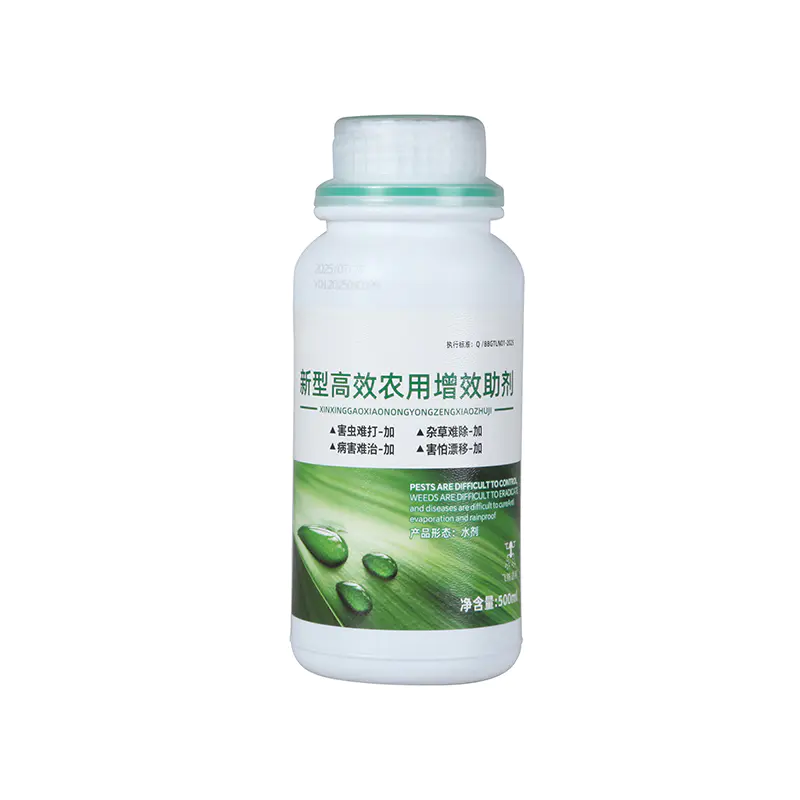
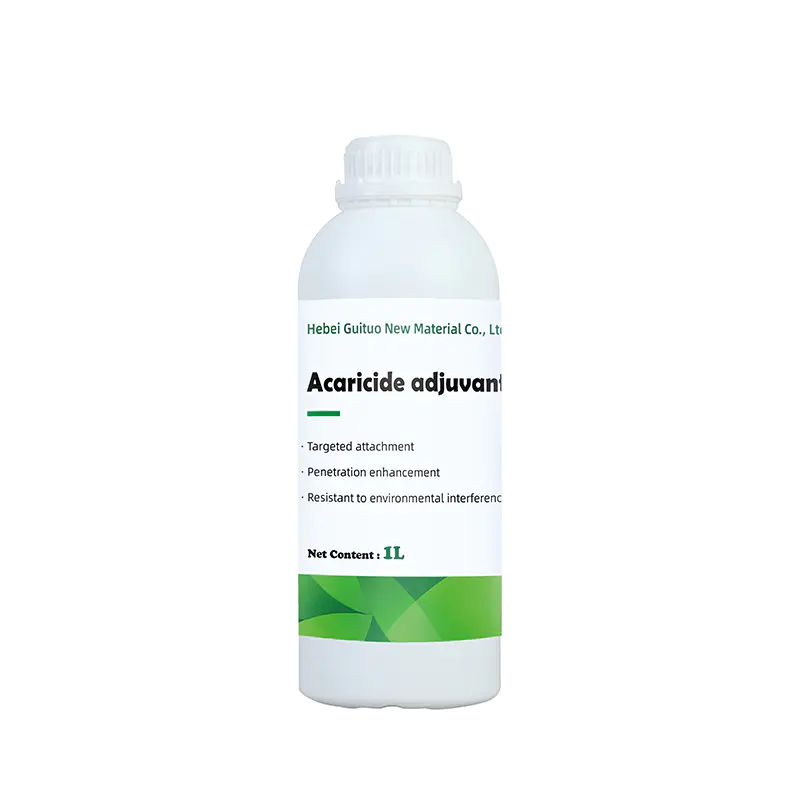
Coverage Built Around Chewing Pests, Larvae, and Egg Masses
Organosilicone Adjuvant for Insecticide Spray is a trisiloxane adjuvant developed around how chewing insects — caterpillars, leaf beetles, armyworms, and similar foliage feeders — actually pick up an insecticide. Unlike sap-feeding pests that are controlled mainly by translaminar or systemic movement, chewing larvae are controlled by two routes that depend on the quality of the surface deposit: direct contact when the spray lands on the insect, and ingestion when the larva eats treated leaf tissue. Both routes improve when the spray forms a thin, continuous, even film rather than isolated beads, which is exactly what this adjuvant is built to produce.
At 0.03–0.05% v/v the adjuvant reduces surface tension to about 22 mN/m. On a waxy cabbage or brassica leaf, where caterpillars such as diamondback moth and cabbage looper feed, an untreated spray covers around 35% of the leaf area in a patchy pattern; with the adjuvant coverage rises above 80% in a continuous film. Because a larva moves across the leaf while it feeds, a continuous film means almost every bite takes in insecticide, whereas a patchy deposit leaves untreated feeding zones that the larva simply eats around.
The same low surface tension helps a spray droplet wet the hairy or waxy cuticle of the larva itself. Many caterpillars carry setae or a waxy bloom that makes water beads roll off; trials on hairy armyworm larvae showed a larger fraction of the sprayed dose staying on the insect when the adjuvant was present, which speeds contact action and improves the knockdown of pyrethroid and spinosyn products.
Egg masses are a third target. Many lepidopteran eggs are laid in scale-covered clusters on the leaf surface and are normally shielded from sprays. The adjuvant's wetting action lets ovicidal and larvicidal products penetrate the scale layer, and egg-mass coverage increased by around 30% in laboratory spray-tower tests, which matters most for programs that aim to stop an outbreak before the larvae hatch.
The adjuvant is compatible with the main chewing-pest insecticide classes — diamides, spinosyns, emamectin benzoate, pyrethroids, and insect growth regulators — and with biological products based on Bacillus thuringiensis, where a uniform film directly raises the chance that a feeding larva ingests a lethal dose of spores and toxin crystals.
Why Chewing-Pest Programs Use This Adjuvant
Mechanism of action
Organosilicone Adjuvant for Insecticide Spray lowers spray surface tension to about 22 mN/m, so droplets flatten and merge into a film instead of drying as isolated spots on a waxy leaf. For a chewing insect, the continuity of that film is what matters: a larva samples leaf tissue as it moves, and a continuous deposit means each bite contains insecticide.
On the insect itself, the lower contact angle lets a droplet wet the waxy or hairy cuticle, so the dose is retained rather than rolling off. This improves contact action and the speed of knockdown.
For egg masses, the same wetting action carries the spray through the scale layer that normally sheds water, allowing larvicidal and ovicidal products to reach the eggs before they hatch.
Coverage rises above 80% at 0.03% and plateaus near the recommended 0.05% upper rate.
Product specifications
| Parameter | Value |
|---|---|
| Appearance | Clear to slightly hazy liquid |
| Active content | ≥ 98% (trisiloxane surfactant) |
| Viscosity (25°C) | 20 – 35 cSt |
| Density (25°C) | 1.00 – 1.03 g/cm³ |
| Cloud point (1% aq.) | > 36°C |
| Flash point | > 95°C |
| Recommended tank pH | 6.0 – 8.0 |
| Storage stability | 24 months (cool, dry) |
Performance data
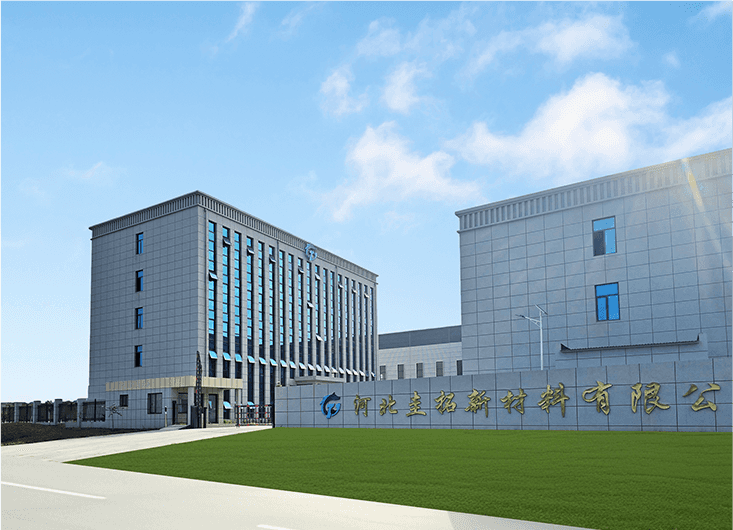

- 2021
Company Establishment
- 10000m²
Advanced Factory
- 50+
Exporting Country
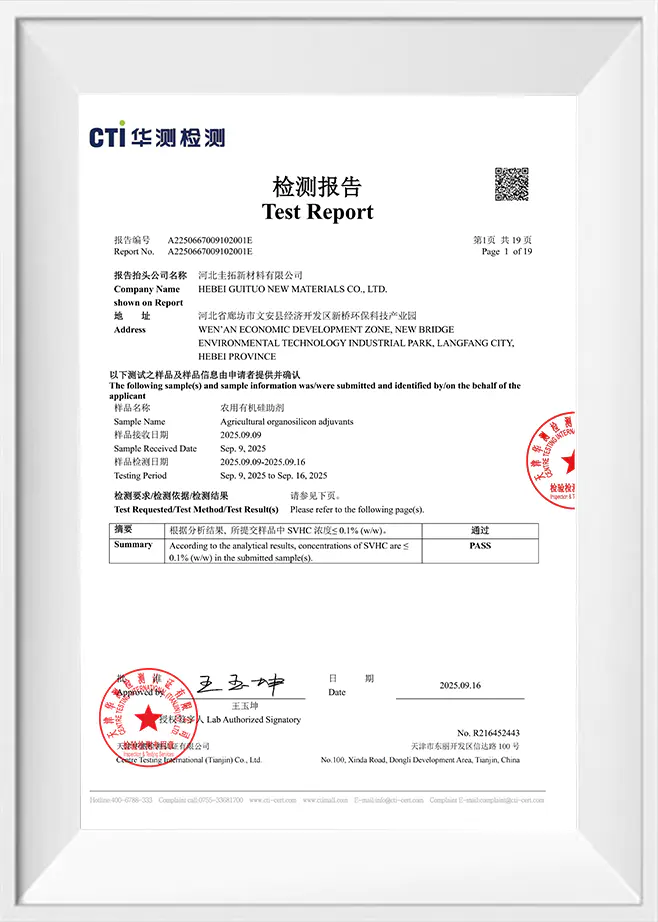
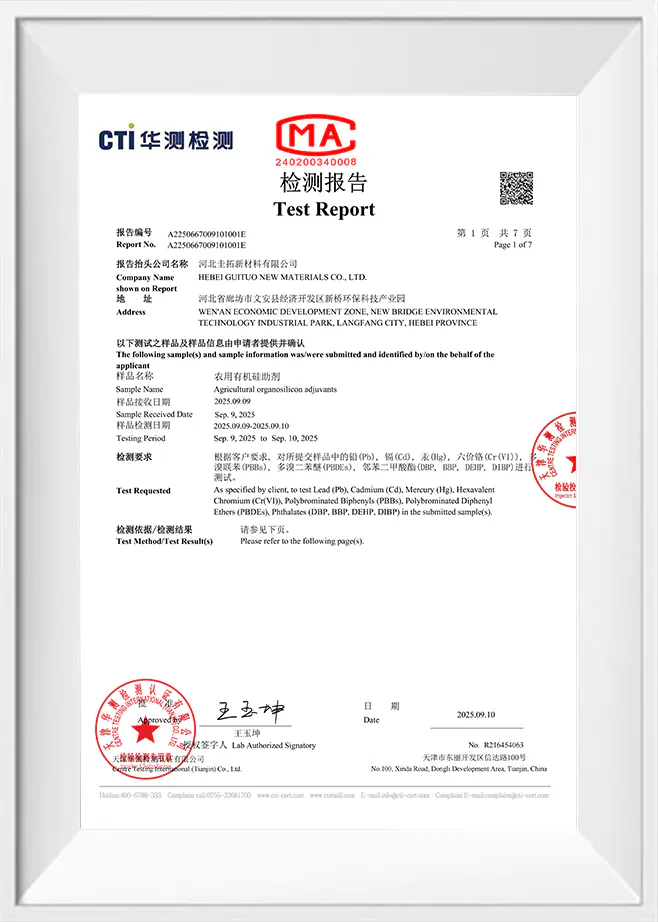
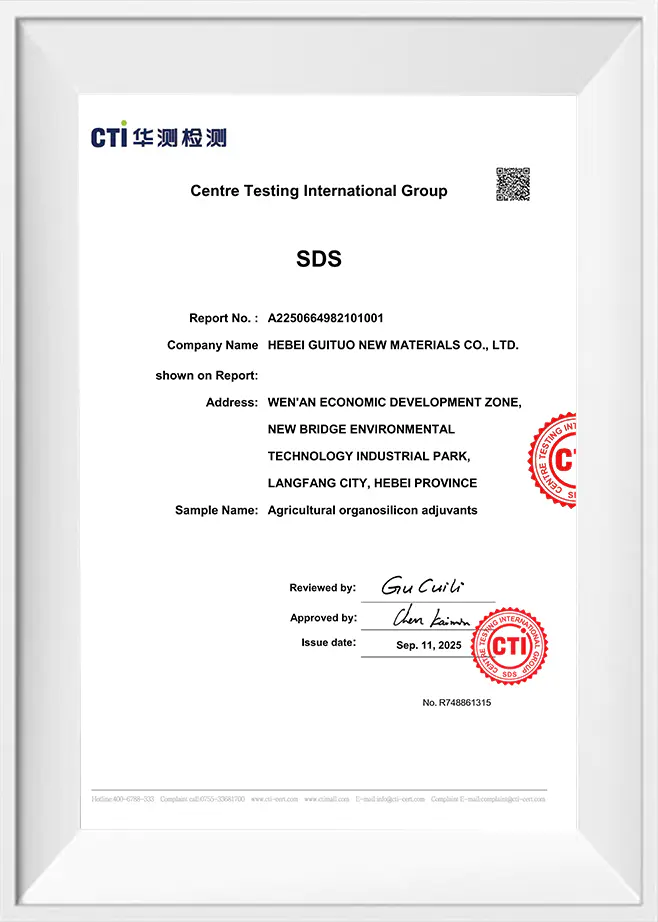
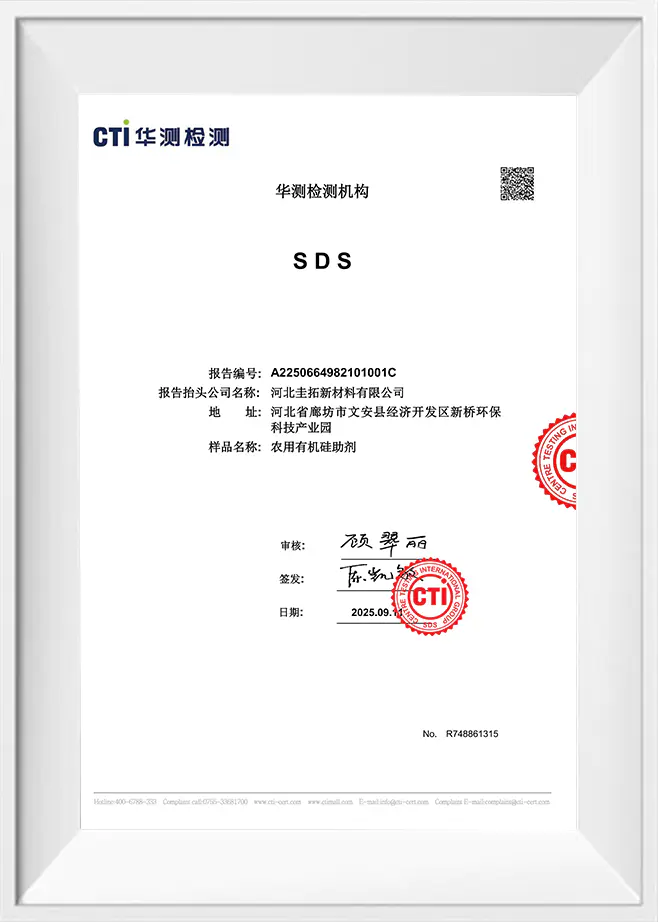
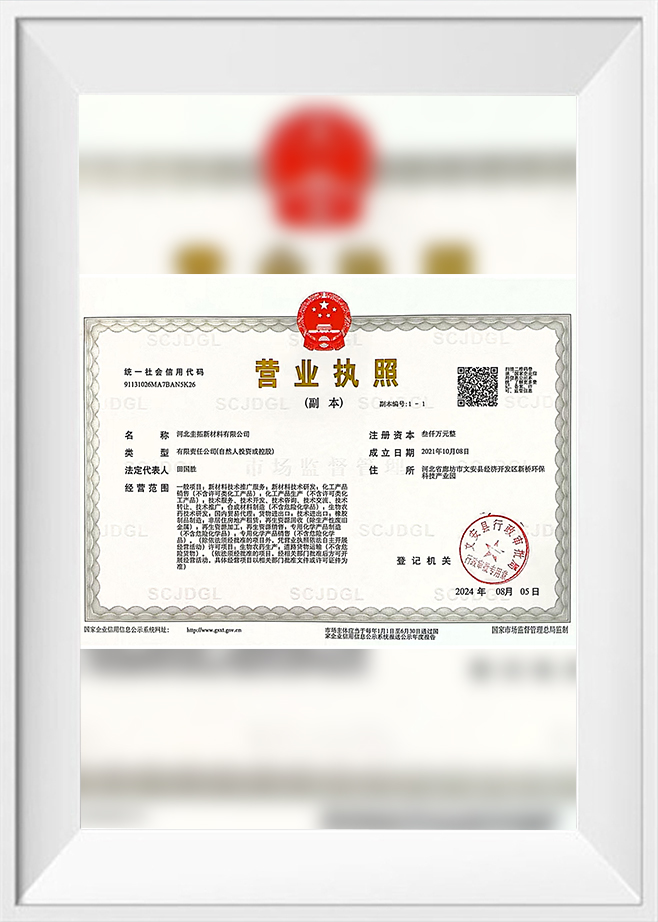
Our Certifications
And Partners
Professional scale factory production. We can customize finished products wholesale and export, OEM production, and distribution.
I just wanted to let you know that welcome to inquire and place orders.


Performance benchmark
| Property | This insecticide adjuvant | Conventional NIS | No adjuvant |
|---|---|---|---|
| Waxy-leaf coverage | > 80% | 50–58% | 35% |
| Larval cuticle wetting | Strong | Weak | Poor |
| Egg-mass coverage | +30% | +5–8% | Baseline |
| Bt ingestion-dose support | Yes | Limited | No |
| Surface tension (0.1%) | 22 mN/m | 32–36 mN/m | ≈ 60–70 mN/m |
Chewing-pest efficacy trial results
Source: brassica and vegetable field trials, laboratory spray-tower tests, 2024–2025.
Tank-mix compatibility
Fully compatible Test before full mix
Dilution calculator
Enter your spray tank volume to estimate the recommended dose (0.04% v/v typical).
How to apply
Safe use guidelines
- Personal protection — Wear gloves, goggles, and long sleeves during mixing.
- First aid — Rinse skin/eyes with plenty of water; if ingested, seek medical advice.
- Storage — Keep in original container, tightly closed, cool and dry (5–40°C).
- Environmental — Biodegradable; low toxicity to fish. Avoid drift into water.
- Pollinators — Do not spray flowering crops during bee flight; follow the insecticide label.
- Disposal — Dispose of empty containers per local regulations.
Crops & use cases
- Brassica vegetables — cabbage, kale, broccoli — diamondback moth and looper control.
- Cotton and corn — bollworm and armyworm programs.
- Onion and allium crops — thrips and caterpillar control on waxy foliage.
- Orchard and vine defoliators — leafroller and beetle programs.
Also used in resistance-management rotations where coverage consistency protects the program.
Why it outperforms
- Targets how chewing pests feed — continuous film for ingestion and contact.
- Reaches eggs — higher coverage of scale-covered egg clusters.
- Supports biologicals — raises the ingested dose of Bt products.
- Strong on waxy crops — largest coverage gains where beading is worst.
Application guidelines
- Timing: spray while larvae are small and feeding actively
- Tank pH: keep spray solution between pH 6 and 8 and use the mix the same day
- Bt products: jar-test and use the lower rate with Bt formulations
- Coverage: use enough water volume to wet the whole canopy, including leaf undersides
Packaging & shelf life
- Packaging: 1 L, 5 L, 20 L, 200 L drums / IBC totes.
- Storage: cool, dry, away from direct sunlight; 5–40°C.
- Shelf life: 24 months in unopened original container.
Global quality benchmarks
| Test item | Standard requirement | Our performance |
|---|---|---|
| Surface tension (0.1%) | ≤ 25 mN/m | 22 mN/m |
| Waxy-leaf coverage | ≥ 60% | > 80% |
| Egg-mass coverage gain | ≥ 10% | ≈ 30% |
| Foam height (1 min) | < 25 mL | < 20 mL |
| Biodegradability | OECD 301 | Readily biodegradable |
Frequently asked questions
Latest articles & guides
Organosilicone Surfactant for Pesticide Spray
overview Purpose-Built Adjuvant for Insecticide and Pesticide Spray Efficacy Or
Silicone Spray Adjuvant for Herbicides
overview Faster Burndown and Reliable Control When the Weather Isn't Ideal Sili
Silicone Adjuvant for Fungicide Spray
overview Adjuvant Built Around the Disease-Control Weather Window Silicone Adju
Tank Mix Organosilicone Spray Adjuvant
overview A Compatibility Adjuvant for Crowded, Multi-Product Tank Mixes Tank Mi
Agricultural Spray Adjuvant Wetting Agent
overview The General-Purpose Workhorse Adjuvant for Everyday Spray Programs Agr
High Performance Silicone Agricultural Adjuvant
overview The Flagship Adjuvant for High-Value Crop Programs High Performance Si
Organosilicone Wetting and Spreading Agent
overview Balanced Dual-Function Performance for Powder Dissolving and Leaf Sprea
Silicone Emulsion Defoamer for Pesticides
overview Foam Control Inside the Pesticide Plant: Milling, Emulsifying, Strippin
Silicone-Based Penetration Enhancer for Agriculture
overview Moving Large, Water-Loving Molecules Across the Cuticle When Stomatal E
Leave chewing pests nowhere clean to feed
Free samples · Insecticide program technical support
cnguituonewmaterial.com · Agricultural adjuvants & new materials

Tel : +86-400-138-5268
Email : [email protected]
Phone : +86-15128434888 / +86-13511051998
Add : Xinqiao Environmental Protection Industrial Park, Wen'an County, Langfang City, Hebei Province, China
Copyright © Hebei Guituo New Material Co., Ltd. All Rights Reserved.
