

 English
  Français
  Português

Silicone Spreader for Foliar Fertilizer
Trisiloxane spreading surfactant validated for foliar nutrition programs — spreads nutrient solution into a uniform leaf film, improving zinc and boron uptake by 20–35% on waxy-leaved crops.
Explore our adjuvant range
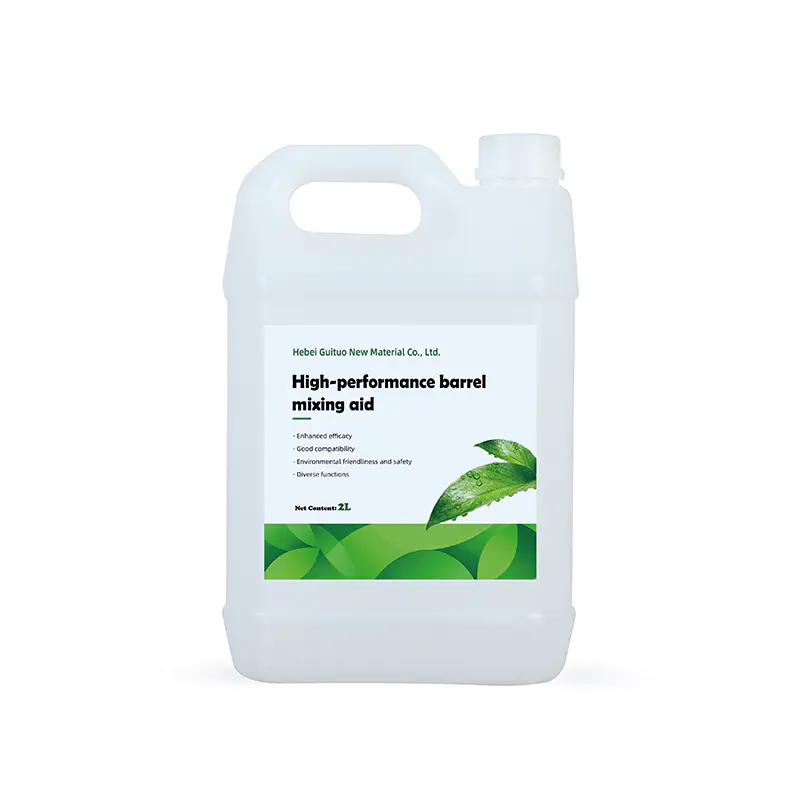
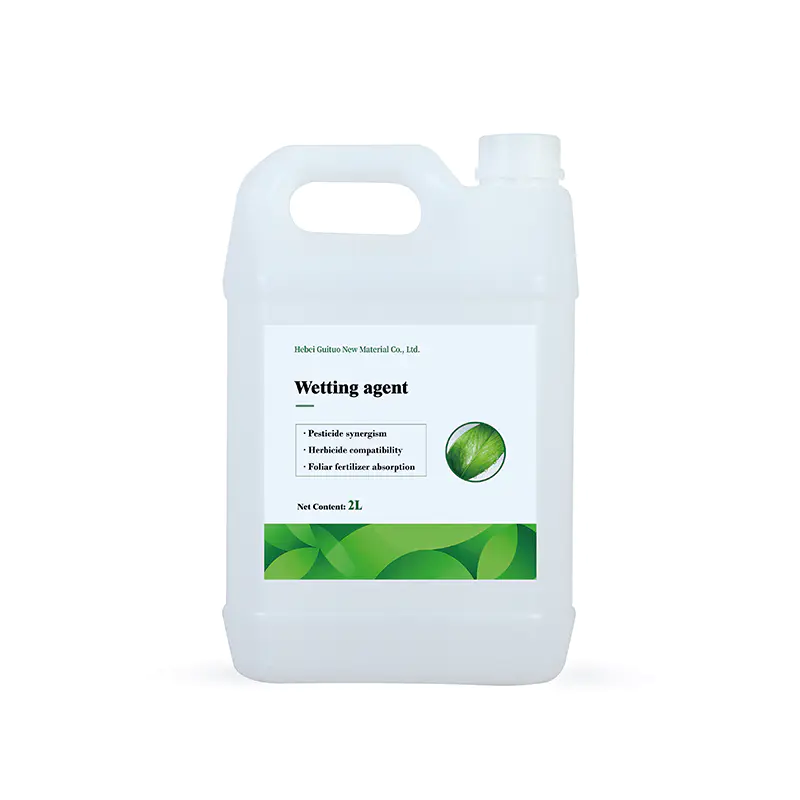
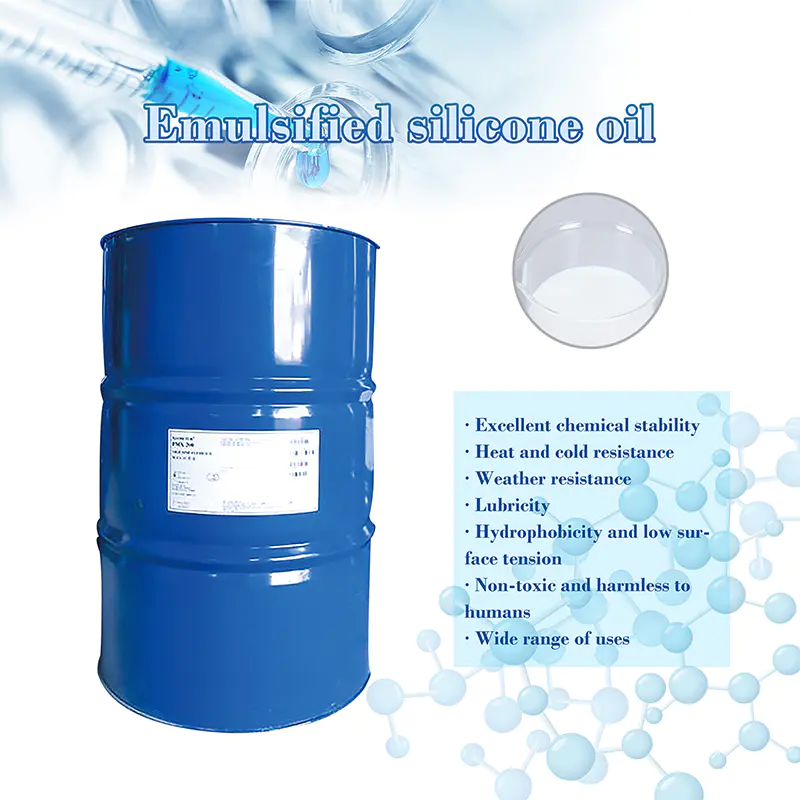
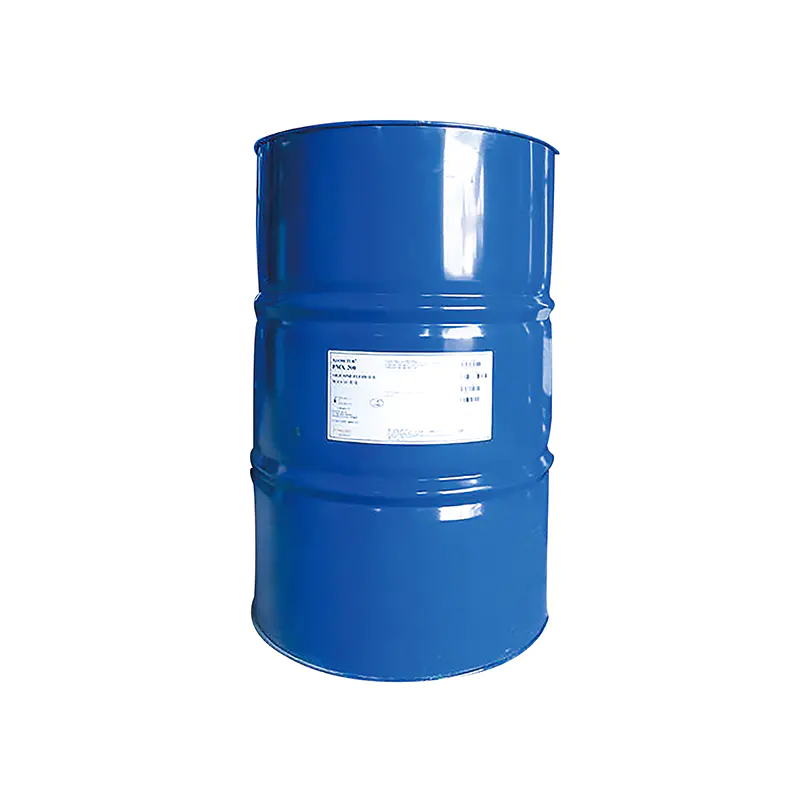
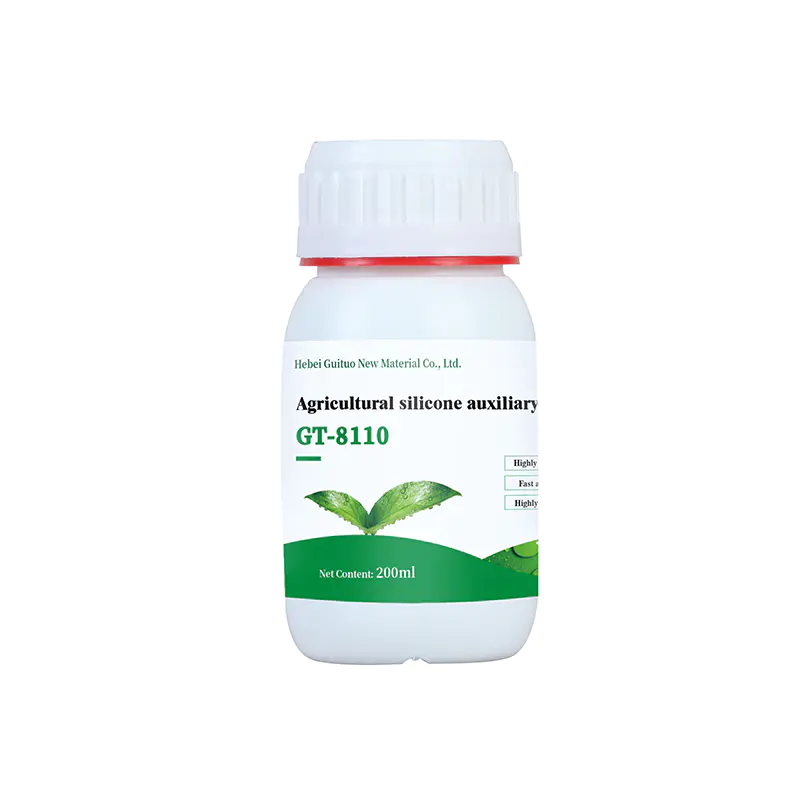
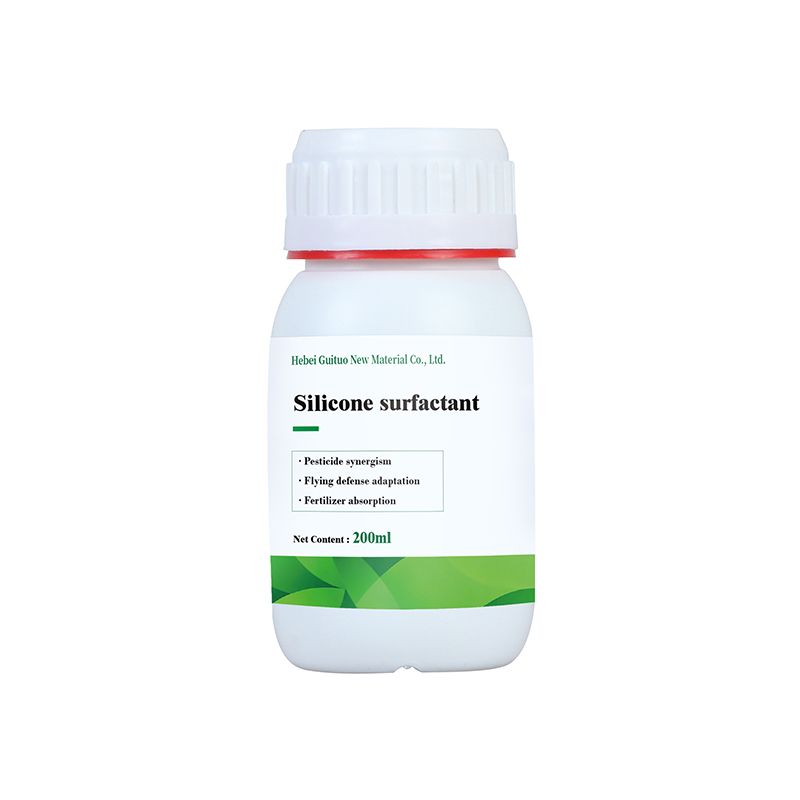
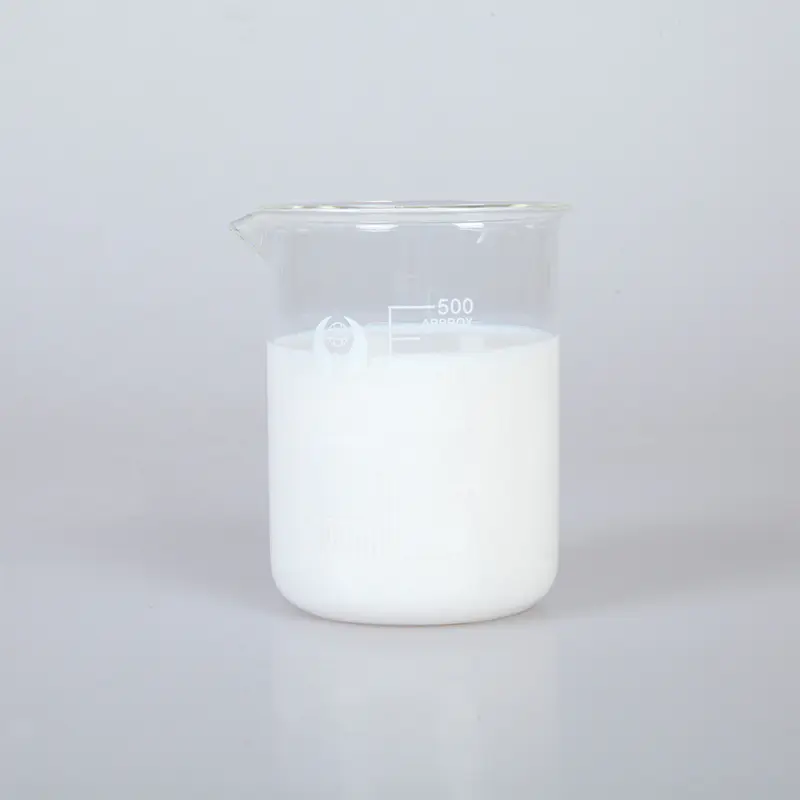
Purpose-Built Spreader for Foliar Nutrition Programs
Silicone Spreader for Foliar Fertilizer is a trisiloxane spreading surfactant formulated and field-validated specifically for foliar nutrition programs, where the performance goal differs meaningfully from crop protection spray adjuvants: instead of maximizing pesticide translocation or weed coverage, the priority here is maximizing leaf-surface contact time and uptake efficiency for water-soluble macro- and micronutrients such as nitrogen, potassium, zinc, boron, and iron chelates delivered directly to foliage.
At 0.03–0.06% v/v, the spreader reduces surface tension to approximately 24 mN/m, allowing nutrient solution droplets to spread into a thin, uniform film across the leaf surface rather than remaining as concentrated beads. This matters directly for foliar nutrient absorption efficiency: a spread film maximizes the leaf-surface contact area available for cuticular and stomatal nutrient uptake, while a beaded droplet limits absorption to the small contact footprint of the bead itself and increases the fraction of applied nutrient that simply evaporates or runs off without being absorbed.
The product is formulated to be compatible with the specific chemistry of foliar fertilizer solutions, including chelated micronutrients (EDTA, DTPA, and amino-acid chelates), which can be more sensitive to certain surfactant chemistries than conventional pesticide actives. Compatibility testing across common foliar nutrient blends shows no precipitation, chelate breakdown, or reduced nutrient solubility when this spreader is included at label rates.
Field trials measuring leaf tissue nutrient concentration following foliar application show that adding this spreader can improve measured uptake of zinc and boron by 20–35% compared to the same nutrient solution applied without a spreading adjuvant, with the improvement being most pronounced on waxy-leaved crops such as citrus, grapes, and brassicas where nutrient solution beading is otherwise a significant limiting factor.
Because foliar feeding is frequently combined with fungicide or insecticide applications in a single tank mix to reduce trips across the field, the spreader is also validated for compatibility with the most common crop protection actives applied alongside foliar nutrition programs.
Why Foliar Nutrition Programs Choose It
Mechanism of action
Silicone Spreader for Foliar Fertilizer lowers nutrient solution surface tension to approximately 24 mN/m, causing droplets to spread into a thin, continuous film across the leaf surface instead of remaining as isolated, concentrated beads.
This film geometry directly increases the leaf-surface area in contact with the nutrient solution at any given moment, which is the rate-limiting factor for both cuticular diffusion and stomatal uptake of foliar-applied nutrients — a beaded droplet simply has far less contact footprint than the same volume spread thin.
Because the spreader is formulated with chelate-compatible surfactant chemistry, it maintains this spreading performance without disrupting the metal-chelate bonds that keep micronutrients like zinc, iron, and boron in a plant-available form within the nutrient solution.
Leaf-surface contact area rises sharply and plateaus near the 0.06% recommended rate.
Product specifications
| Parameter | Value |
|---|---|
| Appearance | Clear liquid |
| Active content | ≥ 97% (trisiloxane surfactant) |
| Viscosity (25°C) | 20 – 35 cSt |
| Density (25°C) | 1.00 – 1.03 g/cm³ |
| Cloud point (1% aq.) | > 35°C |
| Flash point | > 95°C |
| pH (1% aq.) | 5.5 – 7.0 |
| Storage stability | 24 months (cool, dry) |
Performance data


- 2021
Company Establishment
- 10000m²
Advanced Factory
- 50+
Exporting Country
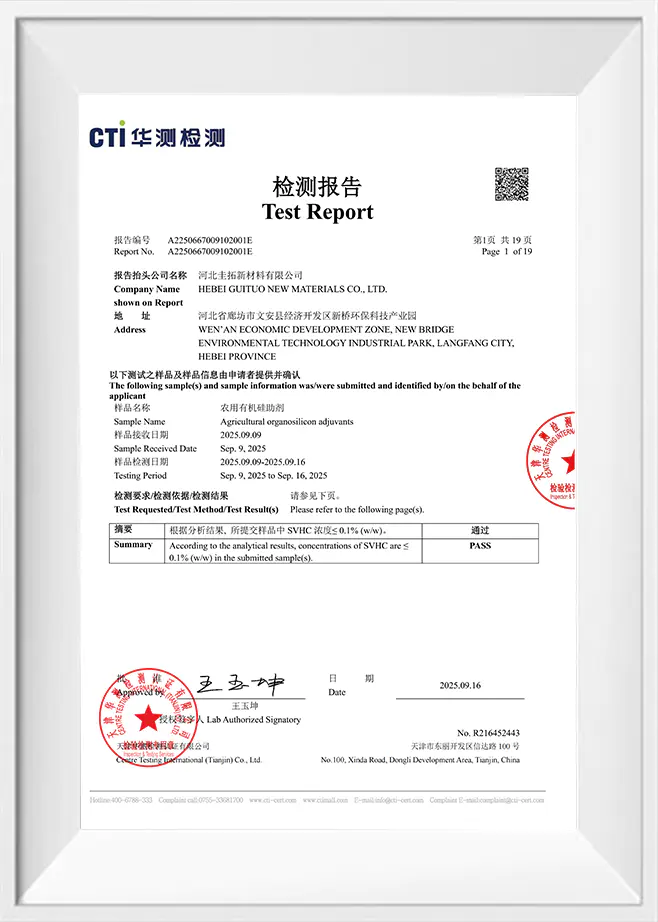
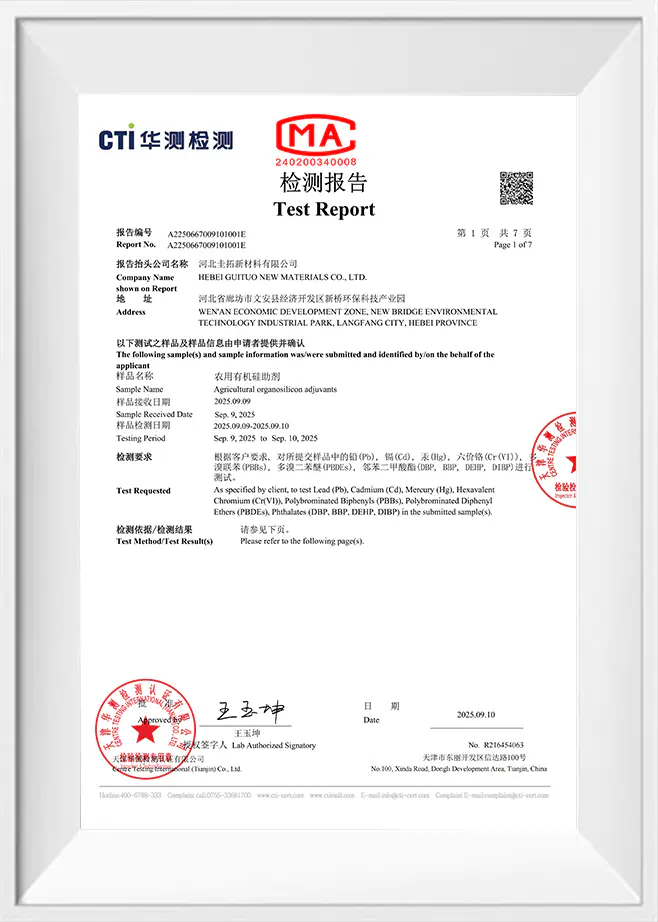
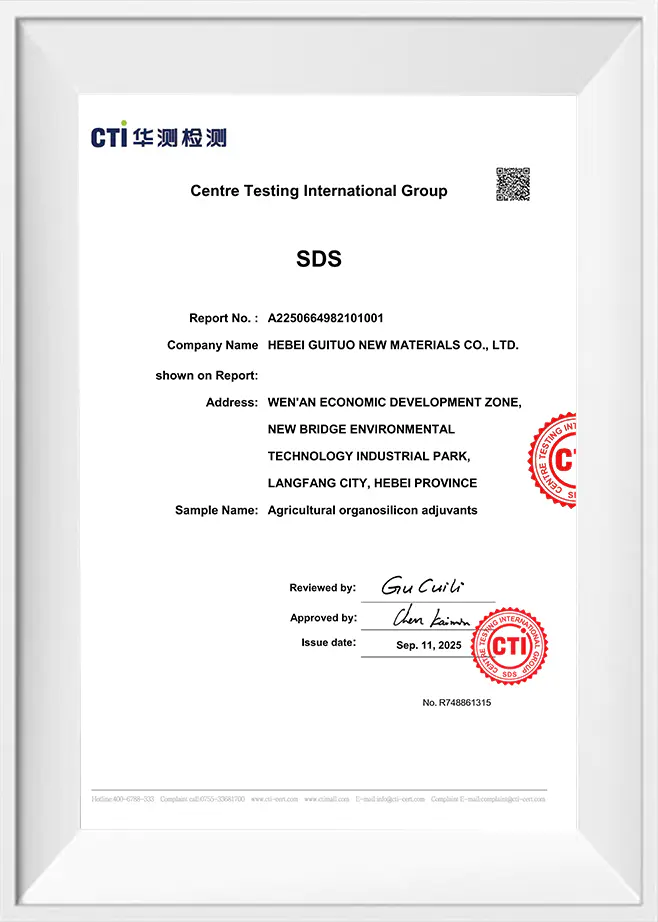
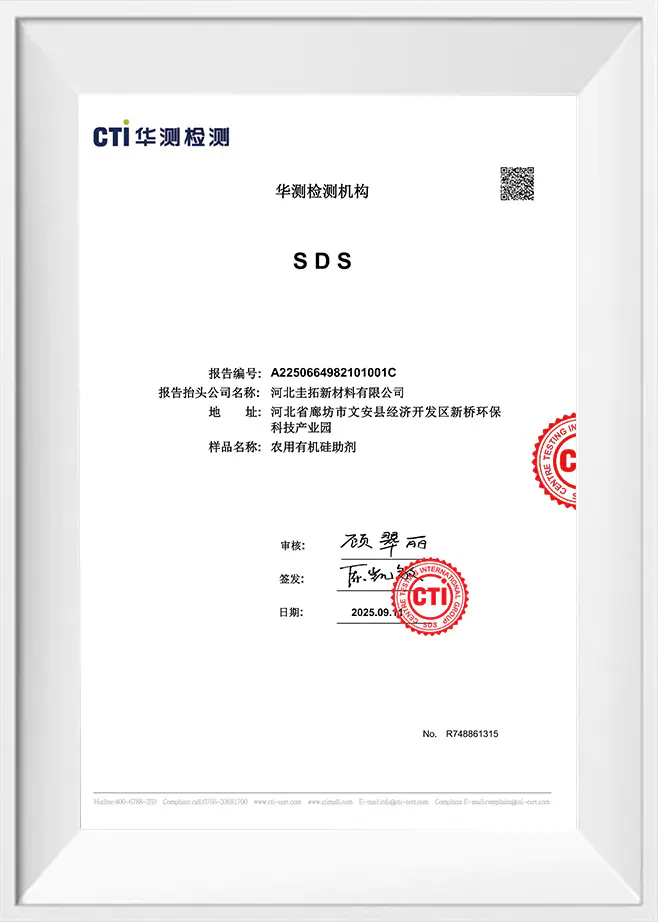
Our Certifications
And Partners
Professional scale factory production. We can customize finished products wholesale and export, OEM production, and distribution.
I just wanted to let you know that welcome to inquire and place orders.



Performance benchmark
| Property | This foliar spreader | General non-ionic surfactant | No adjuvant |
|---|---|---|---|
| Surface tension (0.1%) | 24 mN/m | 34–38 mN/m | N/A (no adjuvant) |
| Chelate compatibility | Confirmed, no breakdown | Not validated for chelates | N/A |
| Zinc/boron uptake gain | +20–35% | +5–10% | Baseline |
| Waxy-crop performance | Excellent | Fair | Poor |
| Crop protection co-application | Validated | Case-by-case | N/A |
Foliar nutrient uptake trial results
Source: foliar nutrition field trials on waxy-leaved crops, 2024–2025.
Tank-mix compatibility
Fully compatible Test before full mix
Dilution calculator
Enter your foliar spray tank volume to estimate the recommended spreader dose (0.045% v/v typical).
How to apply
Safe use guidelines
- Personal protection — Wear gloves and eye protection during mixing.
- First aid — Rinse skin/eyes with water; if ingested, seek medical advice.
- Storage — Keep sealed, cool, and dry, away from direct sunlight.
- Environmental — Biodegradable; low aquatic toxicity.
- Disposal — Dispose of containers per local regulations; do not contaminate water sources.
- Shelf life — 24 months in unopened original container.
Crops & use cases
- Citrus & grapes — waxy-leaved crops where nutrient beading limits uptake.
- Brassicas & leafy greens — foliar micronutrient programs for zinc, boron, and iron.
- Orchard nutrition programs — seasonal foliar feeding schedules for tree crops.
- Row crops with combined tank mixes — foliar nutrition paired with fungicide/insecticide sprays.
Also used in tissue-test-driven nutrition programs where measured uptake improvement is tracked against cost.
Why it outperforms
- Proven uptake gains — 20–35% improvement in measured leaf tissue nutrient concentration.
- Protects chelate chemistry — no precipitation or breakdown of micronutrient chelates.
- Reduces nutrient waste — less bead run-off means more applied nutrient is actually absorbed.
- Fits combined spray trips — validated for tank-mixing with common crop protection products.
Application guidelines
- Mixing order: dissolve all fertilizer/chelate concentrates first, add spreader last
- Waxy crops: use the higher end of the rate range for citrus, grapes, and brassicas
- Application timing: apply during active growth stages for best nutrient uptake response
- Tank-mix validation: jar-test new fungicide/nutrient combinations before full-field use
Packaging & shelf life
- Packaging: 1 L, 5 L, 20 L, 200 L drums / IBC totes.
- Storage: cool, dry, away from direct sunlight; 5–40°C.
- Shelf life: 24 months in unopened original container.
Global quality benchmarks
| Test item | Standard requirement | Our performance |
|---|---|---|
| Surface tension (0.1%) | ≤ 27 mN/m | 24 mN/m |
| Chelate compatibility testing | Not routinely verified | Confirmed across major chelate types |
| Zinc/boron uptake gain | ≥ 10% | 20–35% |
| Foam height (1 min) | < 25 mL | < 18 mL |
| Biodegradability | OECD 301 | Readily biodegradable |
Frequently asked questions
Latest articles & guides
Silicone Wetting Agent for Agrochemicals
overview Purpose-Built Wetting Agent for Chemigation Through Irrigation Systems
Silicone Surfactant for Agricultural Chemicals
overview Multi-Functional Silicone Surfactant for Agrochemical Formulation Sili
Silicone Adjuvant for Fungicide Spray
overview Adjuvant Built Around the Disease-Control Weather Window Silicone Adju
Silicone-Based Antifoam for Agriculture
overview Foam Control for On-Farm Liquid Storage, Fertigation, and Slurry System
Silicone Surfactant for Herbicide Application
overview Purpose-Built for Broadleaf and Grass Weed Herbicide Programs Silicone
Silicone Additive for Crop Protection
overview A Formulator's Multi-Function Toolbox Additive Silicone Additive for C
Agricultural Silicone Penetrant and Spreader
overview Penetration-Focused Adjuvant for Translocated Actives Agricultural Sil
High Performance Silicone Agricultural Adjuvant
overview The Flagship Adjuvant for High-Value Crop Programs High Performance Si
Modified Silicone Fluid for Agriculture
overview Functional Silicone Fluid for Agricultural Films, Coatings, and Textile
Spread it thin, absorb it fully
Free samples · Foliar nutrition program support · Chelate compatibility data
cnguituonewmaterial.com · Agricultural adjuvants & new materials

Tel : +86-400-138-5268
Email : [email protected]
Phone : +86-15128434888 / +86-13511051998
Add : Xinqiao Environmental Protection Industrial Park, Wen'an County, Langfang City, Hebei Province, China
Copyright © Hebei Guituo New Material Co., Ltd. All Rights Reserved.
