

 English
 Français
 Português


Agricultural Super Wetting Silicone Fluid
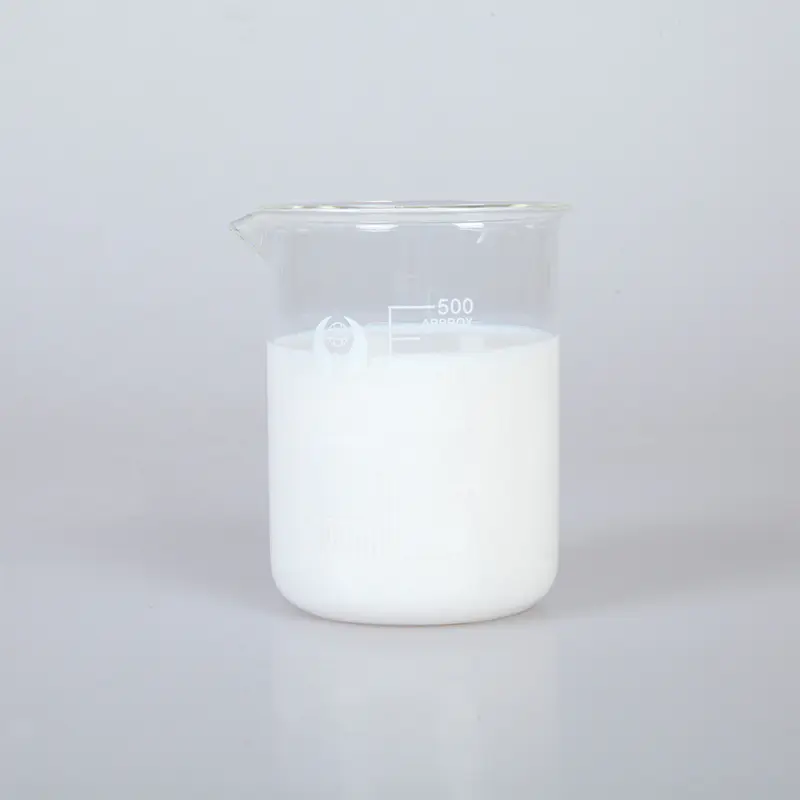
High-purity 7.5-EO trisiloxane ethoxylate — 480 mm² spreading area from a 10 µL droplet, contact angle under 5°, 90% of spread in 8 seconds, and 81% coverage at 60 L/ha.
Explore our adjuvant range
True Superspreading: Measured by Spreading Area, Contact Angle, and the Humidity It Needs
Agricultural Super Wetting Silicone Fluid is a high-purity trisiloxane ethoxylate fluid sold on a property that can be measured rather than claimed: superspreading. Most adjuvants reduce surface tension; only a small family of trisiloxane surfactants makes a droplet spread out to many times its initial footprint within seconds, flattening to an almost invisible film and, on a leaf, allowing wetting of recesses, hairs, and the folds around stomata. Spreading area on a hydrophobic test surface is the clearest way to compare these products, and it differs a great deal between grades, even among those that all claim to be 'silicone'.
This fluid is a narrow-cut, single-component trisiloxane with an average of 7.5 ethylene oxide units — the structure known to give the strongest superspreading — with a trisiloxane content above 98% and a polyether-free by-product content under 1%. Impurities matter here: blends containing longer siloxane chains or free polyether can spread no better than a conventional surfactant. On a 10 µL droplet of 0.1% solution applied to polypropylene film, spreading area was 480 mm² within 30 seconds, against 290–340 mm² for typical commercial trisiloxane blends and under 30 mm² for a conventional nonionic. Static contact angle on paraffin film fell from 105° to under 5°.
Speed is the second measure. The fluid reaches 90% of its final spread within 8 seconds, which matters because a droplet on a leaf in warm, dry air loses water quickly. A droplet that spreads in 8 seconds covers its area before evaporation changes its concentration, whereas a slow spreader dries to a smaller footprint. On waxy cabbage and onion leaves at 0.03% v/v, leaf coverage reached 88% and 85%, and at a spray volume of 60 L/ha — the low-volume range used by drones and some boom sprayers — coverage dropped only from 88% to 81%, where a conventional nonionic fell from 56% to 31%.
Humidity is an honest constraint with any superspreader. The spreading mechanism depends on the droplet's thin film being sustained by water vapor, so performance is highest above about 70% relative humidity. At 40% relative humidity, the same fluid's spreading area falls to about 210 mm² — still more than seven times that of a nonionic, but well below its peak. For this reason the technical guidance recommends spraying in the early morning, evening, or after dew, and discourages hot, dry midday spraying, which also increases drift and burn.
Superspreading is not always the best fit. Very low surface tension raises the risk of runoff, can damage tender flowers and fruit set, and breaks down quickly in strongly acidic or alkaline tanks, so the fluid is for waxy, difficult-to-wet targets in mid-range pH tanks. Programs that need acid tolerance, rainfastness, or gentle bloom-stage action are better served by other grades.
Why Superspreading Performance Is Worth Measuring
Mechanism of action
Agricultural Super Wetting Silicone Fluid is built on a compact, T-shaped molecule: a short, bulky trisiloxane head and a short polyether tail of about 7.5 ethylene oxide units. This geometry packs densely at the air–water interface, giving surface tension near 20.5 mN/m, and allows the molecule to move rapidly to the advancing edge of a spreading droplet.
On a hydrophobic surface the droplet is driven outward by a surface-tension gradient at its edge, and a thin precursor film races ahead of the main drop. The film needs a supply of water vapor from the surrounding air, which is why spreading is greatest at high humidity and slower in dry air.
Purity of the molecular structure determines how strong the effect is. Longer siloxane chains or higher EO numbers reduce the spreading dramatically, which is why single-component, narrow-cut material outperforms blends, even when all are described by the same name.
Spreading is near its peak above 70% relative humidity and falls in dry air; a conventional nonionic stays under 30 mm² at any humidity.
Product specifications
| Parameter | Value |
|---|---|
| Appearance | Clear, colorless to pale liquid |
| Chemical type | Trisiloxane ethoxylate, average 7.5 EO |
| Trisiloxane content | ≥ 98% |
| Polyether by-products | < 1% |
| Viscosity (25°C) | 16 – 24 cSt |
| Cloud point (1% aq.) | > 36°C |
| Recommended tank pH | 6.0 – 8.0 |
| Storage stability | 24 months (cool, dry) |
Performance data


- 2021
Company Establishment
- 10000m²
Advanced Factory
- 50+
Exporting Country
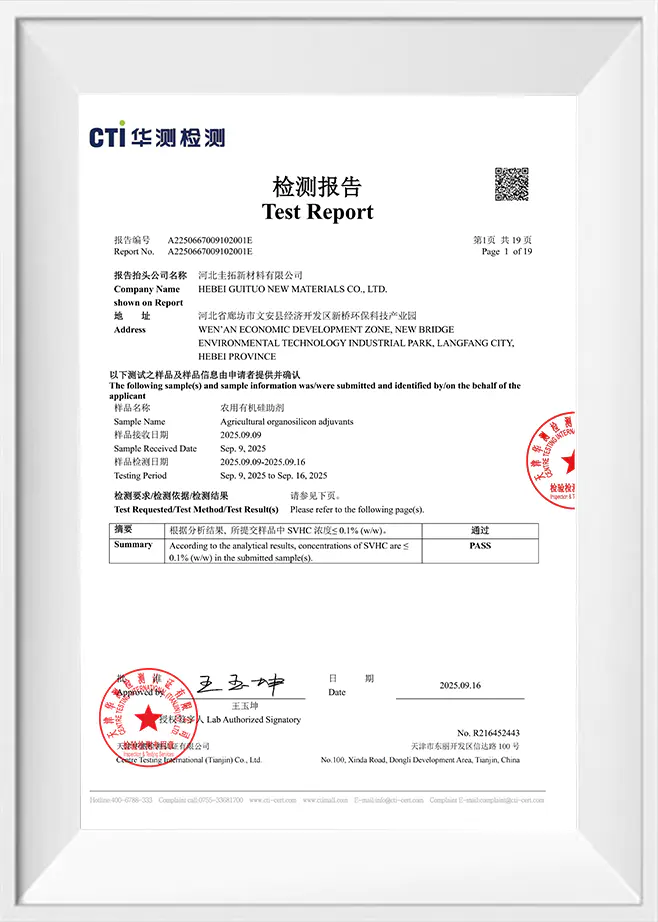
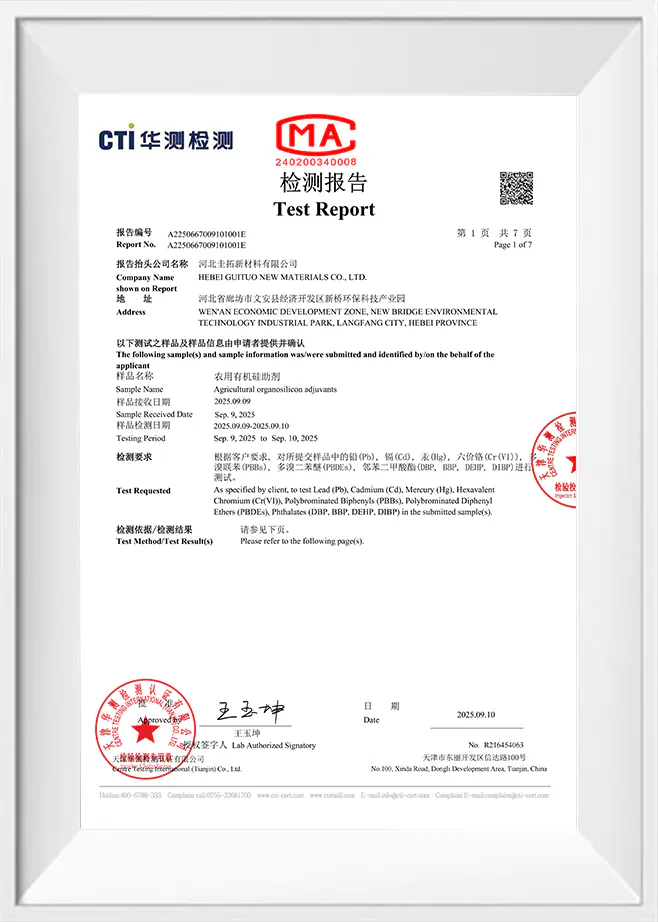
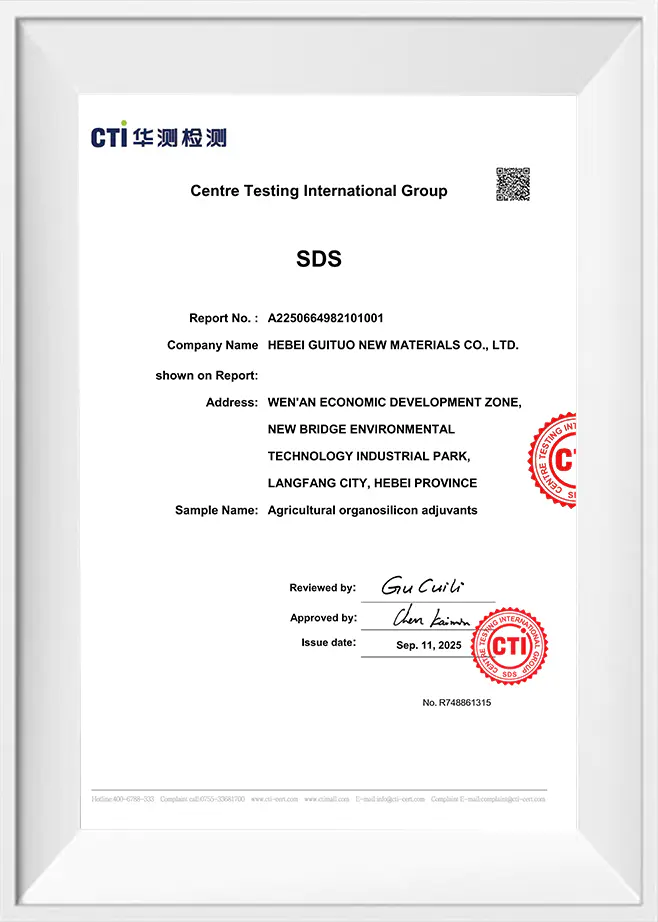
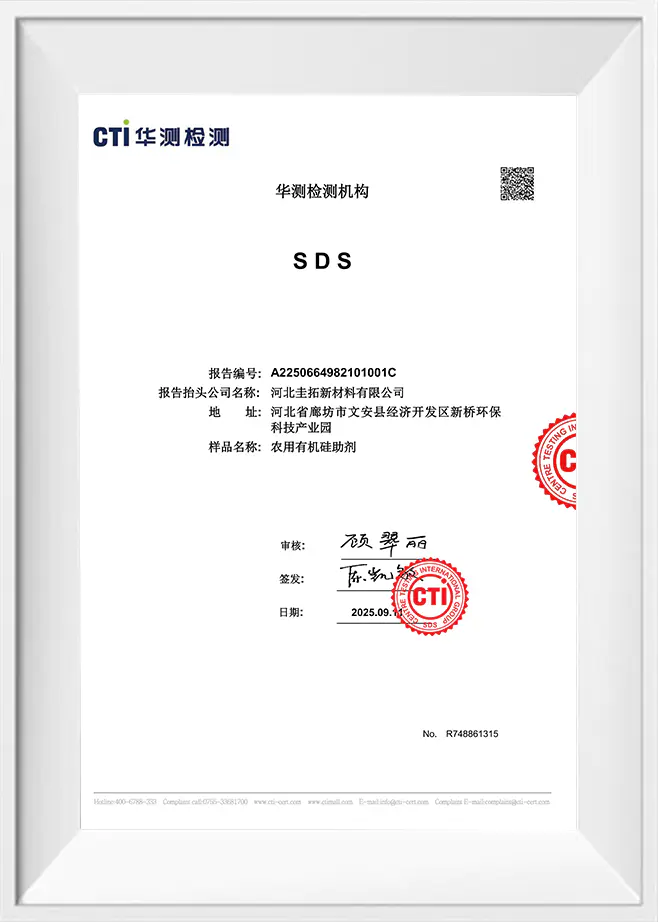
Our Certifications
And Partners
Professional scale factory production. We can customize finished products wholesale and export, OEM production, and distribution.
I just wanted to let you know that welcome to inquire and place orders.



Performance benchmark
| Property | This 7.5-EO superspreader | Typical trisiloxane blend | Conventional NIS |
|---|---|---|---|
| Spreading area, 10 µL (0.1%) | 480 mm² | 290–340 mm² | < 30 mm² |
| Contact angle on paraffin | < 5° | 12–25° | 60–75° |
| Time to 90% of spread | 8 s | 15–25 s | Does not spread |
| Coverage at 60 L/ha (cabbage) | 81% | 68% | 31% |
| Trisiloxane content | ≥ 98% | 70–90% | — |
Spreading and low-volume coverage results
Source: spreading-area, contact-angle, and low-volume coverage tests at 22°C and 75% relative humidity unless stated, 2024–2025.
Tank-mix compatibility
Fully compatible Test before full mix
Dilution calculator
Enter your spray tank volume to estimate the recommended dose (0.02% v/v typical).
How to apply
Safe use guidelines
- Personal protection — Wear gloves, goggles, and long sleeves during mixing.
- First aid — Rinse skin and eyes with plenty of water; if ingested, seek medical advice.
- Storage — Keep in original container, tightly closed, cool and dry (5–40°C).
- Crop safety — Very low surface tension can harm tender flowers and fruit set; test first.
- Environmental — Biodegradable; low toxicity to fish. Avoid drift into water.
- Disposal — Dispose of empty containers per local regulations.
Crops & use cases
- Onion, leek, and cabbage — — waxy leaves with high contact angles.
- Rice and cereals — — narrow, upright, hydrophobic foliage.
- Drone and low-volume programs — — coverage at 15–60 L/ha.
- Research and quality testing — — a reference superspreader for adjuvant comparisons.
Not intended for tender flowers, acidic tanks, or very dry, hot spray conditions.
Why it outperforms
- True superspreading — — 480 mm² spreading area and under 5° contact angle.
- High purity — — single-component, narrow-cut trisiloxane.
- Low-volume ready — — 81% coverage at 60 L/ha.
- Transparent limits — — humidity and tank-pH guidance stated clearly.
Application guidelines
- Humidity: spray above 70% RH where possible; avoid hot, dry midday
- Rate: 0.01–0.02% typical; up to 0.03% on very waxy foliage
- Tank pH: keep between 6 and 8 and use the mix the same day
- Crop safety: test on a small block before using at flowering or fruit set
Packaging & shelf life
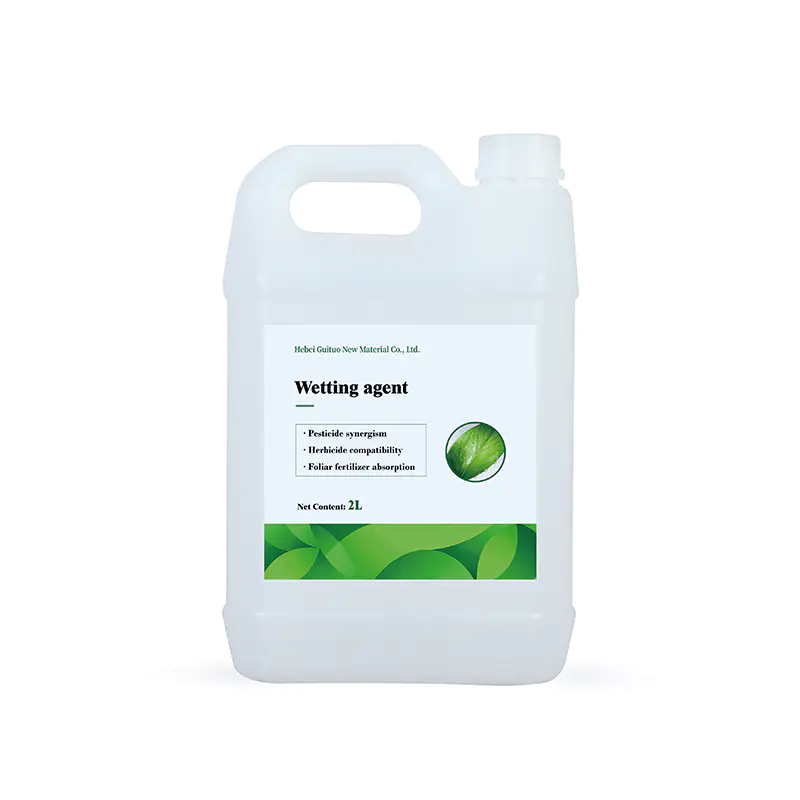
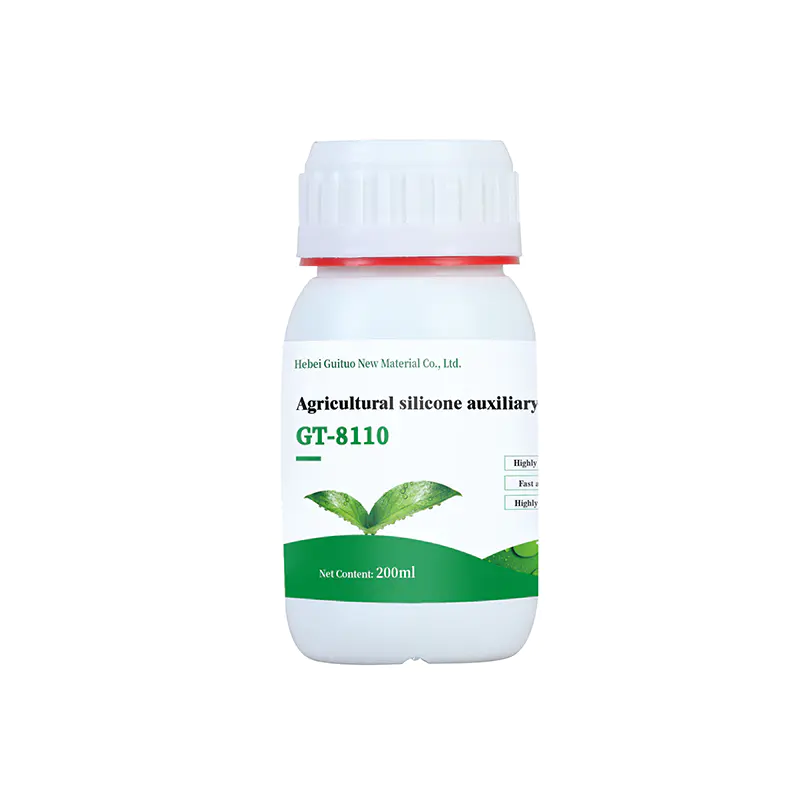
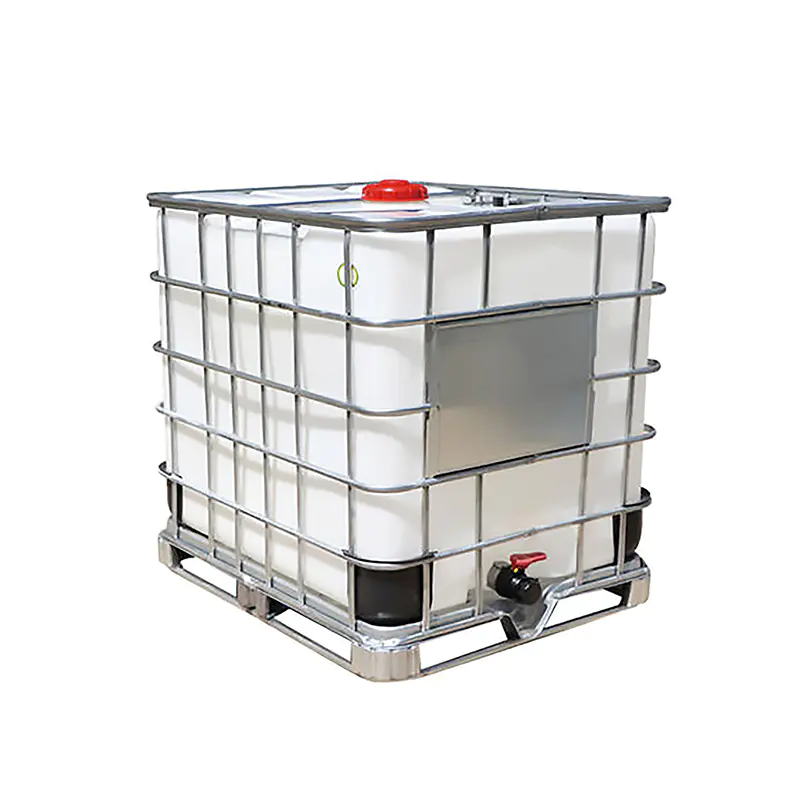
- Packaging: 1 L, 5 L, 20 L, 200 L drums / IBC totes.
- Storage: cool, dry, away from direct sunlight; 5–40°C.
- Shelf life: 24 months in unopened original container.
Global quality benchmarks
| Test item | Standard requirement | Our performance |
|---|---|---|
| Surface tension (0.1%) | ≤ 22 mN/m | 20.5 mN/m |
| Spreading area, 10 µL on PP film | ≥ 350 mm² | 480 mm² |
| Trisiloxane content | ≥ 90% | ≥ 98% |
| Polyether by-products | ≤ 3% | < 1% |
| Biodegradability | OECD 301 | Readily biodegradable |
Frequently asked questions
Latest articles & guides
Agricultural Silicone Super Spreading Agent
overview Extreme Leaf-Surface Coverage Through True Super-Spreading Agricultura
Agricultural Grade Silicone Wetting Agent
overview Certified, Traceable Wetting Agent Built for Registration-Grade Consist
Agricultural Pesticide Silicone Wetting Additive
overview A Wetting Additive Built Into the Powder, Not Added After Agricultural
Super Spreading Silicone Agricultural Surfactant
overview Super-Spreading Performance for Turf, Ornamentals, and Nursery Producti
Agricultural Spray Droplet Modifier Silicone
overview Controlling What Happens in the Milliseconds After a Droplet Hits the L
Agricultural Chemical Silicone Defoaming Agent
overview Industrial-Scale Antifoam for Agrochemical Manufacturing Processes Agr
Concentrated Agricultural Silicone Wetting Agent
overview A Super-Concentrate That Treats Thousands of Litres per Litre Concentr
Agricultural Grade Polyether Modified Silicone
overview A Hydrolytically Stable Comb-Type Silicone for Acidic and Multi-Day Tan
Silicone Wetting Agent for Agrochemicals
overview Purpose-Built Wetting Agent for Chemigation Through Irrigation Systems
Measure the spread, not just the label
Free samples · Spreading-area test support
cnguituonewmaterial.com · Agricultural adjuvants & new materials

Tel : +86-400-138-5268
Email : [email protected]
Phone : +86-15128434888 / +86-13511051998
Add : Xinqiao Environmental Protection Industrial Park, Wen'an County, Langfang City, Hebei Province, China
Copyright © Hebei Guituo New Material Co., Ltd. All Rights Reserved.
