

 English
 Français
 Português


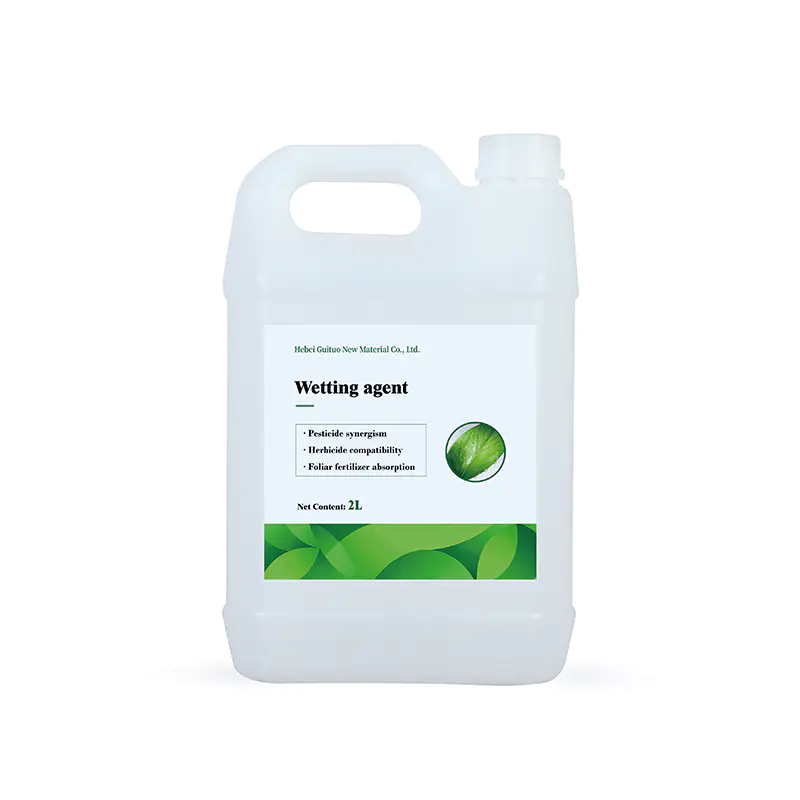
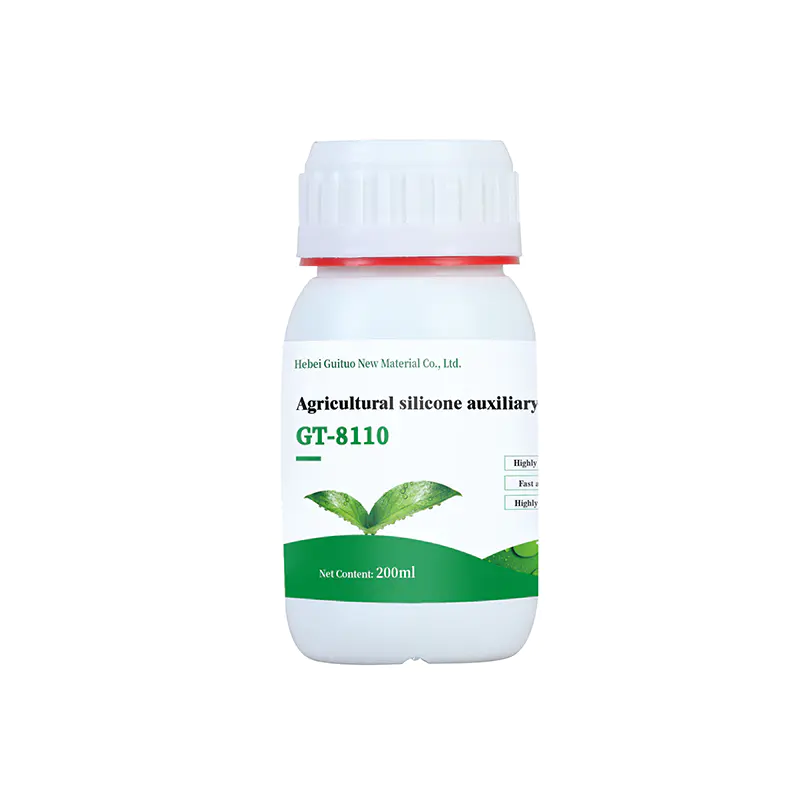
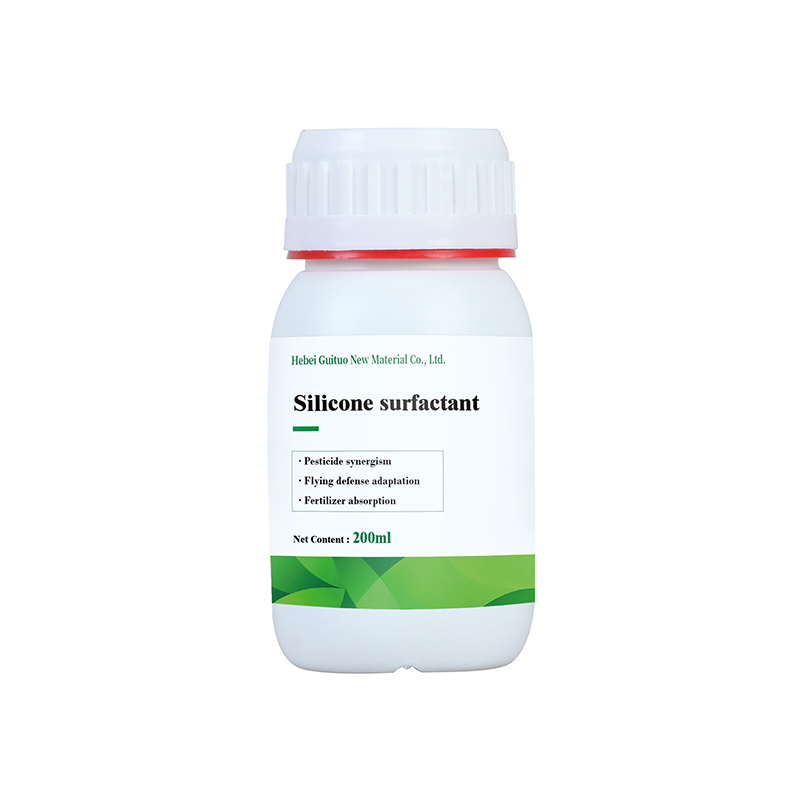
Agricultural Spray Droplet Modifier Silicone
Fast-diffusing silicone modifier with 36 mN/m dynamic surface tension at 10 ms — cuts droplet rebound on rice leaves from 72% to 19% and lifts wheat spray retention from 28% to 71%.
Explore our adjuvant range
Controlling What Happens in the Milliseconds After a Droplet Hits the Leaf
Agricultural Spray Droplet Modifier Silicone is designed around a part of spraying that standard adjuvant data sheets rarely mention: the first few milliseconds after a droplet strikes a leaf. A spray droplet travelling at several metres per second does not simply land and spread. On a hydrophobic surface such as rice, wheat, onion, or waxy brassica foliage, it can rebound, split into satellite droplets, or bounce off the leaf entirely before it ever has a chance to wet it. Spray retention studies commonly find that 50–70% of the volume reaching a waxy leaf is lost this way, and the loss is largest for the larger droplets used to control drift.
The key property is not equilibrium surface tension — the number listed on most adjuvant spec sheets, measured after the surfactant has had many seconds to reach the surface — but dynamic surface tension, which describes how quickly surfactant molecules migrate to a newly created surface. A droplet in flight and at impact is only milliseconds old. A conventional non-ionic surfactant can show an equilibrium value near 30 mN/m but a dynamic value above 50 mN/m at 10 ms, meaning the droplet behaves almost like plain water when it hits. This droplet modifier is built on a fast-diffusing, low-molecular-weight silicone structure with a measured dynamic surface tension of about 36 mN/m at 10 ms and 27 mN/m at 100 ms, so the surface is already active at the moment of impact.
The practical result is higher retention. In high-speed imaging tests, 400 µm droplets striking a rice leaf at 4 m/s rebounded in 72% of cases without the droplet modifier; with 0.03% v/v modifier, only 19% rebounded, and the rest adhered and spread. In a spray-chamber retention test on wheat, the retained volume rose from 28% to 71% of the sprayed dose. This matters more for the coarse droplets used in drift-reduction nozzles and for UAV spraying, where droplets are small but fast and application volumes are low.
The modifier does not set out to maximize spreading area and intentionally avoids pushing equilibrium surface tension to the extreme floor, so it can be used in programs where a controlled, retained droplet is preferred to an extremely thin film. It is also not a drift-control polymer; the benefit is retention at impact, not droplet-size distribution.
Compatibility is broad across herbicide, fungicide, and insecticide classes, and the product is low-foaming so it can run through the pressurized, recirculating systems used on ground rigs and drones.
Why Impact Behaviour Matters
Mechanism of action
Agricultural Spray Droplet Modifier Silicone is a compact, fast-diffusing silicone surfactant. Because its molecules are small and highly surface-active, they reach a freshly created droplet surface within milliseconds, so the droplet's surface tension is already low when it strikes the leaf.
On impact, a droplet with high dynamic surface tension stores energy at its surface like a spring and rebounds; a droplet with low dynamic surface tension absorbs the impact, spreads, and adheres. The difference decides whether the spray reaches the target or ends up on the ground.
Equilibrium surface tension still matters for what happens once the droplet has settled, but at impact it is the early-time behaviour that determines retention.
Surface tension is already well below water's 72 mN/m by 10 ms, the time scale of leaf impact.
Product specifications
| Parameter | Value |
|---|---|
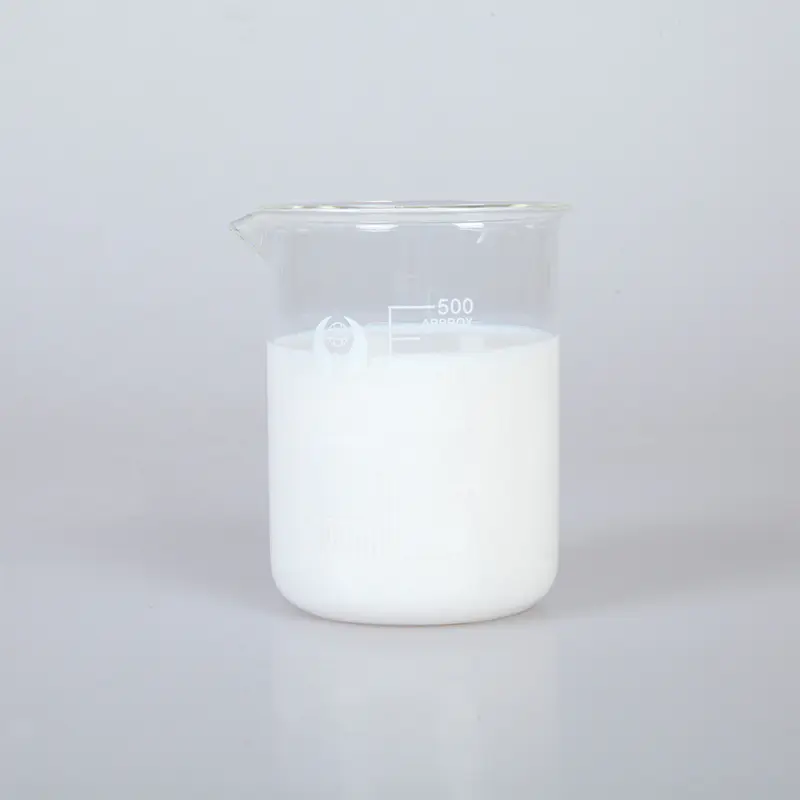
| Appearance | Clear, mobile liquid |
| Active content | ≥ 97% (low-molecular-weight silicone surfactant) |
| Viscosity (25°C) | 12 – 22 cSt |
| Density (25°C) | 0.98 – 1.01 g/cm³ |
| Equilibrium surface tension | 24 mN/m (0.1% aq.) |
| Dynamic surface tension, 10 ms | ≈ 36 mN/m (0.1%) |
| Dynamic surface tension, 100 ms | ≈ 27 mN/m (0.1%) |
| Storage stability | 24 months (cool, dry) |
Performance data


- 2021
Company Establishment
- 10000m²
Advanced Factory
- 50+
Exporting Country
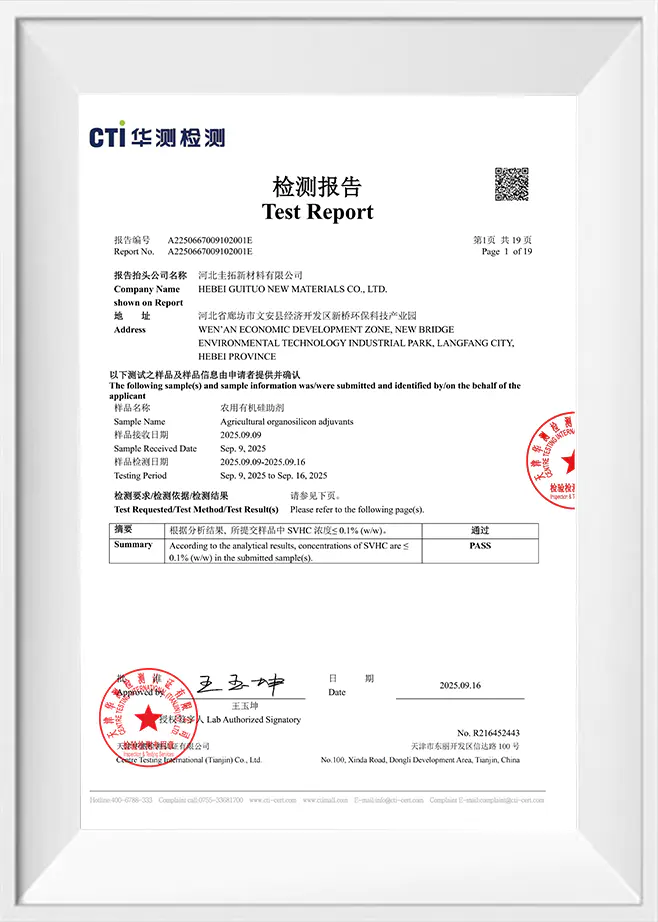
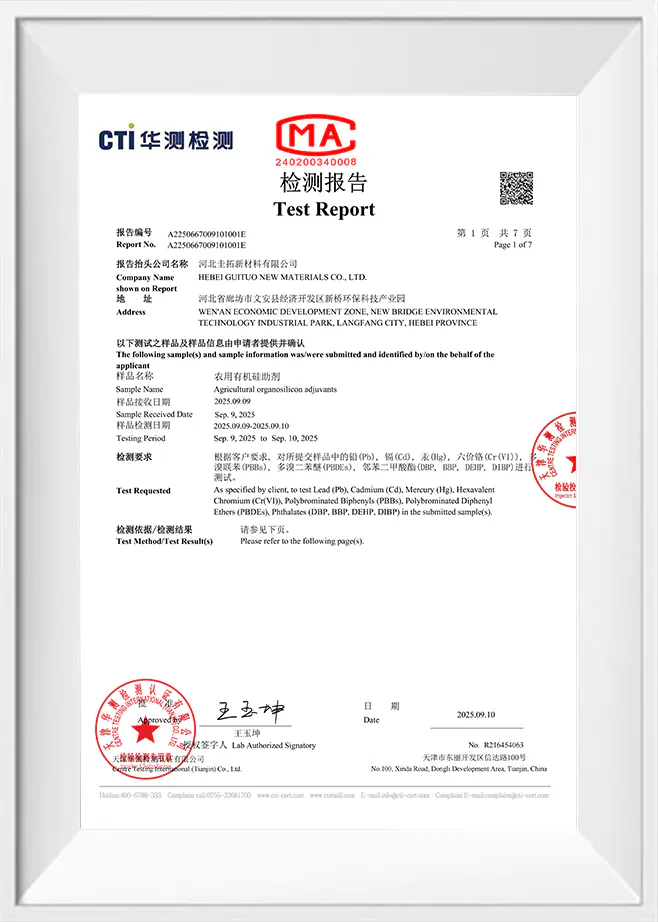
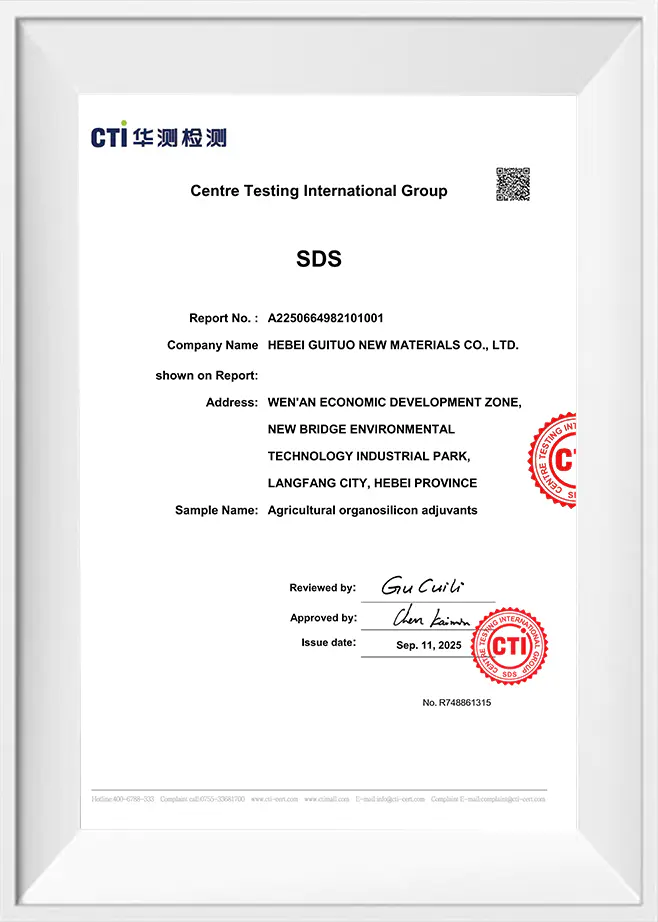
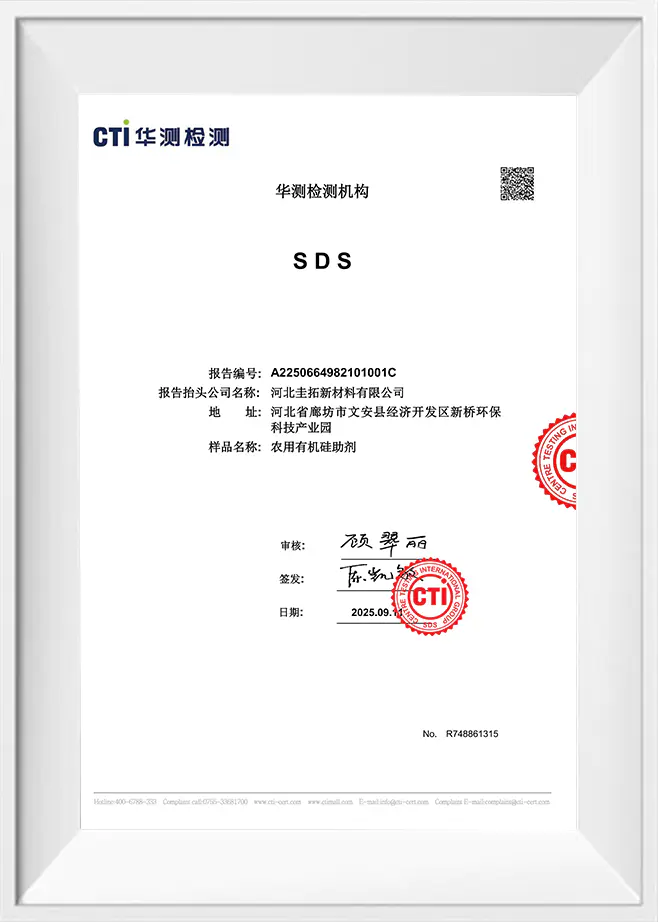
Our Certifications
And Partners
Professional scale factory production. We can customize finished products wholesale and export, OEM production, and distribution.
I just wanted to let you know that welcome to inquire and place orders.



Performance benchmark
| Property | This droplet modifier | Conventional NIS | No adjuvant |
|---|---|---|---|
| Dynamic surface tension at 10 ms | 36 mN/m | 52 mN/m | Not applicable |
| Droplet rebound on rice leaf | 19% | 48% | 72% |
| Wheat spray retention | 71% | 49% | 28% |
| Equilibrium surface tension | 24 mN/m | 30–34 mN/m | — |
| Drift-control effect | None (not its role) | None | None |
Impact and retention test results
Source: high-speed imaging and spray-chamber retention tests, 2024–2025.
Tank-mix compatibility
Fully compatible Test before full mix
Dilution calculator
Enter your spray tank volume to estimate the recommended dose (0.03% v/v typical).
How to apply
Safe use guidelines
- Personal protection — Wear gloves, goggles, and long sleeves during mixing.
- First aid — Rinse skin/eyes with plenty of water; if ingested, seek medical advice.
- Storage — Keep in original container, tightly closed, cool and dry (5–40°C).
- Environmental — Biodegradable; low toxicity to fish.
- Disposal — Dispose of empty containers per local regulations.
- Tank holding — Use the mix the same day; keep pH between 6 and 8.
Crops & use cases
- Rice and cereals — upright, waxy leaves where droplet bounce is severe.
- Onion, leek, and brassicas — waxy vegetable foliage.
- Drone and UAV programs — fast droplets at low spray volume.
- Drift-reduction nozzle programs — coarse droplets prone to bounce.
Also used in research programs studying spray retention and deposition.
Why it outperforms
- Targets the real loss mechanism — bounce and shatter at impact.
- More dose reaches the leaf — retention more than doubles on cereals.
- Complements drift nozzles — recovers retention lost with coarser droplets.
- Not a spreading-only product — controlled, retention-focused behaviour.
Application guidelines
- Target selection: use on hydrophobic, upright leaves where bounce losses are highest
- Drift control: combine with an approved nozzle or polymer; this product does not set the droplet spectrum
- Tank mix: add last; hold pH 6–8; use the same day
- Drone programs: keep rates at 0.03–0.04% in concentrated, low-volume mixes
Packaging & shelf life
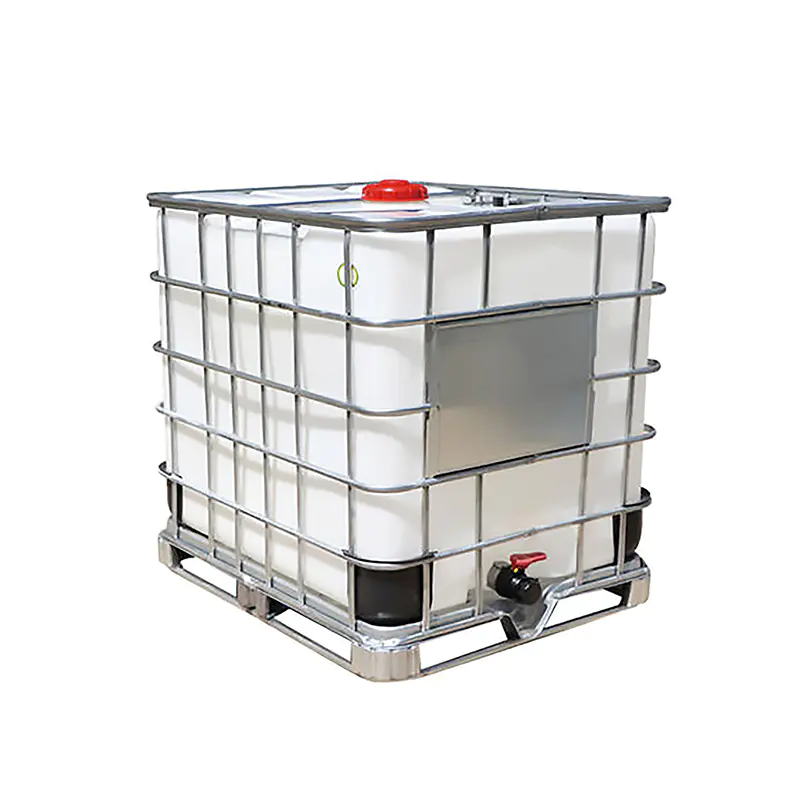
- Packaging: 1 L, 5 L, 20 L, 200 L drums / IBC totes.
- Storage: cool, dry, away from direct sunlight; 5–40°C.
- Shelf life: 24 months in unopened original container.
Global quality benchmarks
| Test item | Standard requirement | Our performance |
|---|---|---|
| Dynamic surface tension, 10 ms | ≤ 45 mN/m | ≈ 36 mN/m |
| Droplet rebound on rice (400 µm) | ≤ 40% | 19% |
| Wheat spray retention | ≥ 50% | 71% |
| Foam height (1 min) | < 25 mL | < 18 mL |
| Biodegradability | OECD 301 | Readily biodegradable |
Frequently asked questions
Latest articles & guides
Agricultural Super Wetting Silicone Fluid
overview True Superspreading: Measured by Spreading Area, Contact Angle, and the
Agricultural Spray Adjuvant Wetting Agent
overview The General-Purpose Workhorse Adjuvant for Everyday Spray Programs Agr
Silicone Spray Adjuvant for Herbicides
overview Faster Burndown and Reliable Control When the Weather Isn't Ideal Sili
Agricultural Grade Polyether Modified Silicone
overview A Hydrolytically Stable Comb-Type Silicone for Acidic and Multi-Day Tan
Agricultural Pesticide Silicone Wetting Additive
overview A Wetting Additive Built Into the Powder, Not Added After Agricultural
Silicone Surfactant for Agricultural Chemicals
overview Multi-Functional Silicone Surfactant for Agrochemical Formulation Sili
Silicone Adjuvant for Fungicide Spray
overview Adjuvant Built Around the Disease-Control Weather Window Silicone Adju
Agricultural Chemical Silicone Defoaming Agent
overview Industrial-Scale Antifoam for Agrochemical Manufacturing Processes Agr
Agricultural Silicone Penetrant and Spreader
overview Penetration-Focused Adjuvant for Translocated Actives Agricultural Sil
Make more of every droplet stick
Free samples · Spray retention testing support
cnguituonewmaterial.com · Agricultural adjuvants & new materials

Tel : +86-400-138-5268
Email : [email protected]
Phone : +86-15128434888 / +86-13511051998
Add : Xinqiao Environmental Protection Industrial Park, Wen'an County, Langfang City, Hebei Province, China
Copyright © Hebei Guituo New Material Co., Ltd. All Rights Reserved.
