

 English
 Français
 Português


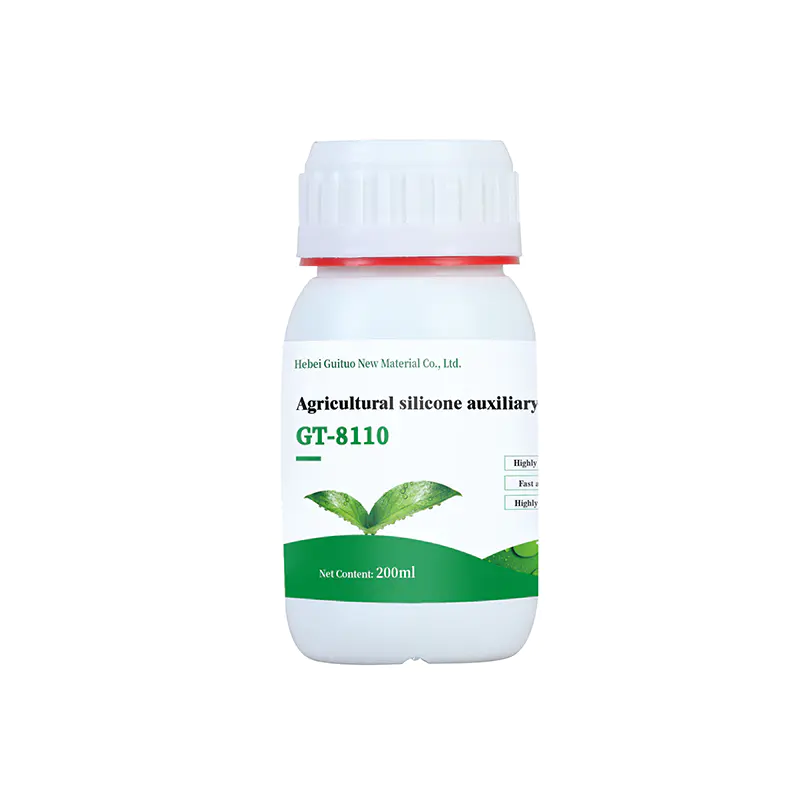
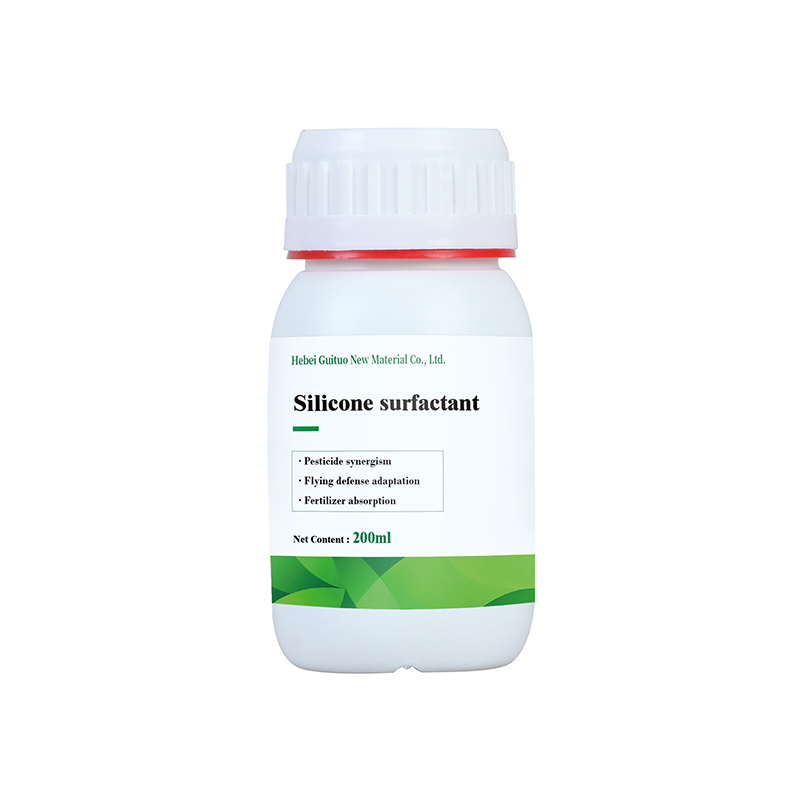
Foliar Spray Silicone Spreading Agent
Moderate, foam-controlled silicone spreader for seaweed, humic, amino-acid, and chitosan sprays — no flocculation of acidic humates, foam under 30 mL, coverage lifted from 41% to 76%.
Explore our adjuvant range
A Spreading Agent Matched to Seaweed, Humic, Amino-Acid, and Other Biostimulant Sprays
Foliar Spray Silicone Spreading Agent is formulated for foliar biostimulant programs — sprays based on seaweed extracts, humic and fulvic acids, amino acids and protein hydrolysates, chitosan, and plant extracts. These products have a very different chemistry from mineral nutrient solutions and pesticides: they are rich in large organic molecules, often viscous, often slightly acidic, and frequently foam-prone because of their proteins and saponins. A spreading agent that works well with a clean pesticide solution can flocculate a humic spray, foam out a protein hydrolysate, or fail to spread through a thick seaweed extract.
Humic and fulvic acids are the most pH-sensitive of these. Below about pH 5 they begin to aggregate and precipitate, and adding the wrong surfactant can speed that. This spreading agent is built on a non-ionic comb-type silicone that is neutral and compatible with acidic humate solutions; in tests with a 0.5% fulvic acid spray at pH 4.5, no flocculation or cloudiness appeared over 24 hours, whereas a standard trisiloxane showed visible haze within 4 hours as the solution's pH drifted and the surfactant degraded.
Foam control is built into the formulation. Protein hydrolysates and saponin-rich plant extracts can produce a foam column of 100 mL or more in a standard test. With 0.03% v/v of the spreading agent, which contains a low level of a compatible silicone antifoam, foam height after one minute stayed below 30 mL in a 1% amino-acid solution, so tanks fill and spray cleanly.
Coverage on the leaf is the purpose. Biostimulants are normally applied at low spray volumes, often on the leaf for uptake or on the leaf as a film that interacts with the microbiome. At 0.03–0.05% v/v, the spreading agent reduces surface tension to roughly 25 mN/m — a moderate level that is gentle on the sensitive tissue of young leaves, flowers, and fruit-set stages when biostimulants are most often used — and lifts leaf-area coverage on tomato and pepper foliage from 41% to 76%.
In tissue analysis after foliar amino-acid treatment of lettuce, free amino-acid content in the leaves was 18% higher with the spreading agent than without, consistent with improved contact and uptake. The product is compatible with the chelated micronutrients and phosphite products commonly co-applied with biostimulants.
Why Biostimulant Programs Need a Matched Spreader
Mechanism of action
Foliar Spray Silicone Spreading Agent uses a non-ionic comb-type silicone surfactant that has no charge, so it does not interact with the negatively charged humic and fulvic acid molecules in the spray. This avoids the charge-driven aggregation that some surfactants trigger.
A trace of compatible silicone antifoam keeps foam from protein hydrolysates and saponins under control without destroying the surfactant's spreading action, since the antifoam droplets are small and present at very low levels.
On the leaf, the lowered surface tension spreads even viscous seaweed and plant-extract solutions into a thin film, increasing the area of contact available for nutrient and signal-molecule uptake.
Coverage plateaus near 0.05%, the upper end of the recommended range.
Product specifications
| Parameter | Value |
|---|---|
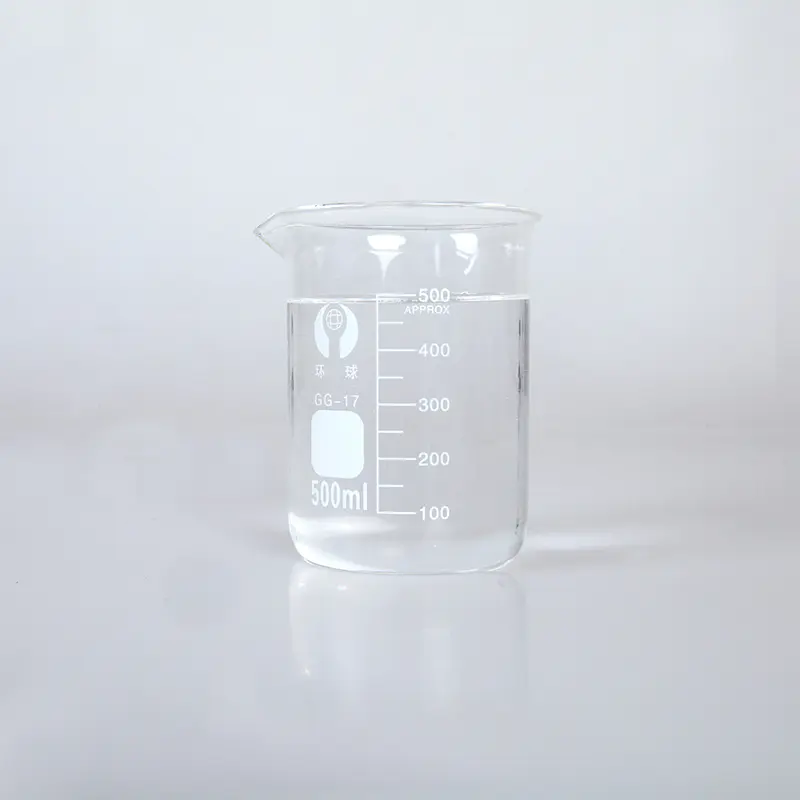
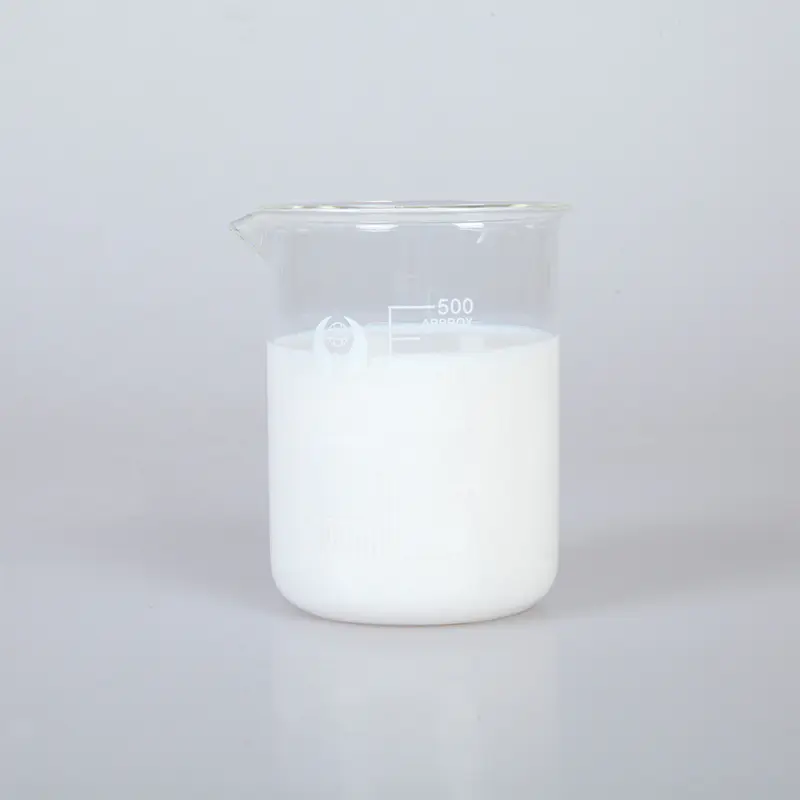
| Appearance | Clear to slightly hazy liquid |
| Composition | Comb-type silicone surfactant + trace compatible antifoam |
| Active content | ≥ 95% |
| Viscosity (25°C) | 50 – 110 cSt |
| Density (25°C) | 1.02 – 1.06 g/cm³ |
| Charge | Non-ionic |
| Compatible pH range | 4.0 – 9.0 |
| Storage stability | 24 months (cool, dry) |
Performance data

- 2021
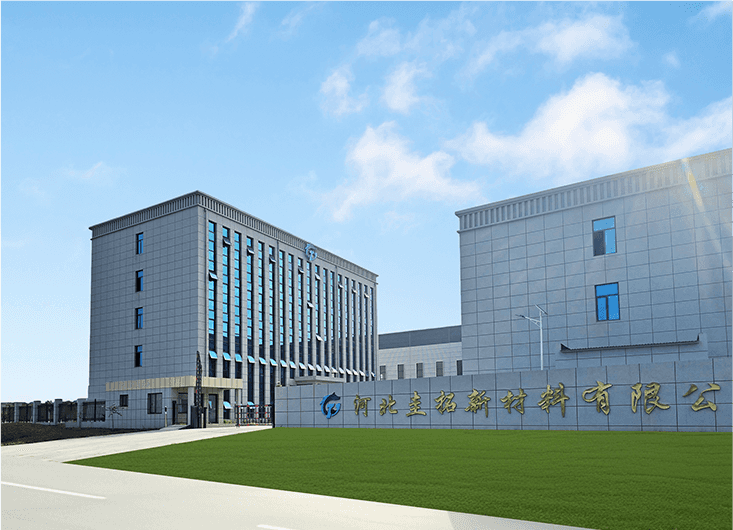
Company Establishment
- 10000m²
Advanced Factory
- 50+
Exporting Country
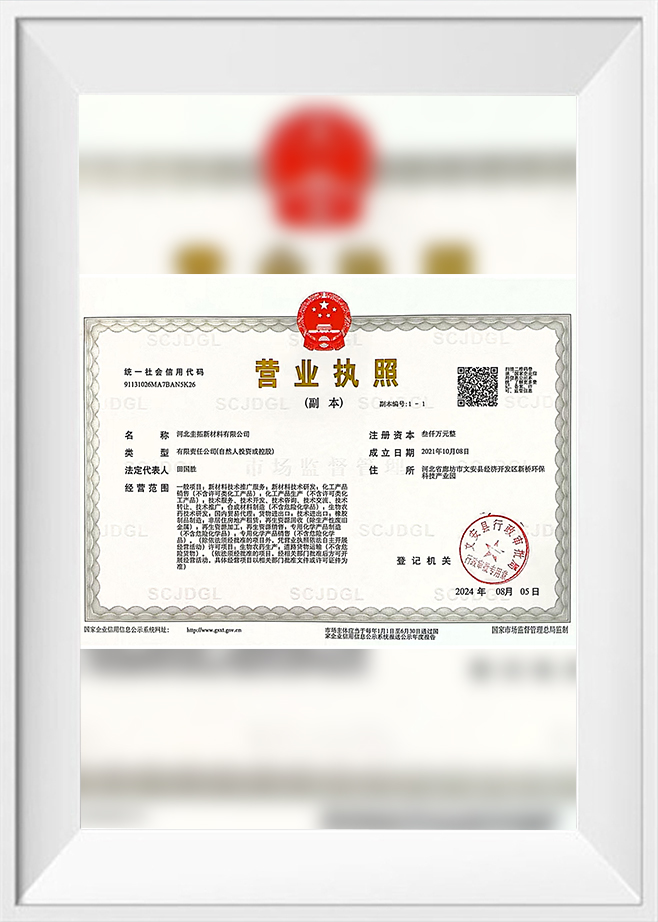
Our Certifications
And Partners
Professional scale factory production. We can customize finished products wholesale and export, OEM production, and distribution.
I just wanted to let you know that welcome to inquire and place orders.


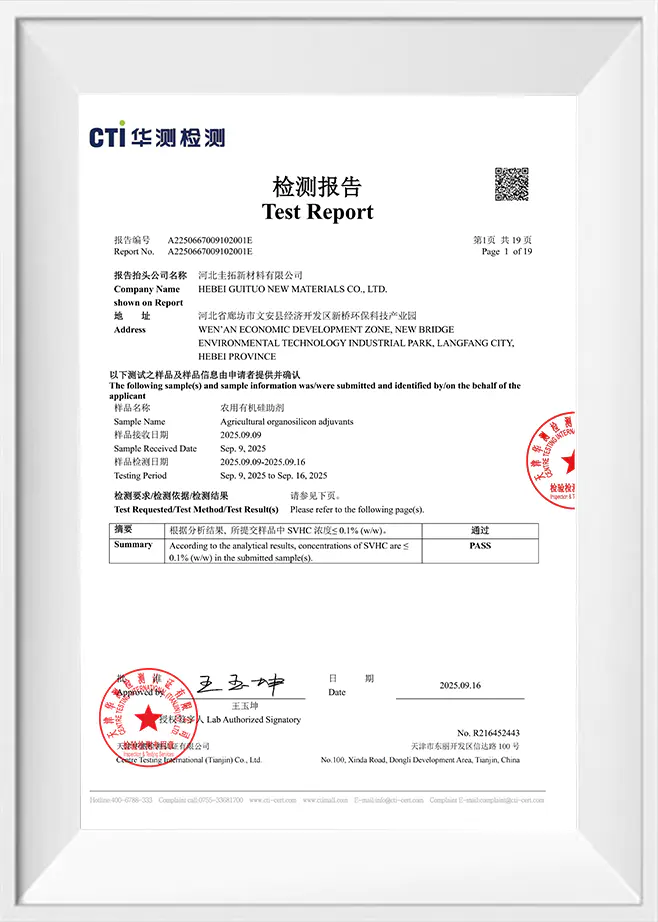
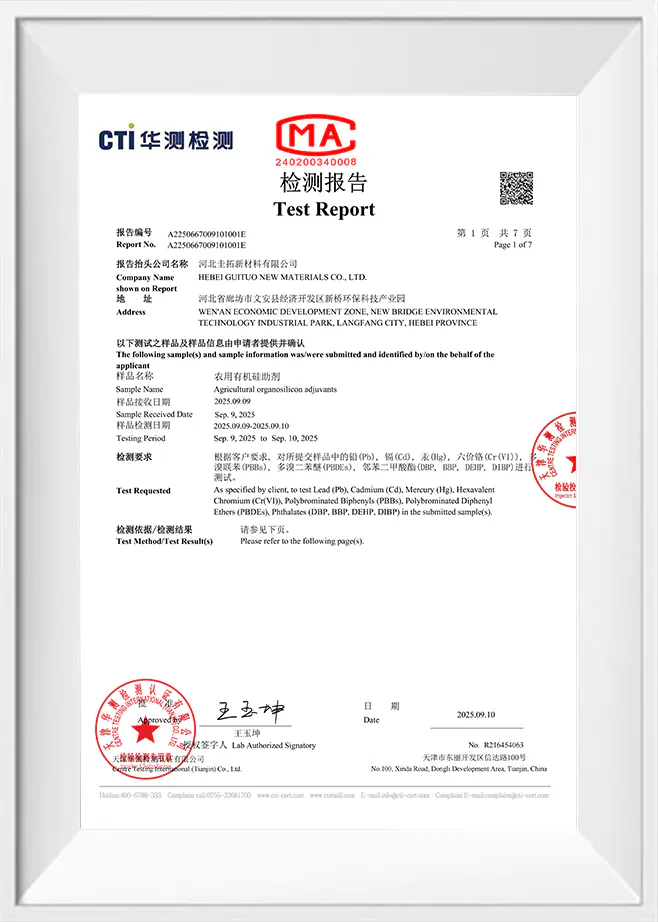
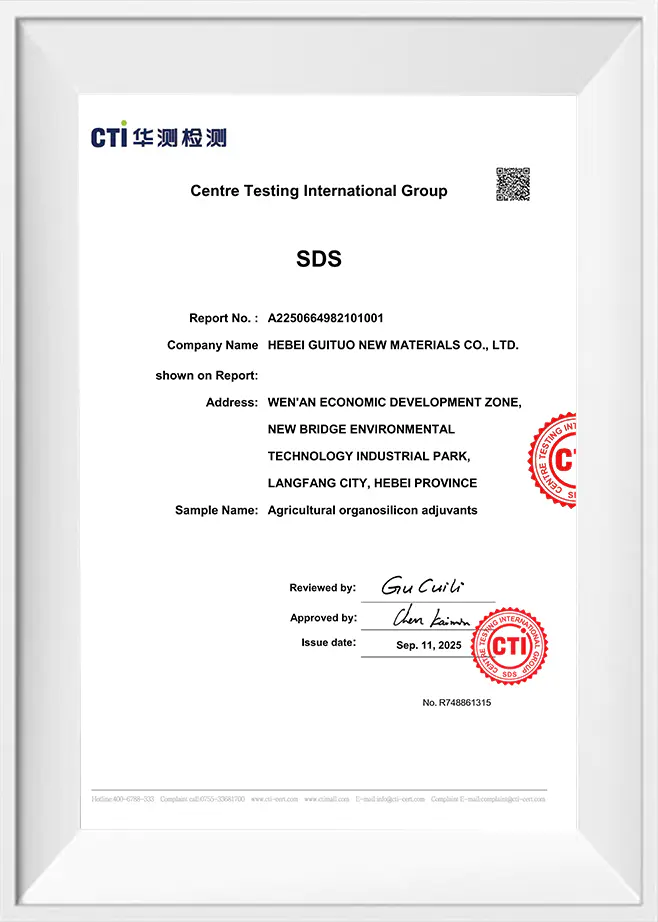
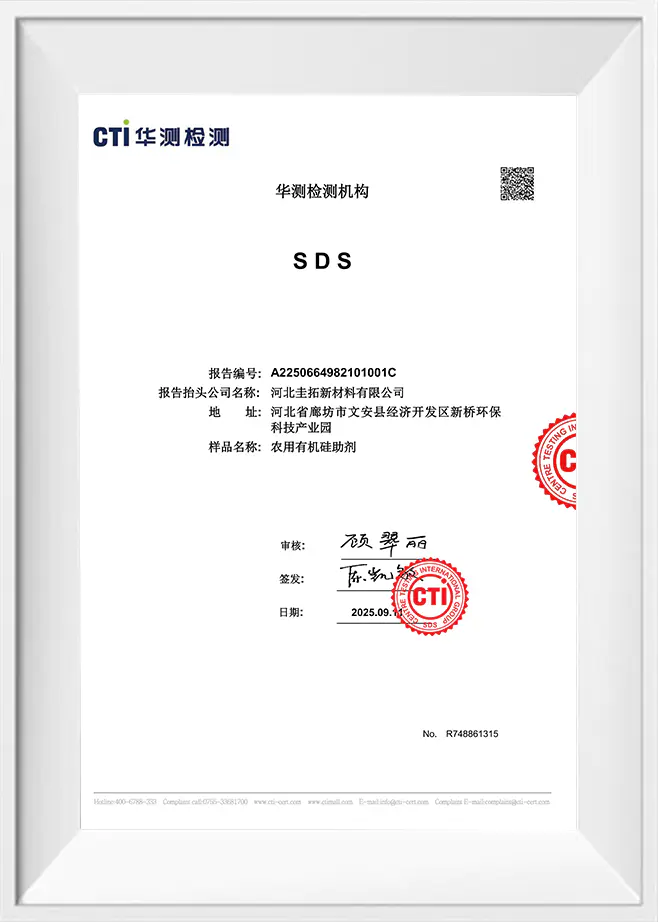
Performance benchmark
| Property | This biostimulant spreader | Standard trisiloxane | Conventional NIS |
|---|---|---|---|
| Humate flocculation at pH 4.5 | None | Haze within 4 h | Possible |
| Foam in protein solution (1 min) | < 30 mL | 60–100 mL | 40–80 mL |
| Leaf coverage (tomato) | 76% | 82% | 55% |
| Tissue safety margin | Wide | Narrower | Wide |
| Viscous-extract spreading | Strong | Moderate | Weak |
Biostimulant spray trial results
Source: greenhouse biostimulant spray trials and leaf tissue analysis, 2024–2025.
Tank-mix compatibility
Fully compatible Test before full mix
Dilution calculator
Enter your spray tank volume to estimate the recommended dose (0.04% v/v typical).
How to apply
Safe use guidelines
- Personal protection — Wear gloves and eye protection during mixing.
- First aid — Rinse skin/eyes with water; if ingested, seek medical advice.
- Storage — Keep sealed, cool, and dry, away from direct sunlight.
- Environmental — Biodegradable; low aquatic toxicity.
- Disposal — Dispose of containers per local regulations.
- Shelf life — 24 months in unopened original container.
Crops & use cases
- Greenhouse tomato, pepper, cucumber — frequent biostimulant spray programs.
- Leafy vegetables — amino-acid and seaweed foliar feeding.
- Orchards and vineyards — humic and chitosan sprays at flowering and fruit set.
- Organic-oriented programs — plant-extract and biostimulant-based protection.
Also used in stress-recovery sprays after frost, heat, or hail.
Why it outperforms
- Compatible with organic extracts — avoids flocculation and heavy foam.
- Better contact for uptake — coverage and tissue content gains in trials.
- Gentle on sensitive stages — moderate surface tension.
- One adjuvant for many extracts — seaweed, humic, amino-acid, and chitosan programs.
Application guidelines
- Mixing order: dilute the biostimulant first, then add the spreading agent
- Humate programs: keep tank pH at or above 4.0
- Sensitive stages: use the lower end of the rate range at flowering
- Microbial products: jar-test and spray soon after mixing
Packaging & shelf life
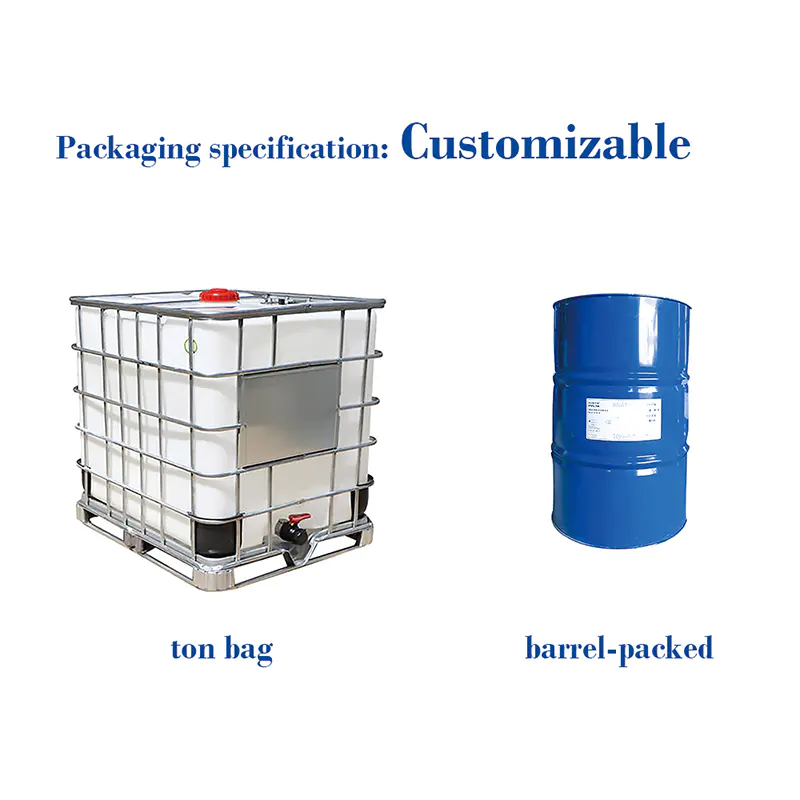
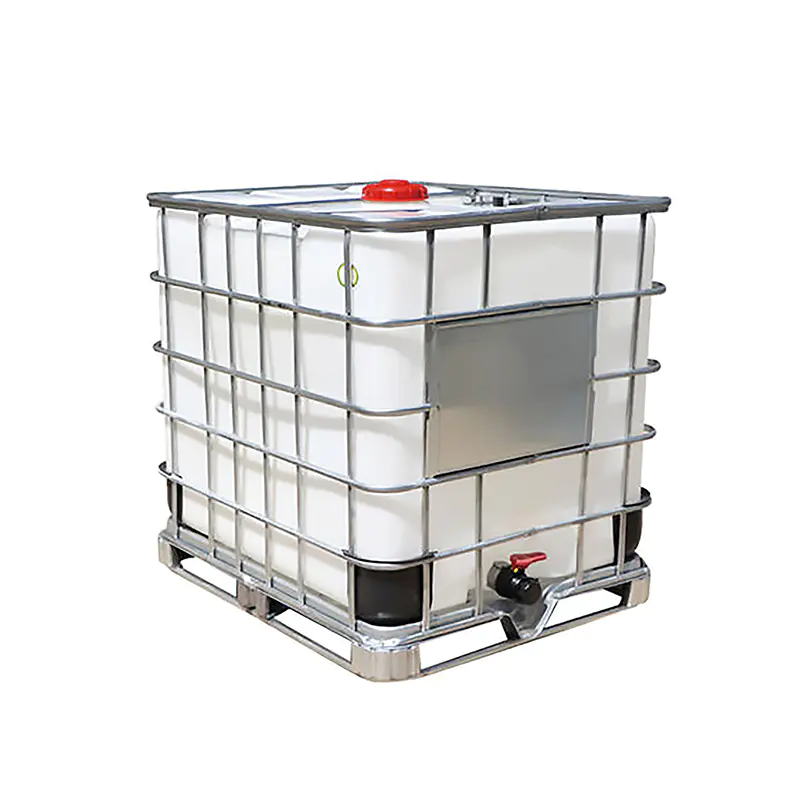
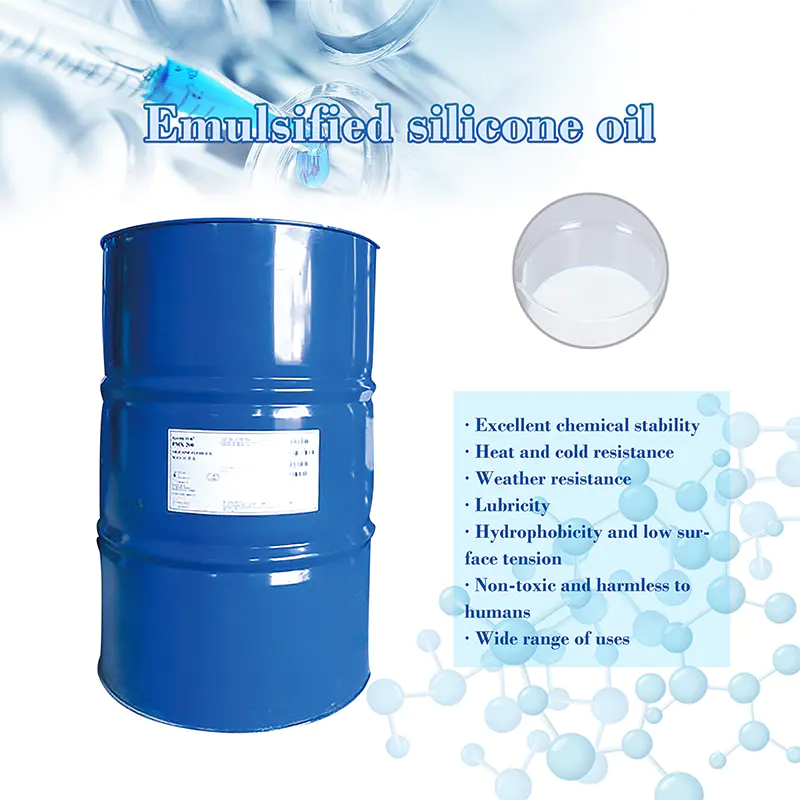
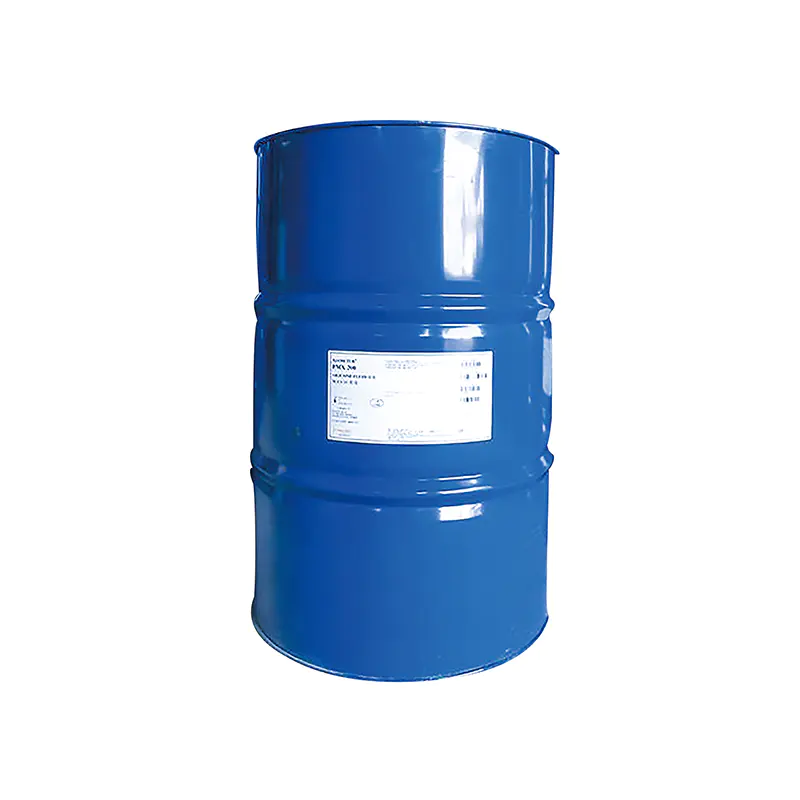
- Packaging: 1 L, 5 L, 20 L, 200 L drums / IBC totes.
- Storage: cool, dry, away from direct sunlight; 5–40°C.
- Shelf life: 24 months in unopened original container.
Global quality benchmarks
| Test item | Standard requirement | Our performance |
|---|---|---|
| Surface tension (0.1%) | ≤ 28 mN/m | 25 mN/m |
| Humate flocculation (pH 4.5, 24 h) | No visible haze | None observed |
| Foam in 1% amino-acid solution | < 60 mL | < 30 mL |
| Leaf coverage gain | ≥ 20 points | +35 points |
| Biodegradability | OECD 301 | Readily biodegradable |
Frequently asked questions
Latest articles & guides
Silicone Wetting Agent
overview Fast, Uniform Wetting for Hard-to-Wet Agricultural Surfaces Silicone W
Agricultural Silicone Super Spreading Agent
overview Extreme Leaf-Surface Coverage Through True Super-Spreading Agricultura
Silicone Spray Adjuvant for Herbicides
overview Faster Burndown and Reliable Control When the Weather Isn't Ideal Sili
Silicone Wetting Agent for Agrochemicals
overview Purpose-Built Wetting Agent for Chemigation Through Irrigation Systems
Crop Protection Silicone Spreading Agent
overview Value-Tier Spreading Performance Built for Broad-Acre Economics Crop P
Silicone Spreader for Foliar Fertilizer
overview Purpose-Built Spreader for Foliar Nutrition Programs Silicone Spreader
Silicone Adjuvant for Fungicide Spray
overview Adjuvant Built Around the Disease-Control Weather Window Silicone Adju
Concentrated Agricultural Silicone Wetting Agent
overview A Super-Concentrate That Treats Thousands of Litres per Litre Concentr
Silicone Surfactant for Herbicide Application
overview Purpose-Built for Broadleaf and Grass Weed Herbicide Programs Silicone
A spreader that respects the chemistry of your biostimulant
Free samples · Biostimulant program technical support
cnguituonewmaterial.com · Agricultural adjuvants & new materials

Tel : +86-400-138-5268
Email : [email protected]
Phone : +86-15128434888 / +86-13511051998
Add : Xinqiao Environmental Protection Industrial Park, Wen'an County, Langfang City, Hebei Province, China
Copyright © Hebei Guituo New Material Co., Ltd. All Rights Reserved.
