

 English
 Français
 Português


Silicone Surfactant for Plant Growth Regulators
Comb-type silicone surfactant stable at the acidic pH of ethephon mixes — improves coverage uniformity, cutting plant-height variation from 14% to 8% in mepiquat cotton programs.
Explore our adjuvant range
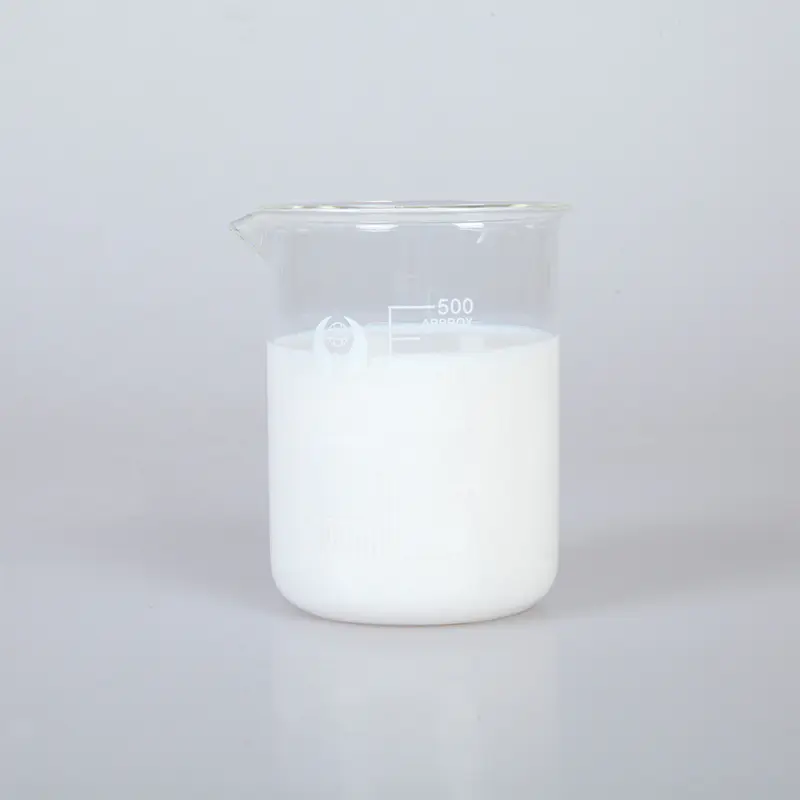
Even, Acid-Stable Coverage for Growth Regulator Programs
Silicone Surfactant for Plant Growth Regulators is a modified silicone surfactant tuned to the needs of PGR spraying — mepiquat chloride on cotton, chlormequat and trinexapac-ethyl on cereals and turf, paclobutrazol on fruit trees and ornamentals, gibberellic acid (GA₃) and cytokinins at flowering and fruit set, and ethephon for ripening and boll opening. Growth regulators differ from pesticides in an important way: the target is not a pest that either dies or does not, but a plant response that varies continuously with dose. If one part of the canopy gets more regulator than another, the plant ends up uneven — some shoots too short, some too tall; some bolls ripened, others not.
That makes coverage uniformity the main design goal. Because the effect of a PGR depends on the amount absorbed per plant, variability in how much each leaf retains turns directly into variability in the response. In a cotton trial using mepiquat chloride, the coefficient of variation in plant height among treated plants fell from 14% without the adjuvant to 8% with 0.03% v/v of this surfactant, giving a more uniform crop that is easier to defoliate and harvest. In turf, trinexapac-ethyl applications showed a similar tightening of growth suppression between sprayed passes.
The second design requirement is acid stability. Ethephon, one of the most widely used PGRs, is only stable in strongly acidic solution: at pH above about 4.5 it decomposes to release ethylene, so tank mixes are held at pH 2.5–4.0. A conventional trisiloxane surfactant hydrolyzes quickly at these pH values and loses its effect within hours. This product is built on a comb-type silicone backbone that retained over 90% of its surface activity after 24 hours at pH 3 in a model ethephon solution, so applicators get consistent coverage without special handling.
Phytotoxicity margins are narrower for PGRs than for many pesticides, particularly with GA₃ and cytokinins applied at bloom and fruit set, when flowers and young fruit are sensitive. The surfactant is therefore used at low rates of 0.02–0.04% v/v and has a moderate surface tension of about 26 mN/m, which improves coverage without the very low surface tension that can cause flower burn or fruit marking. Trials on grapes at bloom with GA₃ showed no russeting at the recommended rate.
The product is compatible with the most widely used growth regulator chemistries and with the nutrient and fungicide products commonly tank-mixed with PGRs.
Why PGR Programs Need Their Own Surfactant
Mechanism of action
Silicone Surfactant for Plant Growth Regulators lowers surface tension to about 26 mN/m so that growth-regulator sprays spread into an even film across leaf surfaces. Each leaf then receives a more consistent dose, so shoots respond in step with one another.
A comb-type silicone backbone with Si–C bonded polyether side chains shields the siloxane bonds from acid, so the surfactant keeps working at the pH 2.5–4.0 of ethephon mixes where compact trisiloxanes break down within hours.
Because the surface tension is deliberately moderate, the spray does not creep into tight flower structures or accumulate in tissue folds, which is the usual route to burn and marking at bloom.
Variation tightens by 0.03% v/v with no further gain at higher rates.
Product specifications
| Parameter | Value |
|---|---|
| Appearance | Clear to slightly hazy liquid |
| Active content | ≥ 96% (comb-type polyether-modified silicone) |
| Viscosity (25°C) | 50 – 120 cSt |
| Density (25°C) | 1.02 – 1.06 g/cm³ |
| Working pH range | 2.5 – 9.0 |
| Flash point | > 100°C |
| Charge | Non-ionic |
| Storage stability | 24 months (cool, dry) |
Performance data

- 2021
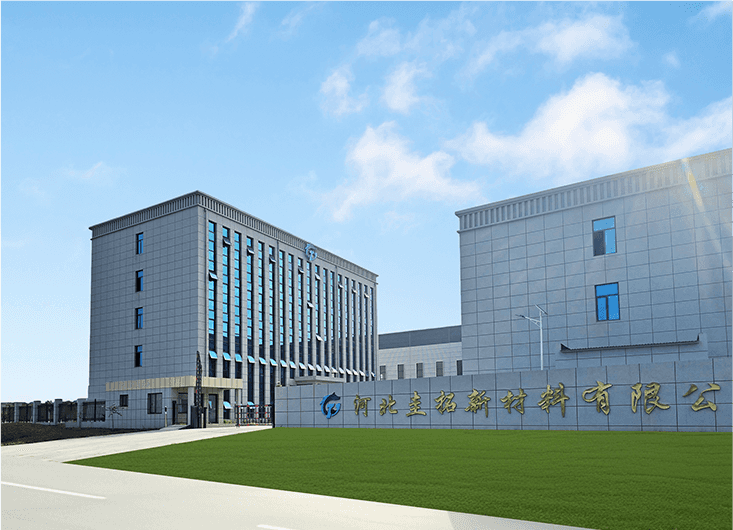
Company Establishment
- 10000m²
Advanced Factory
- 50+
Exporting Country
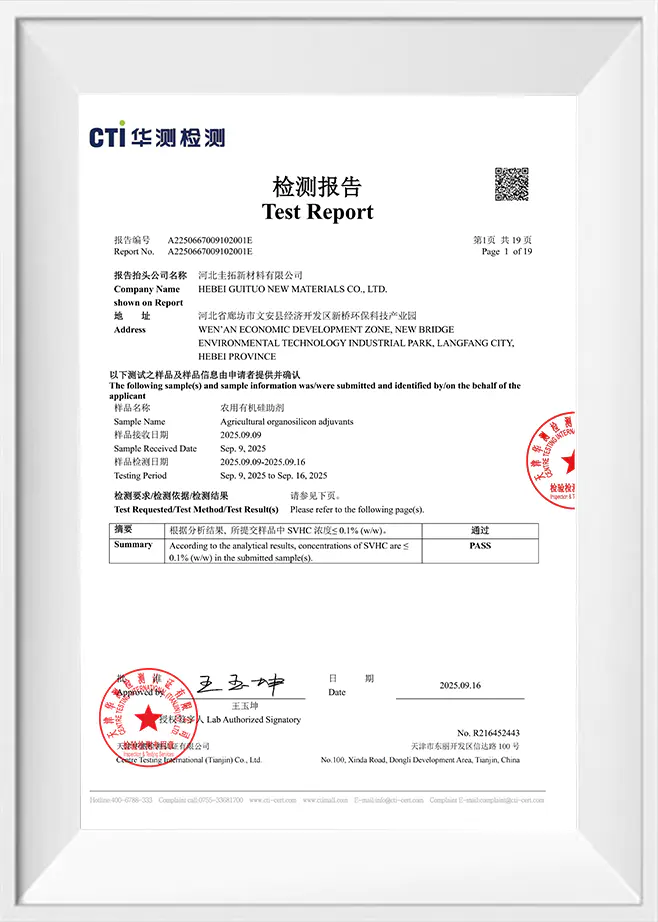
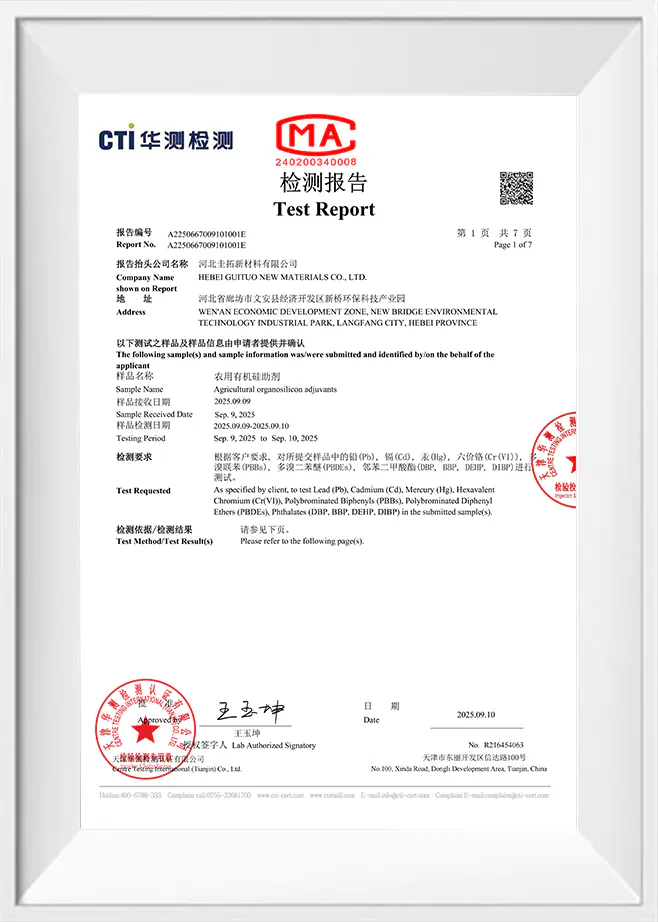
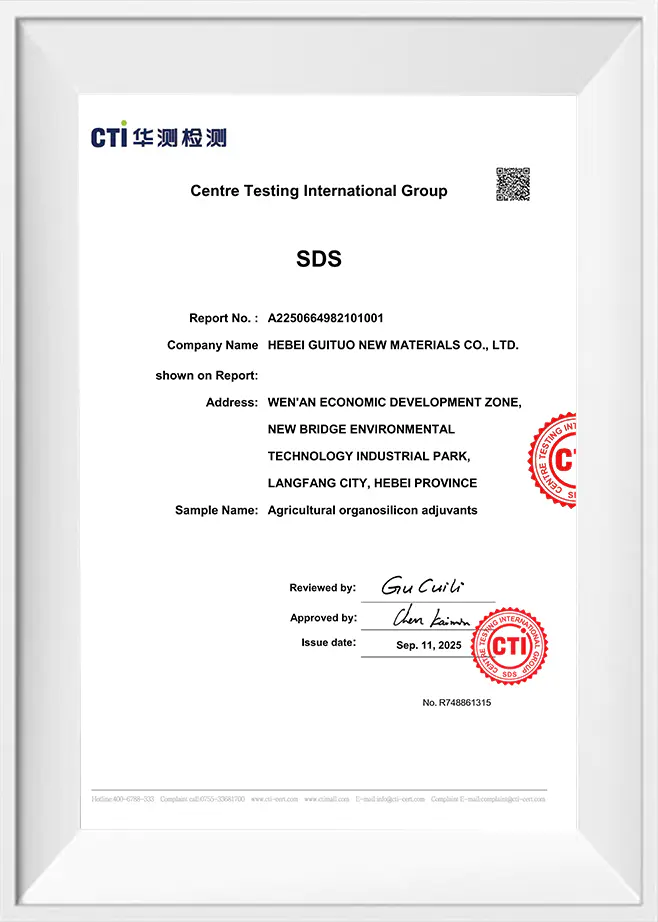
Our Certifications
And Partners
Professional scale factory production. We can customize finished products wholesale and export, OEM production, and distribution.
I just wanted to let you know that welcome to inquire and place orders.



Performance benchmark
| Property | This PGR surfactant | Trisiloxane super-spreader | Conventional NIS |
|---|---|---|---|
| Activity after 24 h at pH 3 | > 90% | < 15% | > 90% |
| Surface tension (0.1%) | 26 mN/m | 20.5–22 mN/m | 32–36 mN/m |
| Plant-height variation (cotton) | 8% | 9% | 14% |
| Bloom-stage tissue safety | High | Lower | High |
| Ethephon tank-mix suitability | Yes | No | Yes |
PGR program trial results
Source: cotton PGR field trials and laboratory pH-stability tests, 2024–2025.
Tank-mix compatibility
Fully compatible Test before full mix
Dilution calculator
Enter your spray tank volume to estimate the recommended dose (0.03% v/v typical).
How to apply
Safe use guidelines
- Personal protection — Wear gloves, goggles, and long sleeves; ethephon mixes are corrosive.
- First aid — Rinse skin/eyes with plenty of water; if ingested, seek medical advice.
- Storage — Keep in original container, tightly closed, cool and dry (5–40°C).
- Environmental — Biodegradable polyether fraction; low aquatic toxicity.
- Disposal — Dispose of empty containers per local regulations.
- Label compliance — Follow the PGR label for rate, timing, and crop stage.
Crops & use cases
- Cotton — mepiquat plant-height control and ethephon boll-opening programs.
- Cereals and turf — chlormequat and trinexapac-ethyl growth control.
- Grapes and tree fruit — GA₃ and cytokinin bloom and fruit-set sprays.
- Ornamentals and nurseries — paclobutrazol and other compact-growth programs.
Also used in sugarcane ripener and tobacco sucker-control programs where even coverage matters.
Why it outperforms
- More uniform crops — tighter plant response across the field.
- Works at acidic pH — suited to ethephon mixes where trisiloxanes fail.
- Gentle at bloom — moderate surface tension limits burn and russeting.
- Broad PGR chemistry coverage — from mepiquat to GA₃.
Application guidelines
- Rate by stage: use 0.02% at bloom and fruit set, up to 0.04% on vegetative canopies
- Spray weather: avoid hot midday sun when applying GA₃ or cytokinins
- Ethephon mixes: hold tank at pH 2.5–4.0 as the PGR label requires
- Coverage: use even, consistent travel speed and nozzle overlap
Packaging & shelf life
- Packaging: 1 L, 5 L, 20 L, 200 L drums / IBC totes.
- Storage: cool, dry, away from direct sunlight; 5–40°C.
- Shelf life: 24 months in unopened original container.
Global quality benchmarks
| Test item | Standard requirement | Our performance |
|---|---|---|
| Activity after 24 h at pH 3 | Not specified | > 90% |
| Surface tension (0.1%) | ≤ 30 mN/m | 26 mN/m |
| Plant-height CV reduction (cotton) | ≥ 2 points | 6 points |
| Phytotoxicity at bloom (GA₃, grapes) | Standard rate only | None observed |
| Biodegradability | OECD 301 | Readily biodegradable |
Frequently asked questions
Latest articles & guides
Silicone Surfactant for Agricultural Chemicals
overview Multi-Functional Silicone Surfactant for Agrochemical Formulation Sili
Silicone Surfactant for Herbicide Application
overview Purpose-Built for Broadleaf and Grass Weed Herbicide Programs Silicone
Silicone Spray Adjuvant for Herbicides
overview Faster Burndown and Reliable Control When the Weather Isn't Ideal Sili
Silicone Defoamer for Agrochemical Formulations
overview A Built-In Antifoam Designed to Live Inside the Finished Product Silic
Silicone Emulsion Defoamer for Pesticides
overview Foam Control Inside the Pesticide Plant: Milling, Emulsifying, Strippin
Silicone Wetting Agent for Agrochemicals
overview Purpose-Built Wetting Agent for Chemigation Through Irrigation Systems
Silicone Additive for Crop Protection
overview A Formulator's Multi-Function Toolbox Additive Silicone Additive for C
Silicone-Based Penetration Enhancer for Agriculture
overview Moving Large, Water-Loving Molecules Across the Cuticle When Stomatal E
Silicone Spreader for Foliar Fertilizer
overview Purpose-Built Spreader for Foliar Nutrition Programs Silicone Spreader
Even coverage means an even crop
Free samples · PGR program technical support
cnguituonewmaterial.com · Agricultural adjuvants & new materials

Tel : +86-400-138-5268
Email : [email protected]
Phone : +86-15128434888 / +86-13511051998
Add : Xinqiao Environmental Protection Industrial Park, Wen'an County, Langfang City, Hebei Province, China
Copyright © Hebei Guituo New Material Co., Ltd. All Rights Reserved.
